

HART textile materials guide: horsehair
Open up a nineteenth-century armchair and you will often find, beneath the layers of hessian and calico, horsehair still springy after a hundred years of service. Rarely seen and rarely mentioned, horsehair is one of the pillars of traditional upholstery: a structural fibre made to support, to breathe and to last. Woven, it also becomes one of the rarest fabrics there is.
This guide offers a clear, neutral reading of horsehair: what it is, the difference between horsehair and vegetable fibre, its properties, its role inside a seat, woven horsehair fabric, and what to check before choosing it.
Contents
What is horsehair
Horsehair and vegetable fibre
Origin and preparation
Technical properties
Horsehair inside a seat
Woven horsehair, an exceptional fabric
Horsehair or foam?
Care and constraints
Environmental impact: the facts
Before you choose
What is horsehair
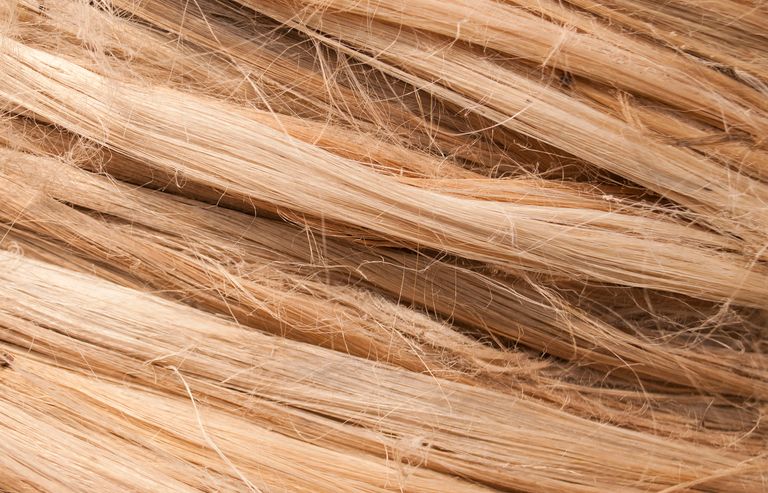
Horsehair is a natural animal fibre taken from the tail and mane of the horse. It is not a soft textile fibre like wool or cotton, but a long, smooth, springy hair whose mechanical properties make it a structural material. Tail hair, longer and stronger, is the most sought after, especially for weaving.
On the label
In Europe, the composition must give the full name: horsehair (crin in French), stating where relevant whether it is tail or mane hair.
Horsehair and vegetable fibre
In French they share the same word, crin, yet they have nothing in common. Horsehair comes from the horse. Vegetable fibre (crin végétal) is made from the leaves of the North African dwarf palm, shredded and curled: firmer, less springy and far cheaper, it is used mainly for the first stuffing. Horsehair itself comes in very different grades: pure horsehair and mixed hair, cut with pig or cattle hair, which is cheaper and less resilient.
Origin and preparation
Depending on the supply chain, horsehair is cut from living horses or collected at slaughterhouses. Much of the horsehair used today comes from Asia, Mongolia in particular, and from South America. Supply is limited and preparation remains largely by hand: sorting by length and colour, washing, drying, carding.
For stuffing, the hair is then curled: it is twisted into tight ropes, steamed and left to rest for a long time before being untwisted. The fibre keeps a permanent wave that acts like a spring. This curling is what gives upholstery horsehair its resilience and its lifespan.
Technical properties
Resilience and elasticity
Curled horsehair is remarkably springy. Where other stuffings sag or pack down, it recovers its shape after compression. That ability to bounce back explains centuries of use in seating.
An airy, breathable structure
Carded and worked into a stuffing, it forms a very open structure. Air circulates, moisture does not build up, and the seat stays fresh and healthy.
Exceptional longevity
Old chairs often contain horsehair stuffing that is decades, sometimes a century old and still working. Better still: when a seat is re-upholstered, the hair can be pulled out, washed, re-carded and reused.
Horsehair inside a seat
In traditional upholstery, horsehair is not meant to be seen. It works beneath the cloths, and its performance depends as much on the craftsmanship as on the fibre: webbing, springs, hessian, density, tension, stitched edges. Broadly, a first stuffing, often in vegetable fibre, gives shape and firmness; a second stuffing in horsehair, more springy, adds comfort; then come the calico, the wadding and the top fabric.
Horsehair is the material of antique restoration, of high-end seating designed to last generations, and of projects that champion a craft approach. It is the work of the ateliers in our upholstery workshops directory.
Woven horsehair, an exceptional fabric
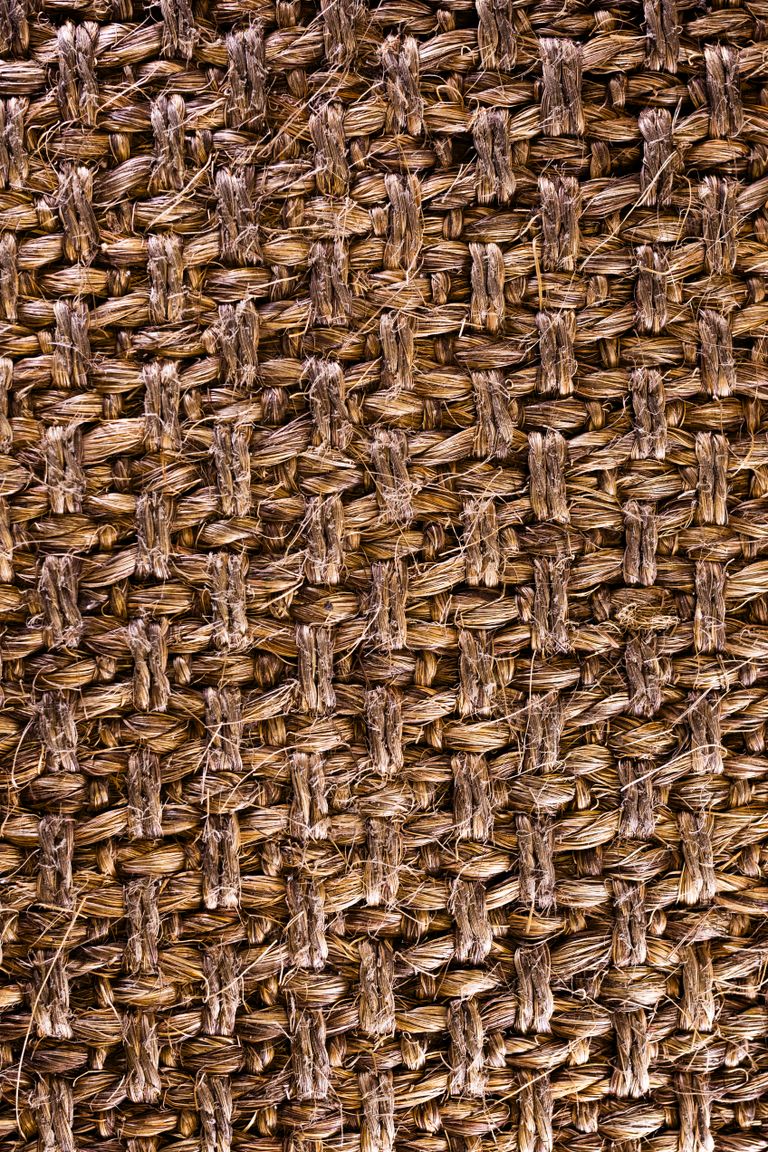
Once woven, horsehair changes status: from hidden material it becomes cloth. It is woven as the weft, on a cotton or silk warp, one hair at a time, which limits the width of the fabric to the length of the hairs themselves: horsehair fabrics are always narrow. The result has a sheen close to silk, a crisp body and exceptional resistance to wear.
The nineteenth century made it one of its favourite seat fabrics: it appears on mahogany chairs from the Empire period onwards, then throughout Victorian interiors, often in black, in stripes or small patterns.
In France, the Le Crin workshop in Challes, in the Sarthe, has been weaving horsehair since the early nineteenth century. It is now one of the last traditional horsehair weaving workshops in France, and its fabrics are produced by Métaphores, part of the Hermès textile group. Curtains, wall panels, screens, seat covers: horsehair becomes a graphic, architectural material that plays with light and transparency, often combined with silk, linen or cotton.
Horsehair or foam?
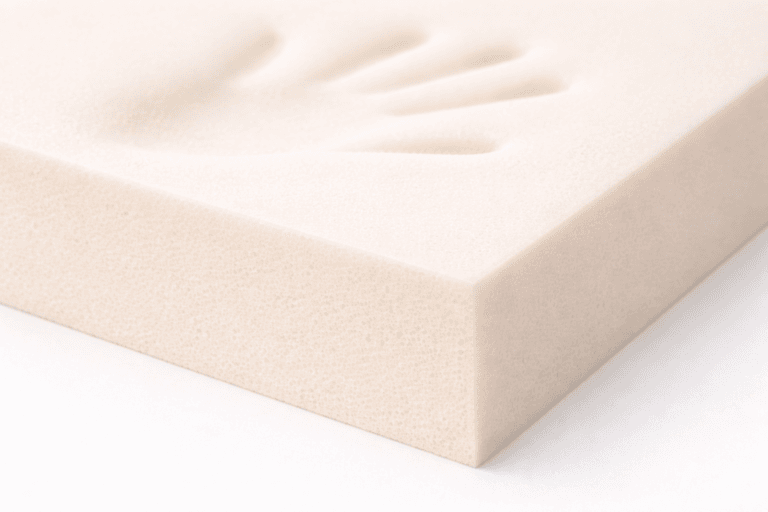
Over the twentieth century, horsehair was largely replaced by foams, waddings and synthetic fibres, for reasons of cost, speed and standardisation. These materials have their place: they allow precise shapes, fast production and immediate comfort. But foam gradually loses its spring, packs down, then crumbles, and it cannot be reused. Horsehair, by contrast, is re-carded and starts a new life at every re-upholstery. Our investigation into upholstery foams explains what separates a good foam from a poor one.
The choice is not either-or: many high-end contemporary seats combine a traditional horsehair structure with a more modern comfort layer. What matters is knowing what is inside. For more on seating, see our guide to high-end sofas.
Care and constraints
As a stuffing, horsehair needs no maintenance: it is overhauled when the seat is re-upholstered. Like any animal fibre, it can attract moths in a seat that is stored or neglected for a long time. Horsehair fabric is very easy to care for: dust with a soft brush or vacuum, and wipe with a barely damp cloth if needed. Its only constraint is its stiffness: horsehair cloth must be worked methodically, and its edges need careful finishing.
Environmental impact: the facts
Horsehair is a natural, renewable and biodegradable fibre, a by-product of horse rearing. Its real strength lies elsewhere: it is one of the very few stuffings that can be reused in full. A horsehair seat goes through several re-upholsteries without changing material, where a foam seat consumes new foam every time. The points to watch are traceability, since the fibre often travels far, and the conditions of rearing and collection, which vary between supply chains.
Before you choose horsehair
– A material reused at every re-upholstery
– As a fabric, a rare, lustrous and almost indestructible cloth
What to check
– Horsehair or vegetable fibre, pure or mixed, and in which layer
– The workmanship: webbing, tension, stitching, by a qualified upholsterer
– For horsehair fabric, the narrow width, which affects how panels are planned
When horsehair is an excellent choice
– Restoring antique seating
– High-end seating designed to last generations
– Curtains, panels and seats in horsehair fabric in an architect-led project
When to be careful
– A quote that says “horsehair” without specifying which
– A tight budget or deadline: traditional upholstery takes time
– An expectation of very soft comfort, which horsehair alone does not give
Conclusion
Horsehair is one of those rare materials that can only be judged over time. Invisible inside a seat, it keeps it in shape for a century; woven, it becomes one of the rarest fabrics in upholstery. In a high-end interior, it embodies a luxury you cannot see but feel every time you sit down. To place it among other fibres, see our guide to exceptional upholstery fabrics.
HART guide
Textile materials, fibre by fibre
Each fibre has its own origin, processing, way of ageing and limits in use. These guides form a reference base for understanding natural, man-made and synthetic textiles before choosing a fabric.
Alpaca/Cotton/Hemp/Horsehair/Linen/Mohair/Polypropylene/Raffia/Silk/Sisal/Viscose/Wool
Go further
- Textile materials: the overview → Natural, man-made and synthetic fibres compared
- Exceptional upholstery fabrics → An editorial and cultural reading of high-end textiles
- Linen, wool, silk → Why natural fibres dominate luxury textiles
- Upholstery fabric brands from A to Z → Textile houses, editors and their know-how
- The Martindale rub test → Reading real performance against use
- Luxury trimmings → Braids, fringes and textile finishes
- Upholstery workshops directory → The ateliers that work noble textiles
- Textile wallcoverings → Natural or synthetic, the matter on the wall

Digital entrepreneur and craft artisan.
My work bridges craftsmanship, design history and contemporary creation, shaping a personal vision of luxury interior design.
Since 2012, I have been based in my workshop on the shores of Lake Annecy, creating bespoke interiors for architects, decorators and private clients.