


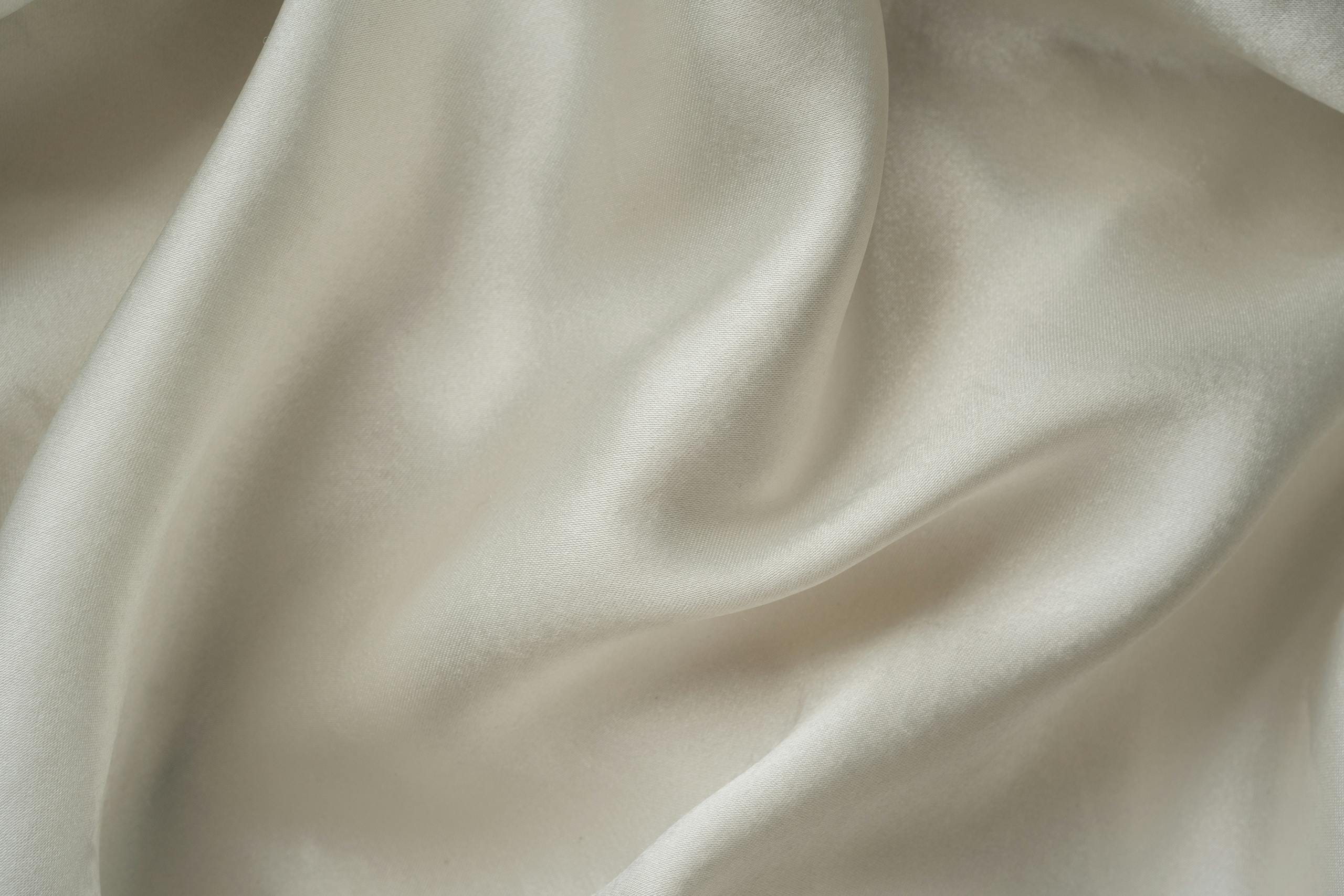
HART textile materials guide: silk
In high-end furnishing, silk stands apart. It is often mistaken for a universal luxury material, when it is first and foremost a decorative fibre: precious, luminous, steeped in culture, yet structurally more delicate than performance fibres such as wool, mohair or some dense linens. A heritage silk wall covering, a taffeta made for drapery, a fragile silk satin and a silk-wool blend engineered to stabilise the cloth have very little in common once they are put to use.
This guide offers a clear, neutral reading of silk: what it is, how it behaves, where it belongs in an interior, its limits, and what to check before committing to it on a demanding project.
Contents
What is silk
Origin and production
Textile classification and label codes
Look and feel
Weaves and construction: what really matters
Uses in interiors
How silk ages
Durability and technical performance
Care and practical constraints
Environmental impact: the facts
Before you choose
What is silk
Silk is a natural animal fibre drawn from the filament the silkworm (Bombyx mori) spins to build its cocoon. Unlike wool, which is a short, crimped fibre, a silk filament is continuous, extremely long and fine. That is where its smoothness, its sheen and its ability to produce perfectly even surfaces come from.
In furnishing fabrics, silk appears in many guises: taffeta, satin, damask, jacquard, ottoman, lampas, shantung, the rarer silk velvet, and above all in blends such as silk-wool, silk-linen or silk-cotton, used to stabilise the cloth or soften its brilliance. The word “silk” on its own tells you very little. What matters is the weave, the density, the finishes and the way the fabric will actually be used. If you are still weighing up the great natural fibres, our comparison of linen, wool and silk in luxury textiles sets them side by side.
Origin and production
Silk production rests on sericulture: rearing the silkworms, harvesting the cocoons, then reeling off the filament. The fibre is spun or twisted into yarn and woven to the chosen structure. The final performance of the fabric depends heavily on the type of yarn, the weave and the finishing treatments applied to stabilise, reinforce or dress the surface.
In interiors, silk is bound up with long decorative traditions: hangings, silk wall coverings, damasks, brocades and jacquards. The great figured silks woven in Lyon for eighteenth-century France, which dressed the walls and seats of the Louis XV interior, remain a reference for anyone working with silk today. In these uses, light, texture and visual depth come first.
Textile classification and label codes
How silk appears on a label
France: Soie
Europe (ISO code): SE
United States and United Kingdom: Silk
SE is the standard code used across Europe. In a blend, the share of silk (30% SE, for instance) should be read in light of the job it is doing: enriching the surface, adding light, stabilising a jacquard or adjusting the hand. A minority of silk can be enough to transform the look of a fabric.
Look and feel
Silk has an exceptional relationship with light. Its sheen is never uniform: it shifts with the viewing angle and the intensity of the light, which gives the fabric its characteristic depth. The surface can be very smooth (satin), crisper (taffeta) or slubbed and textured (shantung), depending on the weave and the yarn.
To the touch, silk is usually smooth, fluid and cool. It has a clean, immediately refined hand. In high-end interiors, this hand and this light are precisely what justify using it, far more than any promise of toughness.
Weaves and construction: what really matters
Two fabrics sold as “silk” can be worlds apart. The deciding factors are:
– Weave (taffeta, satin, twill, jacquard, damask, lampas…)
– Density (how tightly it is woven, its weight, how it holds)
– Yarn (twist, count, quality of the filament)
– Finishing and stabilisation (suppleness, hand, resistance, tendency to crease)
Uses in interiors
Curtains and drapery
Silk can give a superb drape and a luminous presence no other fibre quite matches. For it to last, protection from light is essential: lining, interlining, or a position that keeps it out of direct sunlight.
Fabric-covered walls
Silk has long been used to dress walls. Here the issue is less abrasion than light fastness, colour stability and upkeep (dust, marks). Traditional fabric walling, where the silk is stretched over padded battens, remains the most refined way to use it; the craft is explained in our portrait of Stephen Franklin, master of fabric walling. For papers and coverings with a silk effect, see our guide to textile and textured wallcoverings.
Cushions and accessories
On decorative cushions, silk works well as long as handling stays moderate. Very smooth satins can mark under friction and need particular care. A silk trimming, a cord or a fringe, is often the most durable way to bring its sheen into a room.
Seating
Pure silk is rarely suited to a seat used every day. It can still appear in blends such as silk-wool or silk-linen on chairs that see little wear, or in specific decorative settings. The decision should rest on technical data and real use, ideally with the advice of an experienced upholstery workshop.
How silk ages
Silk ages mainly under the effect of light, friction and certain cleaning constraints. The changes to expect:
– colour change under UV exposure (fading, dulling)
– gradual weakening of the fibre under strong, prolonged exposure
– visible marking from friction on satins and very smooth surfaces
– creasing and pressure marks, depending on the weave and the finish
Silk used where it belongs, shielded from light and properly cared for, keeps its visual value for a very long time. Exposed and worked hard, it will lose its looks and its strength far sooner.
Durability and technical performance
Performance varies widely from one silk to another. For furnishing use, check in particular:
– Martindale abrasion rating, against the intended use
– colour fastness to rubbing (dry and wet), to avoid dye transfer
– light fastness (curtains, wall panels, sunny rooms)
– dimensional stability (distortion, how the cloth holds)
To understand how Martindale ratings work and choose according to context, read our complete guide to the Martindale rub test.
Care and practical constraints
Silk calls for specific precautions. The essentials:
– Always follow the manufacturer’s instructions (professional cleaning, permitted solvents)
– Avoid water and unsuitable stain removers, which can leave rings and weaken the fibre
– On smooth surfaces, beware of repeated friction, which leaves marks
– Plan for dust and marks on wall panels, and clean them gently
Environmental impact: the facts
Environmentally, silk cannot be summed up by the fact that it is natural. The main issues are:
– a production process that is long and labour-intensive (sericulture)
– processing (dyeing, finishing), which can add significantly to the footprint depending on practices
– lifespan: silk used in the right place avoids premature replacement
– transport: production is concentrated in a few countries, so logistics can weigh in depending on the supply chain
Over the long run, the most coherent criterion remains the fit between fibre, construction and use. A silk that is kept, protected and cared for weighs far less than a decorative textile replaced every few years. It is the same logic of lasting materials that underpins quiet luxury interiors.
Before you choose a silk fabric
– A refined hand, usually smooth and fluid
– Strong decorative and cultural value (hangings, wall panels, jacquards)
What to check
– Weave and density (a light silk does not play the same role as a dense jacquard)
– Light fastness and exposure conditions
– Technical data (abrasion, rubbing) if it is going on a seat
When silk is an excellent choice
– Lined curtains, drapery, fabric-covered walls
– Well-handled decorative accessories (cushions, details)
When to be careful
– Seating in daily use (friction, marking, weakening)
– Unprotected sun exposure (UV, fading)
– Projects where easy maintenance is a priority
Conclusion
Silk is a material of decoration and culture, remarkable when it is asked to do what it does best: catch the light, enrich a surface, give depth and presence to a room. In high-end interiors, its value lies less in the word “silk” than in the weave, the density, the protection from light and the way it will really be used. Chosen with care, silk feels inevitable. Chosen out of habit, it becomes a constraint. The difference lies in an informed choice, and the houses listed in our guide to high-end upholstery fabric brands are a good place to start looking.
HART guide
Textile materials, fibre by fibre
Each fibre has its own origin, processing, way of ageing and limits in use. These guides form a reference base for understanding natural, man-made and synthetic textiles before choosing a fabric.
Alpaca/Linen/Mohair/Polypropylene/Raffia/Silk
Go further
- Textile materials: the overview → Natural, man-made and synthetic fibres compared
- Exceptional upholstery fabrics → An editorial and cultural reading of high-end textiles
- Linen, wool, silk → Why natural fibres dominate luxury textiles
- Upholstery fabric brands from A to Z → Textile houses, editors and their know-how
- The Martindale rub test → Reading real performance against use
- Luxury trimmings → Braids, fringes and textile finishes
- Upholstery workshops directory → The ateliers that work noble textiles
- Textile wallcoverings → Natural or synthetic, the matter on the wall