


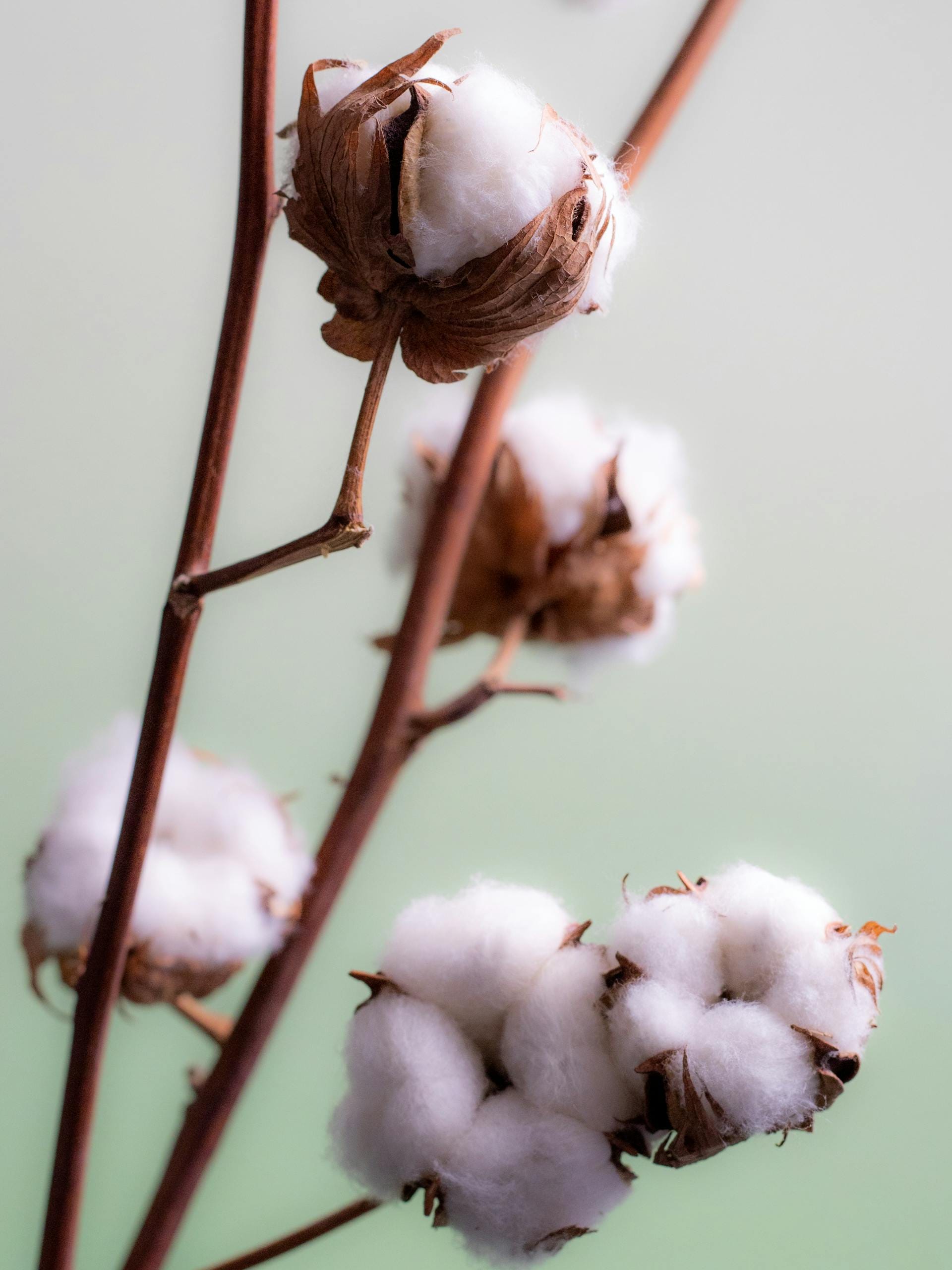
HART textile materials guide: cotton
In high-end furnishing, cotton feels like the obvious choice, and yet it is one of the most misunderstood materials of all. We instinctively link it to nature, comfort and simplicity. But a dense twill made for seating, a cotton velvet, a delicate sateen and a cotton blend behave in very different ways once they are in use, and last for very different lengths of time.
This guide offers a clear, neutral reading of cotton: what it is, how it behaves, where it belongs in an interior, its limits, and what to check before committing to it on a demanding project.
Contents
What is cotton
Origin and processing
Textile classification and label codes
Look and feel
Fabric construction: what really matters
Uses in interiors
How cotton ages
Durability and technical performance
Care and practical constraints
Environmental impact: the facts
Before you choose
What is cotton
Cotton is a natural plant fibre made almost entirely of cellulose. It grows around the seeds of the cotton plant, then is harvested, cleaned and spun. Unlike regenerated cellulose fibres such as viscose, cotton can be spun directly: its fibre structure already exists in the plant, with no dissolving and regenerating stage.
In furnishing fabrics it takes many forms: heavy canvas, twills, sateens, jacquards, chenilles, velvets. It is used on its own or blended with linen, wool, viscose or polyester. The word “cotton” on a label is therefore not enough: read the full composition and the technical data.
Origin and processing
After harvest, cotton is ginned to separate fibre from seed, then cleaned and carded to align the fibres, sometimes combed to keep only the longest. It is then spun, and woven or knitted depending on its purpose. Final performance depends on the yarn (fibre length, twist), the weave (structure, density) and the finishing (washing, dressing, treatments).
Fibre length is a first marker of quality: long-staple cottons such as Egyptian or pima produce yarns that are more even, smoother and stronger. Conversely, some very soft, very fine or very supple cottons, light sateens in particular, are poorly suited to areas of heavy friction.
Cotton also carries a strong decorative history: William Morris’s printed cottons turned the floral pattern into a manifesto of the Arts and Crafts movement, and his designs are still in production today.
Textile classification and label codes
How cotton appears on a label
France: Coton
Europe (ISO code): CO
United States and United Kingdom: Cotton
CO is the standard code used across Europe. In a blend, the share of cotton (55% CO, for instance) should be read against the whole composition: a majority of cotton does not guarantee durability if the construction is light or if the blend is designed mainly for a visual effect.
Look and feel
Cotton is valued for its warm, comfortable hand and its matt to semi-matt finish. Its appearance changes a great deal with the weave:
– as plain weave or twill: presence, robustness, a legible grain
– as sateen: a smoother, brighter surface, but more sensitive to rubbing
– as velvet: a soft pile, depth, and better stability than many viscose velvets
– as jacquard: a woven-in pattern, relief, decorative richness
In high-end interiors, cotton is often chosen for its balance: present without being showy, it sits as comfortably beside wood, stone or leather as it does in bolder decorative schemes.
Fabric construction: what really matters
This is where quality is decided. Two “100% cotton” fabrics can be worlds apart. The deciding factors are:
– Density (weight per square metre, how tightly it is woven)
– Weave (plain, twill, sateen, jacquard…)
– Yarn count and twist (strength, pilling)
– Finishing (washing, dressing, stain-resistant treatments, stabilisation)
Uses in interiors
Seating and sofas
For seating, choose dense cottons: heavy canvas, twills, some chenilles, sturdy jacquards, with a construction designed for abrasion. Cotton suits projects that want warmth and good wear, as long as fabrics that are too fine or too fluid are kept away from heavy use. Our guide to high-end sofas covers what makes a good sofa beyond its cover, and our investigation into upholstery foams what lies underneath.
Chairs and high-friction areas
On a dining chair, friction never stops. Cotton remains a good choice if the fabric is strong and stable (tight weave, good density) and its technical performance matches the use.
Curtains and drapery
As a curtain, cotton gives a more structured drape than a very fluid viscose. The balance lies between weight, opacity, body and ease of care. On curtains exposed to the sun, light fastness and the risk of fading need to be considered.
Cushions and accessories
Printed cottons, jacquards and sateens are everywhere on cushions. Appearance comes first, and performance depends on how much they are handled: very fine or very smooth fabrics mark more quickly.
Fabric walls and headboards
Here, colour stability and light fastness matter most. A well-stabilised cotton works, provided you plan for cleaning and marks, especially on a headboard. This is upholsterers’ work, mastered by the ateliers in our upholstery workshops directory. For coverings that imitate textile, see our guide to textile and textured wallcoverings.
How cotton ages
Cotton tends to soften over time and takes on a lovely patina when the fabric is well made. The changes to expect:
– gradual softening, often sought after
– loss of body on fabrics that are too fine or poorly stabilised
– marking in friction areas on smooth constructions (sateens, some velvets)
– possible fading under strong light, depending on the dyes
In daily use, a dense cotton ages better than a light one: it keeps its structure, grain and appearance for longer.
Durability and technical performance
Performance varies enormously from one fabric to another. For furnishing use, check in particular:
– Martindale abrasion rating, against the intended use
– colour fastness to rubbing (dry and wet), to avoid dye transfer
– light fastness, especially for curtains and sunny rooms
– dimensional stability (distortion, shrinkage)
A technical cotton can far exceed the thresholds expected for residential use, while a more delicate decorative cotton belongs where wear is light. To understand how Martindale ratings work and choose according to context, read our complete guide to the Martindale rub test.
Care and practical constraints
How cotton should be cared for depends on its finish and its use. The essentials:
– Follow the manufacturer’s instructions (washing, professional cleaning, stain removal)
– Watch out for greasy stains and friction areas, where dirt builds up
– On cotton velvet, respect the direction of the pile and avoid aggressive brushing
– Anticipate shrinkage and distortion, depending on how the fabric is stabilised
Environmental impact: the facts
Environmentally, cotton cannot be summed up by the fact that it is natural. The main issues are:
– water use, which varies widely by region and irrigation
– inputs (pesticides, fertilisers), depending on farming methods
– processing (dyeing, finishing, treatments), which can add to the footprint
– lifespan: a dense, durable cotton avoids frequent replacement
Some supply chains reduce these impacts through crops less dependent on inputs, better water management or certification. Over the long run, the most coherent criterion remains the fit between fibre, construction and use: a fabric that is kept, cared for and handed down weighs far less than one replaced every few years.
Before you choose a cotton fabric
– A wide range of weaves (canvas, twill, jacquard, velvet)
– Comfort in use and an honest reading of the material
What to check
– Density and weave (a light cotton does not play the same role as an upholstery cotton)
– Durability (Martindale and fastness ratings) against real use
– Stability and finishing (distortion, dye transfer, care)
When cotton is an excellent choice
– Seating and sofas, if the fabric is dense and sturdy
– Structured curtains, cushions, well-built decorative jacquards
When to be careful
– Very fine constructions (delicate sateens, overly soft fabrics) in friction areas
– Strong sun exposure without adequate light fastness
– Projects where easy maintenance is a priority (depending on finish)
Conclusion
Cotton is a cornerstone of furnishing textiles, but its value does not lie in the word “cotton”. It lies in the construction, the density, the finishing and the real use. In a high-end interior it can be remarkable, provided it is chosen with care: not as a “natural” reflex, but as an informed, technical decision made to last. The houses listed in our guide to high-end upholstery fabric brands are the best place to start looking.
HART guide
Textile materials, fibre by fibre
Each fibre has its own origin, processing, way of ageing and limits in use. These guides form a reference base for understanding natural, man-made and synthetic textiles before choosing a fabric.
Alpaca/Cotton/Linen/Mohair/Polypropylene/Raffia/Silk
Go further
- Textile materials: the overview → Natural, man-made and synthetic fibres compared
- Exceptional upholstery fabrics → An editorial and cultural reading of high-end textiles
- Linen, wool, silk → Why natural fibres dominate luxury textiles
- Upholstery fabric brands from A to Z → Textile houses, editors and their know-how
- The Martindale rub test → Reading real performance against use
- Luxury trimmings → Braids, fringes and textile finishes
- Upholstery workshops directory → The ateliers that work noble textiles
- Textile wallcoverings → Natural or synthetic, the matter on the wall