

HART textile materials guide: sisal
Sisal takes its name from a small port in Yucatán, Mexico, from which its bales of fibre once set sail for the rest of the world. Drawn from the leaves of an agave, it spent centuries as ships’ rope before it made its way onto our floors. It seeks neither softness nor sophistication: it is a structural material, made to be walked on and to last.
This guide offers a clear, neutral reading of sisal: where it comes from, what makes it so tough, where it belongs in an interior, its limits, and what to check before choosing it.
Contents
What is sisal
A desert plant
Technical properties
Uses in interiors
The weak point: water
Care
Environmental impact: the facts
Sisal, jute, coir or seagrass?
Before you choose
What is sisal
Sisal is a natural plant fibre extracted from the leaves of Agave sisalana, a plant native to Mexico. Unlike linen or hemp, supple fibres drawn from the stem, it is a hard fibre drawn from the leaf: long, stiff and very strong. Hence its long history in rope and twine, then in rugs and floor coverings.
On the label
France: Sisal
Europe (code): SI
United States and United Kingdom: Sisal
A desert plant
Agave sisalana grows on dry, poor land unsuited to most other crops. It tolerates drought, needs no irrigation and few inputs. Today it is grown mainly in Brazil, the world’s leading producer, and in Tanzania, Kenya and Madagascar.
The fibre is extracted mechanically by decorticating the leaves, then washed, sun-dried, brushed and spun. Processing is essentially mechanical, with little chemistry. Quality depends on fibre length, evenness and the care taken in drying: a high-end sisal is more uniform, less brittle and visually more stable.
Technical properties
Exceptional strength
Sisal is one of the most abrasion-resistant plant fibres. That makes it a natural choice for hallways, stairs and floors that take heavy traffic. It does not shed or flatten: properly fitted, it keeps its structure for years.
Anti-static and acoustic
As a natural fibre, it does not build up static and holds on to dust far less than a synthetic carpet. On the floor, it softens the sound of footsteps.
Texture and look
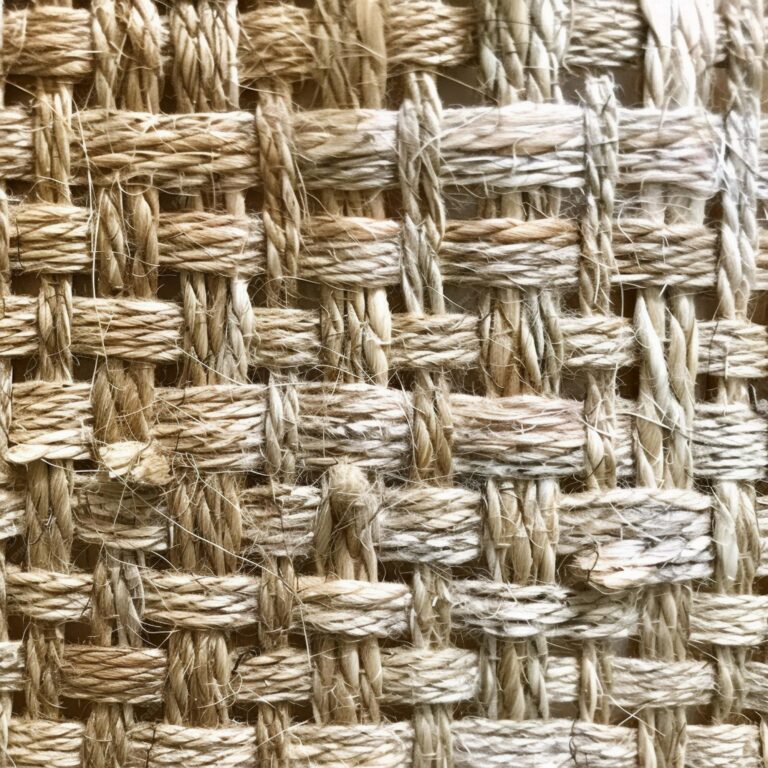
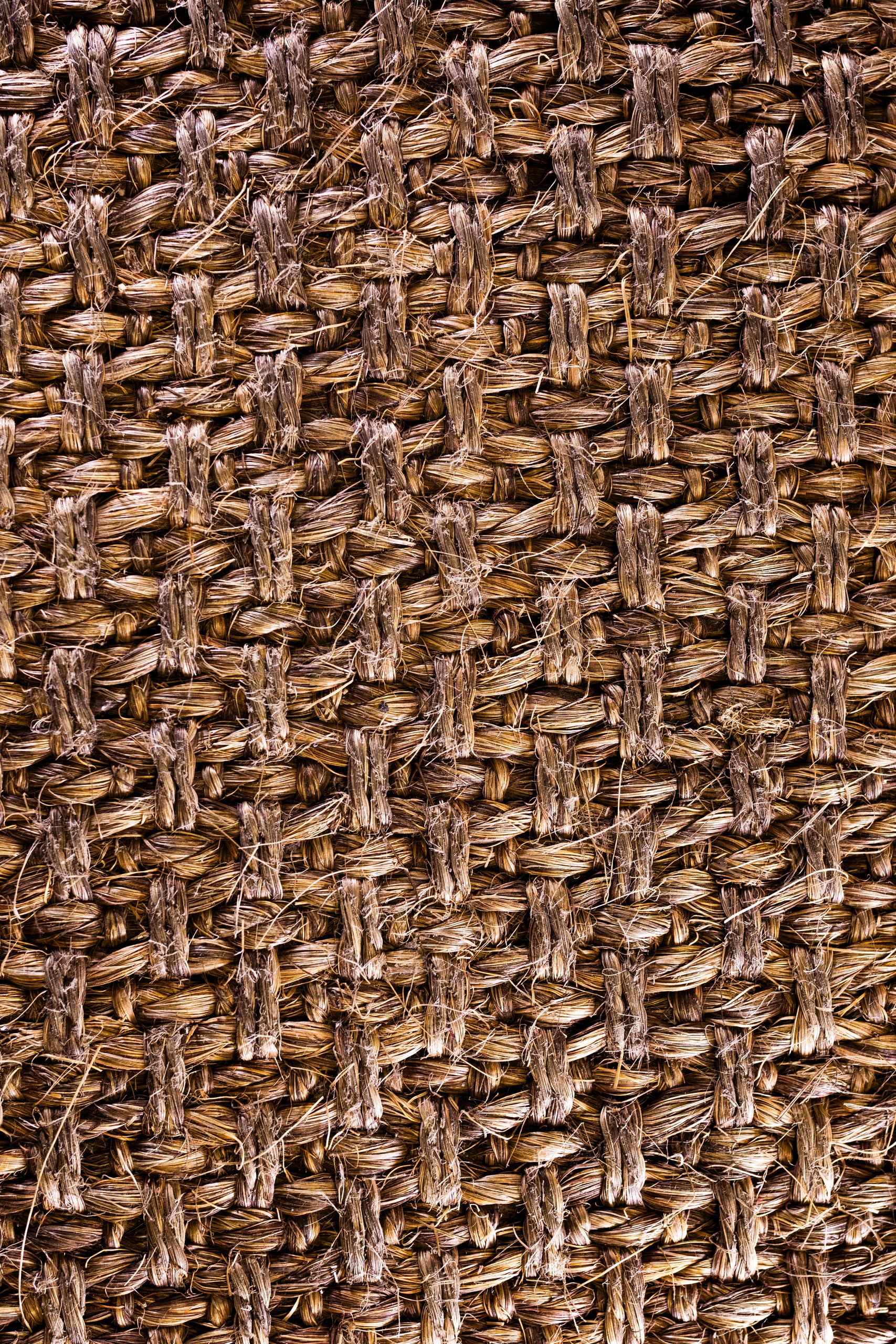
Its texture is frank, slightly rough under the hand and bare foot. Its finish is matt, natural, deliberately unpolished. Weaves vary widely: bouclé, herringbone, panama, basketweave, from the finest to the boldest. That honesty of material is why it is loved in quiet luxury interiors and in biophilic architecture.
Uses in interiors
Floors, rugs and stairs
This is its natural territory: bound rugs made to measure, wall-to-wall carpeting, stairs and landings, areas of moderate to heavy traffic. Our guide to high-end rugs and carpets presents the houses that work with it.
Wallcoverings
Used as an accent, sisal dresses a wall with texture and warmth, in a study, a corridor or a library. For coverings that borrow its look, see our guide to textile and textured wallcoverings.
Inside the seat
Sisal also works where you cannot see it: in traditional upholstery, needled sisal pads act as an insulator between the springs and the stuffing, stopping the springs from marking or wearing through. A workshop detail well known to the upholsterers in our upholstery workshops directory.
And for cats
Its toughness has made it the universal fibre of scratching posts, found on the finest pieces in our selection of design and luxury for dogs and cats.
Uses to avoid
Seating and anything in direct contact with the skin, damp rooms such as bathrooms and kitchens, and any space where soft, cushioned comfort is expected.
The weak point: water
Sisal absorbs liquids. A spill of water, wine or coffee soaks quickly into the fibre and can leave a lasting ring; moisture can also make it swell, distort or shrink. It is therefore not suited to damp rooms or to wet cleaning.
Care
Sisal is cared for with dry methods:
– Vacuum regularly, without an aggressive rotating brush
– Blot any spill immediately, without rubbing
– Have stains treated by a professional, with dry or powder cleaning
– Never use a carpet shampooer or steam cleaner
Environmental impact: the facts
Sisal is renewable and biodegradable. Grown without irrigation and with few inputs, it makes use of arid land where little else grows, and its processing remains mostly mechanical. Two points need attention: transport, since the fibre comes from South America or East Africa, and the backing, often latex, which determines how recyclable the covering is. Its main asset remains longevity: a well-fitted sisal floor lasts many years without replacement.
Sisal, jute, coir or seagrass?
These are the four great plant fibres for floors, and they are not equal. Jute is the softest and cheapest, but far less hard-wearing: keep it for quiet rooms. Coir is the roughest and toughest, ideal in an entrance but coarse in a living space. Seagrass, almost waterproof, resists stains better, but cannot be dyed and offers little variety. Sisal strikes the best balance of strength, refinement and range of weaves: it is the most versatile of the four. For more decorative plant fibres, see also our raffia guide.
Before you choose sisal
– A frank, matt, legible texture
– An undemanding raw material, grown without irrigation
What to check
– The weave, finer or bolder depending on the look and comfort you want
– The stain-resistant treatment and the type of backing
– Professional fitting, glued or stretched
When sisal is an excellent choice
– Stairs, hallways, studies, living rooms
– Bound rugs made to measure, textured walls
When to be careful
– Damp rooms or rooms exposed to spills: bathrooms, kitchens, dining rooms with children
– Bedrooms where softness underfoot is expected
– Projects where wet cleaning is essential
Conclusion
Sisal is neither decorative nor comfortable in the classic sense. It is structural, robust and honest. In a high-end interior, it comes into its own for floors and surfaces that must last, resist and age steadily, as long as it is kept away from water. To place it among other fibres, see our guide to exceptional upholstery fabrics.
HART guide
Textile materials, fibre by fibre
Each fibre has its own origin, processing, way of ageing and limits in use. These guides form a reference base for understanding natural, man-made and synthetic textiles before choosing a fabric.
Alpaca/Cotton/Hemp/Linen/Mohair/Polypropylene/Raffia/Silk/Sisal/Viscose/Wool
Go further
- Textile materials: the overview → Natural, man-made and synthetic fibres compared
- Exceptional upholstery fabrics → An editorial and cultural reading of high-end textiles
- Linen, wool, silk → Why natural fibres dominate luxury textiles
- Upholstery fabric brands from A to Z → Textile houses, editors and their know-how
- The Martindale rub test → Reading real performance against use
- Luxury trimmings → Braids, fringes and textile finishes
- Upholstery workshops directory → The ateliers that work noble textiles
- Textile wallcoverings → Natural or synthetic, the matter on the wall
Digital entrepreneur and craft artisan.
My work bridges craftsmanship, design history and contemporary creation, shaping a personal vision of luxury interior design.
Since 2012, I have been based in my workshop on the shores of Lake Annecy, creating bespoke interiors for architects, decorators and private clients.