


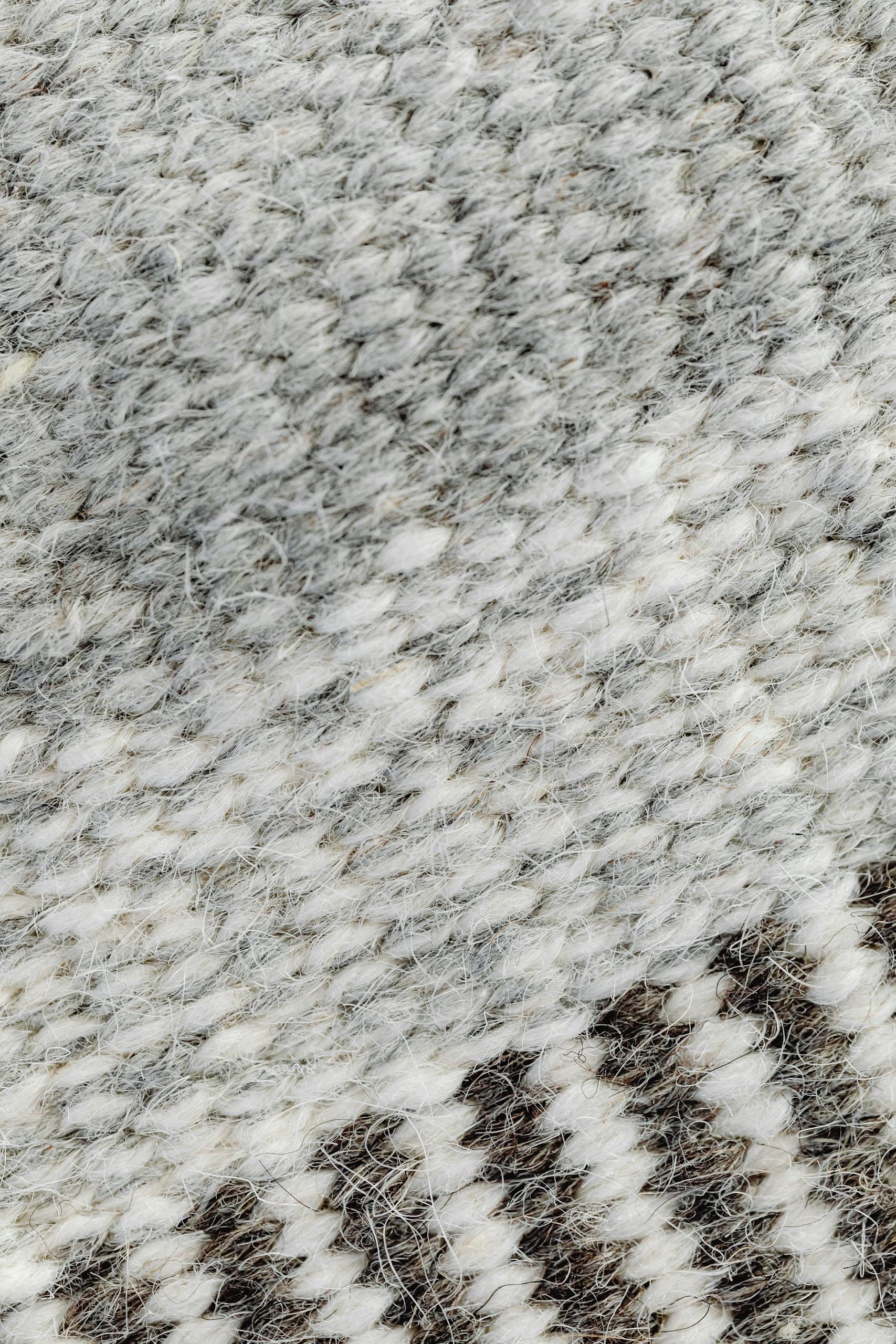
HART Guide to Textile Materials: Wool
We think of it as warm, traditional, a little staid. Wool is in fact one of the most sophisticated fibres there is: it bends and springs back, absorbs moisture without feeling damp, resists flame and soaks up sound. In high-end furnishing fabrics, it is the fibre for seats that are meant to last.
This guide offers a clear, neutral reading of wool: what it is, what makes it so resilient, where it belongs in an interior, its limits, and what to check before choosing it for a demanding project.
Contents
What is wool
Origin and processing
Textile classification and label codes
What makes wool perform
Look and feel
Uses in interiors
How wool ages
Care and practical constraints
Environmental impact: the facts
Before you choose
What is wool
Wool is a natural animal fibre from the fleece of sheep. By extension the word also covers other animal fleeces, which have their own guides: mohair from the Angora goat, alpaca, cashmere. Unlike plant fibres, wool is made of keratin, a protein that gives it elasticity, resilience and insulating qualities, both thermal and acoustic.
In furnishing it takes many forms: wool broadcloth, felt, twill, bouclé, velvet, jacquard. It is used pure or blended with cotton, linen, silk or a synthetic fibre to adjust the hand, durability or ease of care.
Origin and processing
After shearing, raw wool is scoured to remove grease, dirt and plant matter. It is then carded, sometimes combed, and spun before being woven or felted. This gives two main families of yarn: woollen, with shorter, tangled fibres that make lofty, warm fabrics; and worsted, with long, parallel fibres that make smoother, crisper and stronger cloth.
Fibre fineness, measured in microns, length and natural crimp all play a decisive role. But the finest fibre is not the best for every purpose: very fine merino makes wonderfully soft cloth, while upholstery wools often come from breeds with a coarser, springier fibre that stands up better to wear. For a seat, you look for strength before fineness.
Textile classification and label codes
How wool appears on a label
France: Laine
Europe (ISO code): WO
United States and United Kingdom: Wool
WO is the code for wool in European compositions. Blends such as 80% WO / 20% PA are common in upholstery: the small share of polyamide boosts abrasion resistance and dimensional stability without taking away wool’s essential qualities.
What makes wool perform
Wool owes its resilience to its very structure. Its crimped fibre works like a spring: it compresses under weight and recovers its shape. That is why a wool fabric withstands crushing and repeated rubbing so well.
– Elasticity and resilience: the fibre can be bent thousands of times without breaking
– Moisture regulation: it absorbs a significant share of its weight in water vapour without feeling wet
– Natural flame resistance: it is hard to ignite, does not melt or drip, and tends to self-extinguish
– Acoustic comfort: it absorbs sound and calms the echo of a room
– Soil resistance: the scaly surface of the fibre holds on to dust poorly
Well-built wool fabrics routinely reach high abrasion ratings, suitable for heavy use. To read those figures against use, see our complete guide to the Martindale rub test.
Look and feel
Wool has an immediate presence: a warm, enveloping hand, a matt or subtly textured surface, and a wide range of expressions, from dense felt to airy bouclé, from smooth broadcloth to deep velvet. In high-end interiors it structures space, brings visual and acoustic comfort, and balances hard materials such as stone, wood or metal. It is one of the key materials of quiet luxury interiors.
Uses in interiors
Seating and sofas
This is where wool excels: sofas, armchairs, chairs. Its resistance to crushing and rubbing makes it the benchmark natural fibre for heavy everyday use. Our guide to high-end sofas covers what makes a good sofa beyond its cover, and our investigation into upholstery foams what lies underneath.
Rugs
Wool remains the queen of high-end rugs: it withstands foot traffic, springs back after crushing and ages gracefully. Our guide to high-end rugs and carpets presents the houses and the techniques.
Fabric walls and wallcoverings
On an upholstered wall, wool brings genuine acoustic correction and great visual warmth. This is upholsterers’ work, mastered by the ateliers in our upholstery workshops directory. For coverings with a wool effect, see our guide to textile and textured wallcoverings.
Curtains and drapery
As heavy curtains, wool gives a structured drape, excellent sound absorption and a strong architectural presence. A lined wool broadcloth also makes a very effective thermal curtain.
How wool ages
Wool ages particularly well: it develops a patina without degrading and keeps its volume and structure. On a quality wool, permanent distortion stays very low and pilling is limited. Colours hold well, provided the fabric is kept out of direct, prolonged sunlight.
Care and practical constraints
Contrary to popular belief, wool is easy to look after if a few rules are respected:
– Vacuum regularly, and more often where people sit and lean
– Leave deep cleaning to a professional
– Avoid hot water, rubbing and harsh products: heat, moisture and agitation felt the fibre irreversibly
– Watch out for moths, whose larvae feed on keratin, especially in little-used rooms and stored fabrics
Environmental impact: the facts
Wool is a renewable, biodegradable resource, but its real impact depends on farming conditions, animal welfare and the scouring, dyeing and finishing processes. Its main asset remains its exceptional lifespan: a well-chosen wool fabric can cover a chair for decades, and gets re-upholstered rather than thrown away.
Before you choose a wool fabric
– Genuine thermal and acoustic comfort
– Natural resistance to flame and soiling
What to check
– Woollen or worsted, depending on the look and durability you need
– Density, weave and Martindale rating for any seating use
– The fire rating and certificate for any public venue
When wool is an excellent choice
– Sofas, armchairs and chairs in heavy use
– Rugs, fabric walls, heavy curtains
When to be careful
– Very fine wool without reinforcement on a seat
– Washing in water or by machine, which causes felting
– Stored fabrics and little-used rooms, exposed to moths
Conclusion
Wool is one of the most accomplished materials in furnishing textiles. High-performing, comfortable and durable, it embodies a quiet form of luxury, built on technical rightness rather than appearance. Well chosen, it lasts for decades and contributes fully to the architectural quality of an interior. To find it, start with the houses in our guide to high-end upholstery fabric brands, and to compare it with linen and silk, read why natural fibres dominate luxury textiles.
HART guide
Textile materials, fibre by fibre
Each fibre has its own origin, processing, way of ageing and limits in use. These guides form a reference base for understanding natural, man-made and synthetic textiles before choosing a fabric.
Alpaca/Cotton/Hemp/Linen/Mohair/Polypropylene/Raffia/Silk/Wool
Go further
- Textile materials: the overview → Natural, man-made and synthetic fibres compared
- Exceptional upholstery fabrics → An editorial and cultural reading of high-end textiles
- Linen, wool, silk → Why natural fibres dominate luxury textiles
- Upholstery fabric brands from A to Z → Textile houses, editors and their know-how
- The Martindale rub test → Reading real performance against use
- Luxury trimmings → Braids, fringes and textile finishes
- Upholstery workshops directory → The ateliers that work noble textiles
- Textile wallcoverings → Natural or synthetic, the matter on the wall