


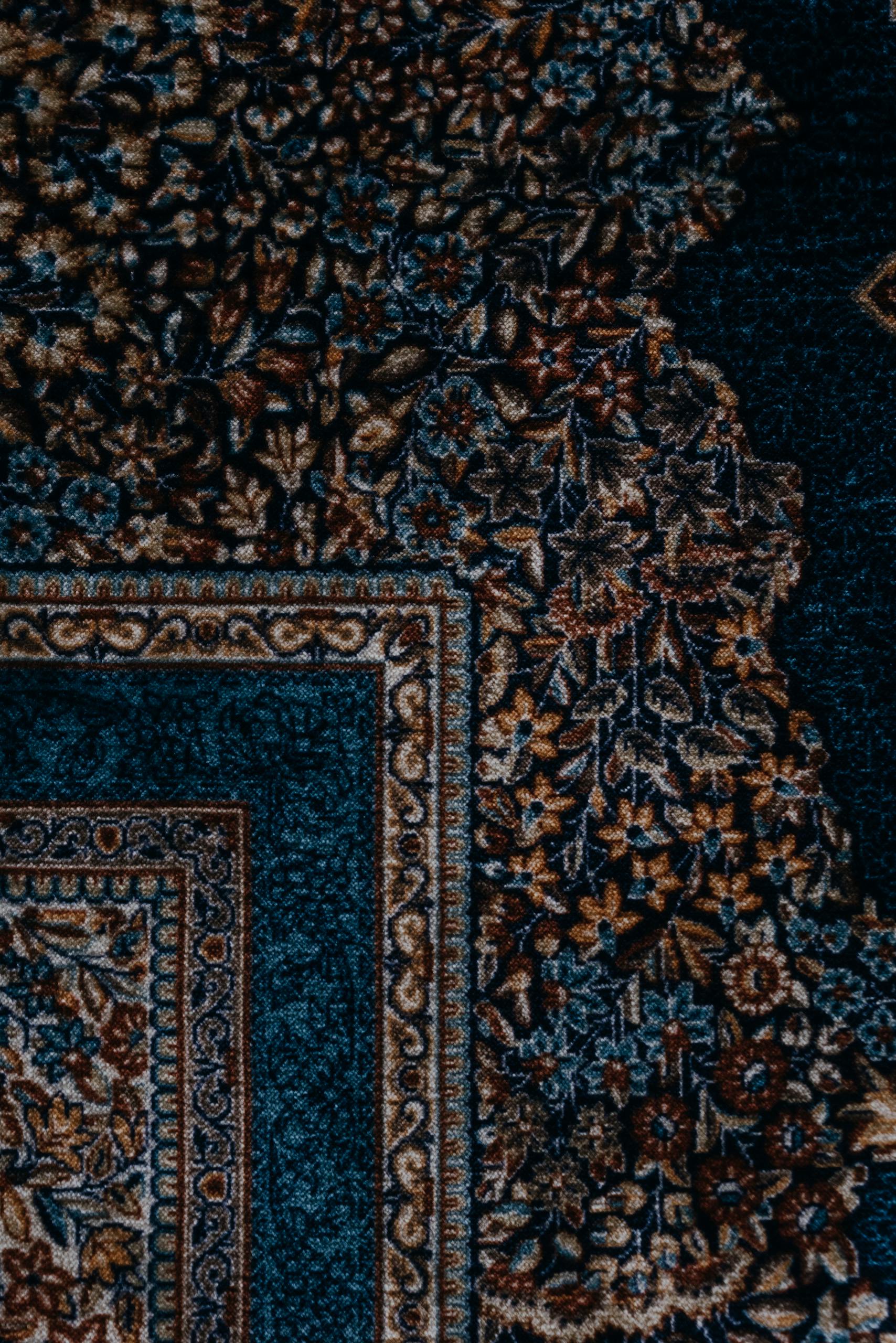
Hart Design Selection: The Ultimate Guide to High-End Rugs & Carpets
A rug is the first thing a room stands on. It anchors the furniture, softens the sound, warms the floor and sets the palette before anything else is chosen. From Persian silk carpets knotted over years to wall-to-wall wool woven in Kidderminster, from Berber flatweaves to contemporary pieces drawn by designers, the world of rugs and carpets is as vast as that of fabrics, and just as unforgiving when the wrong choice is made.
This guide explains how rugs and carpets are made, which fibres to choose, how to size and place them, how to care for them, and which houses set the standard.
How rugs are made
Pile and texture
Fibres
The great traditions
Houses and designers
Sizing and placement
Ratings, underlay and installation
Care
Bespoke and sustainability
Frequently asked questions
Rug or carpet
A rug is a loose piece laid on the floor: it can be moved, turned, cleaned and taken with you. A carpet, in the strict sense, is a wall-to-wall covering, fitted and fixed to the floor; British English also uses the word for large rugs, which explains much of the confusion. The two answer different needs: the rug composes a zone and can be an heirloom; fitted carpet dresses an entire room, insulates it and is chosen for its performance as much as its look.
How rugs are made
The technique decides the price, the lifespan and the look far more than the design. Four families cover almost everything on the market.
In hand-knotting, the knot itself matters. The symmetrical or Turkish knot (Ghiordes) wraps two warp threads and gives a sturdy pile; the asymmetrical or Persian knot (Senneh) allows finer curves; the Tibetan knot is looped around a rod which is then cut, producing a thick, slightly irregular pile. Knot density is a sign of fineness, not of quality on its own: a dense rug in poor wool will age worse than a coarser one knotted in good highland wool.
Hand-tufted rugs are not inferior by nature, but they are a different object: the latex backing dries out over the years and the tufts can loosen. A well-made hand-tufted rug serves a contemporary interior for a long time; it will not become an heirloom.
Pile and texture
- Cut pile: the loops are cut, giving velvet, plush or saxony surfaces. Soft and rich, it shows footprints and shading.
- Loop pile: the loops are left uncut. Often called Berber in the carpet trade, hard-wearing and easy to live with; avoid it with cats, whose claws catch.
- Cut and loop: both together, to draw a pattern in relief.
- Frisé or twist: tightly twisted yarns that hide marks; a good choice for busy rooms.
- Sculpted or carved: varying heights or carved lines, the signature of many contemporary pieces.
For durability, look at density and pile weight rather than height: a short, dense pile resists far better than a long, open one.
Fibres
Wool remains the reference: resilient, it springs back after crushing, soils slowly, is naturally hard to ignite and takes dye beautifully. Highland wools, from Tibet or New Zealand, are prized for their long, lanolin-rich fibres. See our wool guide.
Silk gives lustre and the finest details, often as highlights in a wool ground; pure silk is for rooms with little traffic. Beware of “bamboo silk”, “art silk” or “vegetable silk”: these are viscose, beautiful when new but fragile, sensitive to water and quick to crush. Read our silk guide before buying.
Plant fibres, sisal, jute, seagrass, coir, hemp or linen, bring texture and a natural look. They are firm underfoot and mark with water: no wet cleaning, and avoid kitchens and bathrooms.
Synthetic fibres have their place: polyamide (nylon) is the most resilient and dominates hospitality carpet, including regenerated versions made from recovered waste; polypropylene, inexpensive and water-resistant, is used outdoors. All the fibres are compared in our textile materials guide.
The great traditions
Persian rugs, from Tabriz, Isfahan, Kashan, Nain or Qom, are known for their medallions, floral fields and the Herati motif, with silk pieces of extraordinary finesse. Anatolian and Caucasian rugs favour bold geometry and saturated colours. Turkmen rugs repeat the gul, a tribal emblem, on deep reds. Tibetan knotting gives thick, supple rugs and has become the base of many contemporary designer pieces. In Morocco, the Beni Ourain rugs of the Middle Atlas, ivory wool with dark lines, have become modern classics, alongside colourful boucherouite and azilal pieces.
Europe has its own history: the knotted carpets of the Savonnerie manufactory for the French court, the woven carpets of Aubusson, William Morris’s Hammersmith rugs in the Arts and Crafts movement, the weaving workshop of the Bauhaus with Gunta Stölzl and Anni Albers, the geometric rugs of Art Deco, and the Scandinavian rya, revived by Nordic design. And one fitted carpet entered legend: the leopard of Madeleine Castaing, ancestor of today’s leopard craze.
Houses and designers
Tai Ping, founded in Hong Kong in 1956, is the reference for bespoke hand-tufted and hand-knotted pieces for residences, yachts and hotels. In London, The Rug Company works with designers and fashion houses, and Christopher Farr has championed the rug as contemporary art since the late 1980s. Jan Kath in Germany reinterprets the oriental rug with erased and distressed effects. In Barcelona, Nanimarquina has edited designer rugs since 1987, notably with Ronan and Erwan Bouroullec. Golran and cc-tapis carry the Italian approach, between heritage and design.
For fitted carpet, Brintons, weaving in Kidderminster since 1783, and the Wilton and Axminster weavers in Britain, Manufacture Cogolin in the south of France with its hand-operated looms, and Toulemonde Bochart or Codimat in France supply the finest homes and hotels.
Sizing and placement
- Living room: the rug should at least take the front legs of every seat, so the furniture reads as one group. Too small a rug is the most common mistake.
- Dining room: allow 60 to 75 cm (24 to 30 in) beyond the table on each side, so chairs stay on the rug when pulled out.
- Bedroom: a rug under the lower two thirds of the bed, extending 50 to 60 cm on the sides, or a pair of runners.
- Walls: leave a band of floor visible, generally 30 to 45 cm, so the rug frames the room instead of imitating fitted carpet.
- Layering: a flatweave or natural fibre in a large size, a smaller pile or vintage rug on top: an effective way to bring scale and character.
Ratings, underlay and installation
For fitted carpet, the European standard EN 1307 classifies textile floor coverings by use: classes 21 to 23 for the home, from light to heavy, and 31 to 33 for commercial spaces. Public spaces also require a fire classification under EN 13501-1, Cfl-s1 being the usual level. In France, the UPEC classification is also used. Ask for these figures in writing, especially for stairs and hallways.
Underlay is not an extra: under a rug, a pad stops slipping, protects the back and the floor and adds comfort; under fitted wool carpet, a quality underlay doubles the feeling of luxury and extends its life. High-end residential carpet is usually stretched over underlay on gripper rods; hospitality carpet is often glued down. Stairs call for a runner, held by stair rods or fixed, with a dense, low pile that does not round off on the nosings.
Care
Vacuum regularly, without a beater bar on hand-knotted, silk, viscose and long-pile rugs; a new wool rug sheds for a few weeks, which is normal. Turn rugs once or twice a year to even out wear and light. Blot spills immediately with a white cloth, without rubbing. Never machine-wash a rug, and never wet-clean viscose or plant fibres at home. Valuable rugs go to a specialist cleaner every few years. Wool fears moths in dark, undisturbed areas: vacuum under the furniture too.
The same logic applies to all textiles in the home; our upholstery fabric care guide gives the gestures fibre by fibre.
Bespoke and sustainability
Most high-end houses work to measure: size to the centimetre, colours chosen from yarn poms, a strike-off sample before production. Count several weeks for hand-tufting and several months for a large hand-knotted piece. Bespoke is often the only way to get the right size, and a rug that fits its room changes everything.
On sustainability, a wool rug that lasts decades will always beat a cheap one replaced every few years. Look for the GoodWeave label, which certifies production without child labour, and for the GUT label on fitted carpet, which tests for harmful emissions. Regenerated nylon yarns are making contract carpet less dependent on virgin oil.
Frequently asked questions
Is a hand-tufted rug worth the price?
Yes, if you want a specific design or size and accept a lifespan of years rather than generations. For a piece meant to last, choose hand-knotted wool.
Which rug for a home with children or pets?
A dense wool rug, short cut pile or flatweave, in a mid tone or with a pattern that forgives. Avoid loop pile with cats, and silk or viscose anywhere near food.
Why does my viscose rug look crushed and stained?
Viscose loses strength when wet and crushes under traffic; water alone can leave marks. It needs professional cleaning and suits low-traffic rooms only.
Can a rug go on top of fitted carpet?
Yes, it is a classic way to define a zone. Choose a flat or low rug, and a specific underlay that grips carpet so it does not creep.
Latest articles on rugs and floors
No posts
Continue
- 01HubMaterials and finishesEvery HART guide to the materials of exceptional interiors.
- 02TextilesThe upholstery fabrics guideHouses, fibres, resistance, care and trimmings.
- 03WallsThe high-end wallpaper guideBrands, panoramics, backings and installation.
- 04GlossaryThe HART glossaryKilim, Savonnerie, Aubusson: the words of the trade.
Resources
Five ways into the world of HART
- 01 Spaces Spaces & materials Interiors, atmospheres and materials that give a place its identity.
- 02 Creators Designers & creators Architects, designers and artists whose vision changed the way we live.
- 03 Craftsmanship Artisans & fine crafts Upholsterers, cabinetmakers, metalworkers, ceramicists: the workshops and the hands behind true excellence.
- 04 Furniture Furniture & interiors Iconic sofas, seating and lighting, read through form, use and comfort.
- 05 Heritage Design history From Gothic to global design, the styles that shaped the art of living.