


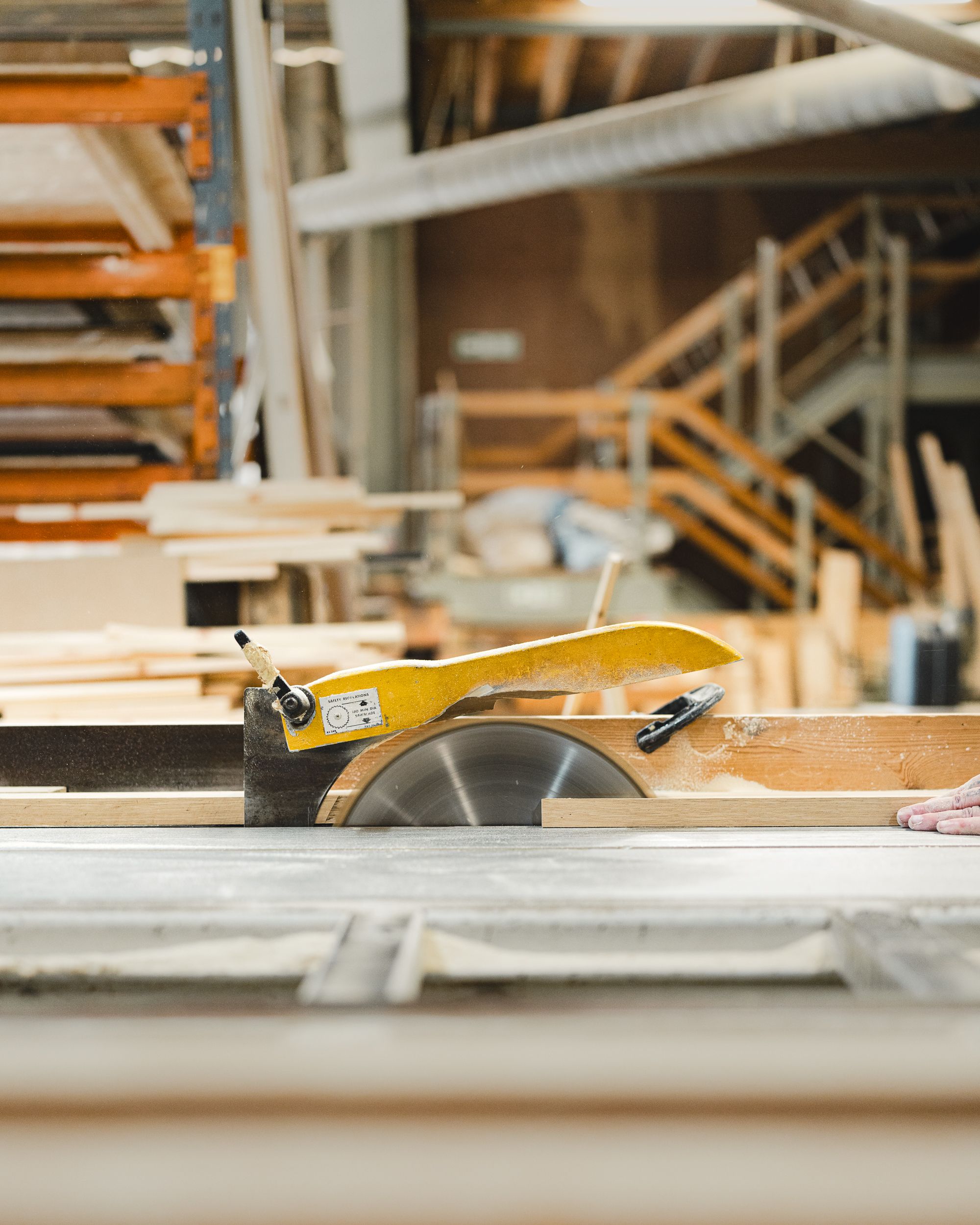
Fine joinery and bespoke fitted interiors:
A library that fills a wall without a millimetre of gap, panelling that has outlived the centuries, a kitchen where every door closes exactly: behind such interiors there is a joiner. Fine joinery and bespoke fitted interiors are the crafts that turn noble wood into interior architecture, made to measure and made to last.
Contents
Joinery, cabinetmaking, fitted interiors: the difference
How do you become a master joiner?
Leading houses, country by country
Choosing your woods
Choosing a workshop
Where to see the work
The craft today
Frequently asked questions
Joinery, cabinetmaking, fitted interiors: the difference
All three crafts work in wood, but not at the same scale. The joiner, or architectural woodworker (in American English, the millwork specialist), makes what belongs to the building: doors, windows, staircases, floors, wall panelling. The cabinetmaker makes furniture, often veneered, inlaid or carved; that art has its own guide, our directory of exceptional cabinetmakers (in French). The fitted-interior specialist designs and installs a whole bespoke interior: kitchen, dressing room, library, study, bathroom, and the built-in furniture that ties them together.
In a high-end project these crafts meet. A walnut library built into a wall, painted panelling in a Parisian drawing room, a solid oak kitchen: this is the work of a workshop able to design, make and install, to the millimetre. Raw timber becomes architecture, from Paris townhouses to New York apartments.
How do you become a master joiner?
In France, the path usually starts with a vocational CAP in joinery, followed by a professional diploma in joinery and fitting. Those aiming for excellence go on to a craft diploma or to the Compagnons du Devoir, the French guild whose Tour de France sends apprentices from workshop to workshop and city to city for several years. At the top, the title of Meilleur Ouvrier de France recognises the very best.
The reference schools include the École Boulle in Paris, founded in 1886, the Compagnons du Devoir, the North Bennet Street School in Boston, and in Germany the Tischlermeister, the master joiner’s qualification.
Leading houses, country by country
This selection brings together houses recognised for the quality of their wood, their making and their installation. It will grow as we meet more workshops.
France
Féau Boiseries (Paris): since 1875, the reference for antique panelling and its faithful reproduction, with one of the largest collections of seventeenth and eighteenth-century boiseries. Moissonnier (Bourg-en-Bresse): fine cabinetmaking and joinery since 1885, known for period furniture in bold colours. Taillardat (Paris): period seating, furniture and fittings for great houses and luxury hotels. On the contemporary side, HART has profiled Adrien des Rues, for whom wood becomes a language, and the Exo collection by Grégoire de Lafforest.
United Kingdom
Smallbone of Devizes, master of the hand-painted English kitchen; Linley, founded by David Linley, for inlaid furniture and fittings; Mark Wilkinson, Plain English and deVOL, three visions of the English wooden kitchen, from the most ornate to the most restrained.
Belgium
Obumex, the Belgian signature of the complete fitted interior, from the kitchen to the whole house, in a quiet luxury spirit.
Italy
Boffi for architects’ kitchens and bathrooms; Poliform and Rimadesio for dressing rooms, libraries and storage systems; Riva 1920, in Cantù, for solid wood in the Brianza tradition.
Germany
bulthaup and Poggenpohl, two great names of the German kitchen, where industrial precision serves highly architectural interiors.
United States
Christopher Peacock, in Connecticut, for bespoke kitchens and cabinetry with an English accent.
For kitchens, our guide to the greatest European luxury kitchen brands goes further.
Choosing your woods
Oak remains the king of French joinery: stable, durable, with a strong grain, as right in classic panelling as in contemporary fittings. Walnut, warm and brown, gives the most elegant libraries and studies. Ash and maple, pale and lively, suit light-filled interiors. Dark tropical woods such as wenge or ebony are striking, but several are endangered: insist on traced, certified origin, or choose a veneer. Our guide to wood in design covers species, origins and behaviour in depth.
Choosing a workshop
Start by defining the project precisely: the type of work, dimensions, style, woods, finishes and budget. The price of bespoke joinery depends less on its size than on its wood, its joints, its finishes and the complexity of installation: always ask for a detailed, itemised quote.
To find the other crafts behind an exceptional project, from cabinetmakers to upholsterers, see our guide to luxury craftspeople and fine crafts.
Where to see the work
The Salone del Mobile in Milan in April, with its EuroCucina biennial for kitchens; Maison&Objet in Paris in January and September; the Artisans d’Excellence fair for the decorative arts; and every spring the European Artistic Crafts Days, when workshops open their doors. For the history of the craft, the Musée du Compagnonnage in Tours and the Maison de l’Outil et de la Pensée Ouvrière in Troyes are essential visits.
The craft today
Responsible wood. The finest workshops favour PEFC or FSC certified timber, European species, the reuse of offcuts and natural finishes: oils, waxes, water-based lacquers.
The machine serving the hand. CNC machining and 3D modelling allow shapes and tolerances that were impossible before, but choosing the wood, fitting and installing remain the craftsman’s gestures.
Passing it on. Woodworking trades are short of hands. The Compagnons du Devoir, the École Boulle and the workshops that train their apprentices carry a knowledge that goes back to Roubo’s great treatise, L’Art du menuisier, published in the eighteenth century and still read in workshops today.
Frequently asked questions
What is the difference between a joiner and a cabinetmaker?
A joiner makes what is tied to the building: doors, staircases, panelling, fitted interiors. A cabinetmaker makes furniture, often veneered, inlaid or carved. In high-end workshops the two skills often come together.
What does a fitted-interior specialist do?
They design, make and install a whole bespoke interior: kitchen, dressing room, library, bathroom and built-in furniture, coordinating materials and the other trades involved.
Which wood is best for a bespoke library?
Oak for its stability and character, walnut for its warm elegance. Avoid long shelves without support: a shelf loaded with books will sag, whatever the wood.
Resources
Five ways into the world of HART
- 01 Spaces Spaces & materials Interiors, atmospheres and materials that give a place its identity.
- 02 Creators Designers & creators Architects, designers and artists whose vision changed the way we live.
- 03 Craftsmanship Artisans & fine crafts Upholsterers, cabinetmakers, metalworkers, ceramicists: the workshops and the hands behind true excellence.
- 04 Furniture Furniture & interiors Iconic sofas, seating and lighting, read through form, use and comfort.
- 05 Heritage Design history From Gothic to global design, the styles that shaped the art of living.