

The Arts and Crafts Movement: A Return to Authentic Craft (1880–1920)
The Arts & Crafts movement: when craft defies industry
The Arts & Crafts movement transformed Western art by setting handmade authenticity against industrial production and human beauty against mechanical standardisation. This aesthetic and social revolution embodied the resistance to nineteenth-century industrialisation: from the dehumanising machine to the authentic gesture, from mass production to individual creative work. The Arts & Crafts movement invented an art of living that reconciled medieval tradition, modern innovation and social responsibility, a turning point in the history of design and decorative styles.
This quiet yet profound revolution reshaped our understanding of ethical design and contemporary craftsmanship. Arts & Crafts values still outline the future of responsible design, favouring quality over quantity and authenticity over artifice.
Arts & Crafts: the creative explosion of resistance
This remarkable period, marked by forty years of creative resistance and craft revival, permanently transformed British, American and European art by offering an alternative to triumphant industrialisation, in sharp contrast with the opulence of the Victorian style.
Key dates:
• 1880-1920: Height of the Arts & Crafts movement (40 years)
• 1888: Founding of the Arts and Crafts Exhibition Society, the movement’s manifesto
• 1901: Gustav Stickley in the United States, the American expansion of the movement
The revolution of authenticity
This era overturned every convention of industrial decorative art. The artist-craftsman regained his creative dignity, while the enlightened bourgeoisie became the advocate of a more authentic and responsible art of living.
 Arts & Crafts workshop, authentic handcraft, 1900
William Morris, Charles Robert Ashbee and Gustav Stickley embody this creative revolution that permanently transformed Western art.
The emergence of an artistic social conscience revolutionised the way things were made. Dignity of labour, accessible beauty and creative responsibility inspired an art that celebrated the humanity of the gesture and social harmony.
This philosophical shift gave rise to an entirely new aesthetic that still shapes our contemporary vision of ethical design and responsible craftsmanship.
A revolution of form and ethics
From now on, it was the craftsman-philosophers who invented the modern aesthetic, replacing mechanised production with visionaries of creative authenticity.
This era forged a revolutionary alliance between beauty and ethics, tradition and social innovation, art and responsibility, bringing an authentic art of living to a wider public.
The Arts & Crafts aesthetic erased the boundary between art and morality: honest forms, authentic materials and traditional techniques bear witness to a responsible modernity.
Arts: the avant-garde of authenticity
The European market: a craft-led influence
Germany and Scandinavia, ethical collections:
Munich and Stockholm hold significant collections of Arts & Crafts art.
German market:
- Authentic Arts & Crafts furniture: €2,500 to €40,000
- Morris textiles: €600 to €5,000
- Studio ceramics: €800 to €8,000
Scandinavian market:
- Arts & Crafts influence: Nordic furniture inspired by the movement, €1,500 to €20,000
Reproductions and the contemporary market
Specialist workshops:
Stickley Audi & Co still produces certain historic models using traditional techniques.
Contemporary makers:
Morris & Co: faithful reproductions of wallpapers and textiles. Morris wallpapers: €120 to €300 per roll. To place them among today’s leading houses, see our selection of the best European wallpaper brands.
Craftsman Farms: keeps certain traditions of Stickley furniture alive. Craftsman-style furniture: €3,000 to €15,000.
The “style” market:
Mission Style reproductions (1920-1940) sell for €800 to €8,000 depending on the quality of execution.
Contemporary copies range from €400 to €4,000 but carry no heritage value.
Expertise and authentication
Authenticity criteria:
Period marks are crucial: Stickley, Morris & Co, Guild of Handicraft, Roycroft.
Craft techniques reveal authenticity: mortise and tenon joints, natural finishes, branded stamps.
Stickley furniture stands out for its exposed joinery and its characteristic fumed finishes.
Specialist expertise:
Craftsman Farms Foundation: authentication of Stickley pieces.
William Morris Society: expertise on Morris & Co creations.
Investment and capital gains
Price trends (2010-2024):
Authentic Arts & Crafts pieces have seen their value multiplied by 2.5 to 5 in fifteen years.
Stamped Stickley armchair: €8,000 in 2010, €20,000 in 2024.
Original Morris textile: €1,200 in 2010, €3,500 in 2024.
Investment criteria:
Documented authenticity: stamped pieces by the masters consistently outperform.
Craft rarity: exceptional creations and rare techniques multiply value.
Ethical provenance: Arts & Crafts documentation preserves the philosophical value of a piece.
Outlook 2025-2030:
Experts expect sustained growth, driven by today’s ecological awareness.
Demand from collectors of responsible design could revive every segment of the market.
Rare, documented pieces offer excellent potential for appreciation.
Arts & Crafts today: a visionary legacy
A major influence on contemporary design
Through its ethical values and pioneering spirit, the Arts & Crafts movement exerts a major and growing influence on contemporary creation.
Many forward-thinking creators (sustainable designers, contemporary craftspeople, ethical brands) draw heavily on this legacy for responsible projects, favouring authenticity and durability, the same principles that drive today’s eco-design.
This influence is becoming central to current concerns around ethical design and responsible consumption.
Designing with Arts & Crafts today
Integrating the Arts & Crafts legacy: authenticity and responsibility
Bringing Arts & Crafts into a contemporary interior is becoming a benchmark approach to avoid “fast decoration”.
An ethical approach: an authentic Stickley piece in a contemporary interior adds a note of responsible authenticity with absolute ecological relevance.
Lasting codes: natural materials and craft techniques create a timeless decorative effect, more responsible than fashionable.
Values to adopt: quality over quantity, handmade over industrial, authentic over artificial, principles more relevant than ever.
Which decorative movement came after Arts & Crafts?
After the Arts & Crafts movement (1880-1920), design evolved towards:
Movements that directly followed Arts & Crafts:
1. Art Nouveau (1890-1910) 🇪🇺
Region: Europe (parallel movement and influence)
Characteristics: natural curved lines, rejection of industry, decorative craftsmanship
Key figures: Victor Horta, Hector Guimard, Antoni Gaudí
2. Prairie School (1900-1920) 🇺🇸
Region: United States (Midwest)
Characteristics: organic architecture, integration into the landscape, local materials
Key figures: Frank Lloyd Wright, Louis Sullivan, George Grant Elmslie
3. Wiener Werkstätte (1903-1932) 🇦🇹
Region: Austria (Vienna)
Characteristics: luxury craftsmanship, modern geometry, Gesamtkunstwerk (total work of art)
Key figures: Josef Hoffmann, Koloman Moser, Dagobert Peche
4. Early Bauhaus (1919-1925) 🇩🇪
Region: Germany (Weimar)
Characteristics: synthesis of art, craft and industry, a revolutionary approach to teaching
Key figures: Walter Gropius, Johannes Itten, Paul Klee
Great Britain and the United States, laboratories of craft
Arts & Crafts decorative art of the 1880s to 1920s brought together medieval tradition and social innovation in a style of remarkable ethical coherence.
William Morris (master of social craftsmanship), Charles Robert Ashbee (virtuoso of community silversmithing) and Gustav Stickley (innovator of democratic furniture) defined this new aesthetic.
John Ruskin revolutionised artistic philosophy, Walter Crane transformed decorative art through his research, while C.R. Mackintosh explored the potential of craft-led architecture.
The revival of authentic crafts
The Arts & Crafts movement dramatically revitalised every craft, freeing it from industrial constraints and steering it towards excellence in making. Many of these trades are still alive today, as our guide to luxury craftspeople and art trades shows.
William Morris (virtuoso of handcrafted textiles), Charles Robert Ashbee (master of social silversmithing) and Ernest Gimson (innovator of traditional cabinetmaking) reinvented their art.
Textile workshops found their soul again with Morris & Co and Liberty, who created an ornamental language of natural beauty.
Silversmithing reached new heights with the Guild of Handicraft and the Artificers’ Guild, while ceramics was transformed by William De Morgan and Bernard Leach.
Fine bookbinding was reborn with T.J. Cobden-Sanderson, who developed a decorative language of craft perfection.
 William Morris textile, natural handcrafted patterns, circa 1890
Arts & Crafts architecture: a manifesto of authenticity
The craftsman’s house as innovation: a laboratory of authenticity
The founding moment: the Arts & Crafts house turned architecture into a manifesto for an authentic art of living.
This revolution imposed new architectural canons: local materials, traditional techniques and a radically new integration into the landscape.
 Arts & Crafts house, authentic local materials, 1895
Its lasting achievements (Morris’s Red House, Voysey’s houses, the Gamble House) permanently inscribed architectural authenticity in the English-speaking landscape.
This aesthetic revolution changed the international image of architecture and influenced organic movements worldwide.
The masters of authentic architecture
The architect Philip Webb, creator of Arts & Crafts architecture, developed a vernacular aesthetic that influenced all responsible modern architecture.

Charles Voysey (master of modern simplicity), Edwin Lutyens (virtuoso of architectural craftsmanship) and Greene & Greene (Californian innovators) embodied this English-speaking avant-garde.
Celebrated internationally, this architectural school laid the foundations of responsible architecture and inspired organic movements around the world.
It transformed our idea of the authentic home and established craft ethics as a lasting aesthetic reference for modernity.
Total decorative art
The Arts & Crafts movement invented the concept of an authentic art of living in which architecture, furniture, objects and textiles form a harmonious whole in the service of ethical beauty.
Designers William Morris, Charles Robert Ashbee and Gustav Stickley developed the art of authentic decorative synthesis.
The synthesis of the arts
The Arts & Crafts movement codified a universal decorative vocabulary that inspired the whole world: honest forms, authentic materials, traditional techniques.
Edward Burne-Jones (master of decorative painting) and Walter Crane (virtuoso of illustration) transformed the applied arts through their narrative innovations.
The influence of medieval art and folk tradition introduced an authentic historicism that renewed European and American inspiration.
The furnishing arts regained their nobility thanks to skilled craftsmen and revived guilds, makers of objects of responsible beauty.
Ceramics found its authentic expression in handmade pieces that brought a new sincerity to the art of the table.
 William De Morgan ceramics, handcrafted lustreware, circa 1890
The workshops of William Morris (art textiles), Charles Robert Ashbee (social silversmithing) and Ernest Gimson (traditional cabinetmaking) set new ethical standards.
Morris furnishings, Ashbee silverware and Gimson furniture created an art of living of authentic sophistication.
Considered simplicity, noble materials and honest functionality define this aesthetic of responsible modernity.
The interiors of the enlightened bourgeoisie, decorated in the Arts & Crafts spirit, perfectly embody this decorative revolution in which Western art meets everyday creative ethics.
 Arts & Crafts drawing room, enlightened bourgeoisie, ethical decoration, 1900
Arts & Crafts fabrics: the art of authentic textiles
Materials and textures: the revolution of authenticity
The Arts & Crafts movement revolutionised textile art by favouring authentic materials and sincere techniques. Arts & Crafts workshops developed handcraft methods that turned textiles into a more human and responsible decorative element, the same reasons natural fibres still dominate luxury textiles today.

Authentic British wools: Arts & Crafts woollens favour local fibres and natural dyes. Hand-woven fabrics feature nature-inspired patterns to create decorative effects of sincere beauty.
Handcrafted linens: linen develops natural textures that bear the mark of handwork, creating tactile effects of new authenticity.
Natural silks: an Arts & Crafts innovation, non-industrial silks offer a handcrafted richness in harmony with the movement’s ethics.
Block-printed cottons: hand printing spread widely, introducing a decorative variety that renewed responsible textile ornament.

Colour palette: the invention of natural colours
The Arts & Crafts colour revolution created an authentic palette, drawn from nature to serve craft ethics.
Signature colours:
- Morris green: a deep green inspired by the British countryside, the emblematic colour of the movement
- Indigo blue: a traditional natural blue that bears witness to ancestral techniques
- Madder red: the red of true dyers, a reference to traditional craftsmanship
- Natural ochre: local earth pigments, simplicity and authenticity
Sophisticated harmonies: Arts & Crafts colour combinations favour natural contrasts: green and red, blue and ochre, brown and cream create atmospheres of organic harmony.
Patterns and iconography: an authentic natural vocabulary
Arts & Crafts textile ornament developed an iconographic repertoire drawn directly from local nature and traditional folk art.
Natural motifs:
- Stylised flowers: roses, peonies and irises treated with simplicity and truth
- Foliage: oak, ivy and Virginia creeper in their botanical truth
- British birds: warblers, blackbirds and robins from the English countryside
- Simple geometric motifs: interlacing and trellis patterns inspired by folk art
Social iconography:
- Rural scenes: idealised depictions of the craftsman’s life
- Medieval motifs: references to the golden age of craftsmanship
- Symbols of labour: tools and emblems of the traditional trades

Furnishing applications: the specifics of craft
Seating and upholstery: Arts & Crafts furnishing fabrics favour authenticity, with natural compositions in honest colours. Seats were covered in specific fabrics that embodied the movement’s ethics, a tradition carried on today by the finest upholstery workshops:
- Morris chairs: authentic woollens with stylised floral patterns
- Handcrafted chairs: hand-woven fabrics with simple geometric patterns
- Upholstered cushions: traditional embroidery or natural weaves
Hangings and curtains: wall hangings favour authentic decorative effects. Handcrafted textiles create natural effects with their nature-inspired patterns.
- Linen curtains: natural fabrics with block prints
- Wool portières: authentic textiles, handcrafted braids
- Morris wallpapers: floral patterns printed with traditional wooden blocks (see our complete wallpaper guide)
Cushions and trimmings: the art of the passementier (trimmings maker) regained its prestige, as explored in our article on luxury trimmings:
- Arts & Crafts braids: traditional patterns woven by hand
- Handcrafted fringes: ornaments of authentic quality
- Natural cords: decorative elements in undyed fibres
Techniques and know-how: craft excellence
Traditional weaving: handlooms regained their prestige, allowing authentic decorative effects:
- Hand weaving: a traditional technique for unique effects
- Block printing: an Arts & Crafts innovation of handcrafted quality
- Natural dyeing: a return to plant and mineral dyes
Dyes and colours: master dyers rediscovered traditional techniques:
- Natural indigo: an ancestral dye for authentic blues
- Red madder: a traditional European dye
- Handcrafted mordanting: pre-industrial techniques brought back to life
 Merton Abbey tapestry, William Morris, craft tradition, circa 1890
Evolution and influences: towards modernism
From 1910 onwards, Arts & Crafts textiles evolved under the influence of the emerging modern movement:
- Simplified patterns: a refinement anticipating Art Deco
- Bolder geometry: the influence of the Wiener Werkstätte
- Brighter colours: paving the way for the modern aesthetic
This textile evolution accompanied the artistic transformation that led to modernism, testifying to the movement’s remarkable adaptability and its truly pioneering role in responsible modern craftsmanship.
Arts & Crafts furniture: the invention of authenticity
A material revolution: the Arts & Crafts movement permanently changed the use of materials by favouring local authenticity and constructive honesty in handcrafted syntheses.
This revolutionary approach created an aesthetic of authentic refinement that directly influences contemporary handcrafted furniture.
Designers favoured local species (English oak, American walnut, fruitwoods) for their natural beauty, enhanced by traditional techniques. Our wood and design guide details these species.
Cabinetmaking regained its nobility: mortise and tenon joints, natural finishes and harmonious proportions created decorative effects of sincere beauty.
The major innovation lay in the harmonious integration of ancestral techniques: handwork, respect for the material and honest functionality revolutionised furniture aesthetics.
A formal revolution: Arts & Crafts furniture invented modern authenticity by reconciling craft tradition and social innovation.
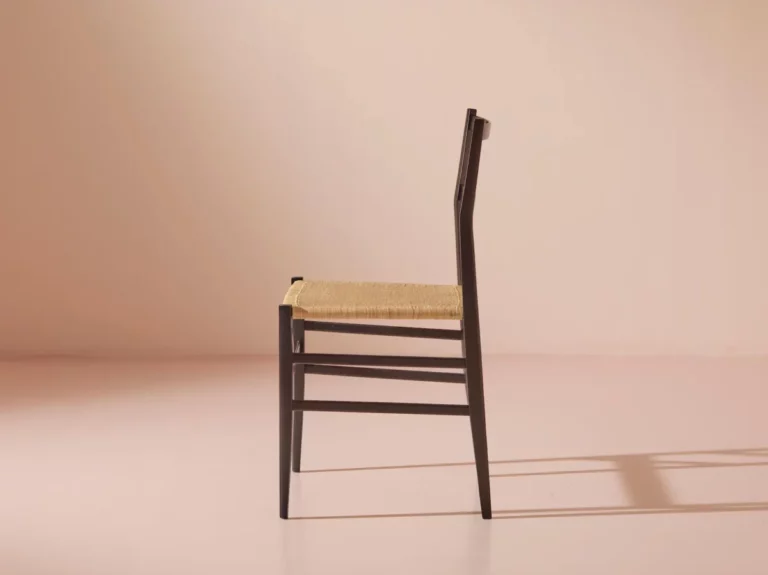
 Gustav Stickley furniture, authentic American oak, circa 1905
This innovative approach transformed the art of furniture-making and laid the foundations of modern ethical design.
Inspiration came from traditional art: medieval craftsmanship, vernacular techniques and folk wisdom nourished a responsible, local creativity.
Ergonomic and ethical research enriched this vocabulary: studies of comfort, the psychology of authenticity and the art of simplicity inspired a responsible democratic aesthetic.
The ingenuity of master craftsmen produced a typology of furniture of authentic refinement, adapted to the new uses of a more conscious society.
Arts & Crafts interiors are defined by their sophisticated simplicity and honest functionality, directly prefiguring responsible modern design.
Assumed authenticity and the use of traditional techniques created an aesthetic of democratic refinement within reach of the enlightened middle classes.
Arts & Crafts furniture typology: an authentic art of living
Seating: a revolution of honesty
The Arts & Crafts seat revolutionised the art of sitting by reconciling authentic comfort and honest construction in pieces of unrivalled formal simplicity.
The adoption of pared-down forms and noble materials permanently transformed the tradition of the decorative seat.
Constructive innovation harmoniously combined traditional joinery, natural finishes and studied proportions in compositions of authentic elegance.
Morris chairs adopted generous volumes and ingenious mechanisms offering exceptional domestic comfort.
The workshop chair became widespread, with sturdy designs accompanying new practices of creative craft.
Dining chairs developed a repertoire of accessible solidity, often inspired by local traditions.
Benches and settles took on communal forms that celebrated conviviality and the art of shared simplicity.
Furniture sets favoured material harmony and practical modularity, creating furnishings suited to authentic family life.
 Morris chair, ingenious authentic mechanism, circa 1890
Functional furniture: innovation and simplicity
A domestic revolution: the Arts & Crafts movement invented authentic functional furniture that turned the home into a stage for a responsible art of living.
This functional revolution reflected changing creative habits and the emergence of a more conscious society.
Workshop furniture multiplied, a sign of how domestic space adapted to new rituals of personal creation.
Bookcase furniture harmoniously housed books and objects in functional settings of authentic excellence.
Tables: sculpting simplicity
The Arts & Crafts table revolutionised table-making by favouring honest construction and authentic materials.
Storage: functional architecture
The Arts & Crafts movement turned storage furniture into functional elements that structure and organise authentic domestic space.
Bookcases adopted simple architectural compositions, often punctuated by harmonious proportions and local materials.
Wardrobes developed a constructive vocabulary of remarkable simplicity, adorned with handcrafted ironwork of authentic finesse.
 Charles Voysey wardrobe, simplicity and local construction, circa 1895
Bedroom furniture: authentic intimacy
The Arts & Crafts movement revolutionised bedroom furniture by creating ensembles of new simplicity and sincerity.
The handcrafted bed took on honest forms, often enhanced with authentic natural textiles.
Bedside tables, chests of drawers and wardrobes formed coherent ensembles that turned the bedroom into a sanctuary of simplicity.
 Arts & Crafts bedroom, handcrafted bed, natural textiles
Lighting: sculpting authenticity
The Arts & Crafts movement revolutionised lighting by creating fixtures that became true authentic functional objects, a lineage that runs through to today’s designer lighting.
The creations of W.A.S. Benson, the Guild of Handicraft and Roycroft turned artificial light into handcrafted beauty.
 W.A.S. Benson light fitting, handcrafted brass, circa 1895
The virtuosos of the Arts & Crafts movement
The Arts & Crafts movement revealed an exceptional generation of creators who permanently transformed Western art and set new ethical and responsible aesthetic standards.
William Morris: the prophet of social craftsmanship
William Morris (1834-1896) embodied the revolution of social art and carried craftsmanship towards its ethical and democratic evolution.
His genius lay in his ability to unite artistic beauty and social responsibility in creations of unequalled philosophical coherence.
His firm, Morris & Co, revolutionised the decorative arts by humanising production and developed social methods that had a lasting influence on European and American art.
His work for an enlightened society firmly established the British alternative to industrialisation in the field of responsible design.
Charles Robert Ashbee: the inventor of social silversmithing
Charles Robert Ashbee (1863-1942) revolutionised silversmithing by founding the Guild of Handicraft, an aesthetic of revolutionary responsibility.
His philosophy of “community art” deeply influenced the European art of living and still inspires designers today.
His collaborations with craftsmen produced silverwork of unique beauty and social ethics.
Gustav Stickley: the architect of democratic design
Gustav Stickley (1858-1942) turned furniture into an art of democratic authenticity and established the United States as a world reference in modern craftsmanship.
His social innovations transformed the art of furniture and made possible pieces of revolutionary simplicity and accessibility.
Craftsman production spread American excellence across every continent and paved the way directly for a responsible modern flowering.
The masters of the decorative arts
Ernest Gimson revolutionised cabinetmaking by developing traditional techniques that turned furniture into authentic art.
His innovations (traditional joinery, natural finishes) raised cabinetmaking to a major art and influenced its entire responsible evolution.
William De Morgan developed ceramics of handcrafted beauty, while Bernard Leach explored the potential of authentic pottery.
The Arts & Crafts market: between ethics and collecting
Iconic pieces and authentic values
The Arts & Crafts market shows a particular divide between handcrafted masterpieces and documented works. This ethical authenticity gives originals the status of major responsible heritage.
The collector’s holy grail:
Authentic Arts & Crafts pieces (1880-1920) reach peaks at international auctions. Records concern Stickley furniture and Morris textiles.
Stamped Gustav Stickley furniture sells for between €8,000 and €80,000 depending on rarity and condition. Exceptional Craftsman pieces regularly exceed €50,000.
Original Morris textiles range from €500 to €8,000, while complete furnishing ensembles can reach €150,000.
 Original stamped Stickley piece, estimate €25,000
The French market: an Anglo-Saxon heritage
Specialist Paris galleries:
Galerie Steinitz (7th arrondissement): a selection of Arts & Crafts furniture. Authentic pieces: €5,000 to €60,000.
Galerie Perrin (Saint-Germain): specialist in British and American decorative arts. Arts & Crafts objects: €800 to €25,000 depending on the piece.
Galerie Nicolas Lenté: expert in period Arts & Crafts furniture. Seats and furniture: €2,000 to €35,000.
The French secondary market:
Sales at Artcurial, Christie’s and Sotheby’s Paris reveal a moderate French market for this Anglo-Saxon movement.
Tajan: general sales with Arts & Crafts furniture from €1,200.
Osenat (Fontainebleau): Arts & Crafts finds between €600 and €15,000.
The international market: a fascination with authenticity
United States, the benchmark market:
The United States remains the reference market for Arts & Crafts furniture and objects.
Christie’s and Sotheby’s New York: specialist expertise in the American movement.
US price ranges:
- Period Stickley armchair: $3,000 to $25,000
- Roycroft lamp: $1,500 to $15,000
- Morris textiles: $400 to $6,000
Great Britain, the historic market:
London holds major collections of British Arts & Crafts.
Bonhams and Sotheby’s London: regular sales of Morris & Co and Guild of Handicraft pieces.

Digital entrepreneur and craft artisan.
My work bridges craftsmanship, design history and contemporary creation, shaping a personal vision of luxury interior design.
Since 2012, I have been based in my workshop on the shores of Lake Annecy, creating bespoke interiors for architects, decorators and private clients.