

Mies van der Rohe: life, work and iconic furniture
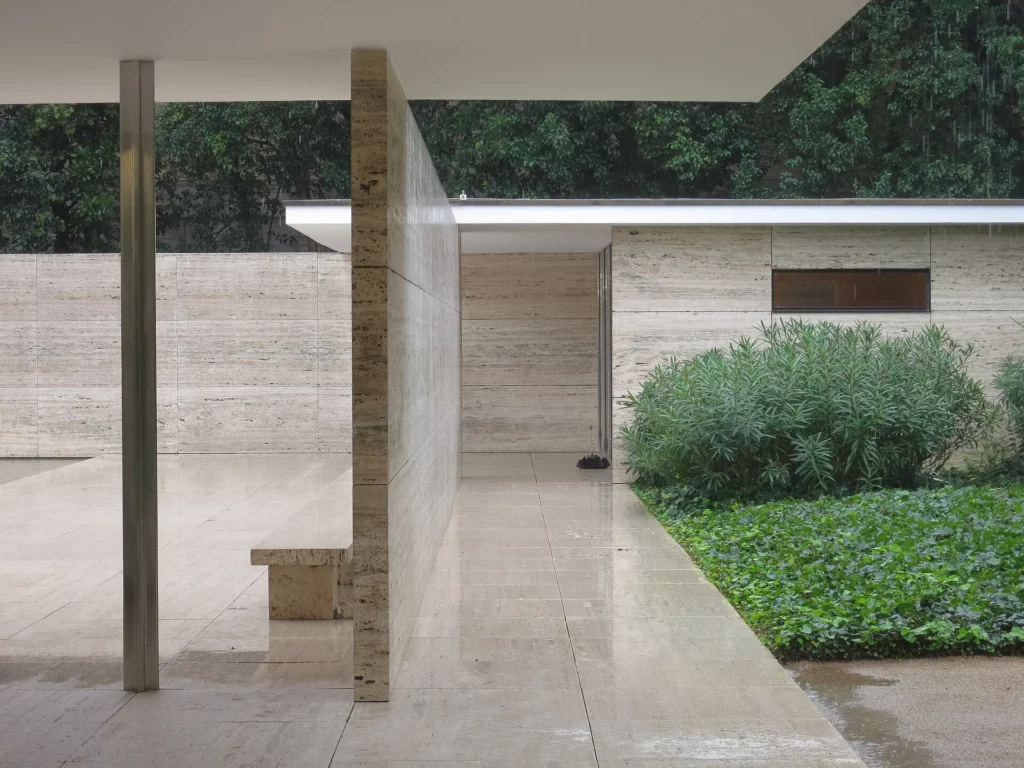
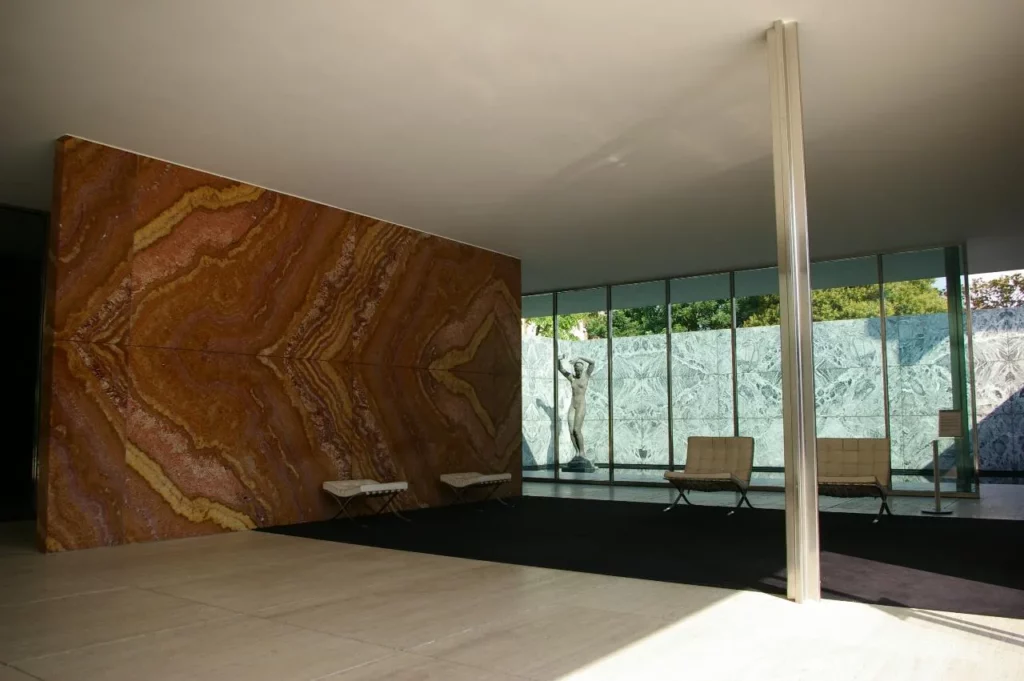
In the spring of 1929, in Barcelona, Germany opened its pavilion at the International Exposition. No showcases, no products for sale: just planes of travertine, green marble and golden onyx, glass walls, a roof that seems to float on slender chrome columns, a pool and a statue of a woman by Georg Kolbe. In the middle, two armchairs of leather and steel. The building was dismantled in 1930. Yet it became one of the most famous in the history of architecture, so much so that it was rebuilt exactly as it was in 1986. Its architect was Ludwig Mies van der Rohe.
Mies is the architect of “less is more”, the phrase that sums up a century of modernity on its own. But to reduce his work to a matter of stripping things back would be to miss the point: with him, simplicity is a luxury, made of the finest materials and an obsessive precision. That is what makes him so valuable to anyone who loves interiors.
A child of stone
Ludwig Mies was born in Aachen on 27 March 1886. He grew up in his father’s stone-carving business and learned early on the weight and grain of materials. He never earned an architecture degree: he trained on building sites, then with Berlin architects.
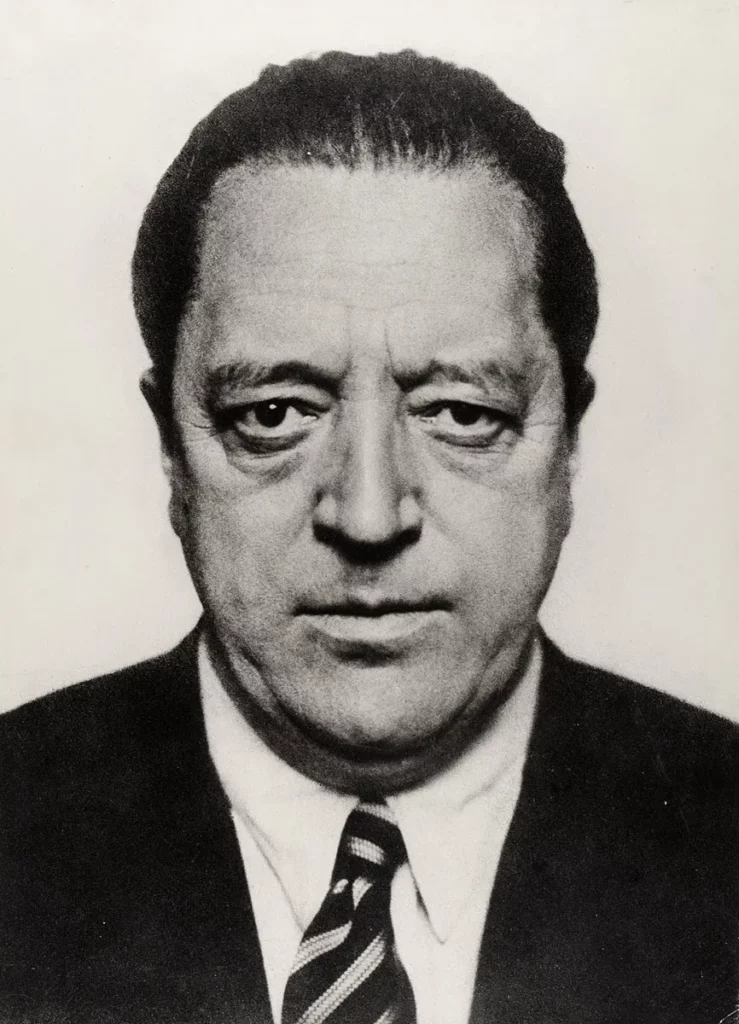
In 1908 he joined Peter Behrens, the great architect of German industry, in a studio that also saw Walter Gropius and a young Swiss named Charles-Édouard Jeanneret, the future Le Corbusier. There he learned rigour, the pared-back classicism of Karl Friedrich Schinkel and the idea that a building could be both industrial and noble.
In 1921 he added his mother’s surname, Rohe, to his own and became Ludwig Mies van der Rohe. The name sounded more aristocratic; the man was about to break every rule.
Berlin, the invention of a language
In the early 1920s Mies drew projects no one built, but everyone looked at. The most famous was a skyscraper clad entirely in glass, imagined in 1921 near Friedrichstraße station in Berlin. A transparent tower, at a time when buildings were still made of stone and brick.
In 1927 he directed the Weissenhof Estate in Stuttgart, a full-scale exhibition where Europe’s best modern architects, Le Corbusier included, each built a house. It was also the period of his decisive partnership with Lilly Reich, designer and interior architect, with whom he worked from 1925 to 1938. She was his partner on the great exhibition projects, interiors and furniture, and history long forgot her name.
Barcelona and Brno, the two masterpieces
The Barcelona Pavilion, built in 1928 and 1929, invented a new kind of space. Walls no longer enclose rooms: they slide past one another, and you move from inside to outside without noticing. Lilly Reich was artistic director of the German contribution. To furnish it, they designed the Barcelona chair together: an X-shaped steel frame and two tufted leather cushions. It is said to have been meant to seat the King and Queen of Spain at the opening; it became one of the most famous pieces of furniture in the world.
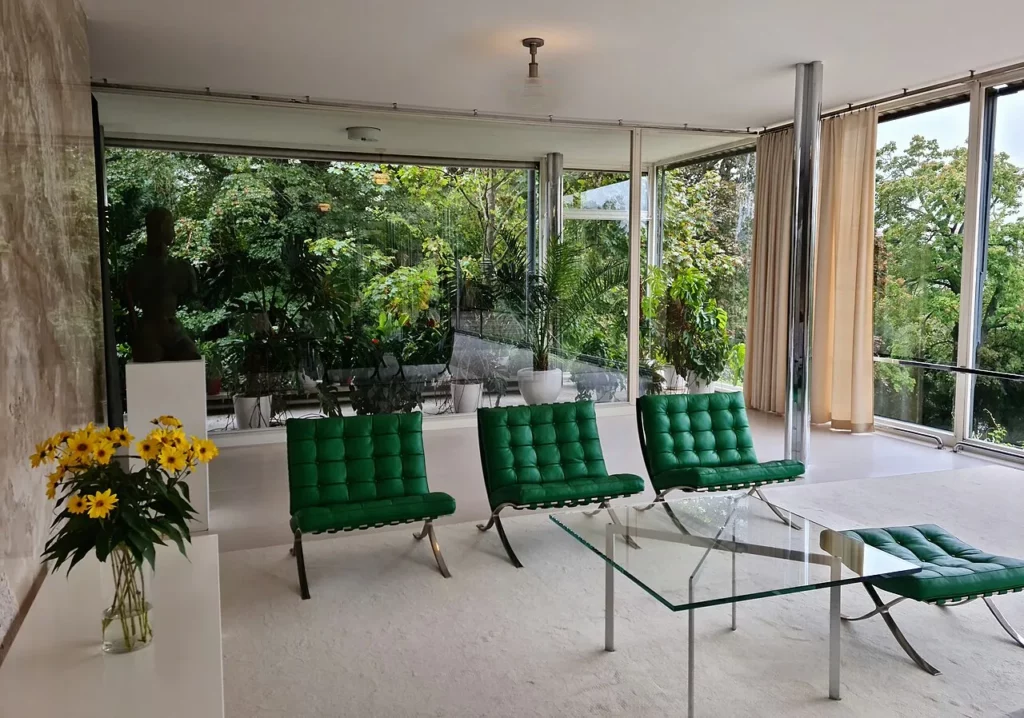
At the same time, from 1928 to 1930, Mies built the Villa Tugendhat in Brno, Czechoslovakia, for a young industrialist couple. The great living room opens onto the garden through glass walls that slide down into the floor. An onyx partition, a semicircular wall in macassar wood, cross-shaped chrome columns: the materials are sumptuous, the space utterly serene. Lilly Reich and Mies also designed the Brno chair there. The villa has been a UNESCO World Heritage Site since 2001.
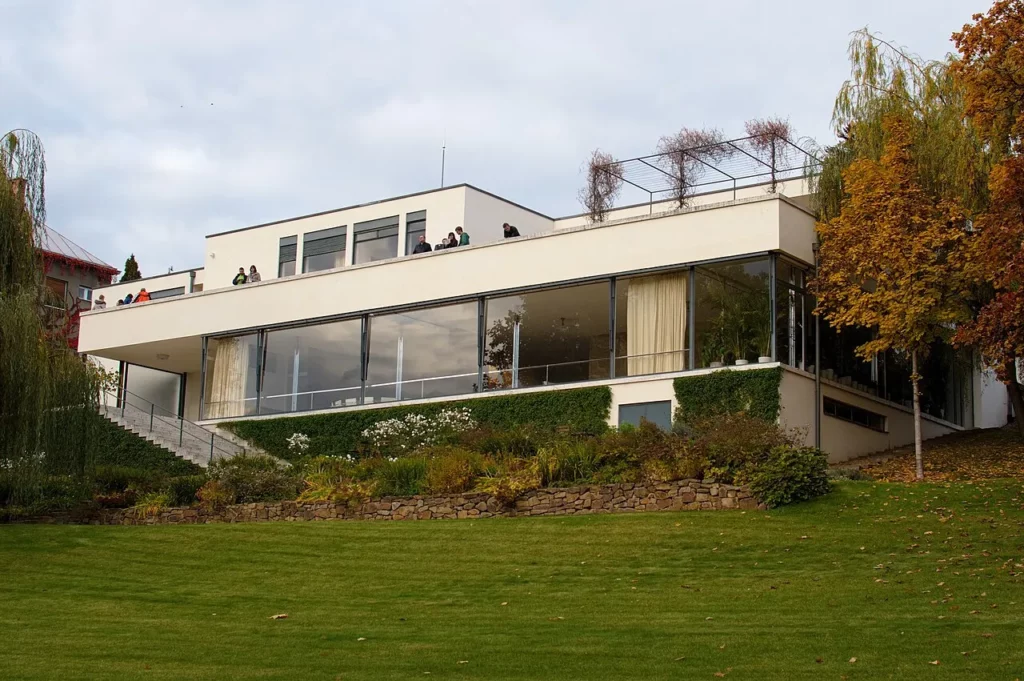
These two works say everything about Mies. “Less is more” is never poverty here: fewer elements, each one perfect, and materials you want to touch. Another phrase is attributed to him, “God is in the details”. It suits him just as well.
The Bauhaus, its last director
In 1930 Mies took over the Bauhaus, the school founded by Walter Gropius. The times were dire. Under Nazi pressure the school left Dessau for Berlin in 1932, where Mies tried to keep it going in a former factory. Lilly Reich ran the interior design workshop. In 1933 the Bauhaus closed for good. Mies stayed in Germany a few more years, with less and less work, then left for the United States in 1938.
America, the modern skyscraper
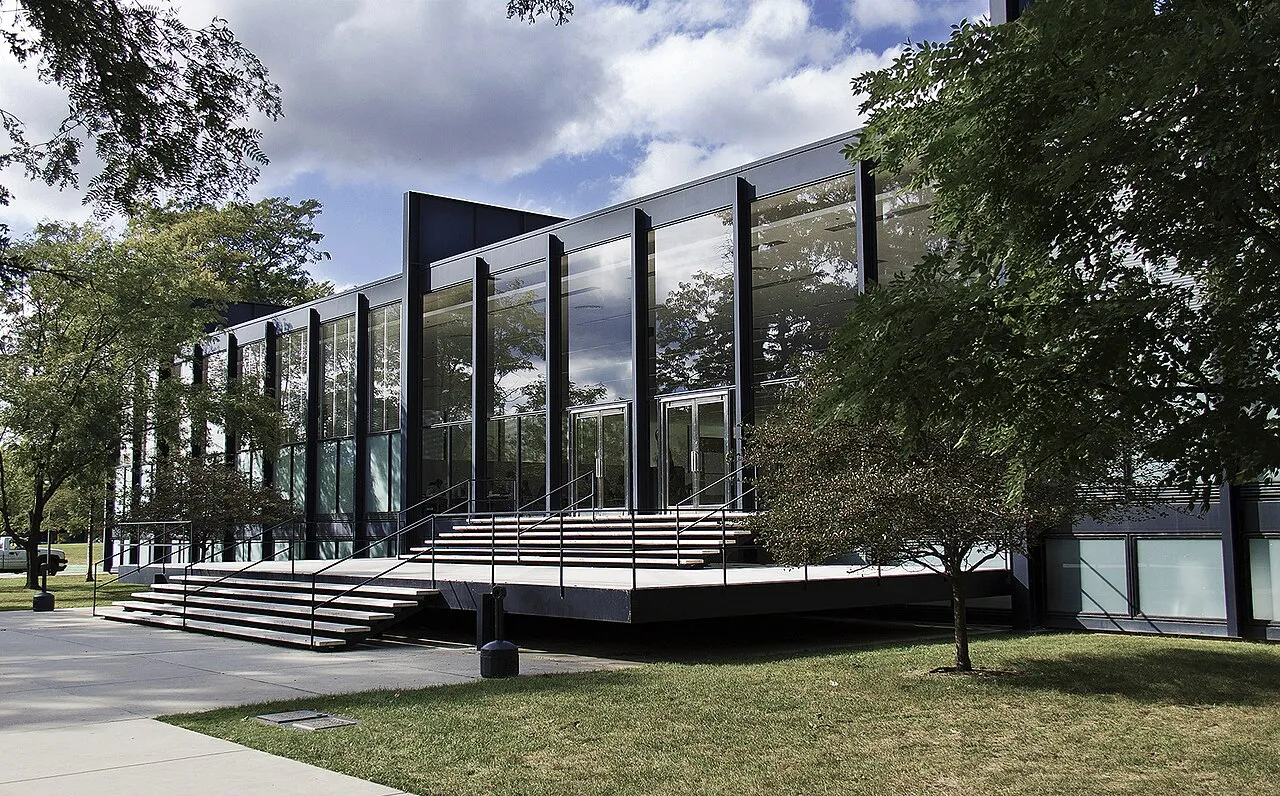
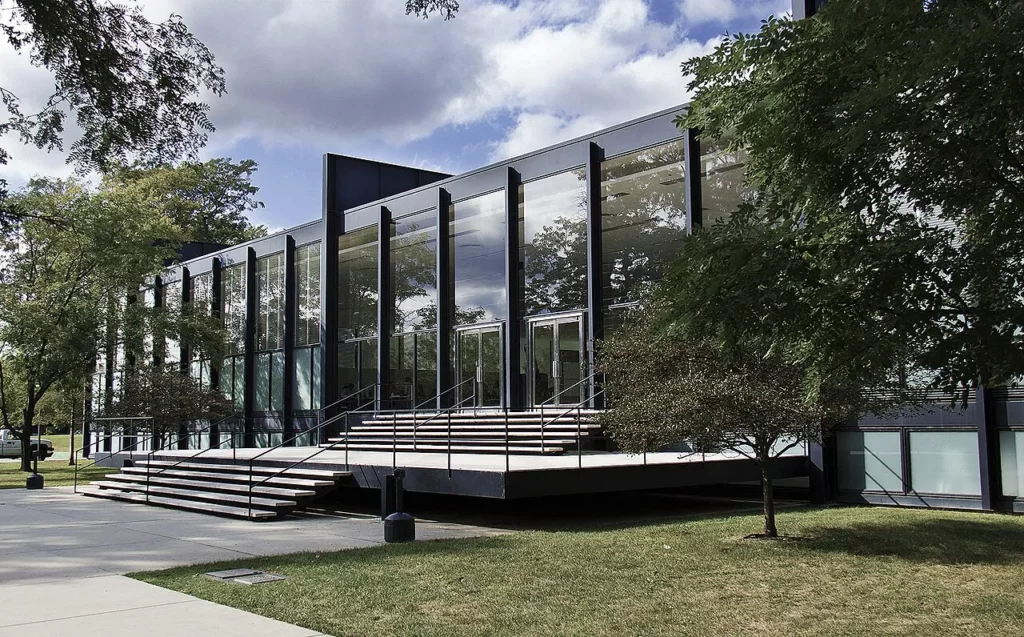
In Chicago he became head of the architecture department at the Illinois Institute of Technology, whose campus he also designed. Crown Hall, completed in 1956, is a vast hall without a single interior column, under a roof hung from steel frames: one entirely open space in which to teach architecture.
For Dr Edith Farnsworth he built a glass house on stilts by the Fox River near Chicago, completed in 1951. Eight white columns, two slabs, glass walls on all four sides: the most pared-back house ever built, and the most debated. His client found it unliveable; architects the world over see it as a manifesto.
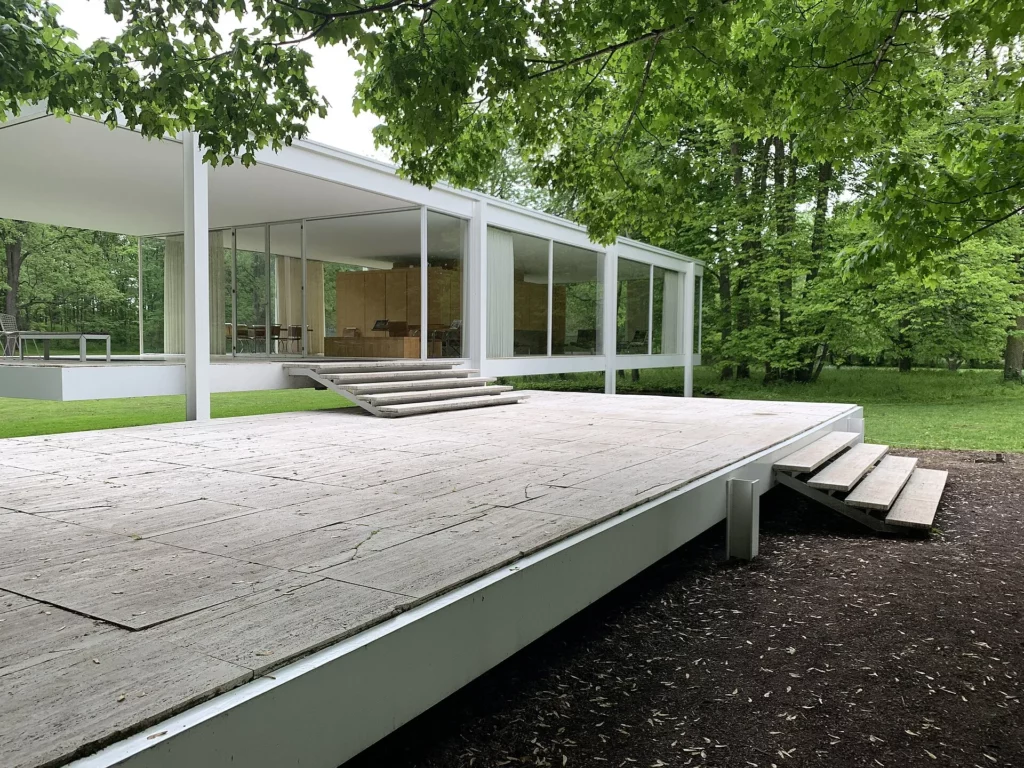
With the Lake Shore Drive towers, built from 1948 to 1951, then the Seagram Building in New York, designed from 1954 to 1958 with Philip Johnson, Mies set the model of the modern skyscraper: a steel frame, glass facades, a regular rhythm of metal profiles. The Seagram, with its bronze profiles and open plaza in front, remains the most elegant of them all. The countless office towers that copied it since have often kept only the form, never the care.

Berlin, full circle
His last great building brought him back to Germany. From 1965 to 1968 he built the Neue Nationalgalerie in Berlin: a vast square steel roof resting on just eight columns, above an entirely glazed hall. It is a modern temple, the culmination of forty years of research. Restored by architect David Chipperfield, it reopened in 2021.
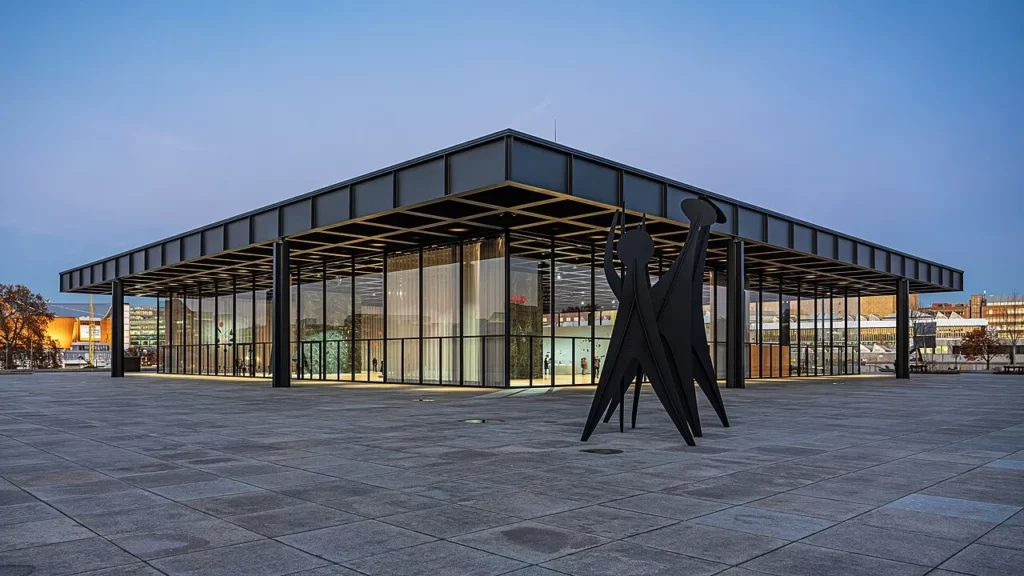
Ludwig Mies van der Rohe died in Chicago on 17 August 1969.
The furniture, still in production
Mies designed little furniture, nearly all of it with Lilly Reich and nearly all between 1927 and 1931. But every piece became an icon. Since 1953, when Mies granted the rights to the American manufacturer, Knoll has produced the Barcelona chair and ottoman, the Brno chair, the cantilevered MR chair and the MR lounge chair.
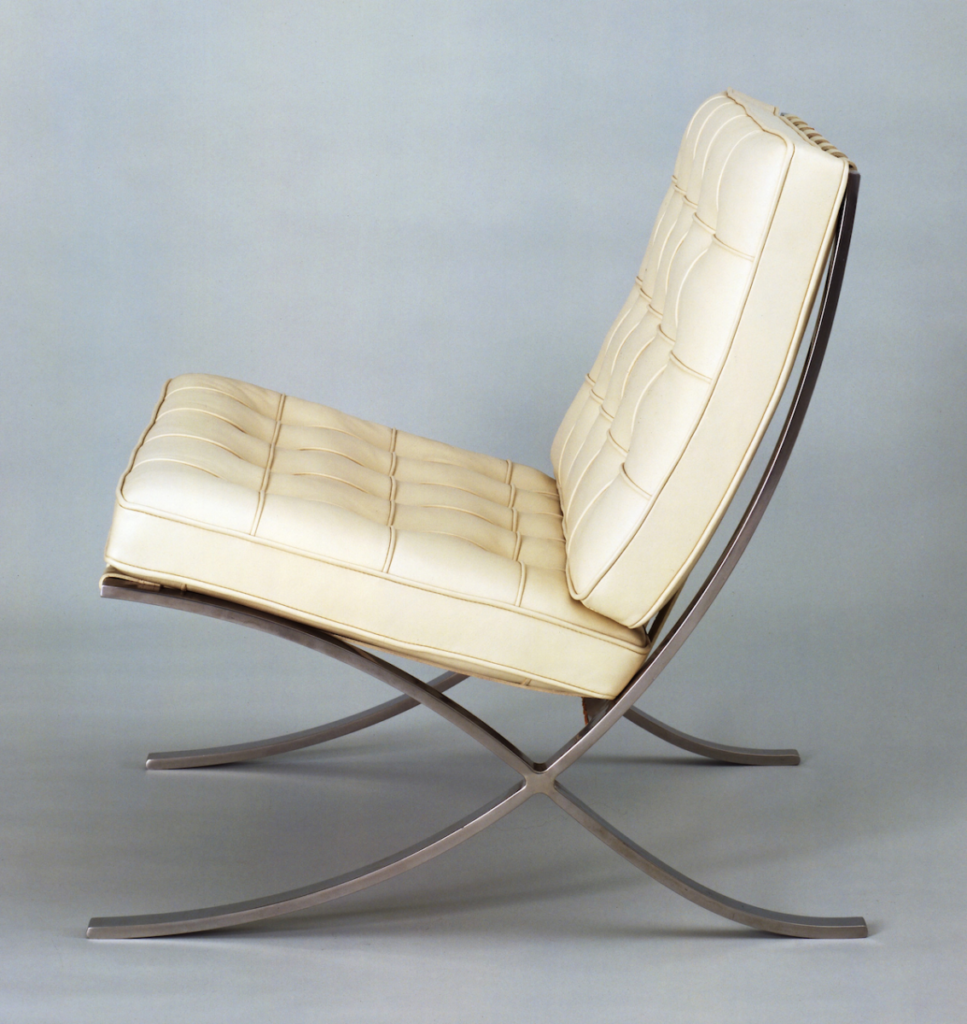
The Barcelona is one of the most copied pieces of furniture in the world, and it is easy to be fooled. On a Knoll model the steel frame is hand-polished to a mirror finish, each cushion is made from forty leather panels cut from a single hide, sewn and tufted by hand, and Mies’s signature is stamped on the frame with the maker’s logo. A copy almost always gives itself away through its welds, stiff leather or missing marks.
In an interior, these pieces need space. A Barcelona chair in a cluttered room loses all meaning; in a bright living room, facing a window, it becomes a sculpture. That is Mies’s lesson: choose less furniture, but the best.
The legacy of Mies
Mies van der Rohe changed the skyline of our cities and the way we think about space. The open plan, transparency and the blurred line between inside and outside owe a great deal to him. The minimalism of the 1990s took up his phrase as a manifesto, and today’s quiet luxury owes him its taste for fine materials and silence.
Against him, Frank Lloyd Wright championed a house rooted in its landscape, and Charlotte Perriand a house made for everyday life. Mies sought the absolute. The three visions are still in conversation in our interiors.
To meet the other great figures of the century, our glossary of 20th-century masters and our architecture page carry on the tour.
Frequently asked questions
Who designed the Barcelona chair?
The Barcelona chair is attributed to Ludwig Mies van der Rohe, but it is now recognised as the fruit of his collaboration with Lilly Reich, artistic director of the German contribution to the 1929 Barcelona Exposition. Knoll has produced it since 1953.
Can you visit Mies van der Rohe’s buildings?
Yes. The Barcelona Pavilion, rebuilt in 1986, is open all year, as is the Villa Tugendhat in Brno, by reservation. In the United States the Farnsworth House is open to the public, and in Berlin the Neue Nationalgalerie reopened in 2021.
How can you tell a genuine Barcelona chair?
A Knoll model has Mies’s signature and the maker’s logo stamped on the frame. Its steel frame is hand-polished with no visible welds, and each cushion is made of forty leather panels sewn and tufted by hand. A very low price, visible welds or stiff leather point to a copy.
Resources
Five ways into the world of HART
- 01 Spaces Spaces & materials Interiors, atmospheres and materials that give a place its identity.
- 02 Creators Designers & creators Architects, designers and artists whose vision changed the way we live.
- 03 Craftsmanship Artisans & fine crafts Upholsterers, cabinetmakers, metalworkers, ceramicists: the workshops and the hands behind true excellence.
- 04 Furniture Furniture & interiors Iconic sofas, seating and lighting, read through form, use and comfort.
- 05 Heritage Design history From Gothic to global design, the styles that shaped the art of living.

Digital entrepreneur and craft artisan.
My work bridges craftsmanship, design history and contemporary creation, shaping a personal vision of luxury interior design.
Since 2012, I have been based in my workshop on the shores of Lake Annecy, creating bespoke interiors for architects, decorators and private clients.