

Charlotte Perriand: life, work and iconic furniture
In October 1927, a twenty-four-year-old woman walked into Le Corbusier’s studio on the rue de Sèvres with a portfolio under her arm. The architect sent her away with a line that became famous: “We don’t embroider cushions here.” A few weeks later, at the Salon d’Automne, he saw the “Bar sous le toit” she had designed in aluminium, glass and chrome-plated steel. He changed his mind and hired her to take charge of furniture. Her name was Charlotte Perriand, and she would spend the next seventy years inventing the way we live.
Her name is often tied to Le Corbusier’s, like a secondary signature at the foot of the famous chaise longue. That is deeply unfair. Perriand built a vast and coherent body of work, from the metal of the 1920s to wood and bamboo, from Japan to the ski slopes of Savoie. For anyone who loves interiors, she may be the most relevant designer of the whole 20th century.
A young woman who refused decoration
Charlotte Perriand was born in Paris on 24 October 1903, to a tailor father and a seamstress mother. Her taste for things well made came from there. On a scholarship, she entered the École de l’Union centrale des arts décoratifs in 1920 and studied furniture design until 1925. She shone there, but soon felt stifled by the aesthetics of the day: precious woods, marquetry, crowded interiors, all the refinement of Art Deco that she already considered outdated.
What fascinated her were machines, cars, speed, modern life. She wore her hair short and a necklace of large chrome-plated metal balls, like a manifesto. To her, a house should work as well as a car, and furniture should follow the body rather than flatter the eye.
Ten years with Le Corbusier
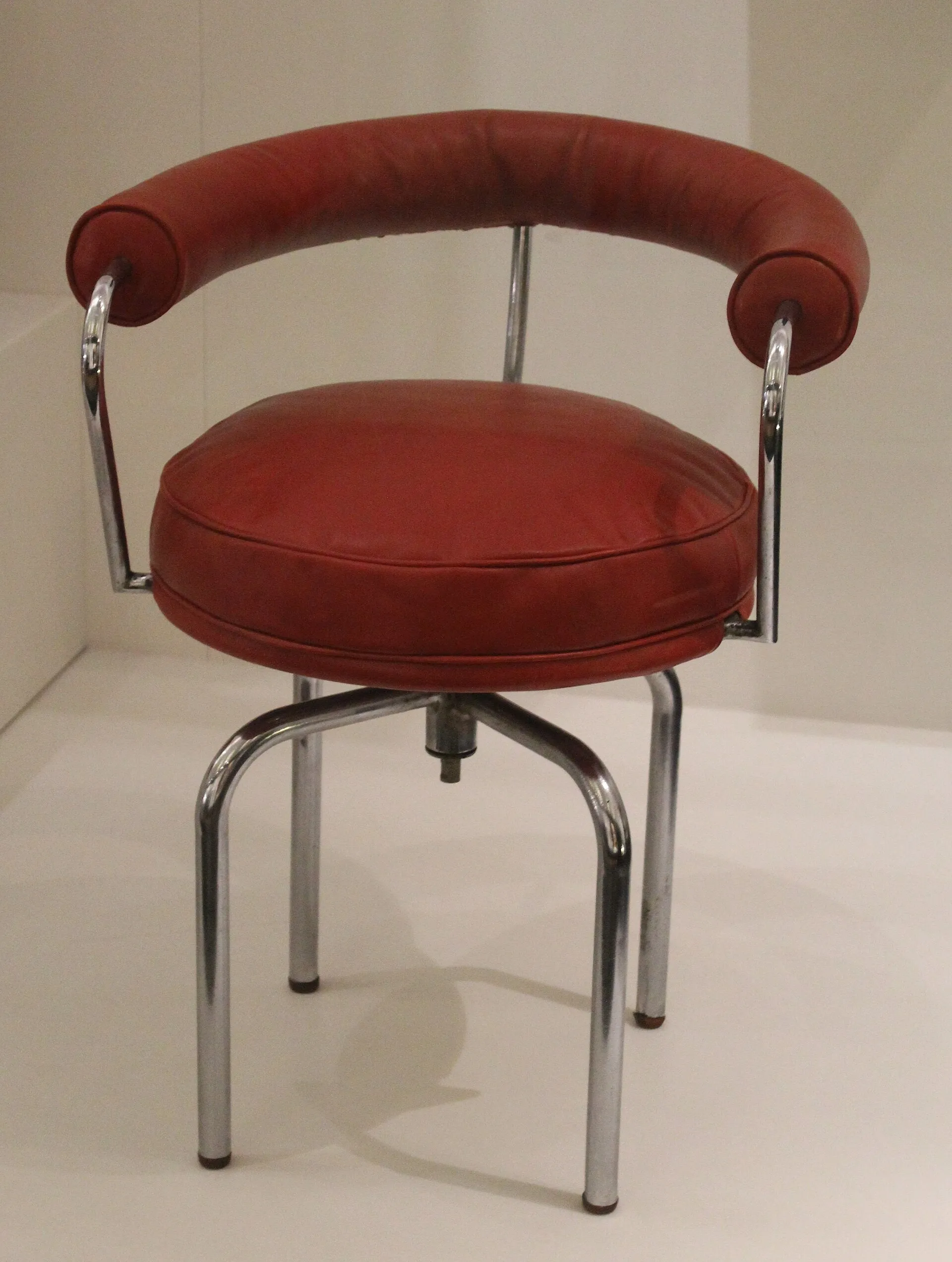
Having joined the studio at the end of 1927, Perriand took charge of interior equipment alongside Le Corbusier and his cousin Pierre Jeanneret. In 1928 the trio presented a series of tubular steel seats that would become icons: the sling-back armchair, the swivel chair, the Grand Confort armchair and above all the reclining chaise longue. A photograph from 1928 shows Perriand lying on it, her face turned to the wall, as if stepping back behind the object.
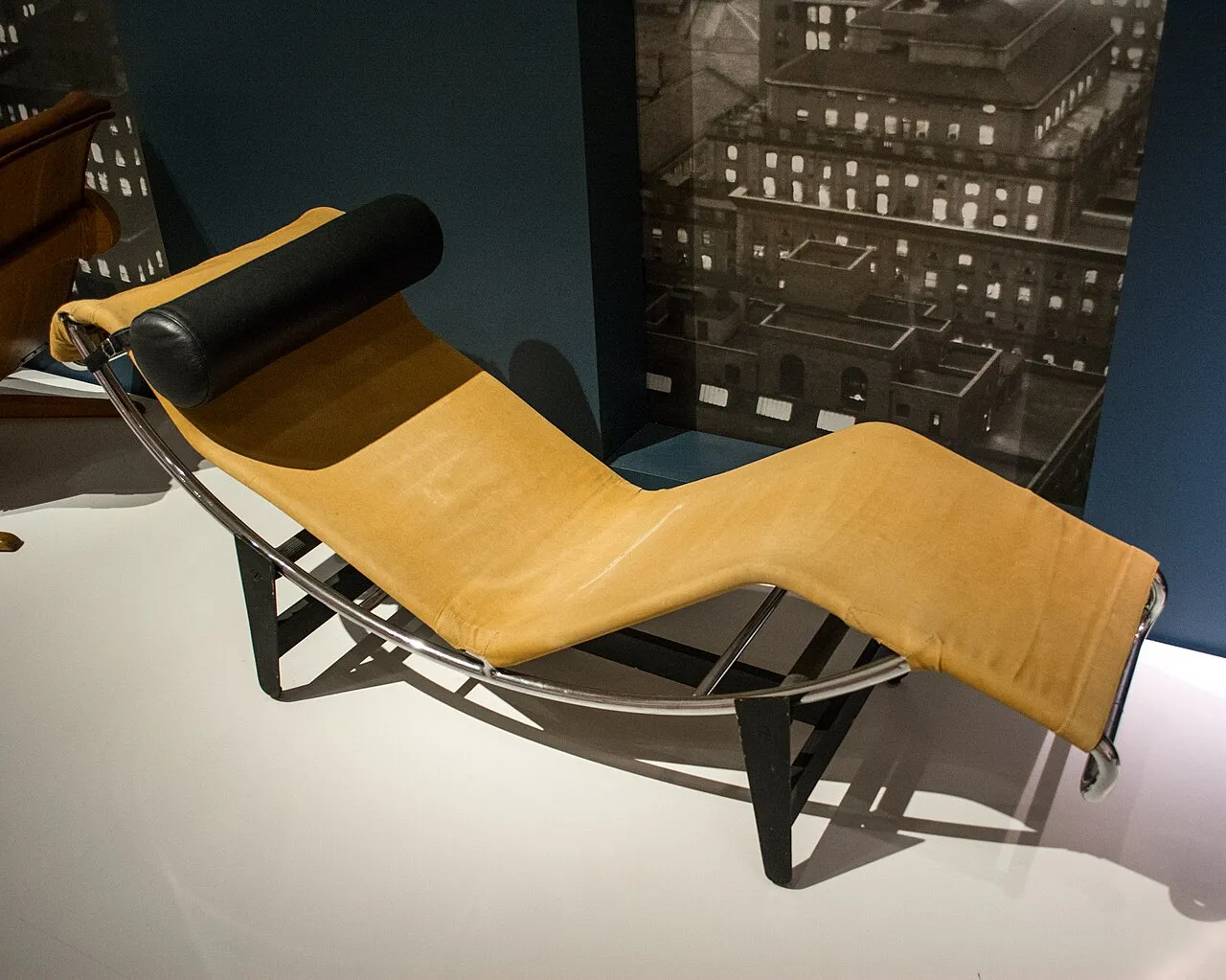
The division of roles long remained blurred, and history first remembered only the name of Le Corbusier. We now know that Perriand played a decisive part in designing and developing these seats, in line with the tubular steel being explored at the same time at the Bauhaus. These models are now produced as the LC1, LC2 and LC4, with all three names on them.
In 1929 she helped found the Union des artistes modernes, alongside Jean Prouvé, Robert Mallet-Stevens and René Herbst. Through the 1930s her outlook widened. She became politically engaged, photographed poverty in Paris, worked with Fernand Léger, and began to take an interest in wood, stone and the mountains, which she explored on skis and on foot. In 1937 she left the studio.
Japan, the great turning point
In June 1940, as France collapsed, Perriand sailed for Japan. The Ministry of Commerce and Industry had invited her as an adviser on industrial art, with a clear mission: to help Japanese craftsmen create objects suited to Western markets. Her assistant and interpreter was Sori Yanagi, later one of the great names of Japanese design.
She travelled the country, visited workshops, discovered bamboo, lacquer, rice straw, sliding partitions and emptiness as an element of architecture. In 1941, at the Takashimaya department store in Tokyo, she presented the exhibition “Selection, Tradition, Creation”. It included a bamboo version of the 1928 chaise longue: the same line, in a living, local material.
Forced to leave Japan in 1942, she found herself stranded in Indochina by the war and only returned in 1946. Those years of exile changed her. She studied woodwork and weaving, and came back to France with a conviction: modernity is not a matter of material, but of the relationship between people, objects and space.
Wood, straw and free forms
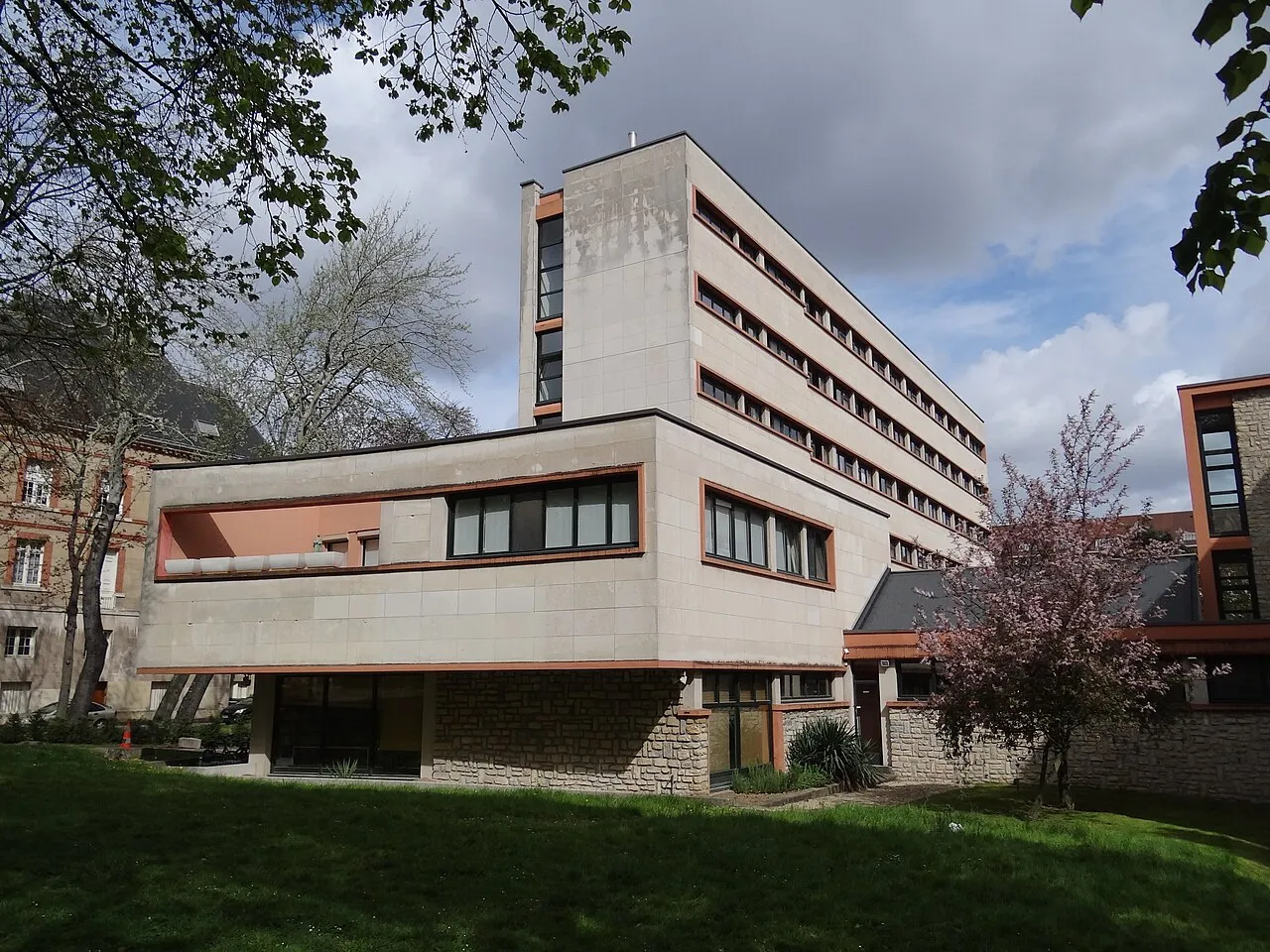
The post-war years revealed a warmer Perriand. She designed solid wood furniture with supple shapes: free-form tables, three-legged stools, benches and banquettes. With the Ateliers Jean Prouvé, she fitted out the rooms of the Maison de la Tunisie and the Maison du Mexique at the Cité internationale universitaire in Paris in 1952 and 1953. The Maison du Mexique bookcase, with its coloured compartments and folded sheet-metal uprights, is now in the collection of the Centre Pompidou.
The same period produced the Nuage bookcases, made of shelves and staggered compartments that divide a room without closing it off. Wood found its place again, worked simply, without artifice. In 1955 she returned to Tokyo for the exhibition “Synthesis of the Arts”, where her furniture stood alongside works by Fernand Léger and Le Corbusier.
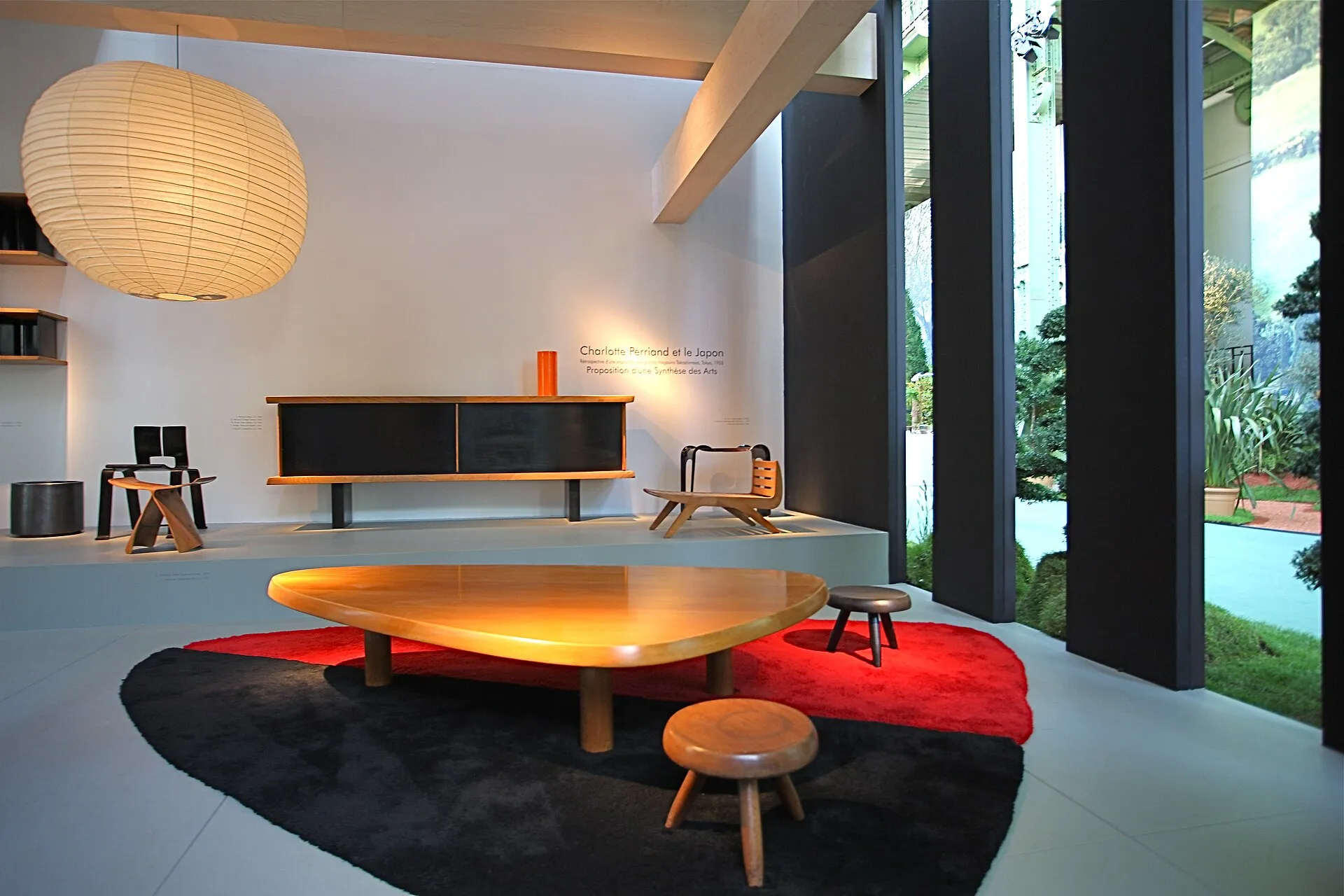
For Le Corbusier she also designed the kitchen of the apartments in the Unité d’habitation in Marseille, inaugurated in 1952. It opened onto the living room through a serving hatch, so that whoever was cooking was no longer cut off from the rest of the family. The idea seems obvious today; at the time it was revolutionary.
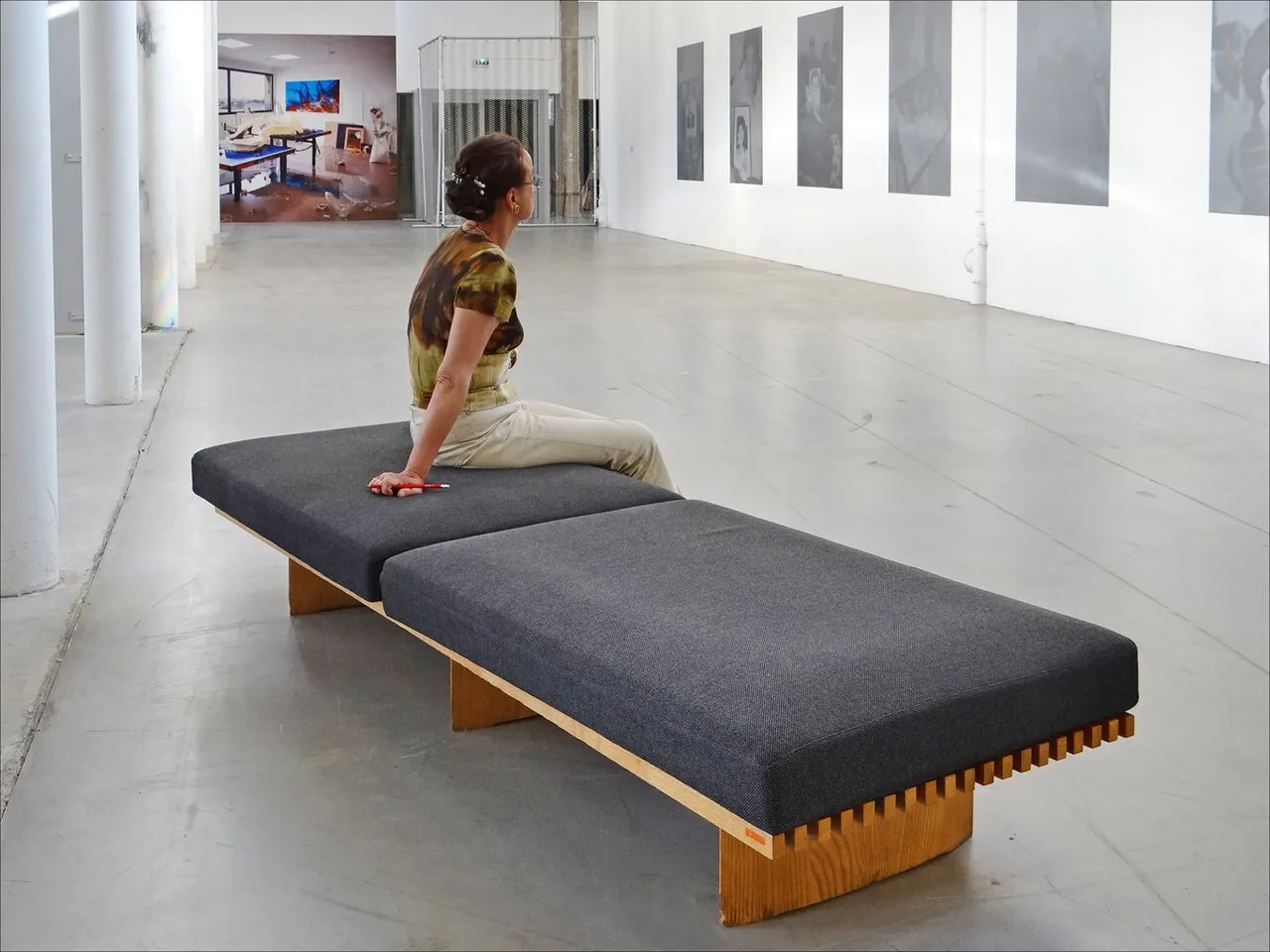
This idea of an interior conceived as a whole, where every object has its reason to be, echoes what Frank Lloyd Wright stood for across the Atlantic, with one major difference: with Perriand, nothing is imposed. Everything is stored, adaptable, and leaves room for life.
Les Arcs, a resort designed from the inside
In 1961 Perriand built her own chalet in Méribel. A few years later began the project that would take up twenty years of her life. From 1967 to 1989 she led the design studies for the Les Arcs ski resort in Savoie, championed by developer Roger Godino, with a team of architects including Gaston Regairaz, Bernard Taillefer and Guy Rey-Millet.

At Arc 1600, which opened in 1968, then at Arc 1800, she invented a mountain urbanism in which buildings follow the slope instead of scarring it. Facades are angled so that every balcony catches the sun without being overlooked. Inside, every centimetre counts: compact studios, kitchens open to the living area, built-in storage, large windows facing the peaks. From 1975 she developed prefabricated bathroom and kitchen units, set into the apartments in one piece.
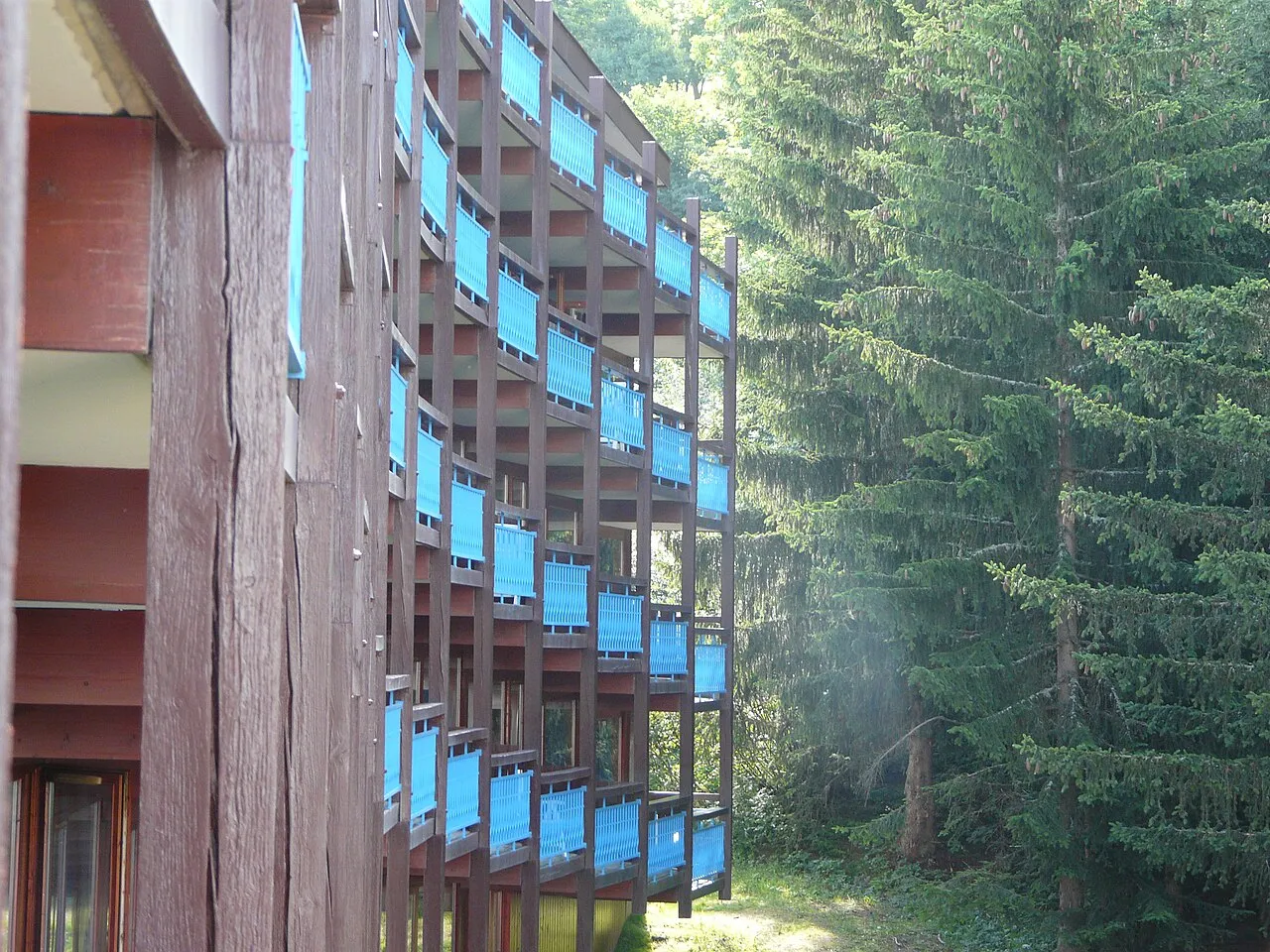
The result is one of the finest leisure architectures of the 20th century, and the culmination of everything she had learned in Japan: little floor area, a great deal of space. At Les Arcs, several residences have been renovated in their original spirit, and the Musée savoisien in Chambéry displays a reconstructed Arc 1800 studio.
Recognition came late
Perriand worked to the very end. In 1993, at nearly ninety, she built a tea house in the gardens of UNESCO in Paris. The same year, the Centre Pompidou gave her an exhibition. Her autobiography, “Une vie de création”, came out in 1998. She died in Paris on 27 October 1999, three days after her ninety-sixth birthday.
Full recognition came after her death. The Centre Pompidou held a retrospective in 2005, then from October 2019 to February 2020 the Fondation Louis Vuitton presented “Charlotte Perriand: Inventing a New World”, a vast exhibition that rebuilt her interiors alongside works by Léger, Picasso and Calder. The public finally discovered the scale of a designer who had long stood in the shadow of a more famous name.
The Perriand style, a user’s guide
You can recognise a Perriand-inspired interior by a few simple gestures, which you can borrow at home without owning a single signed piece.
The first is storage. Perriand hated furniture that clutters. She preferred fitted walls, built-in cupboards and shelving that doubles as a partition. An open bookcase between kitchen and living room, niches that each hold a single object, a bench running along a wall: everything is designed to free the floor and the view.
The second is materials. Pale solid wood, straw, rush, linen, wool, raw stone, with now and then a touch of lacquered metal in a bright yellow, red or blue. Nothing precious, but everything of good quality, chosen to age well.
The third is form. Free-form tops, low seats, softened corners: furniture you want to touch. And finally light. Perriand opened rooms to the outside, turned seats towards the view and left generous empty space around objects, a lesson learned in Japan.
It is this blend of rigour and warmth that makes her so modern. Her interiors look like the ones described today by advocates of quiet luxury: few objects, beautiful materials, and the feeling that everything is in its place.
Perriand furniture today
If you want to live with Perriand, there are two routes. The first is reissues. Cassina has produced the LC collection seats, including the LC4 chaise longue, since the mid-1960s, and in 2004 launched a collection devoted to Perriand, developed with her daughter Pernette and Jacques Barsac. It includes the bamboo Tokyo chaise longue, heir to the Japanese version of 1941, and the Nuage bookcase.
The second is period pieces, originally made in small runs. Stools, free-form tables, bookcases and furniture from Les Arcs regularly come up at auction and in collectible design galleries, at prices that have risen sharply since the 2019 exhibition. For an original piece, provenance and expert opinion matter as much as the form.
In an interior, this furniture works best when it is given room to breathe. Perriand designed for bright, uncluttered rooms, where furniture structures the space rather than filling it.
What she left us
Charlotte Perriand crossed the century changing materials without ever changing her idea. To live, for her, meant first of all to live well: light, space, storage, nature within sight. The tubular steel of the 1920s, the bamboo of Japan and the pine of Les Arcs tell the same story. Her interiors anticipate what we are still looking for today: simple, warm homes made for living.
To meet the other great figures of the century, from Sori Yanagi to Jean Prouvé, our glossary of 20th-century masters and our architecture page carry on the tour.
Frequently asked questions
Did Charlotte Perriand really design the LC4 chaise longue?
Yes. The 1928 reclining chaise longue is the joint work of Le Corbusier, Pierre Jeanneret and Charlotte Perriand, who was in charge of furniture at the studio. Her role was long played down, but all three names now appear on the model produced by Cassina.
Where can you see Charlotte Perriand’s work?
In Paris, the Centre Pompidou holds several of her pieces, including the Maison du Mexique bookcase, and the UNESCO tea house can be seen on guided tours of the headquarters. In Savoie, the Les Arcs resort remains her great work, and the Musée savoisien in Chambéry displays a reconstructed Arc 1800 studio.
Which Charlotte Perriand designs are still in production?
Cassina produces the LC collection seats, including the LC4, and a collection devoted to Perriand launched in 2004, featuring the Nuage bookcase and the Tokyo chaise longue. Original pieces can be found at auction and in galleries.
Resources
Five ways into the world of HART
- 01 Spaces Spaces & materials Interiors, atmospheres and materials that give a place its identity.
- 02 Creators Designers & creators Architects, designers and artists whose vision changed the way we live.
- 03 Craftsmanship Artisans & fine crafts Upholsterers, cabinetmakers, metalworkers, ceramicists: the workshops and the hands behind true excellence.
- 04 Furniture Furniture & interiors Iconic sofas, seating and lighting, read through form, use and comfort.
- 05 Heritage Design history From Gothic to global design, the styles that shaped the art of living.

Digital entrepreneur and craft artisan.
My work bridges craftsmanship, design history and contemporary creation, shaping a personal vision of luxury interior design.
Since 2012, I have been based in my workshop on the shores of Lake Annecy, creating bespoke interiors for architects, decorators and private clients.