

Interior Design in the Digital Age (1990–2026): Styles, Furniture, and an Aesthetic Revolution
What is Interior Design in the Digital Age (1990–2026)?
The rise of digital design since the 1990s has not only transformed our interfaces and screens. It has reshaped how we live at home, introducing new habits, new spatial rituals, and a visual language that feels unmistakably contemporary. In these decades, interior design has been in constant conversation with technology, producing styles that mirror the way we work, connect, consume, and seek comfort in a world that never really goes offline.
1990–2000: High-tech minimalism and the Silicon Valley aesthetic
Historical context
The 1990s brought the mainstream expansion of the personal computer, the first internet boom, and the emergence of a new cultural elite: tech entrepreneurs. Apple, driven by Steve Jobs and designer Jonathan Ive, imposed an aesthetic that went far beyond consumer electronics and began influencing contemporary design at large.
Stylistic features
High-tech minimalism turned away from the postmodern ornament of the 1980s in favor of clean lines, clarity, transparency, and a sense of lightness. Japanese industrial design influences (Muji, in particular) merged with a Californian belief in sleek progress to create interiors where technology becomes present, yet visually discreet.
Signature furniture
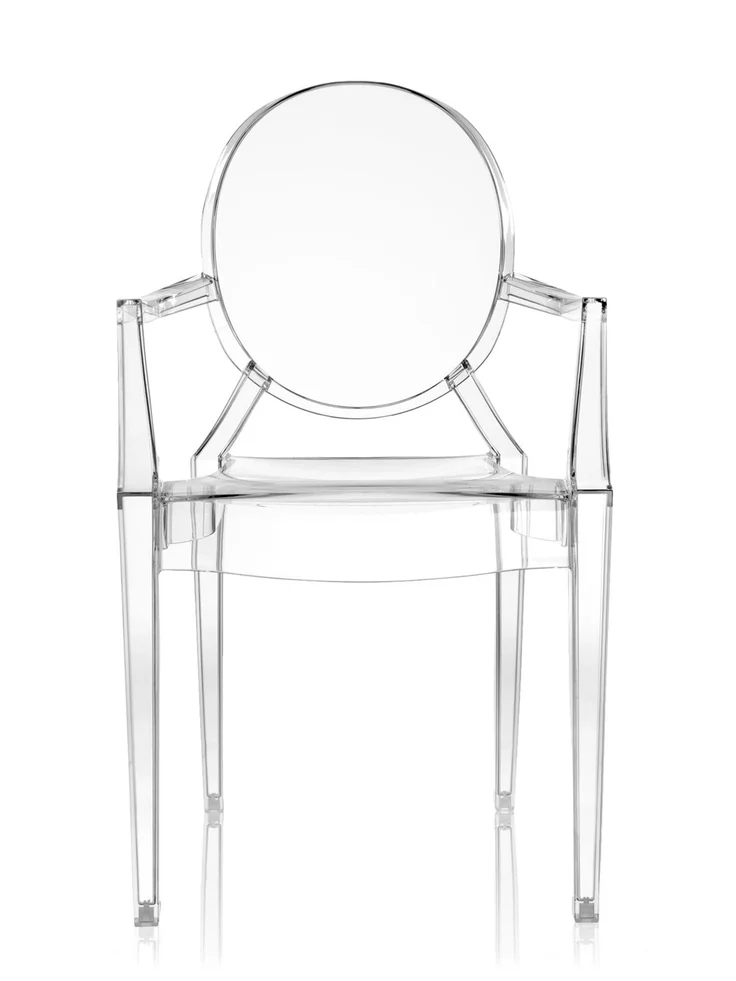
- The Louis Ghost chair by Philippe Starck (2002), in transparent polycarbonate, embodies this taste for dematerialization
- Glass desks and tables paired with chrome steel or brushed aluminum
- Geometric modular shelving, often echoing a revisited Constructivist rigor
- IKEA becomes a global reference point through simplified Scandinavian lines
Dominant materials
Polycarbonate, glass, aluminum, stainless steel, glossy white laminates, molded plastics.
Color palette
Clean white, mouse gray, graphite black, with translucent color accents. The famous “Bondi Blue” of the iMac G3 (1998) influenced an entire generation’s idea of what “modern” could look like.
Lighting
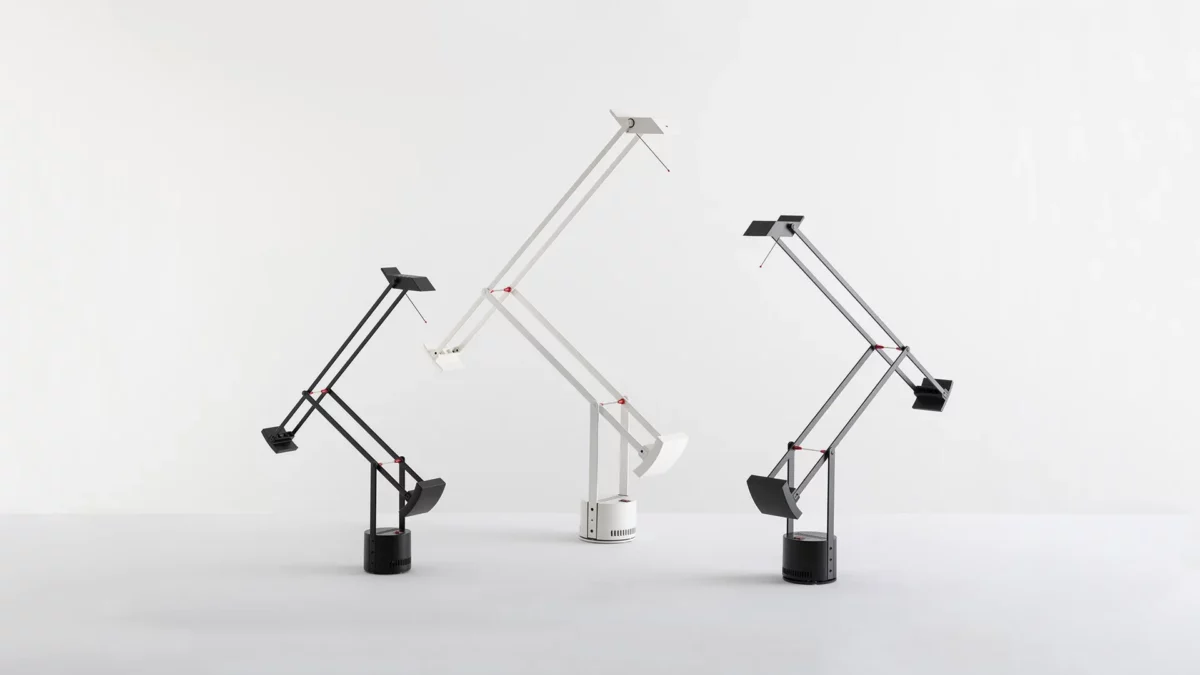
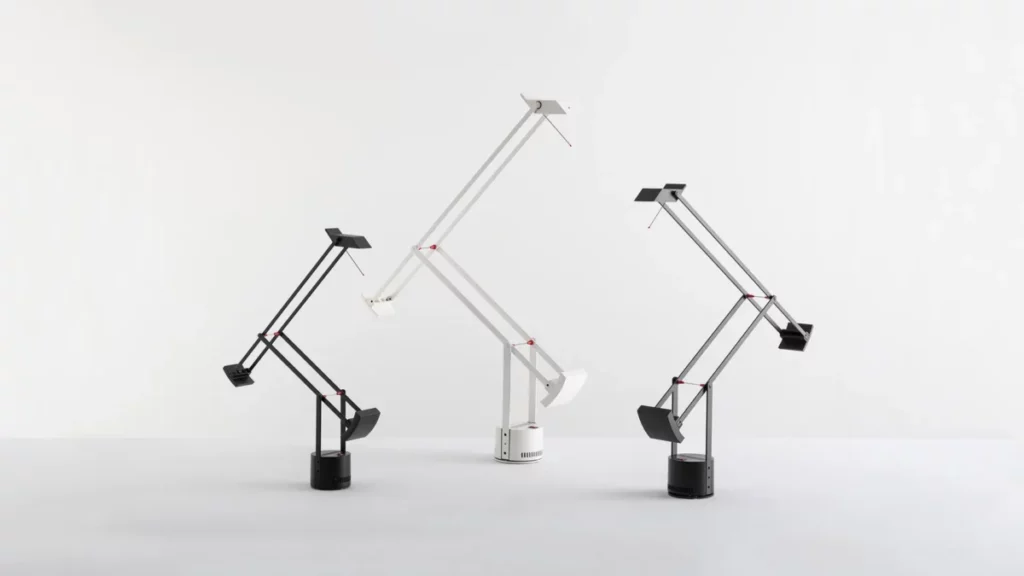
On the lighting side and exceptional fixtures, LEDs begin replacing traditional bulbs. Sculptural lamps such as Artemide’s Tizio, or the minimal creations of Flos, capture this fusion of engineering and elegance.
Key thinkers and influences
Industrial designer Dieter Rams and his ten principles of good design become a touchstone. His Braun work directly inspires Jonathan Ive. Architect John Pawson articulates minimalism as a way of living in Minimum (1996).
2000–2010: The industrial loft 2.0 and the start-up era
Historical context
The dot-com crash (2000) followed by Web 2.0 and the platform economy shaped a new entrepreneurial culture. Start-ups moved into former industrial spaces, creating an interior style that mixed reclaimed elements, raw authenticity, and seamless technological integration.
The reinvented loft
Unlike the 1970s–80s New York loft (SoHo), this new version integrates technology organically. The open plan becomes the stage for a life where work and private space increasingly overlap.
Characteristic furniture
- Massive raw-wood tables (oak, walnut) on industrial metal bases
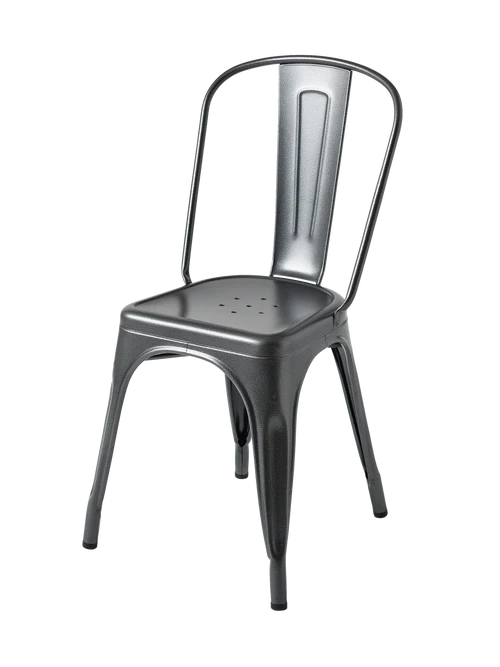
- Tolix chairs (originally created in 1934 by Xavier Pauchard) enjoying a spectacular revival
- Chesterfield leather sofas, patinated and warm against metal and concrete
- Reclaimed factory lockers repurposed as storage
- Workshop benches transformed into communal desks
Accessories and decor
- Edison filament bulbs hanging from simple textile cords
- Wall-mounted blackboards for brainstorming (Google, IDEO influence)
- Oversized vinyl typography with quotes and slogans
- Bikes mounted on walls as sculptural objects
- Large green plants (monstera, ficus) in industrial pots
Signature materials
Polished concrete floors, exposed red brick, reclaimed wood (pallets, old parquet), matte black metal, aged leather, cast iron.
Cultural influences
The maker movement and FabLabs, the look of artisanal coffee shops (Stumptown, Blue Bottle), and a renewed DIY culture fueled by platforms like Instructables.
Thinkers and movements
Designer Tom Dixon with his hammered copper pieces, and the Dutch collective Droog Design, known for salvaging and rethinking industrial objects, embody this creative recycling mindset.
2010–2015: The reign of Scandi-tech
Historical context
The iPhone (2007), Instagram (2010), and Pinterest (2012) changed interior design radically. For the first time, homes became shareable content, built for the camera as much as for living. Design became more accessible, and paradoxically more uniform, around a global Scandinavian baseline.
The “Instagrammable” aesthetic
Nordic style becomes the worldwide reference, popularized through concepts like Danish hygge and Swedish lagom. It answers the desire for warmth in a hyperconnected world, while integrating technology quietly into everyday life.
Star furniture
- Low modular sofas in heathered gray textiles (Muuto, HAY)
- Mid-century classics reissued: the Eames Lounge Chair, Hans Wegner’s Wishbone chair
- Round oak coffee tables on tapered legs
- String Furniture shelving (created in 1949 by Nisse Strinning, rediscovered)
- Sideboards on 1950s compass legs
Decor accents
- Geometric cushions inspired by traditional Scandinavian textiles
- Merino wool throws in neutral tones
- Copper or brass pendants (&Tradition, Muuto)
- Round mirrors with thin brass frames
- Minimal terrariums and succulents
- Design-led scented candles in clean containers
Color palette
Off-white, pearl gray, blue-gray, pale natural woods (ash, bleached oak), graphic black touches, and accents of rose copper and brass.
Textiles
Crumpled linen, organic cotton, boucle wool, natural untreated leather. Upholstery textiles and soft materials lean toward natural tactility.
A sociological phenomenon
Decor blogs (Apartment Therapy, Design*Sponge) and interior designers’ Instagram accounts created a new visual economy. Scandinavian style became a universal language of accessible good taste, amplified by IKEA, H&M Home, and Zara Home.
Thinkers and influences
Japanese architect and designer Naoto Fukasawa and his concept of “without thought” (design that anticipates gestures), and British designer Jasper Morrison with his Super Normal approach (ordinary objects made exceptional through rightness) shape this period’s sensibility.
2015–2020: Digital maximalism and the colorful reaction
Historical context
As fatigue sets in from white minimalism and Instagram feeds fill with interiors that look increasingly identical, an opposite impulse emerges. The millennial generation embraces color, accumulation, and eclectic identity as a way to stand out again.
Chromatic explosion
Millennial pink (Pantone 13-1520), emerald green, and Klein blue invade interiors. The Memphis energy of the 1980s, led by Ettore Sottsass, returns in force, reinterpreted for a new digital stage.
Signature furniture
- Velvet sofas in saturated tones (bottle green, midnight blue, fuchsia)
- Vintage 1970s–80s seating (Ligne Roset’s Togo, Olivier Mourgue’s Djinn)
- Colorful terrazzo tables (a 1950s material revived)
- Rounded, organic “blob furniture” inspired by natural forms
- Sculptural, wavy wall shelves (a Panton spirit revisited)
Decor accents
- Custom LED neon signs with phrases and poetic lines
- Irregular organic-shaped mirrors
- Asymmetrical sculptural ceramic vases
- Maximal textiles: fringes, pom-poms, tufting, macramé
- Tropical wallpapers, palms, and Art Deco echoes
- Saturated prints and colorful abstraction
Aesthetic influences
Vaporwave (nostalgic digital aesthetics of the 1990s), a Memphis redux, unapologetic pop culture, and British maximalism (Abigail Ahern).
Integrated technologies
Connected objects become visible and even decorative:
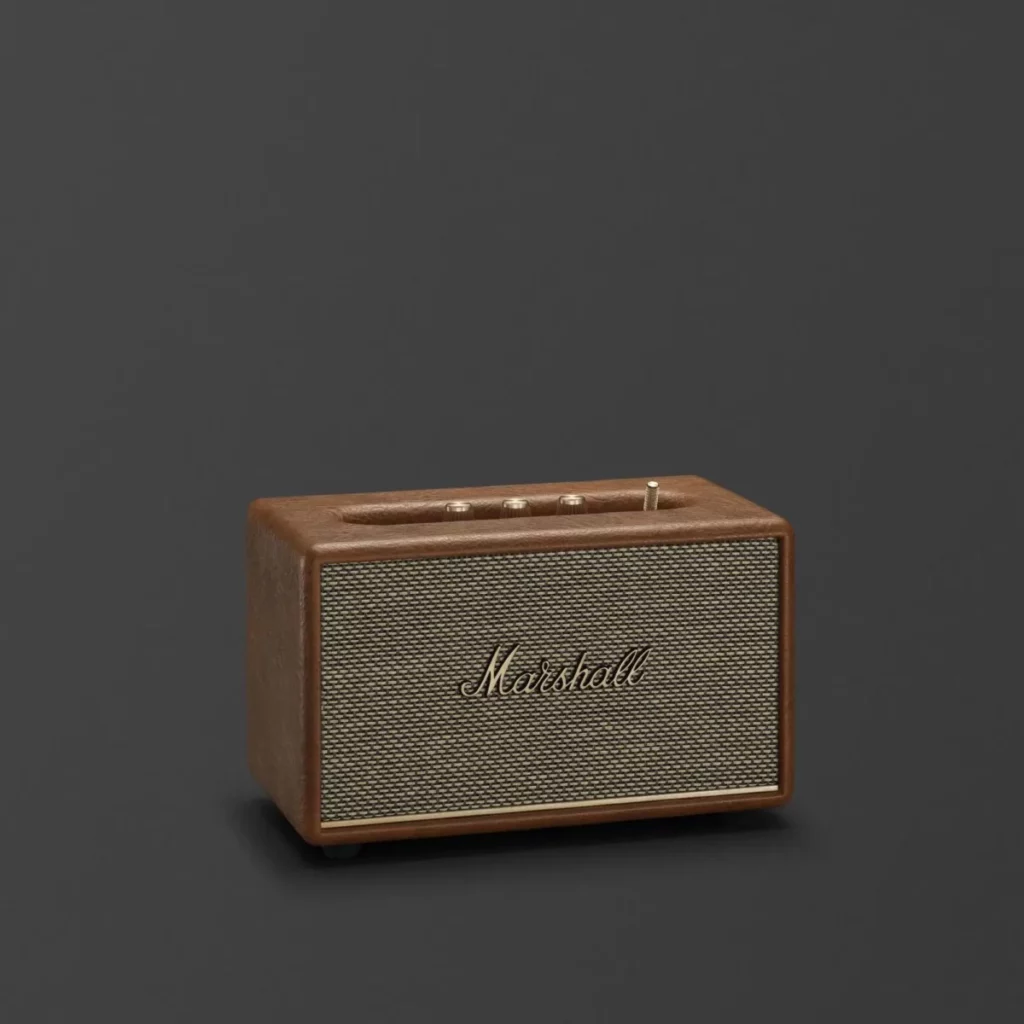
- Marshall speakers and colorful Sonos pieces
- Philips Hue lighting to shift atmospheres at will
- Digital frames displaying contemporary art
Key figures
Designer India Mahdavi with her candy-pink universes, Kelly Wearstler and her luxurious Californian maximalism, and Crosby Studios with its post-Soviet, graphic, color-forward language.
2020–2025: Biophilic tech and the nature–digital reconciliation
Historical context
The COVID-19 pandemic (2020) radically reshaped our relationship with home. Remote work, lockdowns, and heightened ecological awareness created a new paradigm: interiors must function as office, refuge, wellness space, and a renewed connection to nature.
The biophilic style
Biophilic design (theorized as early as 1984 by biologist Edward O. Wilson) truly enters mainstream practice. The idea is to integrate nature into built space, while hiding the technology that has become indispensable.
Trending furniture
- Rattan and cane pieces, bringing craft techniques back into focus
- Organic curves inspired by pebbles, shells, and living forms
- Solid wood tables with translucent epoxy resin inlays
- Enveloping boucle armchairs (teddy fabric)
- Adaptable modular systems (movable partitions separating work from life)
- Clean-lined electric sit-stand desks
Accessories and greenery
- Vertical green walls with automated irrigation systems
- Connected planters monitoring moisture and light
- Indoor fountains for calming acoustics
- Design essential-oil diffusers (aromatherapy integrated)
- Oversized terrariums and indoor mini-greenhouses
Preferred materials
Raw materials take priority: terracotta, clay, artisanal ceramics, linen, hemp, wool, cork, bamboo, untreated wood, natural stone.
Color palette
Terracotta, ochre, olive green, khaki, warm beige, sand, earthy tones, rust, saffron, soft clay pink.
Invisible technologies
Paradoxically, this is the era of the deepest technological integration, but it is designed to disappear:
- Speakers disguised inside natural-looking objects (stone-like forms, wooden lamps)
- Wireless chargers integrated into bedside tables and desks
- Circadian lighting systems mimicking natural daylight progression
- Motorized curtains and blinds controlled by voice or app
- Discreet connected mirrors (fitness, weather, agenda)
- Air-quality sensors and design-led purifiers
New hybrid spaces
Interior architecture reorganizes around new domestic programs:
- Remote-work zones with neutral, “Zoom-friendly” backgrounds
- Gaming corners with ergonomic desks, RGB lighting, and gear storage
- Home podcast and streaming studios with acoustic panels and integrated ring lights
- At-home fitness spaces (Peloton, connected mirrors)
- Design charging stations: furniture with integrated USB ports and multi-device docks
Thinkers and movements
Architect Stefano Boeri and his vertical forests, Formafantasma and their radical ecological approach, and the Slow Design movement advocating durability and emotional connection to objects.
Crossovers: tech objects that became design icons
Some technological objects transcend their function to become aesthetic markers of an era:
1990s–2000s
- The translucent iMac G3 (1998): the first computer openly embraced as a design object
- The Tamagotchi: a digital toy turned cultural phenomenon
- The matte-black PlayStation: hardware as interior presence
2000s–2010s
- The iconic white iPod and its earphones
- Flat screens freeing up wall space and reorganizing living rooms
- The minimal white Wii
2010s–2020s
- Smart speakers (Amazon Echo, Google Home) as small modern sculptures
- Drones displayed on stands like objects
- VR headsets (Oculus) as a new household artifact
2020s–2025
- Robot vacuums influencing layouts (fewer obstacles, clearer floors)
- Samsung The Frame screens displaying artworks as part of decor
- Design-forward multi-device charging stations
How digital interfaces shaped spatial aesthetics
A fascinating phenomenon: interface visuals migrated into physical design language.
Skeuomorphism (2000s)
Early iOS interfaces mimicked real materials (leather, wood, felt). In interiors, this fed a renewed appetite for “true” textures as a counterpoint to the screen.
Flat design (2010s)
The clean interface language of iOS 7 (2013) reinforced minimalism in furniture: solid color fields, simple geometry, and fewer visual effects.
Neumorphism (2020)
Softly swollen surfaces and delicate shadows: this UI aesthetic echoes in gentle, rounded, organic furniture forms.
Glassmorphism (2020–2025)
Transparency, blur, layering: a return of frosted glass, tinted plexiglass, and translucent resins in furniture and partitions.
Resistance movements and counter-cultures
Against digital uniformity, several resistance aesthetics emerge:
Western wabi-sabi (2015+)
Accepting imperfection, celebrating patina, and choosing unique crafted objects over algorithmic sameness.
Vernacular maximalism (2018+)
Personal accumulation, memories, salvaged objects, and a refusal of the “Instagram catalog” look.
Cottagecore (2020+)
A nostalgic rural romanticism, a rejection of hyperconnected urban life. It exploded on TikTok during lockdowns.
Conclusion: toward a post-digital interior?
The digital age (1990–2025) transformed interior design not only through tools (3D modeling, virtual reality, 3D printing) but also through forms, materials, and everyday uses.
Three major tendencies coexist today:
- Invisible integration: technology disappears into warm, natural materials
- Identity-driven expression: resisting sameness through extreme personalization
- Confident hybridization: mixing eras, references, and styles within one space
What defines this period is eclecticism without hierarchy. Unlike earlier eras dominated by a single stylistic regime (Art Nouveau, Bauhaus, Art Deco), the digital age allows and even rewards the coexistence of multiple aesthetics. It mirrors the very nature of the digital world: customizable, modular, infinite.
Contemporary interior design is no longer strictly prescriptive. It becomes democratic and participatory. Social platforms, online marketplaces, visualization tools, and DIY culture allow anyone to shape their own environment. This democratization comes with a sharper awareness of ecological impact, durability, and the meaning we attach to the objects we live with.
The future? Likely an even deeper synthesis between materiality and virtuality, with augmented reality making it possible to transform interiors visually without altering their physical substance, and artificial intelligence personalizing spaces in real time according to our activities and moods. Yet against hyperconnection, the need for tactility, sensorial comfort, and a grounded relationship with matter and nature will only intensify.
Ultimately, interior design in the digital age reminds us of one essential truth: no matter how sophisticated our technologies become, we remain profoundly sensory beings. We need beauty, comfort, and meaning in the spaces we inhabit.

Digital entrepreneur and craft artisan.
My work bridges craftsmanship, design history and contemporary creation, shaping a personal vision of luxury interior design.
Since 2012, I have been based in my workshop on the shores of Lake Annecy, creating bespoke interiors for architects, decorators and private clients.