

Velvet: A Complete Guide to the Most Storied Textile in Interior Design
Velvet: the king of textiles
Velvet is neither a passing interior design trend nor a mere decorative fabric. It is a noble textil, a structural cloth, exacting and historically bound to power, comfort and prestige. Omnipresent in contemporary interiors today, it is nevertheless frequently misunderstood, poorly chosen, and sometimes betrayed by cheap imitations that usurp its name. Our aim here is to restore velvet to its rightful place — technical, cultural, artisanal — and to guide you in choosing it when you are searching for a quality upholstery fabric.
What is velvet?
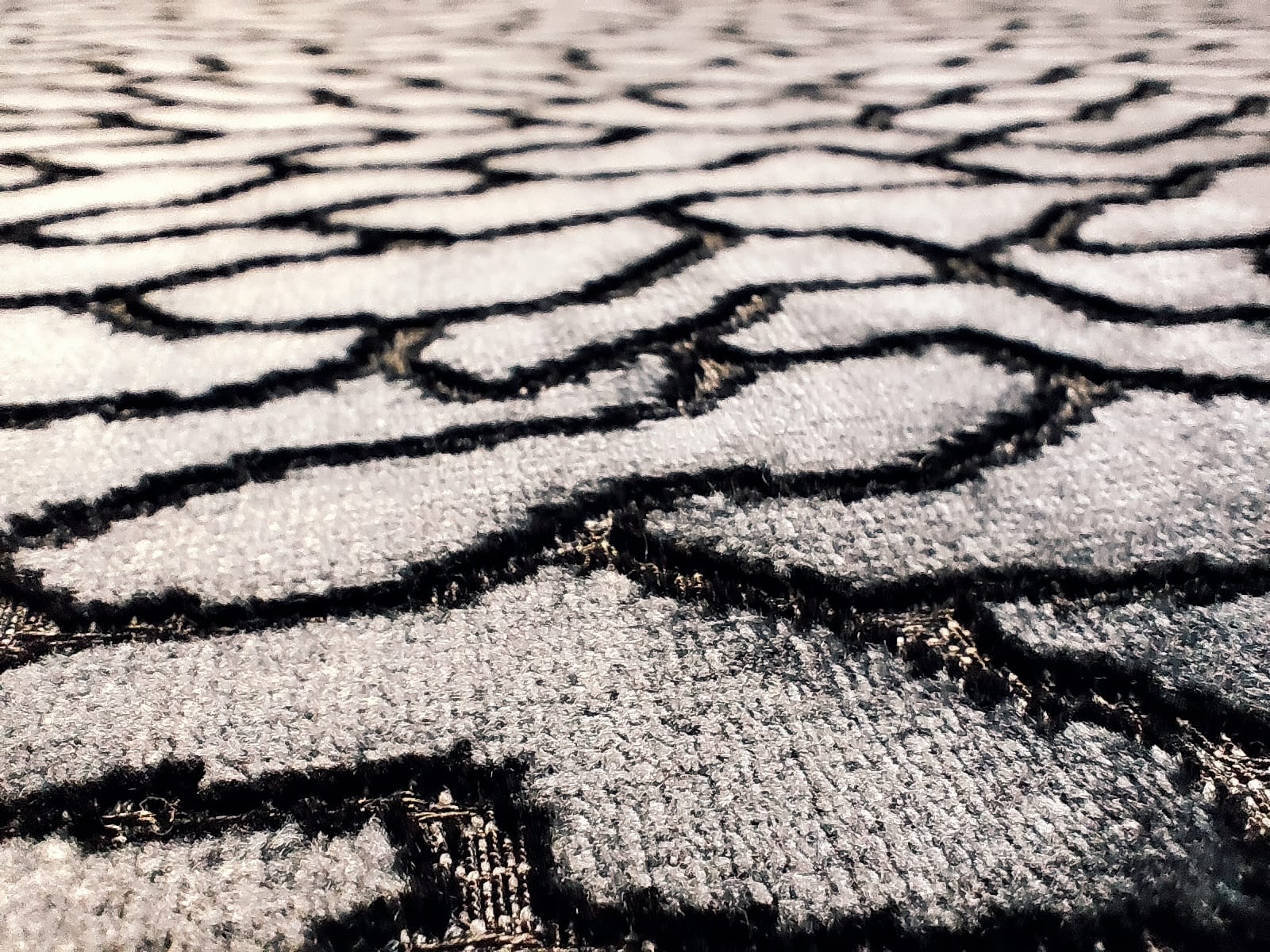
Before anything else, it is essential to understand what fundamentally sets velvet apart from other textiles. Velvet is a pile fabric, a textile whose surface presents fibres standing perpendicularly to the plane of the weave. This pile can be cut (free ends) or looped (intact loops), but in all cases it creates a third dimension.
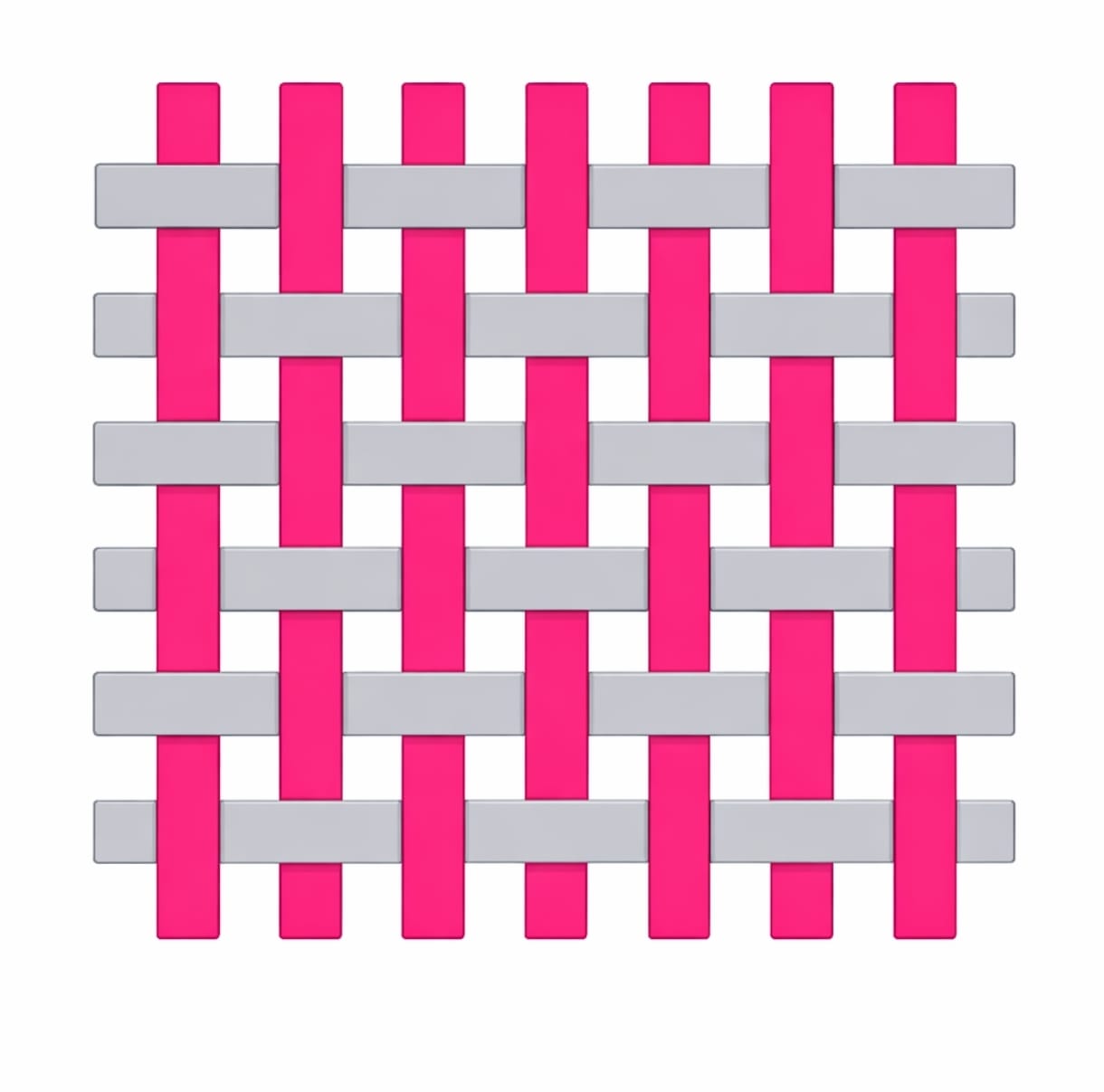
Where a plain weave rests on the perpendicular interlacing of warp threads (vertical) and weft threads (horizontal), velvet adds a vertical architecture: the pile, formed by additional threads woven into loops and, in some cases, cut. This construction explains everything: why velvet captures light differently depending on the viewing angle, why it retains the mark of touch, why it lives with time and use.
The oriented pile creates plays of shadow and reflection that make every velvet surface a shifting, almost living material. This property, far from being a flaw, is the very essence of velvet: its capacity to reveal depth, to interact with light, to bear the imprint of use without degrading. Velvet is widely used in upholstery precisely because it ranks among the most durable of all textiles. Composed of natural or synthetic fibres, it remains one of the noblest fabrics in existence.
Textile construction: warp, weft and pile
To understand what makes a true velvet, one must look at its construction. Velvet is built on a system in which three elements interact: the ground warp (vertical threads forming the base cloth), the weft (horizontal threads) and the pile warp (additional threads creating the loops).
During the weaving process, these pile threads are woven into loops above the ground fabric. These loops may be left intact — producing a looped velvet — or cut to release the ends, creating the characteristic vertical pile of classic cut velvet. Velvet may also detach against a bare weft to create spotted effects, as in certain leopard print velvets.

This architecture, unique to velvet, explains three essential properties:
- Mechanical resistance: the pile, anchored in the ground fabric by weaving, withstands abrasion and pulling.
- Visual reading: the orientation of the pile creates variations in sheen depending on whether light runs with or against the pile direction.
- Ageing behaviour: a true velvet patinas and densifies with use, developing a tactile memory.
This is why velvet never behaves like a flat fabric. Its three-dimensionality confers unique mechanical, optical and tactile properties that demand a specific understanding when choosing and working with it.
A historical example: Genoese velvet
To grasp the technical complexity of velvet, nothing is more instructive than a historical case study: Genoese velvet, produced as far back as the Middle Ages in Italian workshops.
This velvet operates on the principle of a double warp: a ground warp that forms the base fabric, and a dedicated pile warp that creates the loops.
These loops may be left intact on certain areas (looped velvet) and cut on others (cut velvet), producing highly sophisticated contrasts between matte and lustrous effects. This technique, known as voided velvet or velours ciselé, allows patterns to be drawn in relief solely through variations in pile height and treatment.
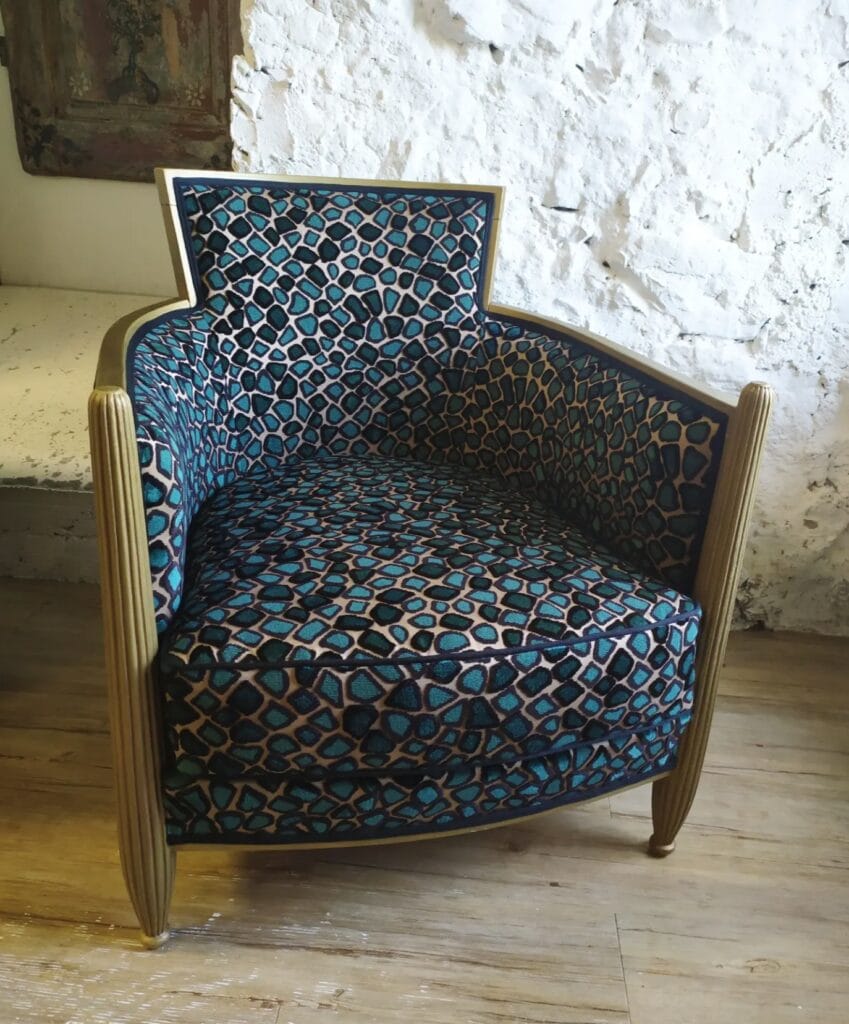
Genoese velvet was destined for aristocratic furniture ( armchairs, wall hangings, canopies…) and its production demanded rare technical mastery. Even today, it remains a benchmark for understanding what a structural quality velvet truly is: rigorous construction, noble materials (silk or wool), high density, and exceptional durability. It remains one of the most luxurious velvets on the market.
KEY TAKEAWAY
A true velvet rests on a specific textile construction: ground warp + pile warp woven into loops. The pile may be cut (free ends) or looped (intact loops). This architecture guarantees resistance, luminous depth and a noble ageing process.
The main types of velvet
Classification by material
Not all velvets are equal, and the fibre composing the pile largely determines the tactile, visual and mechanical properties of the textile.
Velvets made from natural materials such as linen, wool or silk dominate the exceptional interiors market. Each captures light in its own way and adorns the most luxurious spaces.
Silk velvet
Silk velvet remains at the very pinnacle of the hierarchy. It offers an incomparable lustre, a silky softness and an unrivalled ability to capture light. Sometimes delicate, it lends itself to everything and above all to decorative applications such as curtains, cushions, wall hangings and exceptional upholstered pieces.

Cotton velvet
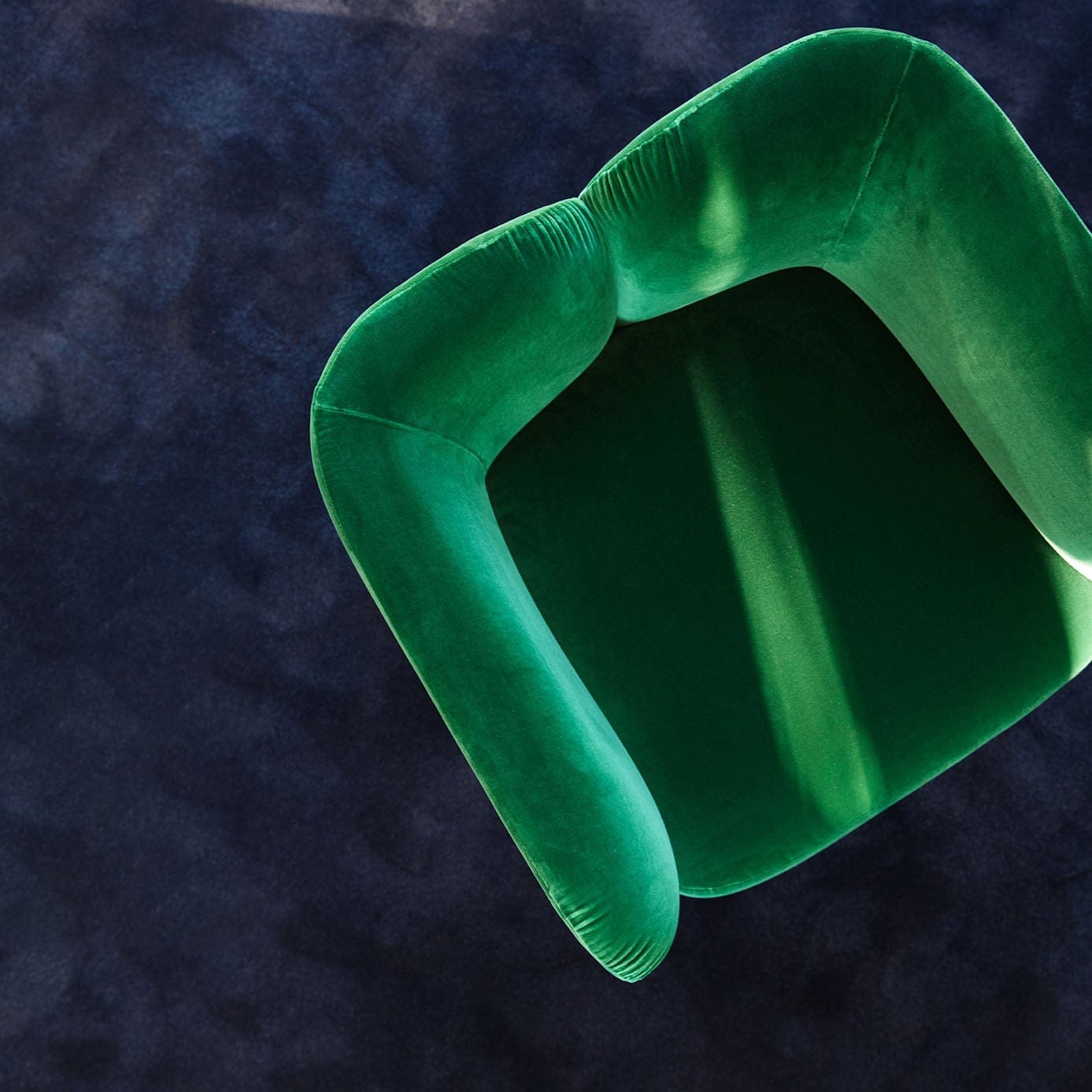
Cotton velvet is the contemporary standard for upholstery: supple, resistant, available in a range of densities, it offers an excellent balance between comfort, durability and affordability. It is the velvet of everyday sofas, reading chairs and benches. Every major fabric editor carries at least one collection of 100% cotton velvet.
Wool velvet
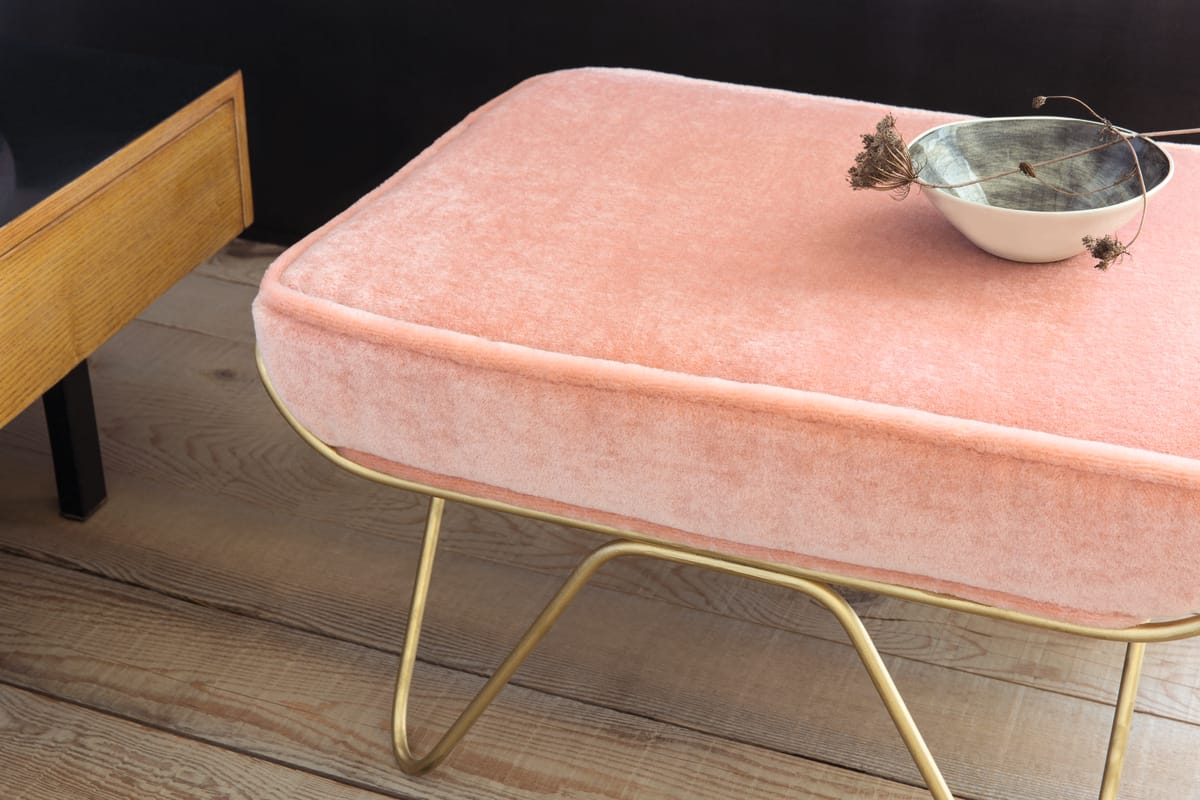
Wool velvet brings warmth and structure, with a slightly rougher texture that ages admirably. Less lustrous than cotton, wool develops a noble patina and is particularly suited to contemporary interiors seeking a quiet, assured sobriety. Mohair velvet is among the most beautiful and resilient.
Linen velvet
Linen velvet, less well known but remarkable, deserves special attention. Its handle is dry, almost mineral, with very restrained lustre and excellent structural hold. Linen velvet is a quintessentially contemporary fabric: matte, architectural, noble without ostentation. In upholstery, it calls for adapted skill — its relative stiffness demands more technique than cotton — but the result, when correctly executed, has a rare elegance perfectly suited to the clean lines of modern furniture.

Synthetic velvets
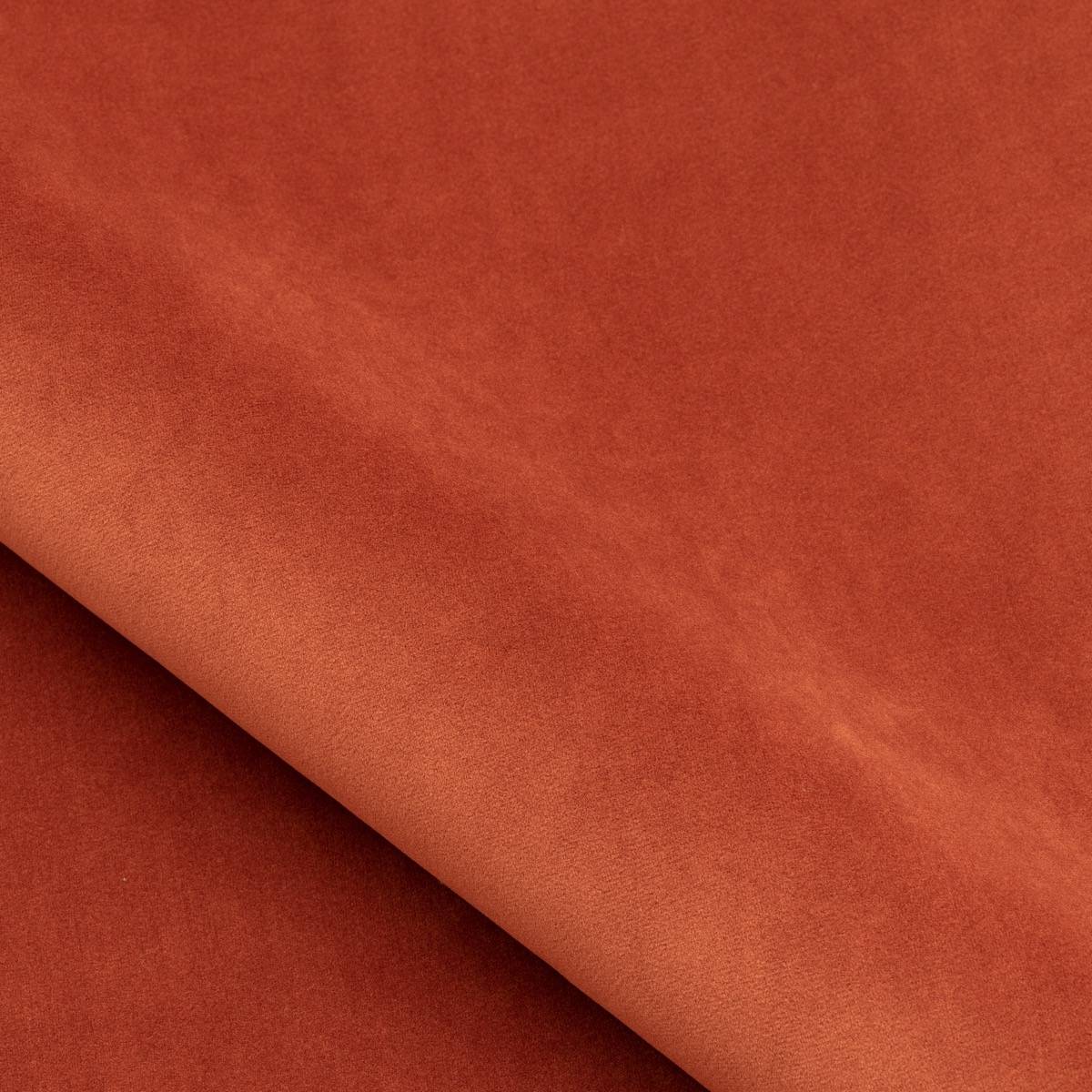
As for synthetic velvets — polyester or viscose — they require careful discernment. Certain high-performance synthetic velvets, developed for contract or intensive use, display remarkable resistance and stability. But many low-grade synthetic velvets do no more than mimic the appearance of velvet without offering its luminous depth, its durability or its tactile nobility. This is why, when choosing a synthetic velvet, one should always prioritise high resistance — that is, a high Martindale rub count.
Classification by technique
Beyond the material, the manufacturing technique produces distinct typologies:
- Cut velvet: pile uniformly cut to a regular height, creating a homogeneous surface.
- Looped velvet: intact loops, matte appearance, excellent resistance to crushing.
- Stamped velvet (velours frappé): a mechanical treatment that flattens certain areas of pile, generating relief patterns through variations in sheen.
- Voided velvet (velours ciselé): combination of cut and looped zones, producing sophisticated textural effects.
- Corduroy velvet: parallel ribs, more rigid structure, great solidity.
A single textile can combine several techniques for a rich and complex result — as seen in the celebrated Genoese velvets and many contemporary creations.

Velvet and light: a living material
No flat textile can rival velvet in its relationship with light. This unique property flows directly from the orientation of the pile. When light strikes velvet with the pile, the fibres open to it, revealing the full depth of colour and creating an impression of chromatic richness that almost vibrates. When light comes against the pile, the fibres act as a screen, darkening the surface and creating areas of dense shadow.
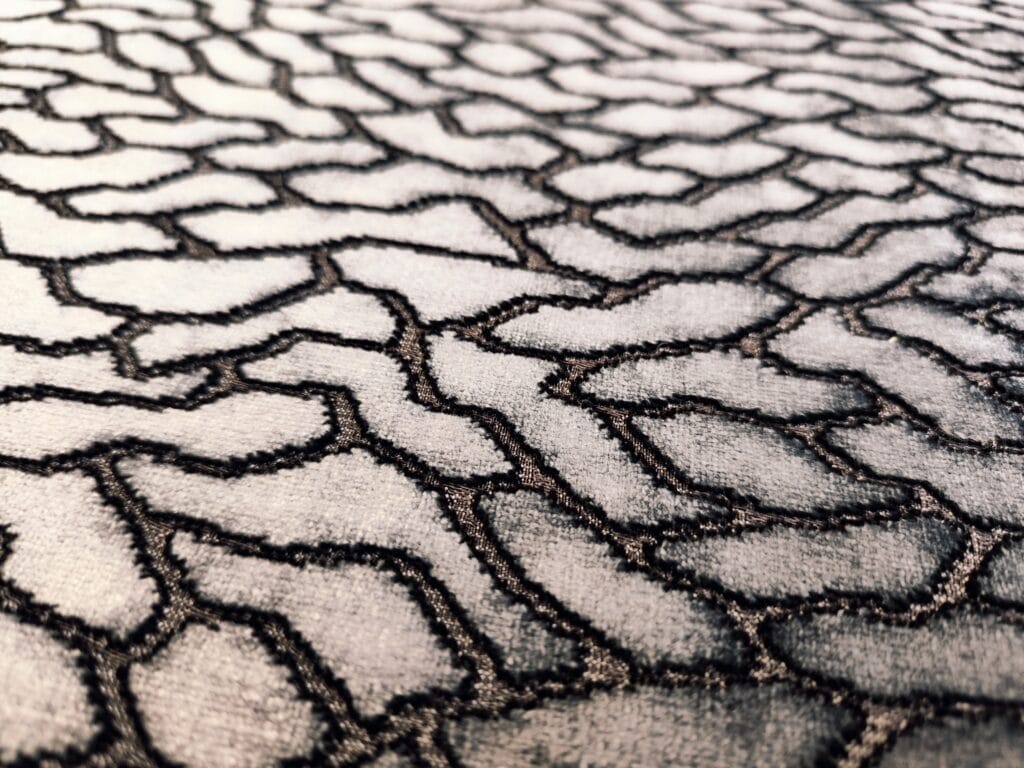
This variation is not a manufacturing defect — it is the very expression of velvet, its optical signature. A sofa in velvet shifts in appearance throughout the day, as the angle of natural or artificial light changes. Far from being unsettling, this optical life contributes to the sensory richness of the interior: velvet becomes an expressive surface, in constant dialogue with the ambient light.
This is why the choice of pile direction during installation — whether for upholstery or curtains — is never trivial. On an armchair, the pile is generally oriented downwards to maximise the lustre seen from the front and to minimise visible wear marks. On a curtain, the orientation can be chosen to modulate the absorption or reflection of light.
Velvet in upholstery: a workshop perspective
Let us be clear: all true structural velvets (cut or looped pile, woven with a pile warp) are suitable for upholstery, provided that their density and construction match the intended use. A delicate silk velvet will not suit a family sofa in daily use, but will be magnificent on a formal armchair. A high-density cotton velvet (over 300 g/m² total weight) will withstand intensive use without wavering.
Linen velvet, despite its reputation for fragility, performs admirably in upholstery when handled with discernment. Its structural stiffness demands careful tensioning during fitting, respect for the grain lines and particular attention to corners. But once correctly executed, it offers exceptional hold and elegant ageing.
The essential step lies in making the right choice before installation begins. A skilled upholsterer knows how to assess pile density, verify the strength of the ground weave and evaluate abrasion resistance. They can also recommend the right type of velvet for the intended use: family living room, bedroom, study, or occasional reception room.

The false friend: chenille velvet
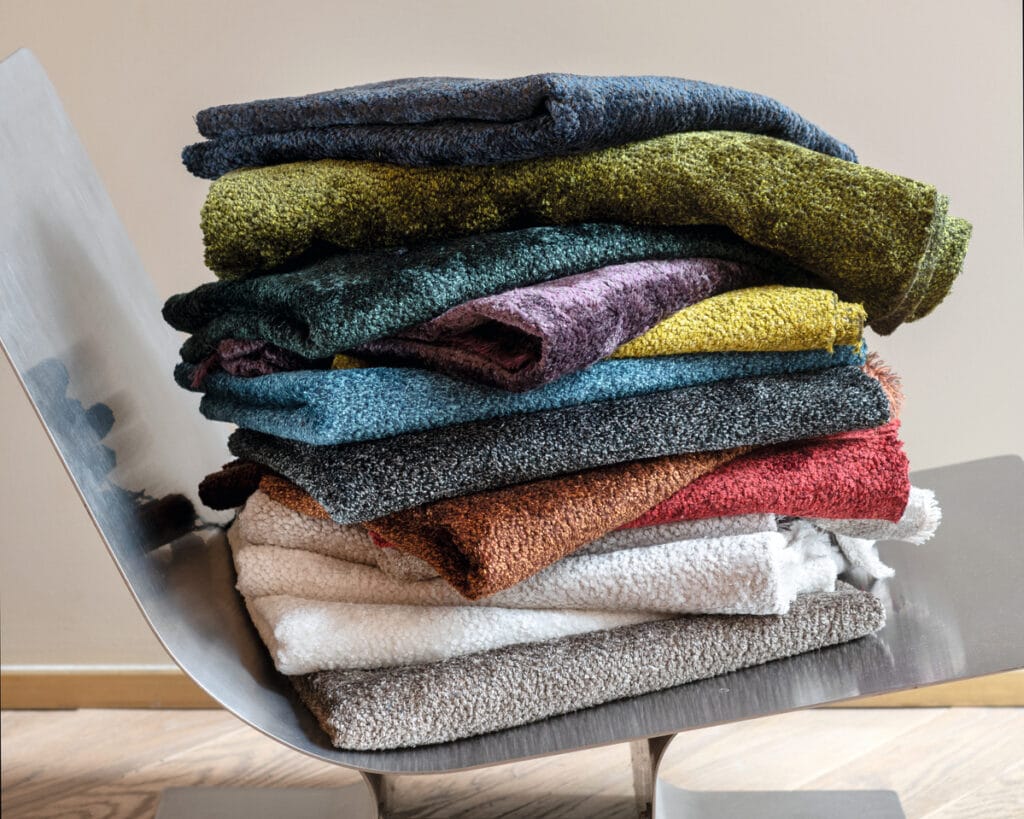
Now for the uncomfortable subject. Chenille velvet is not a velvet in the structural sense of the term. Why? Because its pile does not originate from a supplementary cut warp thread; it is integrated into the yarn itself before weaving.
In practice, chenille yarn is made by wrapping short fibres around a central core, creating a “hairy” thread that resembles a caterpillar (hence the name — chenille means caterpillar in French). These yarns are then woven as warp and weft to form the textile. The handle is immediately soft, plush and seductive. But structurally, this is not a velvet: the pile is not anchored perpendicularly by weaving; it is part of the horizontal thread. It is therefore structurally less resistant, and when choosing chenille, one should be selective and turn to the leading high-end upholstery fabric editors to ensure longevity.
The practical consequences are unforgiving:
- Low mechanical resistance: the pile, not anchored vertically, crushes easily under repeated use. Seat areas mark quickly and irreversibly.
- Pilling: poorly anchored short fibres work loose, forming the characteristic small balls that blight the surface.
- Poor ageing: where a true velvet develops a noble patina, chenille degrades, loses its volume and reveals the underlying ground weave.
Our position is unambiguous: chenille is generally the cheapest of all velvet-like textiles. The least solid. The least durable for upholstery. It is an industrial, high-volume solution, not a quality craft choice. Its immediate softness does not compensate for its structural shortcomings. For upholstered furniture intended to last, to be used, to endure: it is not the ideal choice.
This does not mean chenille has no legitimate application. For small decorative cushions with frequent rotation, or for projects with a limited budget and short intended lifespan, it can be perfectly appropriate. But it should be chosen knowingly, not in the belief that one is acquiring a quality velvet at low cost. It is simply not the type of fabric to recommend for intensive use.
Where a plain weave rests on the perpendicular interlacing of warp threads (vertical) and weft threads (horizontal), velvet adds a vertical architecture: the pile, formed by additional threads woven into loops and, in some cases, cut. This construction explains everything: why velvet captures light differently depending on the viewing angle, why it retains the mark of touch, why it lives with time and use.

KEY TAKEAWAY
Chenille velvet is not a structural velvet. Its pile is integrated into the yarn before weaving, not woven perpendicularly. The result is lower resistance to crushing, a risk of pilling and poor ageing. For upholstery, always favour a true woven velvet with a pile warp.
Printed velvets: complexity and compromise
Printing on velvet represents a major technical challenge. Why? Because the vertical pile captures ink differently from a flat surface, creating risks of bleeding, uneven penetration and degraded chromatic rendering.
The most suitable substrates for printing are short-pile velvets (cotton, viscose and certain synthetics) whose density and moderate pile height allow for better control of ink deposit. Long-pile or very dense velvets, on the other hand, considerably complicate the process.
Printing techniques
Surface printing deposits ink only on the tip of the pile. The result: a pattern visible on the surface, but one that can fade with crushing of the pile or wear. Suitable for light decorative uses (cushions, lightly handled curtains).

Deeper printing (suction or pressure techniques) seeks to drive ink all the way through to the ground fabric. Better durability, but risks stiffening the pile, altering the handle and weakening the structure.
Digital printing, a more recent development, offers increased precision and allows complex patterns. But it remains subject to the same physical constraints: the pile disturbs ink deposit, and long-term durability depends on the quality of ink anchoring.
Visual impact and wear
A printed velvet always presents a more fragile visual reading than a plain velvet. The pattern, deposited on the surface, is subject to variations in pile orientation, areas of wear and progressive crushing. In upholstery, this fragility is amplified: the seating areas see their pattern fade far more quickly than the rest of the piece.
Usage guidelines: reserve printed velvets for decorative applications (cushions, wall panels, headboards) or occasional-use seating. For a daily-use sofa, an office chair or a family bench, favour plain velvet whose chromatic depth holds up far better over time.
Where and how to use velvet in interior design
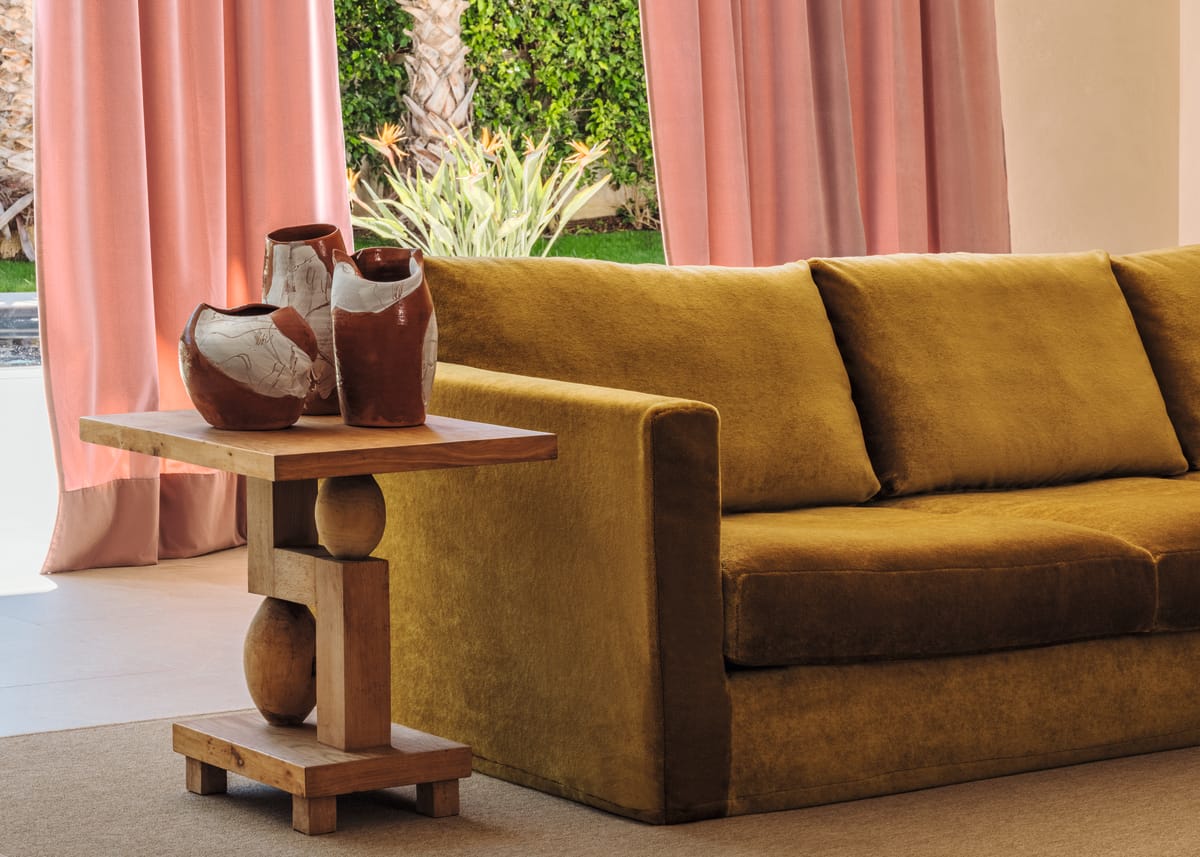
Velvet finds its fullest expression in seating: armchairs, sofas, benches, low chairs. It is here that its ability to capture light, offer tactile comfort and age with nobility comes fully into its own. A sofa upholstered in high-density cotton velvet, correctly chosen and properly executed, will endure fifteen to twenty years of family use without faltering.
In curtains and wall panels, velvet brings chromatic depth and a very satisfying capacity for acoustic absorption. A heavy velvet curtain modulates light with sophistication, creates a hushed atmosphere and contributes to both thermal and acoustic insulation.
Headboards and padded wall decorations also benefit greatly from velvet, particularly in bedrooms and restful spaces where its ability to absorb sound contributes to overall sensory comfort.
Common mistakes
- Choosing a velvet that is too delicate for intensive use.
- Prioritising immediate handle over density.
- Confusing chenille with structural velvet.
- Neglecting pile direction during installation.
- Opting for a printed velvet on a piece of furniture in daily use.
These mistakes, all easily avoidable with a little knowledge, transform what could have been an excellent choice into a costly disappointment.
How to choose a velvet: non-negotiable criteria
Faced with today’s textile offer, a few clear criteria allow you to distinguish the genuine from the imitation, the durable from the disposable.
Pile density: an upholstery velvet must present sufficient density (at least 250–300 g/m² total weight). A velvet that is too light will crush quickly. Ask for the weight per square metre, and insist on a large enough sample to test the pile’s resilience under pressure.
True construction: verify that it is indeed a velvet woven with a cut or looped pile warp, not a chenille. Examine the back of the fabric: a true velvet shows a distinct ground weave; chenille shows the same hairy thread throughout.
Pile direction: ensure that your upholsterer is aware of, and respects, the pile direction when cutting and fitting. A velvet fitted against the pile ages poorly and marks unevenly.
Intended use: be honest about the intensity of use. A daily office chair, a family sofa with young children, an occasional guest room armchair: each use calls for a different density and material.
Expected ageing: accept that velvet will patina and carry the memory of use. This patina is noble when the velvet is of quality, and unsightly when it is not. Prefer a true velvet that ages well over an imitation that will only degrade.
Marketing language versus textile reality: be wary of promises such as “ultra-soft velvet”, “cashmere touch” or “luxury effect”. These formulations often serve to conceal a chenille construction or low density. Favour suppliers who communicate about composition, weight, construction and resistance tests — in short, about the material reality of the textile.
Conclusion: material as an act of resistance
Velvet is an uncompromising material. It immediately reveals the quality — or mediocrity — of a choice. Well understood, well chosen, well executed, it moves through time with growing elegance, developing that noble patina which only genuine materials can offer. Poorly chosen – through ignorance, misplaced economy or confusion between immediate handle and structural quality – it betrays the interior, ages badly and disappoints.
In a market saturated with appearances and marketing rhetoric, technical knowledge becomes an act of resistance. Understanding what velvet truly is, distinguishing structural weaving from industrial chenille, evaluating density and material according to use: these skills are not a matter of snobbery, but of responsibility. The responsibility of choosing materials that last, that age well, that justify their initial cost through longevity.
Far more than a decorative trend, velvet is a textile technique perfected over millennia, the bearer of a rich material and social history. To restore it to its rightful place is to refuse the easy comfort of “velvet-like” substitutes and to insist on the truth of genuine velvet. It is to choose depth over surface, durability over planned obsolescence, substance over appearance.
In this sensevelvet properly understood perfectly embodies what every contemporary approach to interior design should be: informed, exacting, respectful of materials and craftsmanship, and oriented towards longevity rather than rapid consumption.

Digital entrepreneur and craft artisan.
My work bridges craftsmanship, design history and contemporary creation, shaping a personal vision of luxury interior design.
Since 2012, I have been based in my workshop on the shores of Lake Annecy, creating bespoke interiors for architects, decorators and private clients.