

Is Bouclé Fabric Durable? Pros, Cons, How to Choose and Price Guide
Bouclé fabric: the ultra-trending upholstery textile
Bouclé fabric is everywhere. On the sofas of design hotels, on the armchairs of architecture practices, on the mood boards of every self-respecting interior designer. Bouclé fabric has staged one of the most remarkable comebacks in contemporary interiors: it’s not a trend but a conviction. The conviction that materiality matters more than colour, that tactility is the highest form of luxury, and that a fabric can make a room feel warm without a single warm tone in its palette.
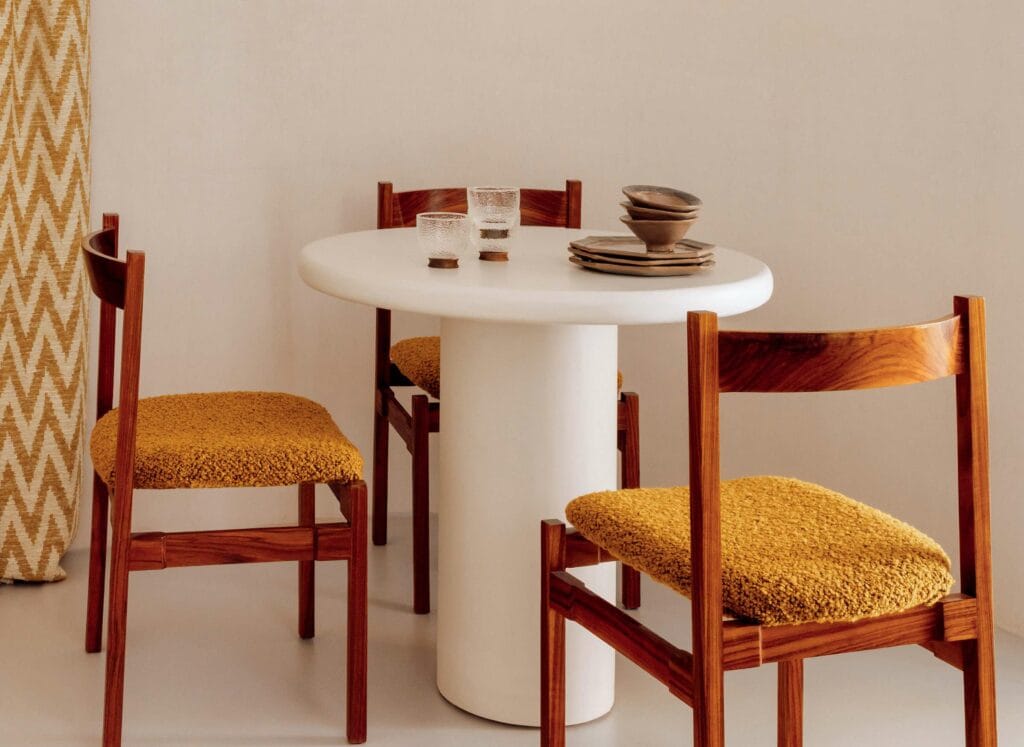
But behind the aesthetic seduction lies a question that every serious buyer, every interior designer, every upholsterer must answer before committing: is bouclé genuinely durable? And if so, which one, from which house, for which use? This guide addresses both questions with the precision this material deserves.
What exactly is bouclé?
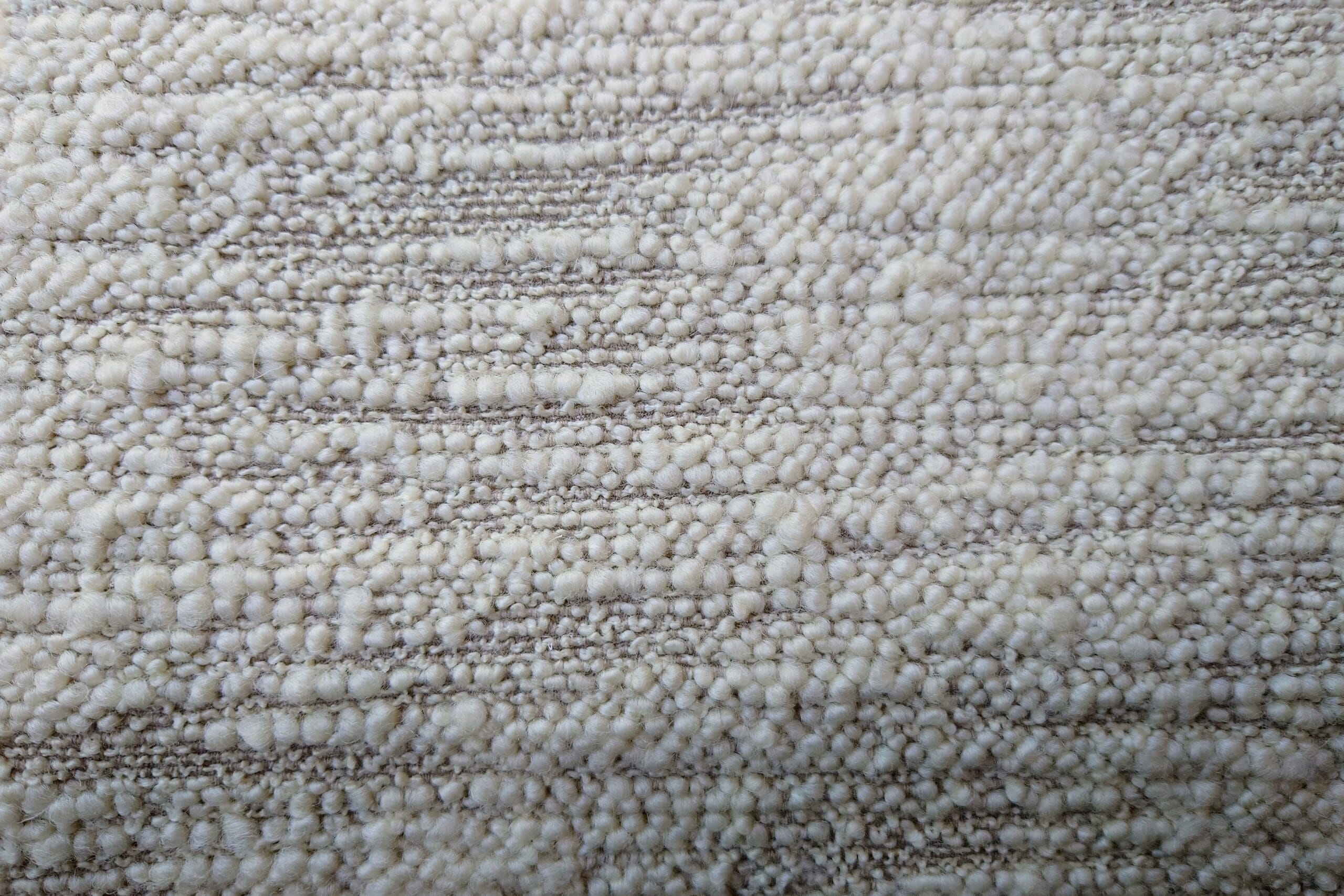
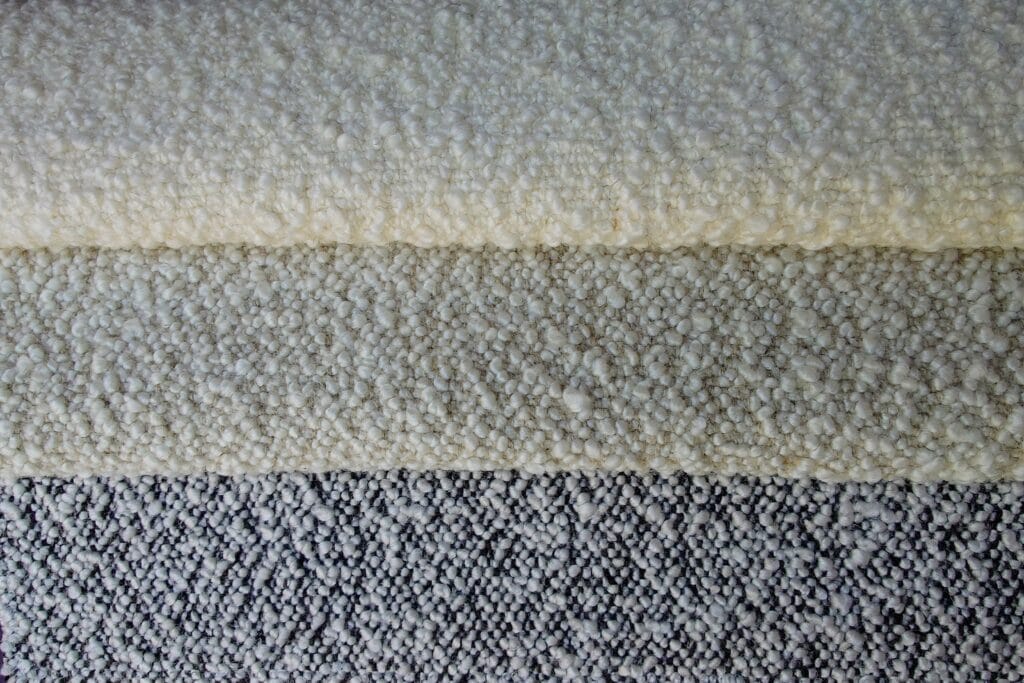
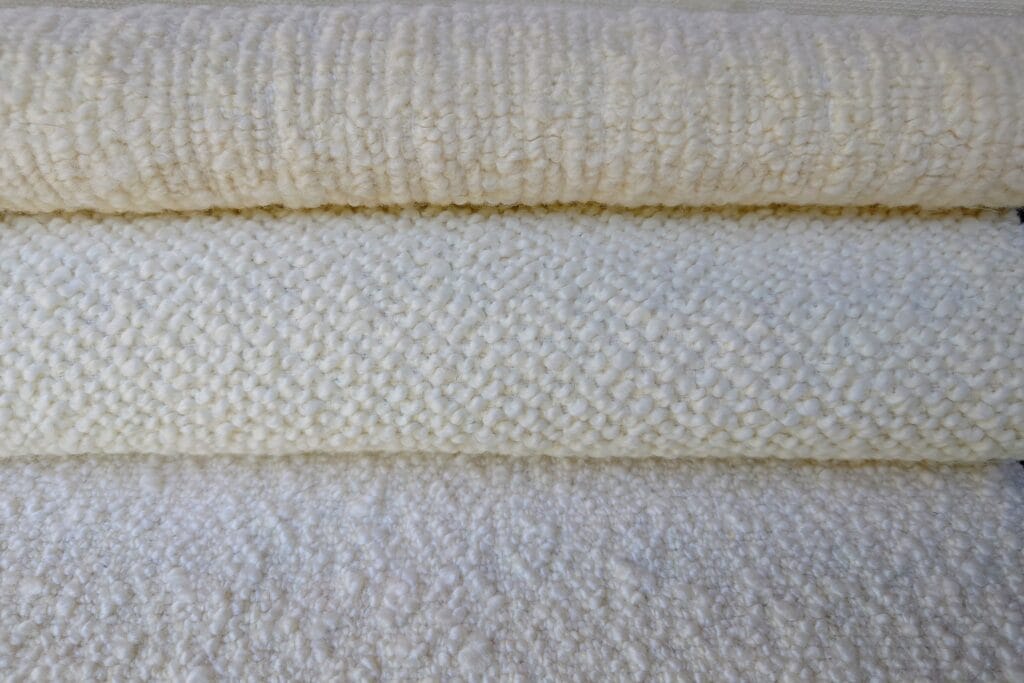
The word is French. It means looped or curled. The technique involves weaving a yarn in which at least one strand retains an excess of length, creating the loops, curls and knots that define the fabric’s surface. As a textile structure, bouclé is technically very close to velvet.
The loops can be tight or loose, fine or thick, regular or deliberately irregular. This variability is precisely what gives bouclé its visual complexity: two bouclés from two different houses can present an entirely distinct appearance and hand.
Historically, bouclé was associated with haute couture. Coco Chanel used a wool boucle for her signature jacket from the 1950s onwards ,the same decade that saw this textile migrate from fashion into interior design.
Today it is a standard reference in the high-end upholstery fabric collections of every major European textile house. But “bouclé” is not a protected term. An inexpensive polyester fabric with artificial loops and a Loro Piana wool boucle rated at 40,000 Martindale cycles both technically meet the definition. The word alone says nothing about quality.
The advantages of bouclé fabric
Visual depth without pattern
Bouclé creates a texture that reads differently depending on the angle of light, the time of day and the viewing distance. It brings visual interest to a piece of furniture without the constraints of pronounced patterns: no pattern matching to manage, no risk of tiring of a motif, no conflict with other textiles in the room. In this sense, it is one of the most versatile upholstery choices available, particularly suited to quiet luxury interiors where materiality takes precedence over effect.
Warmth and tactility
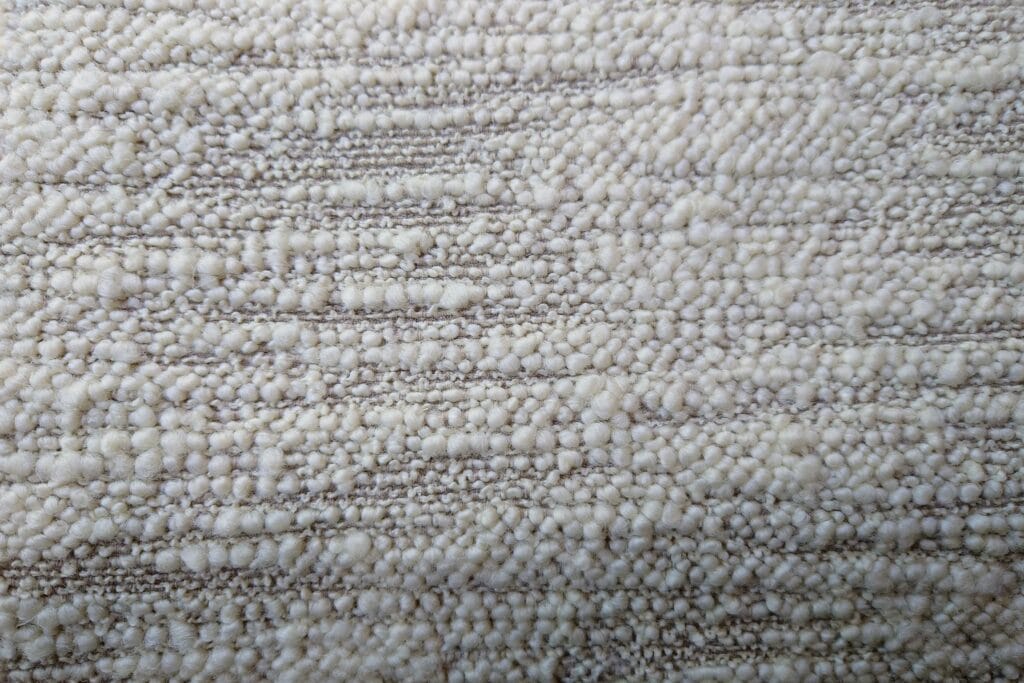
Few upholstery fabrics invite touch the way a quality bouclé does. The looped surface creates a softness that reads as warmth, even in neutral or cool colourways. This explains its dominance in Scandinavian-influenced interiors and any context where comfort must be felt before it is seen.
Forgiving of minor imperfections
The irregular, tufted surface of bouclé is forgiving. The light wear and daily snagging of domestic life tend to disappear into the texture. A flat velvet or a smooth linen will show every crease; a well-constructed bouclé will not.
Timeless aesthetic
Bouclé has been in continuous use since the mid-twentieth century and shows no sign of exhausting itself as a design language. Unlike trend-driven textiles, a quality bouclé sofa purchased today will read as a considered choice rather than a dated one in ten years’ time.
The disadvantages of bouclé fabric
Snagging: the primary risk
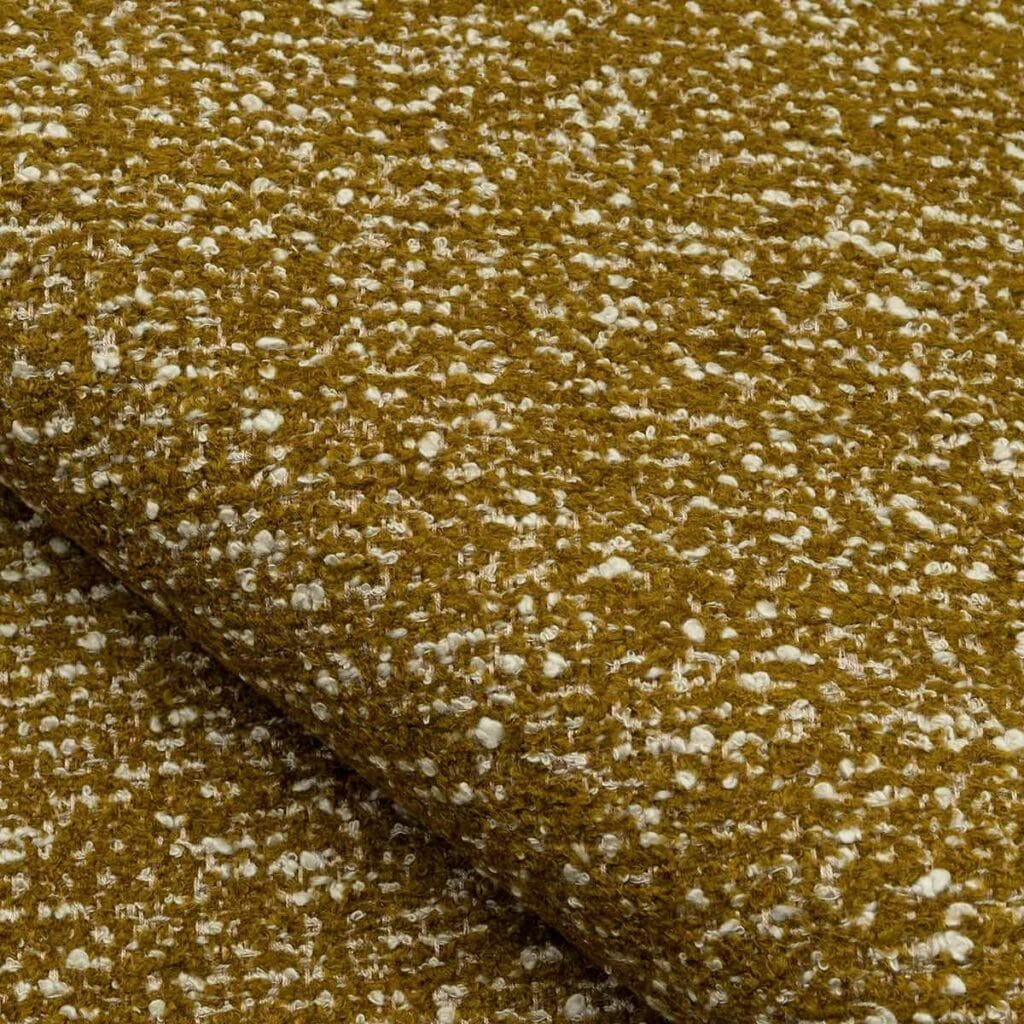
The loops that create the visual appeal are also the material’s main vulnerability. Rings, belt buckles, pet claws, velcro and rough surfaces can catch a loop and pull it, creating an irreversible snag. This is not a manufacturing defect: it is inherent to the weave structure. It can be managed with informed use, but it cannot be entirely eliminated.
Pilling: a risk with lower-quality versions
Inexpensive bouclés, particularly those made from short-fibre wool or loosely twisted yarns, will pill more quickly under friction. Pilling occurs when free fibres migrate to the surface and form small balls. It is the most obvious indicator of poor yarn quality. High-end upholstery fabrics from reputable houses use long-fibre wool or high-twist blended yarns precisely to prevent it.
Care: an essential precaution
Bouclé does not tolerate brushing or rubbing. Water and aggressive cleaning agents can felt wool fibres or permanently distort the loops. Immediate, gentle, targeted stain treatment is the only viable care strategy. Professional dry cleaning is the recommended solution for deep cleaning.
Heavy use: technical specification is essential
A bouclé sofa in a household with young children and pets requires a technically graded construction: flame-retardant yarns, reinforced backing, high Martindale rating. A purely decorative wool bouclé, however beautiful, will not survive that environment intact.
Durability: what the numbers actually mean
The durability of upholstery fabrics is measured by the Martindale test, a standardised assessment of the number of abrasion cycles a fabric can withstand before showing significant wear. Industry reference thresholds are approximately as follows: under 10,000 rubs for decorative use only; 10,000 to 25,000 for light domestic use; 25,000 to 40,000 for standard domestic upholstery; 40,000 and above for heavy domestic use or light contract; and 100,000 and above for contract and commercial environments.
A standard decorative wool bouclé typically falls between 15,000 and 25,000 rubs. This is perfectly adequate for an armchair in a guest bedroom or a bedroom bench. It is not adequate for the main sofa in a living room with intensive daily use.
The good news is that several high-end textile houses now produce technical bouclés and fabrics that combine the aesthetic of traditional bouclé with flame-retardant yarns, reinforced backing and Martindale ratings of 40,000 to 80,000 rubs. Dedar’s Lupo, for example, reaches 80,000 Martindale rubs while retaining the tactile quality associated with the house’s finest fabrics. This is the category to target for any bouclé application on a primary seating piece.
How to choose the right bouclé: a practical framework
Before selecting a bouclé fabric, three questions deserve a clear answer.
The first concerns intensity of use. A sofa used daily by a family requires technical specifications. An occasional armchair in a study does not. The answer determines whether you are looking for a decorative or a technical bouclé, and conditions all the selection criteria that follow.
The second concerns fibre composition. A predominantly wool bouclé (60% and above) offers the best tactile quality and the most beautiful ageing. Wool-synthetic blends offer better technical performance. A viscose or cotton-based bouclé is more accessible but lacks the material depth characteristic of noble fibres. Our article on natural fibres in luxury textiles explores in detail why fibre composition determines the final result.
The third question is that of the manufacturer. The difference between a bouclé at €40/m from a generic supplier and a reference at €180/m from Pierre Frey or Dedar is not purely aesthetic. It is structural: yarn twist, backing construction, dye stability, quality control at every stage of production. Buy from houses with verifiable manufacturing standards and transparent technical specifications.
The finest bouclés from the great textile houses
This is where the choice of fabric becomes a design statement. The following houses represent the highest level in upholstery textiles, each with a distinct approach to weaving, fibre and aesthetic.
Pierre Frey: Louison
Pierre Frey’s Louison is arguably the most cited bouclé reference among French interior architects and decorators. A chunky wool boucle designed for upholstery, offering a chic and natural look that has made it a recurring specification in high-end residential projects. It is available in a restrained palette of natural and mid tones, deliberately removed from trend-driven colourways that date more quickly. Founded in 1935, Pierre Frey remains one of the few French houses to manufacture a significant share of its production in France, a compelling argument in the world of exceptional upholstery fabrics.
Dedar: Karakorum, Sequoia, Lupo
The Milanese house Dedar, founded in 1976 near Como, produces three bouclé references worth knowing. Karakorum is a wool bouclé in the classical tradition — dense, tactile, for decorative and residential upholstery. Sequoia explores texture in a slightly more open construction, with greater visual relief. Lupo is the technical reference: a flame-retardant bouclé reaching 80,000 Martindale rubs, specified for contract and hotel environments where aesthetic quality and performance must coexist. Dedar’s partnership with Hermès for the production of fabrics and wall coverings since 2011 speaks to the house’s positioning.
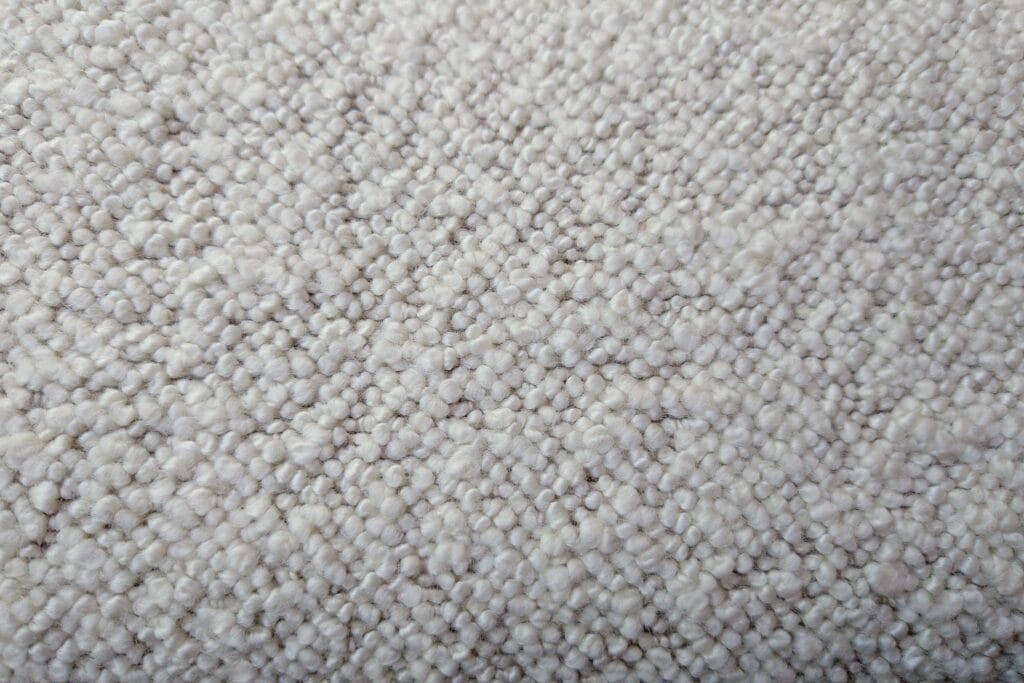
Élitis: Mario, Ambienti collection
Élitis, founded in the south of France, has built its reputation by combining artisanal techniques with unexpected material pairings. Its bouclé references are unconventional. Mario, from the Milan-inspired collection, weaves a raffia warp with a looped weft, then over-dyes the whole: the two fibres react differently to the dye, producing an irregular, rustic effect that is simultaneously soft and sculptural. The Ambienti collection combines bouclé and chenille, wool and silk, creating a tactile dimensionality that sets Élitis apart from more classical bouclé producers.
Nobilis: Awassi, Yaruba
The Parisian house Nobilis, founded in 1928 and one of the oldest textile publishers in France, maintains a consistent bouclé presence in its catalogue. Awassi is a high-quality bouclé with a richly textured, soft and sumptuous hand. Yaruba plays with twisted, mouliné and looped yarns in a diamond pattern, offering a more graphic interpretation of the weave. Nobilis bouclé references are generally positioned for residential projects and boutique hotels, where refinement takes precedence over technical specification.
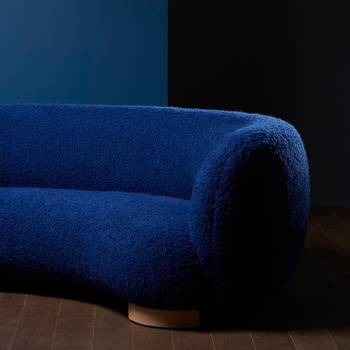
Larsen: Margo (Sahara collection)
Larsen, the American house with Scandinavian influence now part of the Kravet group, maintains a serious wool bouclé offer. Margo, from the Sahara collection, is a dense, soft wool bouclé upholstery fabric available in a palette of warm clay tones that aligns with the Nordic aesthetic Larsen has consistently explored. It remains a reference specification for decorators working in the quiet luxury register, sitting alongside the noble fibres that dominate luxury textiles.
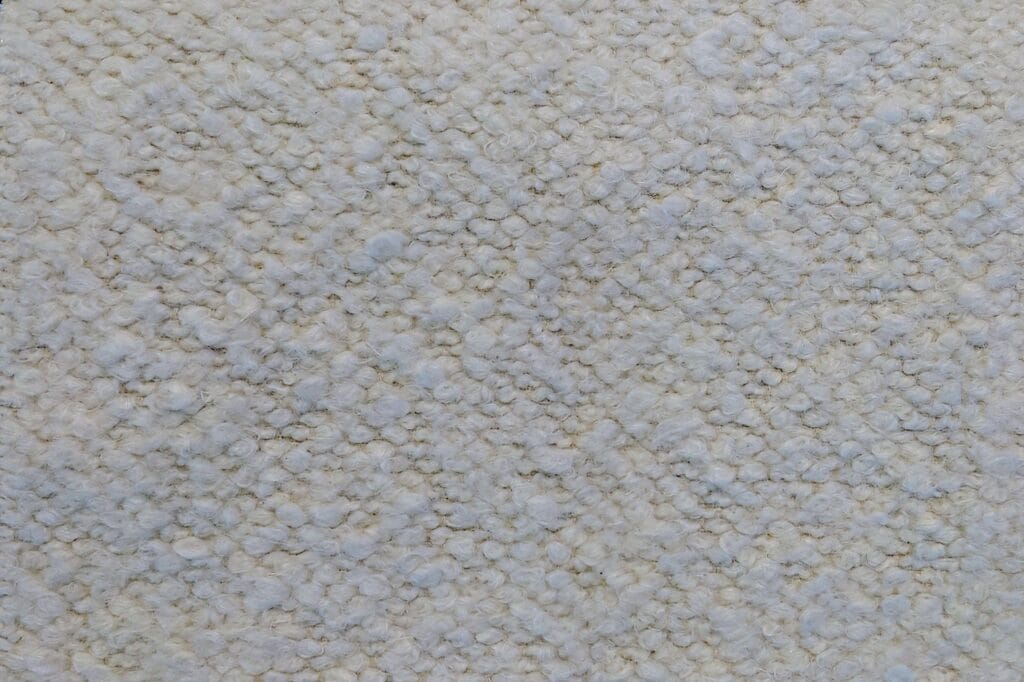
Zinc Textile: Betty Stone, Très Bouclé collection
British house Zinc Textile, part of the Romo group, has built one of the most coherent bouclé-dedicated collections on the contemporary market under the name Très Bouclé. Betty in Stone is a particularly strong reference. Its composition is intentionally complex: viscose, wool, cotton, linen, polyester and polyamide work in combination, and its surface plays with loops of varying sizes to create a genuinely three-dimensional, substantial weave. The look is robust, the hand is soft: this contrast defines the collection’s character. With a Martindale of 30,000 for severe domestic use and a Wyzenbeek of 100,000, Betty is technically specified for serious domestic application. Care is dry-clean only, the construction tolerating neither water nor ironing.
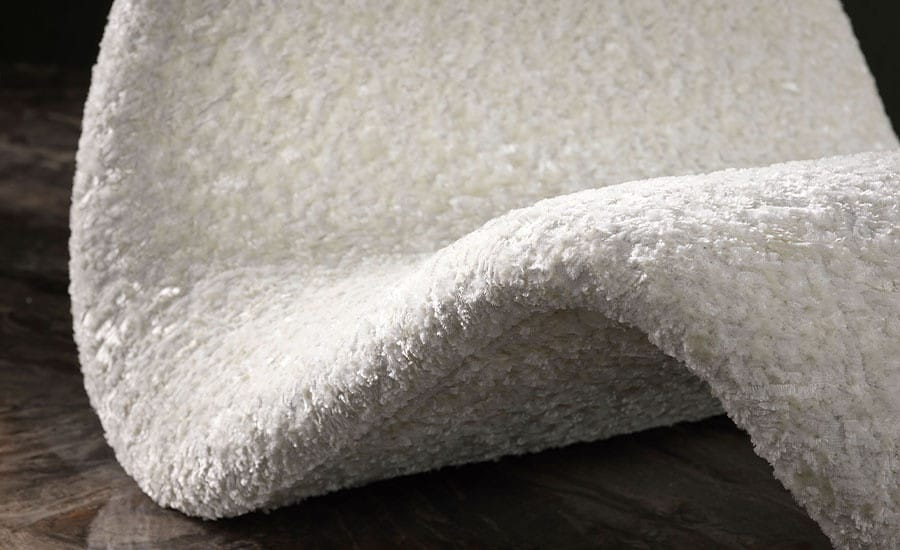
Lelièvre Paris: Borealis and Numéro 24 collections
Founded in 1914, holder of the EPV (Entreprise du Patrimoine Vivant) label and a member of the Comité Colbert since 2024, Lelièvre Paris is one of the oldest and most rigorous textile publishers in Europe, with its own weaving workshops in the Lyon region. The house produces two bouclé references to know. From the Borealis collection, a wool and linen bouclé in a natural colourway delivers a woolly hand and a chic, graphic character, coordinated with the Scandinavian-inspired collection and suitable for upholstery, curtains and wall covering. From the Numéro 24 collection, a marl bouclé woven from three tones reads as simultaneously relaxed and refined, available in eight colourways with a decidedly 1950s spirit. Both references are manufactured in Lelièvre’s own Lyon workshops — a guarantee of production consistency that is rare in a sector where most houses outsource weaving. Also worth discovering as part of the selection presented at Paris Déco Off 2026.
What a quality bouclé actually costs
This is the section most guides omit. Beautiful fabrics are shown without stating what they actually cost, or why the price gap between a synthetic at €40/m and a wool bouclé at €220/m is not arbitrary.
Technical synthetic bouclé, in polyester, acrylic or technical blends with flame-retardant treatment, starts at around €100 to €140/m for a serious specification. Dedar’s Lupo sits in this range: a flame-retardant bouclé at 80,000 Martindale rubs at a professional price point. This is the right choice for contract, hotel and any high-use context where technical performance takes precedence over tactile luxury.
Cotton-dominant bouclé is generally the most accessible natural-fibre option, from €80 to €150/m depending on the house and weave density. Easier to care for than wool, less prone to pilling when well-constructed, but without the depth or ageing quality of wool. Our complete cotton guide details this fibre’s characteristics in upholstery. It is a reasonable choice for occasional seating or when budget is genuinely constrained.
Wool and wool-blend bouclé is the reference material, and the most demanding to produce correctly. Because bouclé requires density — the loops must hold their structure under use — a wool bouclé demands more fibre per square metre than a flat weave. This is not a fabric where savings on yarn quality can be hidden behind an attractive surface. Serious references from Pierre Frey (Louison), Lelièvre Paris (Borealis), Zinc Textile (Betty) or Nobilis start at €160 to €200/m and can reach €300 and above for the most elaborate constructions. This price reflects yarn quality, twist consistency, backing reinforcement and the production rigour that separates a fabric that will be more beautiful in five years from one that will be more damaged in two.
The rule is simple and without exception: do not invest in budget bouclé. A cheap bouclé will pill, snag and lose its structure precisely because the loops — which define the entire aesthetic — are the first to degrade when yarn quality is insufficient. If the budget does not allow for a genuine bouclé, choose a different upholstery fabric. Aesthetics without structure is a short-lived compromise.
Bouclé and organic forms: a natural alliance
There is one advantage of bouclé that upholstery guides almost never mention, yet it often determines the choice of the most exacting upholsterers.
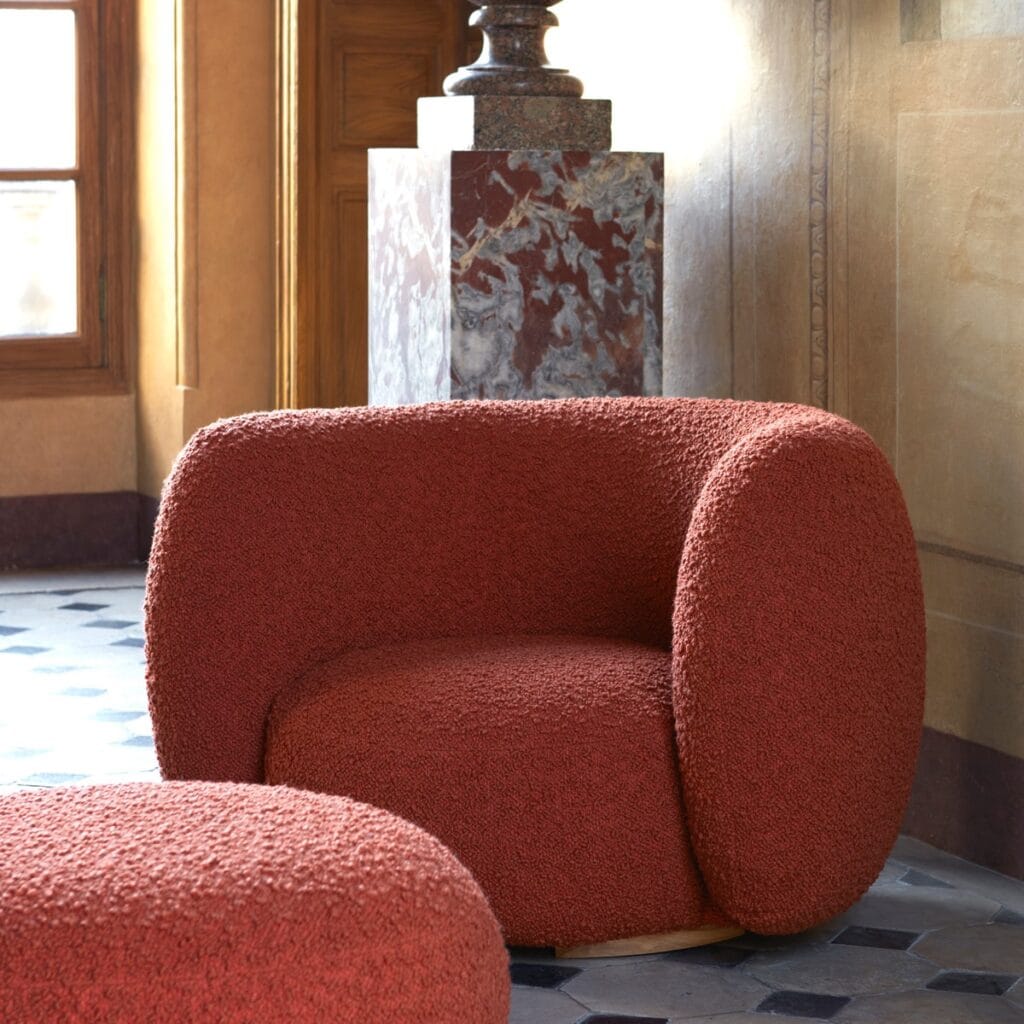
Bouclé is one of the few high-end upholstery fabrics that yields without resistance to rounded and organic forms. Where a classical velvet or a jacquard will pucker, mark or resist curvature, bouclé settles, envelops and follows the contour without creating visible surface tension. The result: on a shell chair, a sofa with rounded backrests, or any piece with sculptural lines, it remains one of the few ultra-material options that imposes no formal constraint on the upholsterer. No parasitic folds, no surface breaks, no seams that betray the complexity of the volume. The texture absorbs everything. This is precisely why the great sculptural furniture houses often prescribe bouclé as the first upholstery option.
Care: the rules that protect the investment
A quality bouclé is not demanding to maintain, but it requires precise and non-negotiable habits.
The first rule is immediate response to stains: blot, never rub. Use a clean, dry cloth applied from the outside of the stain inward. Rubbing drives liquid deeper into the loops and risks permanently felting the fibres.
The second rule is no saturation with water. Even on bouclé references tolerant of moisture, soaking the fabric risks shrinkage, permanent loop distortion or tide marks. When in doubt, contact the textile house before applying any liquid cleaning agent.
Regular, gentle vacuuming with a soft brush attachment on low suction removes dust and debris before they become embedded in the weave structure. Light monthly vacuuming significantly extends the fabric’s lifespan.
For deep cleaning, dry cleaning is the recommended solution for most wool and wool-blend bouclés. The technical data sheet for each reference must always be consulted: flame-retardant yarns, for example, may carry specific care restrictions.
Protecting against snagging is as much a behavioural habit as a care protocol. Informing household members, keeping the sofa away from high-traffic areas: these simple precautions make a real difference over time. Finally, rotating and reversing cushions where the construction allows distributes wear evenly across the fabric. It is the simplest maintenance step and one of the most effective for extending lifespan, to be combined with the advice developed in our article on foams for seats and sofas.
The verdict
Is bouclé fabric durable? Yes, conditionally. The longevity of a bouclé is determined almost entirely by the quality of its construction, not by the fabric category. A high-quality wool bouclé from Dedar or Pierre Frey, correctly specified for its intended use and properly maintained, will outlast most other upholstery fabrics you might consider. A cheap synthetic bouclé bought for its aesthetic, it will not. This fabric rewards investment. Choose accordingly.
HART Design Selection covers the full landscape of high-end textiles for interior design professionals and informed enthusiasts. Explore our complete guides for a comprehensive view of the materials that define exceptional interiors.
Digital entrepreneur and craft artisan.
My work bridges craftsmanship, design history and contemporary creation, shaping a personal vision of luxury interior design.
Since 2012, I have been based in my workshop on the shores of Lake Annecy, creating bespoke interiors for architects, decorators and private clients.