


Exceptional marble craftsmen and stonemasons: the HART guide
Above Carrara, the mountains look snow-capped all year round: it is marble, quarried since antiquity, which Michelangelo came to choose for himself. Marble craftsmen and stonemasons carry on that dialogue with the slowest material of all, the stuff of fireplaces, staircases, floors and tables that outlast the centuries.
Contents
Marble craftsman and stonemason: two stone crafts
How do you become a stonemason?
Choosing your stone and finish
Leading houses and workshops
Choosing a workshop
Where to see stonework
The craft today
Frequently asked questions
Marble craftsman and stonemason: two stone crafts
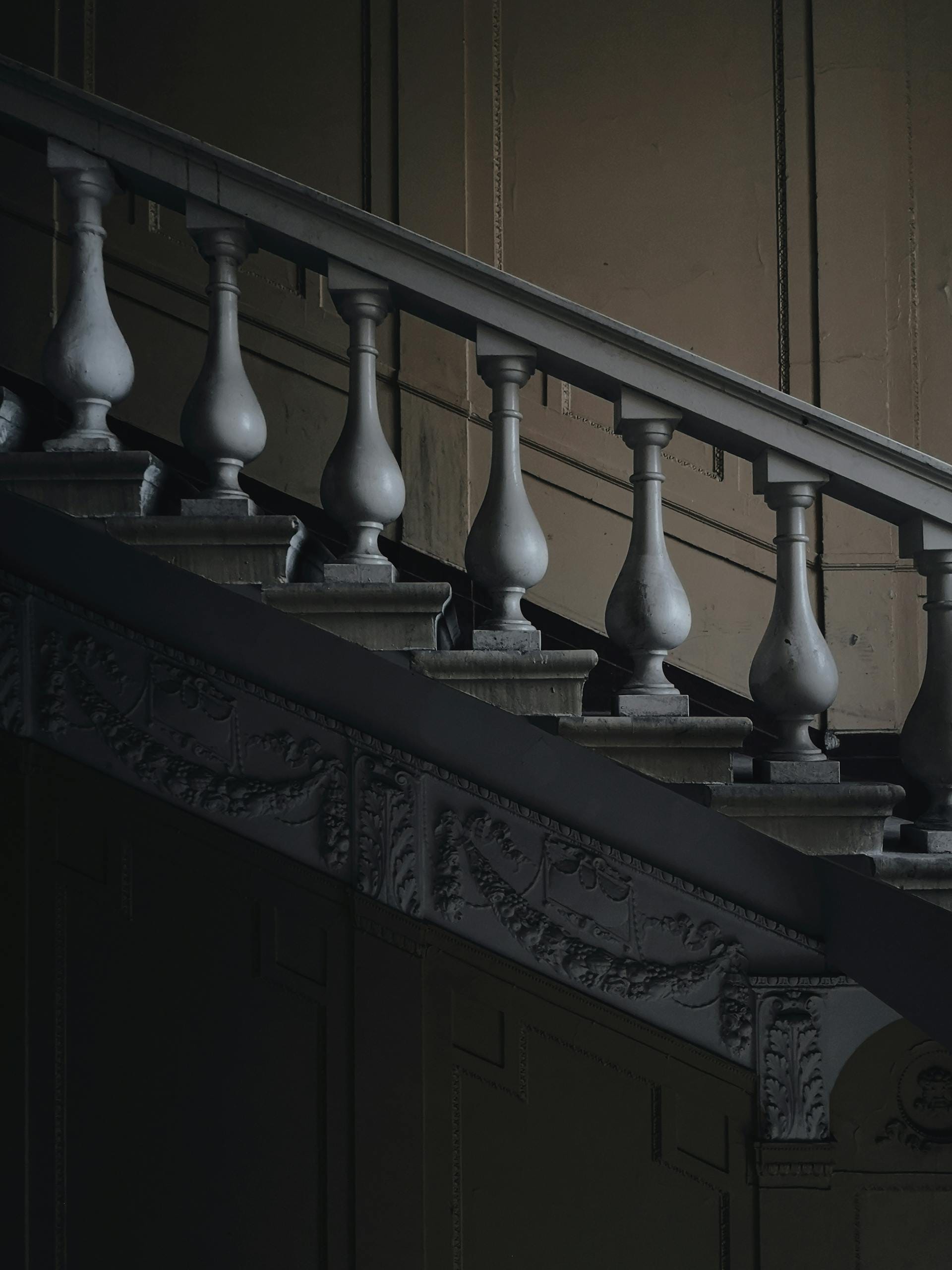
The stonemason turns natural stone, limestone, sandstone, granite, into architecture: facades, columns, surrounds, balustrades, staircases. He masters stereotomy, the geometry that allows each block to be cut so that it fits exactly against the next. The marble craftsman works mainly decorative and marble stones, sawing, shaping and polishing them into fireplaces, floors, worktops, basins and furniture. In exceptional projects, the two skills often come together.
Their clients are historic monuments under restoration, palace hotels, luxury houses and private residences. The craft now combines the machine, diamond wire saws and CNC, with the hand, which alone can read a vein, set a joint or achieve a perfect polish.
How do you become a stonemason?
In France, the path starts with a vocational CAP in stonemasonry or in marble work, often followed by a professional diploma in the stone trades, oriented towards restoration or creation, and a craft diploma in stone engraving for ornament. The Compagnons du Devoir, the French guild, have trained stonemasons on the greatest building sites for centuries, and the title of Meilleur Ouvrier de France crowns the masters.
Reference places to train include the École d’Avignon, specialised in built heritage; the building trades school in Felletin, in the Creuse, a historic centre of stonemasonry; the Compagnons du Devoir; the Pietro Tacca marble school in Carrara; and in the United States the American College of the Building Arts in Charleston.
Choosing your stone and finish
Marble offers timeless elegance and an incomparable polish, but it dislikes acids: lemon, vinegar or wine will etch it. Keep it for decorative or calm areas, or accept its patina. Granite is extremely hard-wearing, perfect for worktops and busy floors. Limestone has a beautiful softness and patina, but it is porous and must be sealed. Travertine, with its pitted texture, warms an interior. Onyx, translucent, can be backlit spectacularly, but it is fragile and best kept for decoration. And quartzite, often mistaken for marble, can share its look with far greater hardness.
The finish changes everything: polished for shine and depth of veining, honed for a silky matt that marks less, brushed or antiqued for a livelier touch. France has its own treasures, from Pyrenean marbles such as Campan and Sarrancolin, prized under Louis XIV, to the limestones of Burgundy and the Paris Basin. For kitchens, our guide to noble kitchen materials compares marble, granite and technical ceramics.
Leading houses and workshops
This selection brings together houses recognised for the quality of their stone and their work. It will grow as we meet more workshops.
Italy
Henraux (Querceta, Tuscany): since 1821, a house with its own quarries in the Apuan Alps, on Monte Altissimo, which has welcomed great twentieth-century sculptors. Laboratorio Morseletto (Vicenza): a family workshop whose collaboration with the architect Carlo Scarpa has become legendary. Lithos Design (Veneto): sculpted stone wall coverings and floors designed by Raffaello Galiotto. Testi Fratelli (Veneto): rare marbles and stones transformed for interior architecture. Fantini Mosaici (Milan): prestige mosaic and terrazzo.
United Kingdom
Rattee & Kett (Cambridge): a historic stonemasonry and heritage restoration workshop. The Stonemasonry Company (Rutland): the reference for cantilevered stone staircases that seem to defy gravity.
United States
Stone Source (New York): importer of high-end natural stone, with a bespoke fabrication service for architects and designers.
France
France has one of the finest stonemasonry traditions in Europe, from the cathedral building sites to the restoration of Notre-Dame de Paris. This section will feature the French marble and stone workshops we meet.
Choosing a workshop
Start by defining the project: the type of work (fireplace, staircase, floor, worktop, basin, fountain), dimensions, indoor or outdoor use, traffic and budget. The price depends on the stone, its thickness, the complexity of the cutting, the finish and the installation: ask for a detailed, itemised quote. Insist on seeing the slab or block before it is cut: two slabs of the same marble can look very different.
For bathrooms, our guide to high-end bathrooms explains how stone works in wet rooms.
Where to see stonework
Fairs: Marmomac in Verona, every autumn, the world’s leading natural stone event; Stone+tec in Nuremberg; Coverings in the United States; and Maison&Objet in Paris for designers working in stone.
Places: the quarries and marble museum of Carrara, the Musée du Compagnonnage in Tours, and of course the great restoration sites when they open their doors. Further reading: The Art of Stoneworking by Peter Rockwell, sculptor and leading expert on stone techniques.
The craft today
More responsible quarrying. The best quarries replace explosives with diamond wire sawing, more precise and less destructive, and manage their sites for the long term. Choosing local or regional stone sharply reduces the footprint of transport, which weighs heavily for such a dense material.
Technology serving the hand. CNC machining, waterjet cutting and 3D modelling allow new shapes and tolerances, while lightweight stone panels open stone up to furniture and yachts. But choosing a block, laying out the veins and finishing remain the craftsman’s gestures.
For the other fine crafts, from cabinetmaking to fine joinery, see our guide to luxury craftspeople and fine crafts.
Frequently asked questions
Is marble suitable for a kitchen worktop?
Yes, as long as you accept its patina: acids (lemon, vinegar, wine) etch it. A honed finish and a protective sealer limit the marks. For a hard-working kitchen, granite or quartzite are more resistant.
What is the difference between marble and quartzite?
Marble is a metamorphic limestone, soft and sensitive to acids. Quartzite is a quartz rock, much harder and more resistant, which can have marble’s veined look. The two are often confused at the point of sale: ask for the technical data sheet.
What is stereotomy?
It is the art of cutting stones to a precise geometry so that they fit together perfectly: arches, vaults, staircases. It is at the heart of the stonemason’s craft, taught in particular by the Compagnons du Devoir.
Resources
Five ways into the world of HART
- 01 Spaces Spaces & materials Interiors, atmospheres and materials that give a place its identity.
- 02 Creators Designers & creators Architects, designers and artists whose vision changed the way we live.
- 03 Craftsmanship Artisans & fine crafts Upholsterers, cabinetmakers, metalworkers, ceramicists: the workshops and the hands behind true excellence.
- 04 Furniture Furniture & interiors Iconic sofas, seating and lighting, read through form, use and comfort.
- 05 Heritage Design history From Gothic to global design, the styles that shaped the art of living.