

Fabric Walling: The Complete Truth, Explained by a Professional
I was fortunate enough to learn the art of fabric walling during my training as an upholsterer and fabric walling specialist. Fabric walling has been part of my daily professional practice for years, and I am still struck by how few people – clients, interior designers and architects alike – truly understand what the craft involves. The term itself carries centuries of history and meaning, and that richness is precisely what creates confusion. It is this confusion that prompted me to set the record straight, clearly and simply, so that you can grasp what fabric walling really is.
In Britain and across the English-speaking world, “fabric walling” – sometimes also called “French walling” when referring to traditional French techniques – is a specialist craft that remains largely unknown outside the world of high-end interiors.
In continental European languages, a single word can refer to anything from heavy curtains to decorative wall panels, and this terminological blur has travelled with the craft. Fabric walling is, in truth, a rare and highly specialised skill, reserved for exceptional spaces – and, of course, the auditoriums and screening rooms that have relied on it for decades.
What exactly is fabric walling?
What fabric walling is NOT
Let us begin by clearing up the most common misconceptions.
A curtain is not fabric walling. Curtains hang vertically, they move, they draw open and closed. The word “hanging” is sometimes used loosely to describe heavy decorative drapes, and this is where language begins to mislead us. Technically, fabric walling is something fundamentally different: it is a fixed textile installation, bonded structurally to the wall itself.
A fabric-covered panel is not fabric walling. This is, in my experience, by far the most widespread source of confusion. Walk into a home décor shop and you will find products marketed as “wall fabric panels”: attractive rectangular frames with fabric stretched over a rigid backing of wood or foam board, ready to hang like a picture. They are practical, they are decorative – but they are not fabric walling in the technical sense. They are upholstered decorative panels.
The fundamental distinction? An upholstered panel is a self-contained object that you mount on the wall. Fabric walling, on the other hand, dresses the wall directly, transforming the entire surface into a continuous textile skin: the wall becomes soft to the touch, and its acoustic properties are dramatically superior.
So what is true fabric walling?
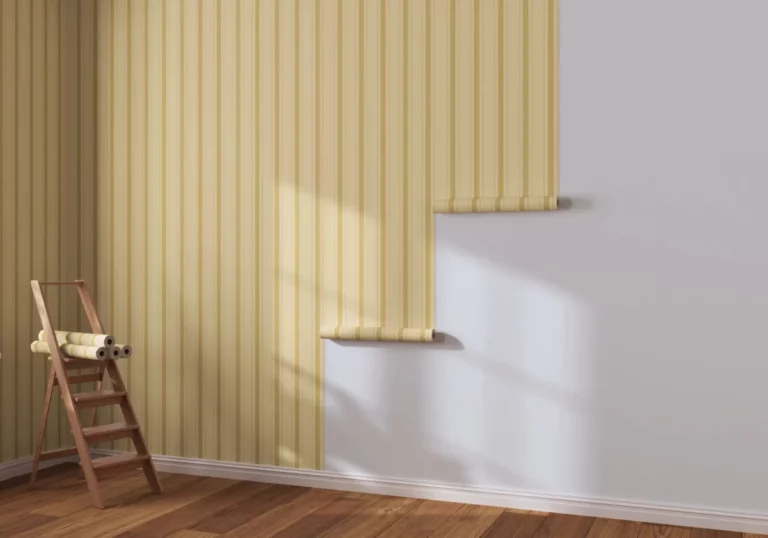
In the trade of the upholsterer and fabric walling specialist, fabric walling is an upholstery fabric stretched directly onto the wall – typically from floor to ceiling, or across a defined height dictated by panelling or architectural framing – creating a continuous, supple, enveloping surface. In essence, the fabric covers the wall entirely, much as traditional wallpaper would, but with an entirely different hand and presence.
The definition has deep roots. In France, where the craft reached its most refined expression under the ancien régime, the Académie Française defines the term in its dictionary as: “A set or sequence of tapestry pieces of the same making or illustrating the same theme, conceived to adorn the walls of a room. By extension: fabric or decorated cloth used to upholster and embellish the walls of a room or building.” That extension – fabric stretched onto a wall – is precisely what the craft is.
Still not entirely clear? Let me walk you through the process, layer by layer.
The techniques of fabric walling
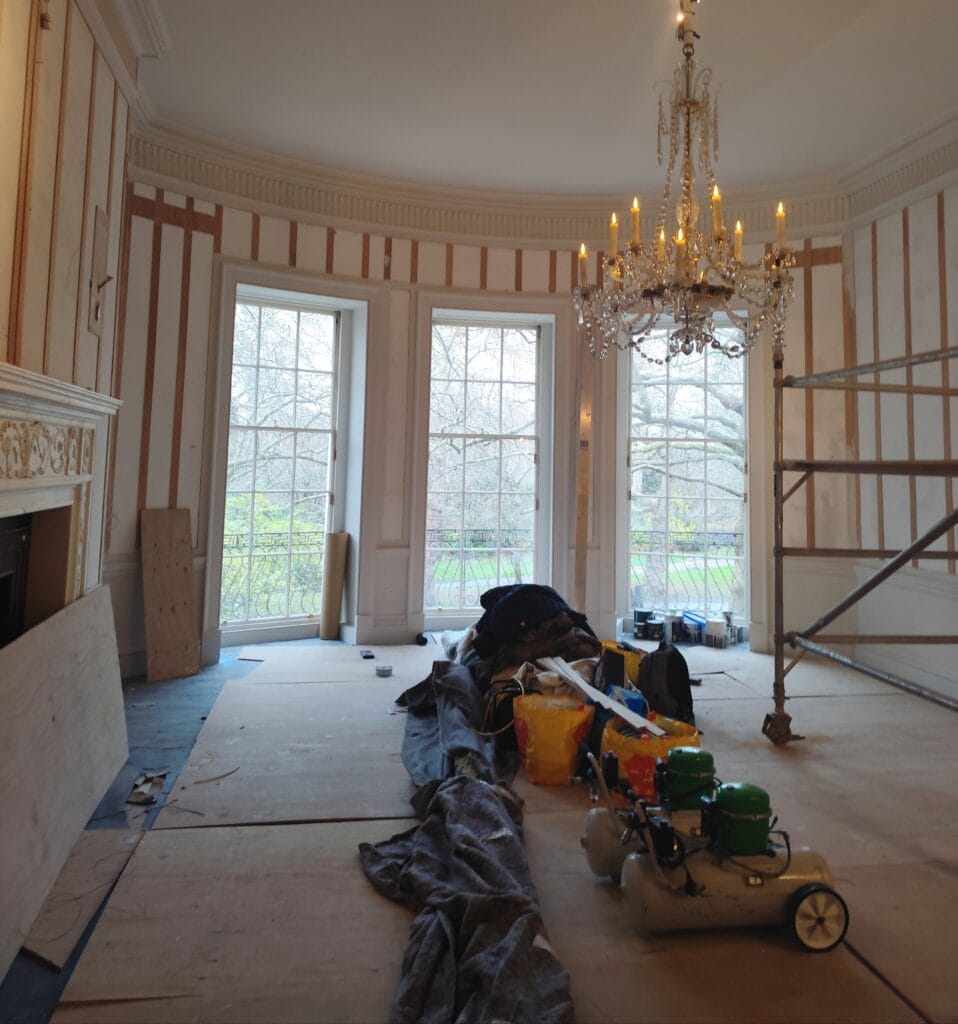
First layer: the batten framework
Everything begins with a framework of wooden battens, typically softwood, in sections of 20×30 mm or 50×40 mm depending on the scale of the wall to be dressed. These battens are fixed directly into the wall.
They must run along every edge of the surface to be covered: one at the top, one at the bottom, one on each vertical side, around door frames, window reveals, power sockets, wall lights – in short, everywhere the fabric will need to be anchored.
For larger surfaces, intermediate horizontal and vertical battens are added at intervals of 60 to 100 centimetres, creating a grid that will also allow fixtures to be attached to the wall at a later stage.
Second layer: the wadding
This is the element that almost everyone overlooks – and it is the one that makes ALL the difference. Onto the battens goes a thick layer of wadding or bump interlining. We are talking about weights of 400, 600, sometimes 800 grams per square metre. This can be made from natural or synthetic fibres, untreated or fire-retardant.
The wadding serves several essential purposes:
- It conceals any imperfections in the wall – cracks, irregularities, uneven plasterwork
- It creates the characteristic padded depth that gives fabric walling its distinctive relief
- It dramatically improves acoustic absorption, deadening sound reflections
- It provides supplementary thermal insulation
- It gives that yielding, cushioned sensation when you press your hand against the finished surface
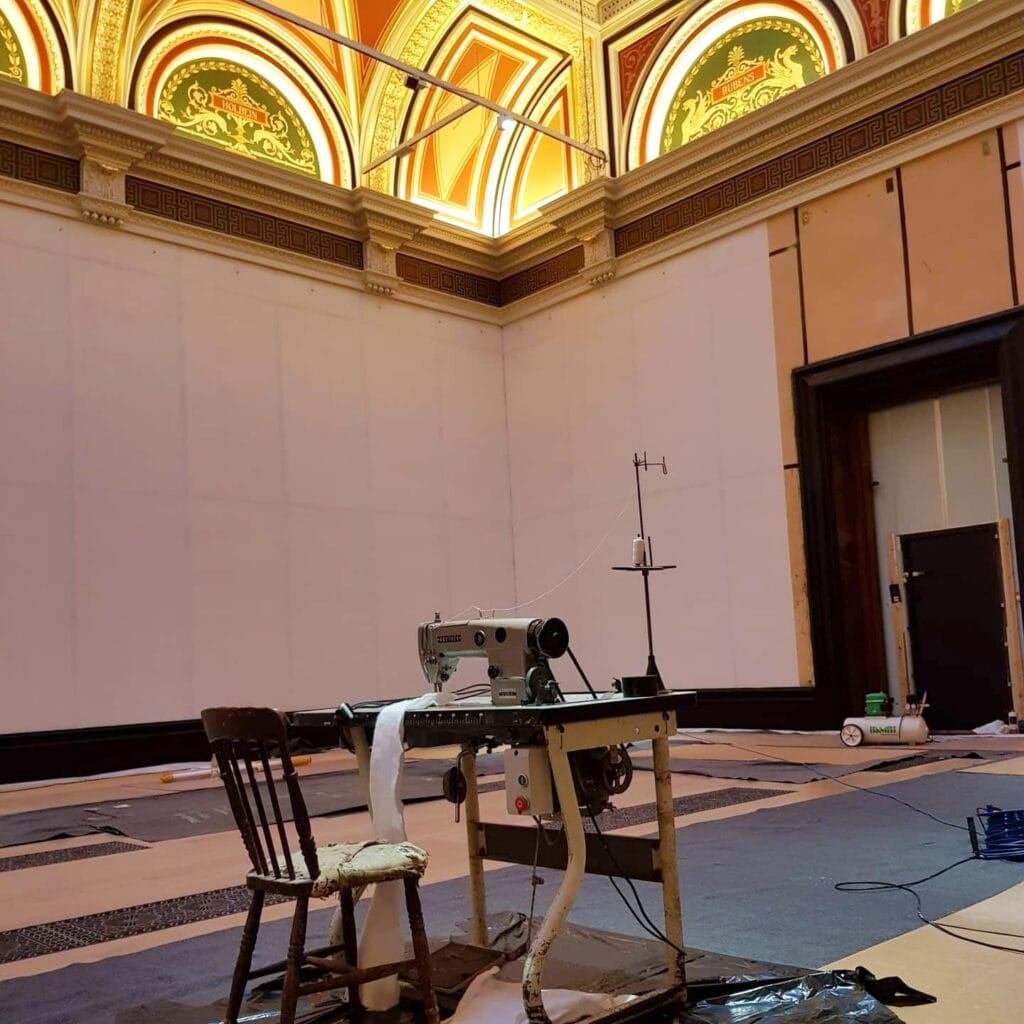
The wadding is stapled onto the battens and stretched uniformly, without ripples or folds. A poorly laid wadding carrying any imperfection will eventually betray itself through the finished fabric. This is why the most meticulous craftsmen align their wadding seams vertically, just as they will the fabric because they know that this seemingly minor detail will influence how the material behaves over time.
Third layer: the fabric
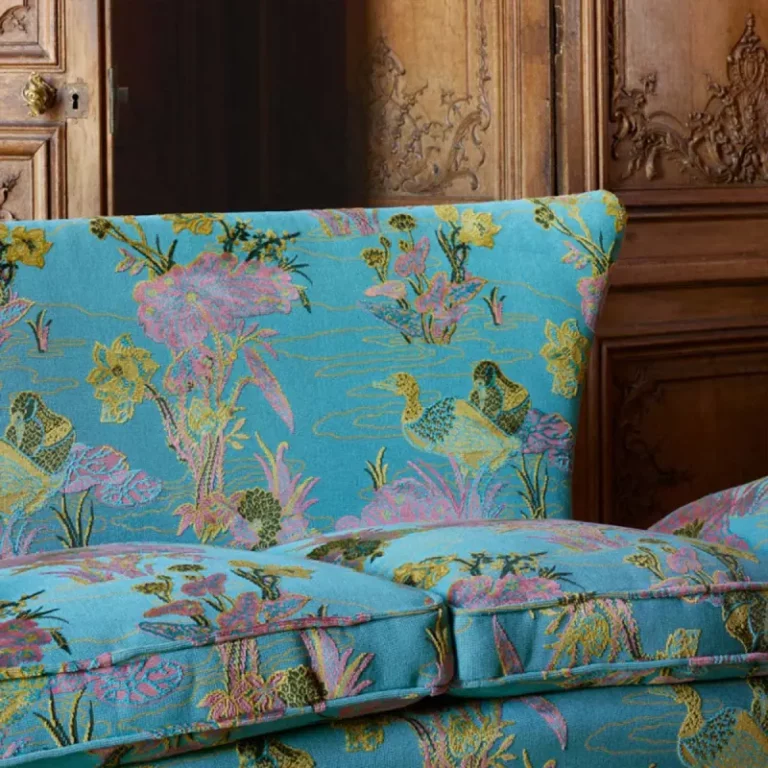
This is the visible element. The fabric is chosen for its colour, its pattern, its texture. The exceptional upholstery fabrics used in fabric walling must meet precise standards of durability and dimensional stability. Broadly speaking, most upholstery-weight fabrics can be wall-stretched, but we strongly recommend working alongside experienced craftsmen when handling noble materials such as wool, silk or linen, as some require considerable technical skill. In all cases, choose a cloth with sufficient weight to avoid any show-through effect.
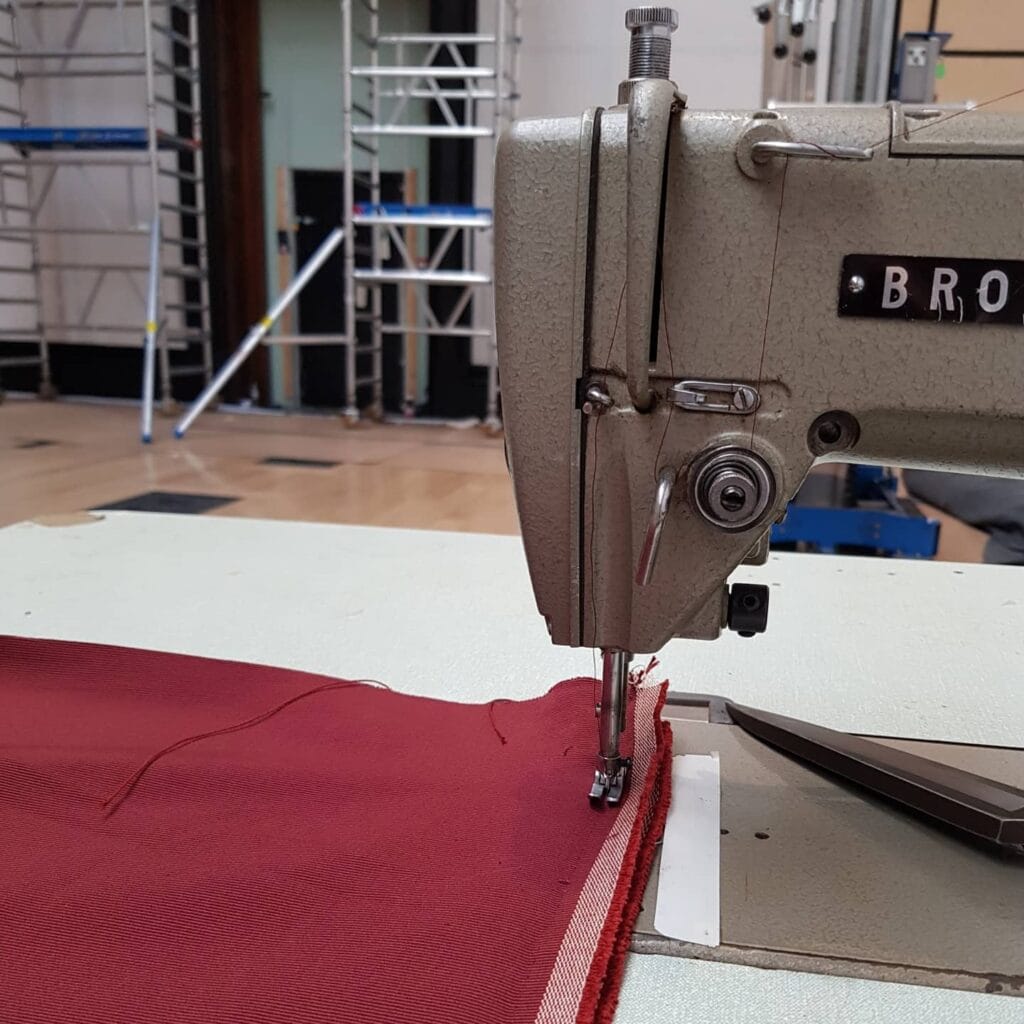
Fabric widths (drops) are joined together by machine-sewn seams, carried out either in the workshop or on site. This means that wide-width fabrics are by no means a requirement for covering your walls in cloth.
Contrary to what one might assume, laying the fabric over the wadding is not a matter of gluing it down. The fabric must be STRETCHED with uniform tension across the entire surface to prevent it from rippling, distorting or sagging over time.
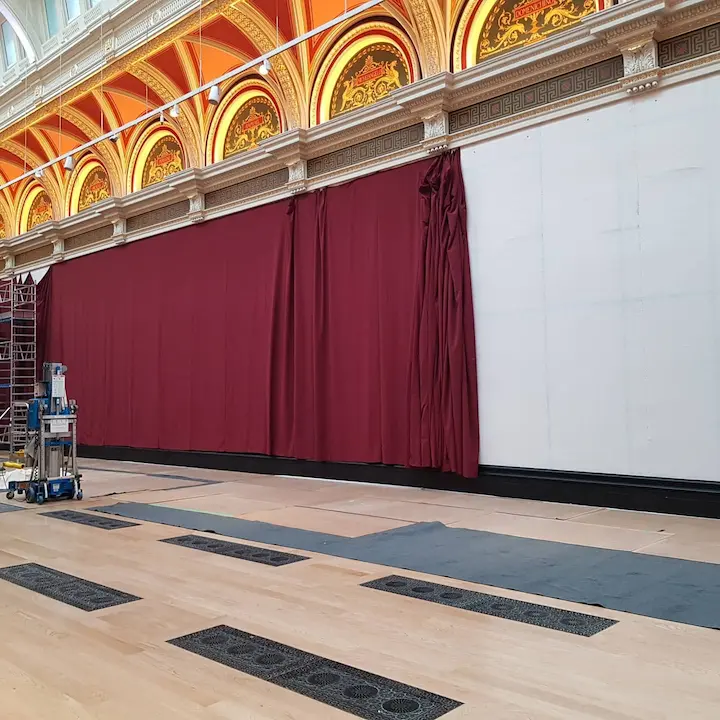
This is where the different fixing techniques come into play. Depending on the intended finish, a fourth step may be required – the application of trimming – unless a modern finish has been specified.
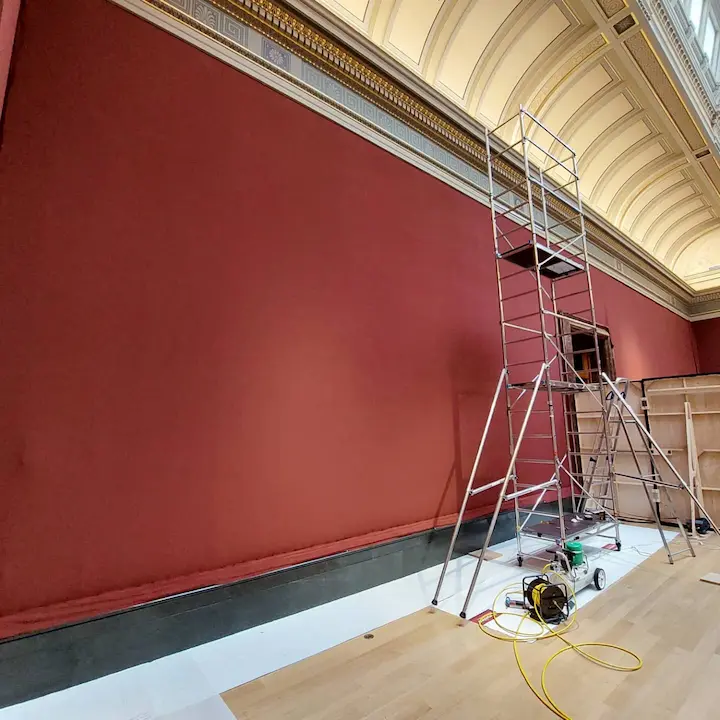
Finishing techniques: visible or concealed
Once your battens are in place and the wadding stapled taut, the fabric must be fixed. Three approaches exist, each with its own character.
The traditional technique with visible trimming
This is the oldest method and still the most widely practised, it is the most straightforward to execute, even if it demands considerable precision to do well.
The fabric is stretched across the entire surface and then stapled directly onto the face of the perimeter battens. The stapling is carried out progressively, distributing the tension evenly across the cloth.
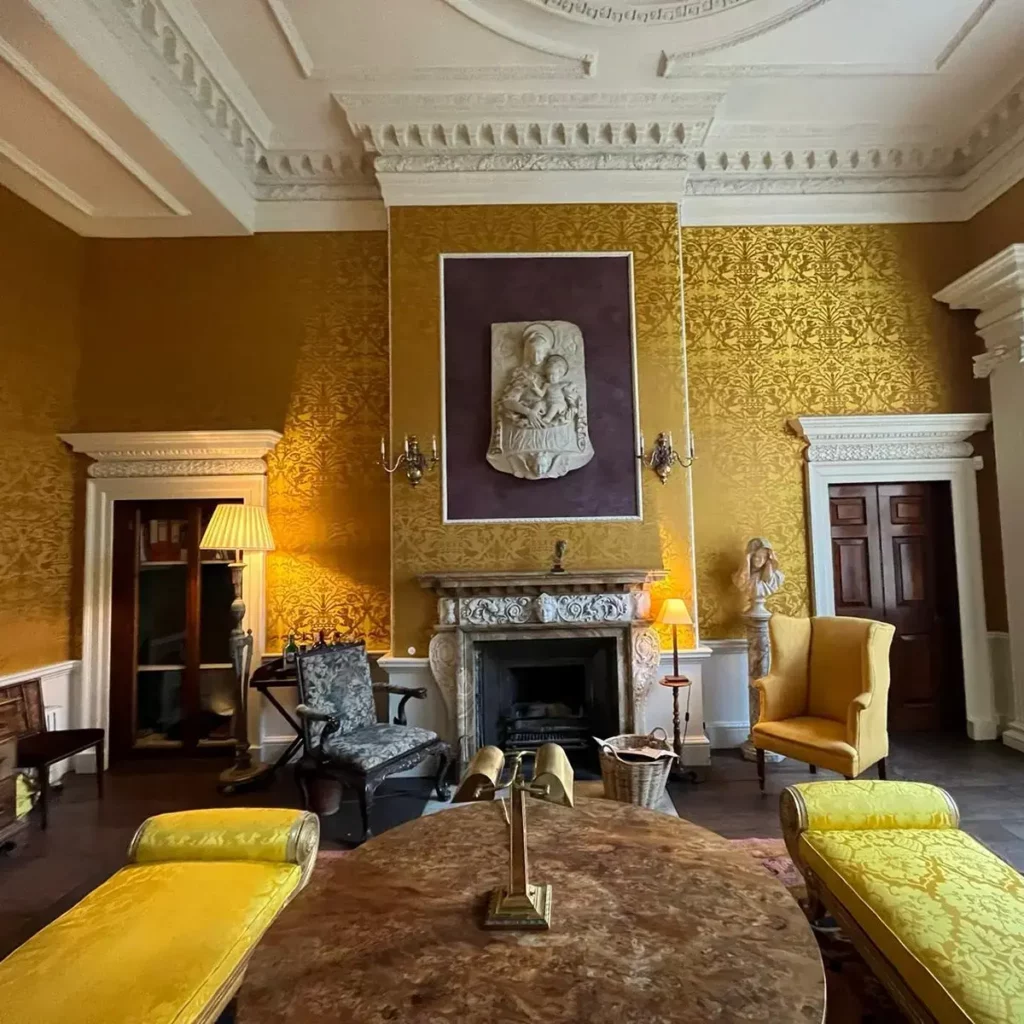
Once the fabric is perfectly tensioned all the way round, the staple lines remain visible. These are then concealed beneath decorative trimming: flat braid, gimp, cord or rope. The trimming is glued or pinned onto the battens, neatly covering the staples.
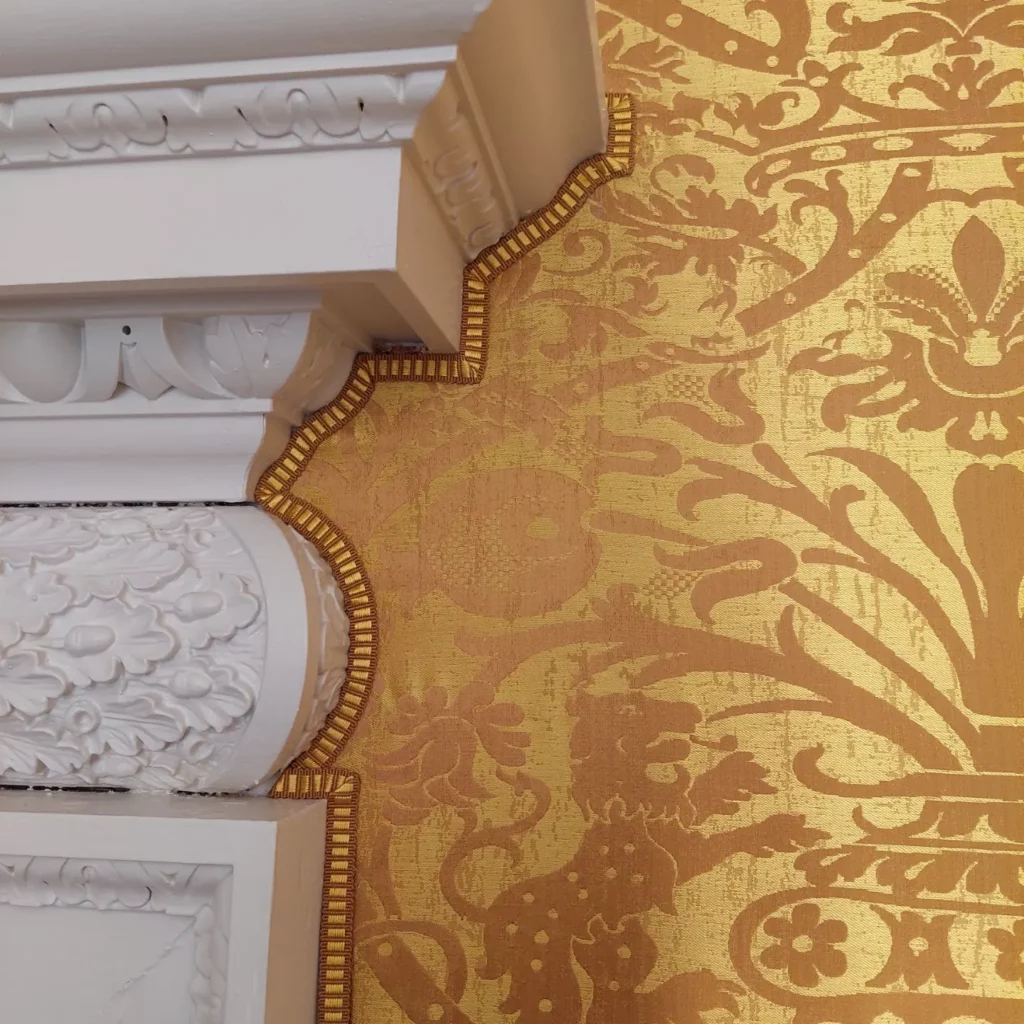
The trimming thus becomes a decorative feature in its own right, forming a border that frames and defines the fabric. This is the solution found in most hotels, restaurants and private drawing rooms.
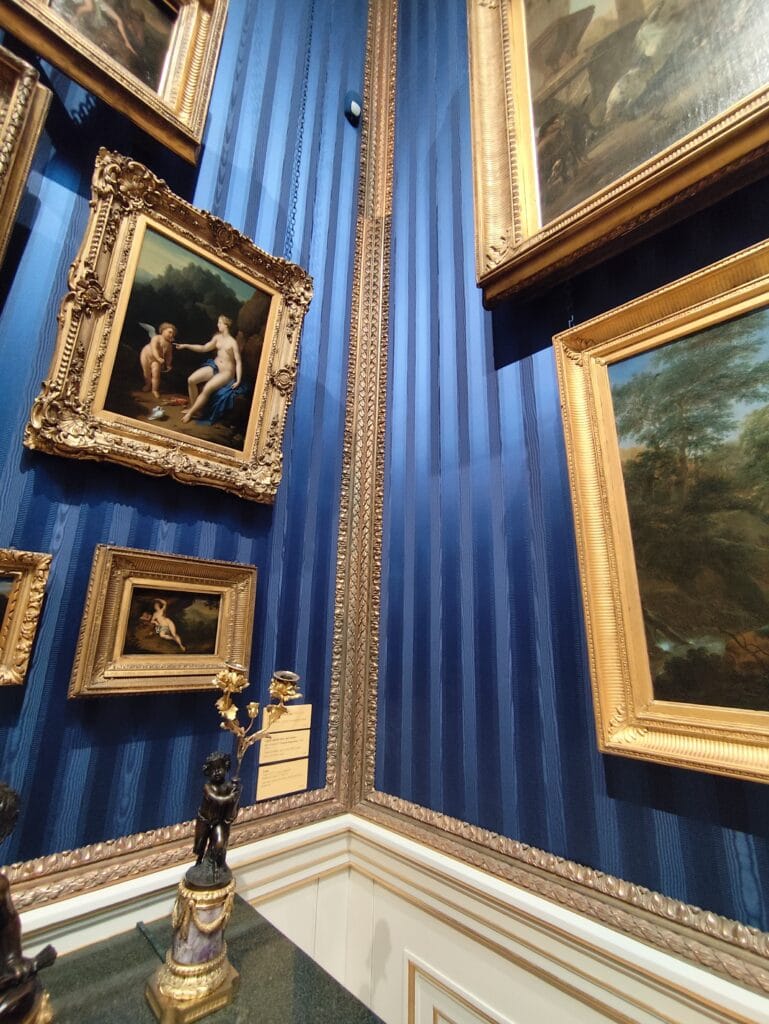
In some interiors, the trimming is replaced by architectural elements in wood — as seen here at the Wallace Collection, where the craftsmen have produced remarkable work with a striped moiré.
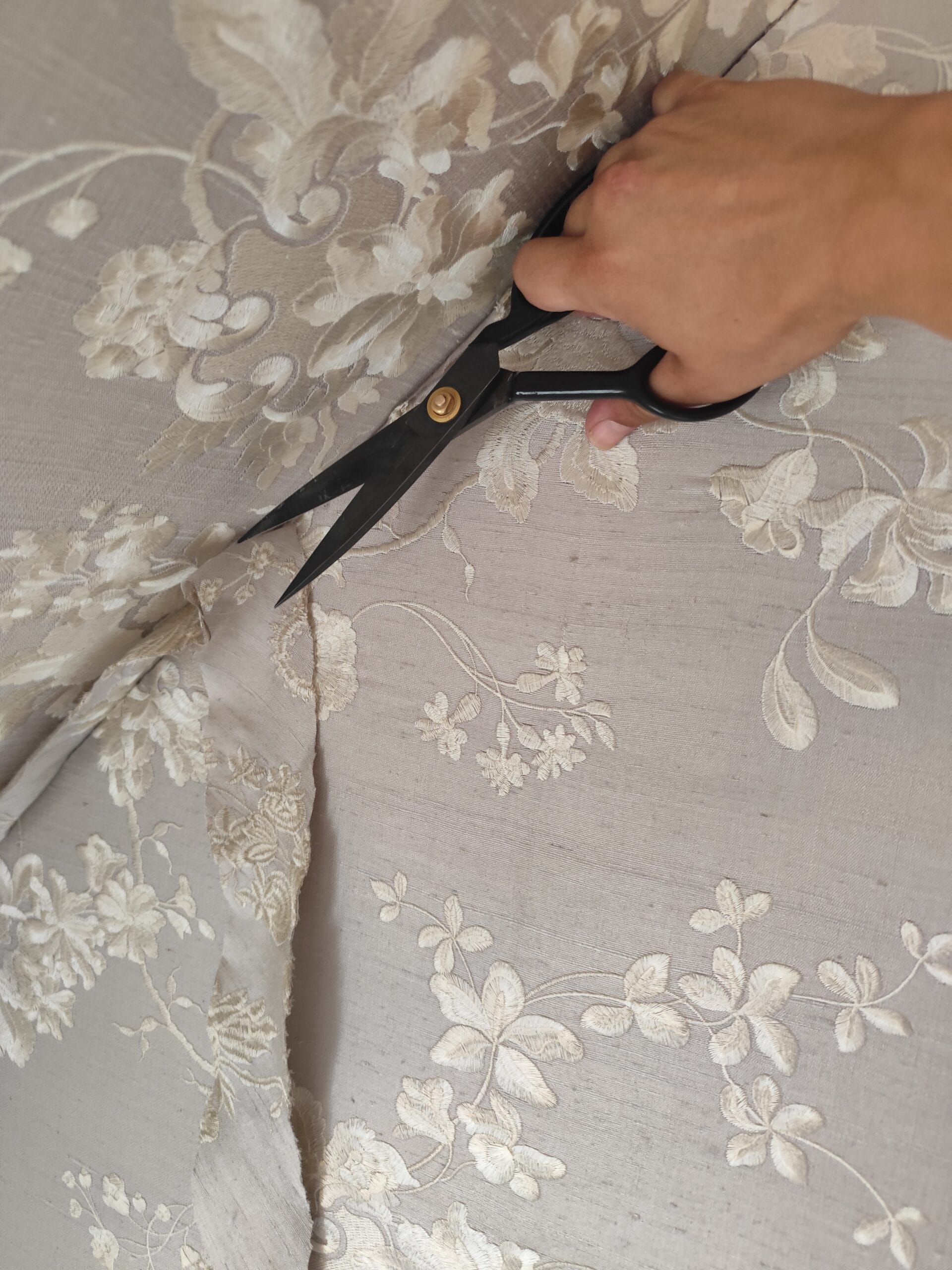
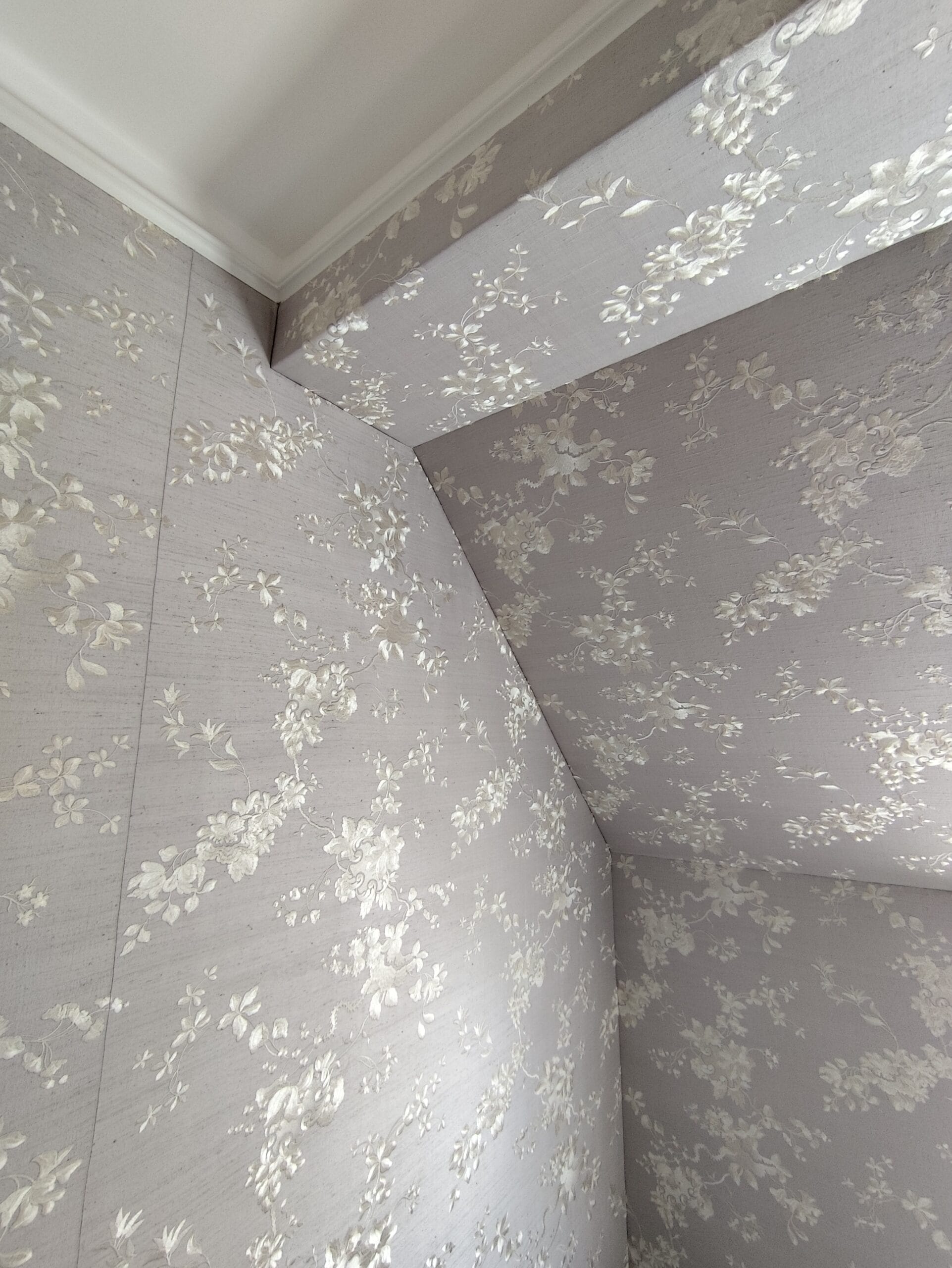
The traditional French-walling invisible technique
For those seeking a cleaner finish with no visible trimming, the traditional French-walling concealed technique offers an elegant solution though it demands real mastery of the craft.
The fabric is attached batten against batten: it is folded back and fixed onto secondary battens of thin card or fine wood.
The result is genuinely beautiful: the fabric appears to end flush with the wall, disappearing neatly into corners, with no fixings visible whatsoever. This is the technique found in grand hotels, prestigious Haussmann-era apartments and exceptional reception rooms. Certain master upholsterers and fabric walling specialists continue this tradition with remarkable excellence.
The drawback: finding a craftsman qualified to execute it is even more of a challenge.
Modern concealed techniques using specialist track systems
From the 1970s and 1980s onwards, specialist track systems – in plastic, wood or aluminium – were developed for fabric walling. These preserve the clean, concealed aesthetic while offering considerably greater practicality.
The principle: purpose-designed tracks replace the traditional wooden battens. These profiles incorporate a gripping mechanism or channel that holds the fabric edge securely.
The advantage is significant: the finish is equally invisible and, depending on the system, the fabric can remain demountable , allowing it to be changed without disturbing the underlying track.
These “modern” fabric walling track systems are available in several variants across different manufacturers, but the underlying principle remains consistent.
The great strength of fabric walling: seamless joins (or nearly so)
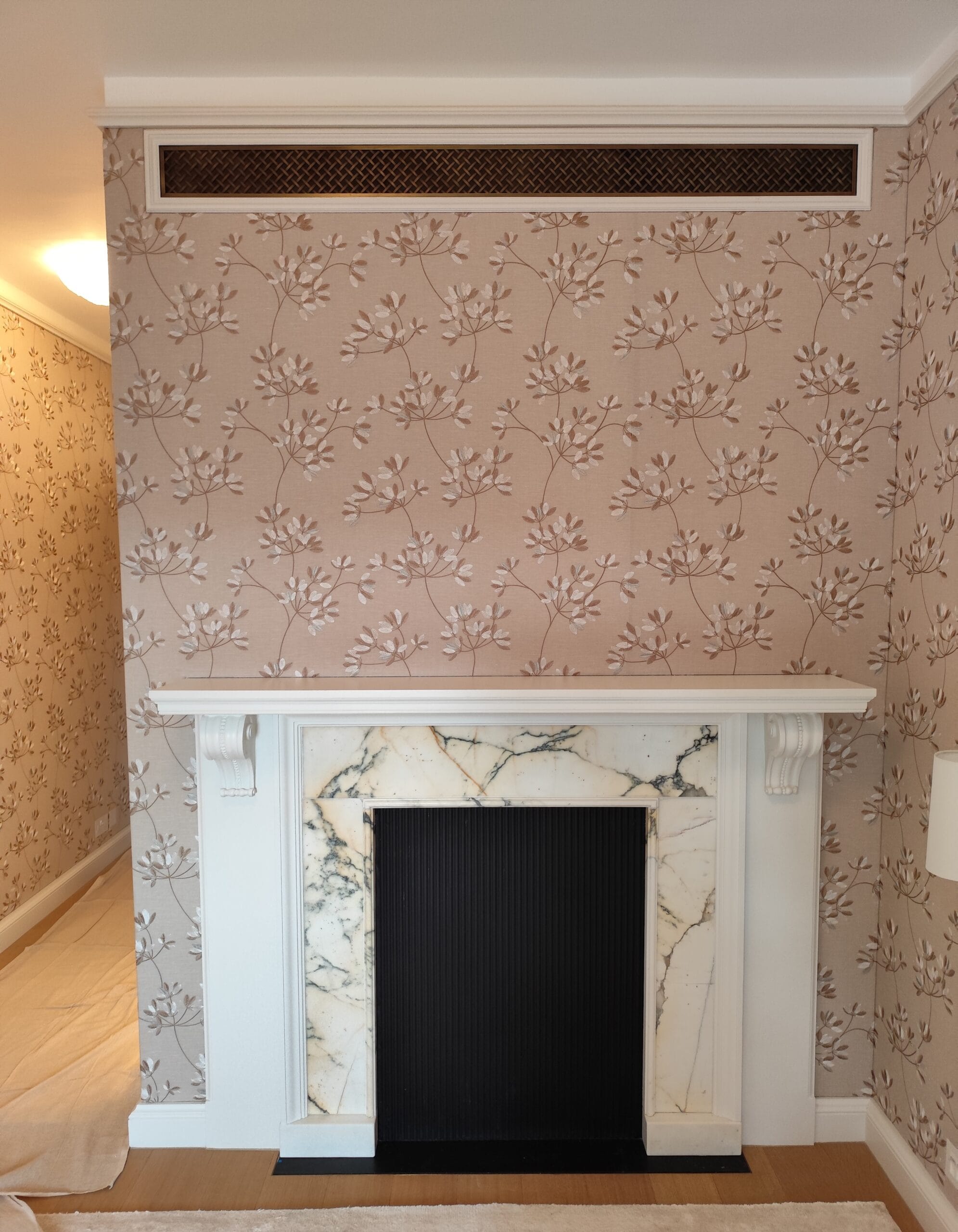
Here is an important point that many people are unaware of: unlike an upholstered panel, which remains an isolated element, true fabric walling makes it possible to create continuous textile surfaces spanning dozens of square metres.
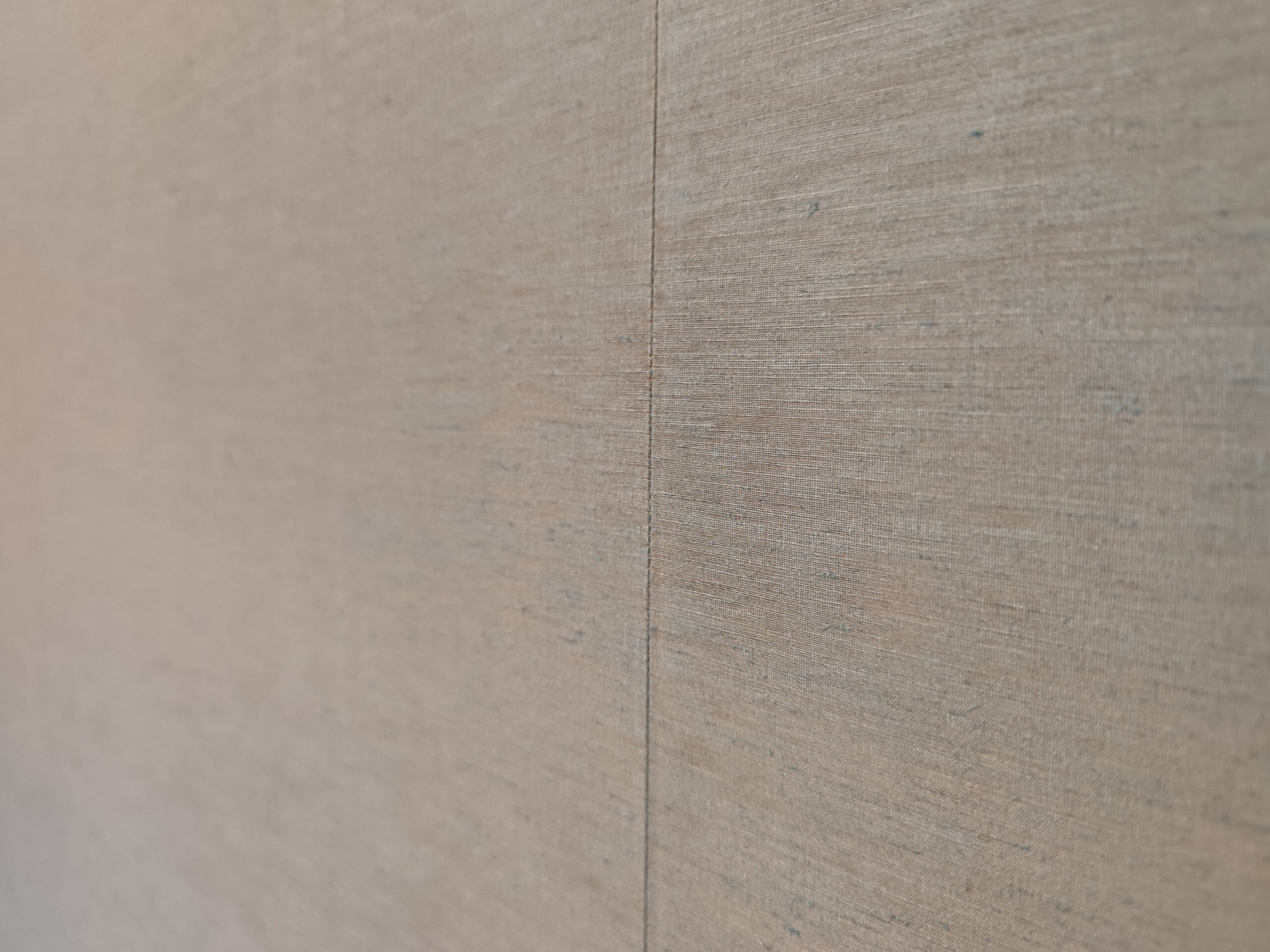
How? By joining the fabric drops together before they are stretched onto the wall. The visibility of the join depends both on the pattern and the type of material. Striped or checked fabrics, for instance, make the seam virtually invisible when the execution is flawless.
Imagine a drawing room eight metres long. Your fabric roll is 1.40 metres wide. With upholstered panels, you face an immediate constraint: you would need to place several panels side by side.
With fabric walling, the drops are joined edge to edge sewn together either in the workshop or on site. When the pattern repeat is matched perfectly, the seam becomes almost imperceptible. Stripes align, colours read as continuous. The result: a wall dressed entirely in fabric, without visible interruption, as though a single vast piece of cloth had been stretched across it. Wide-width fabrics do exist, of course, but the choice is generally limited to plains – linen, cotton canvas, even certain synthetic velvets are now available in wider widths, though the selection tends to stay within solid colours.
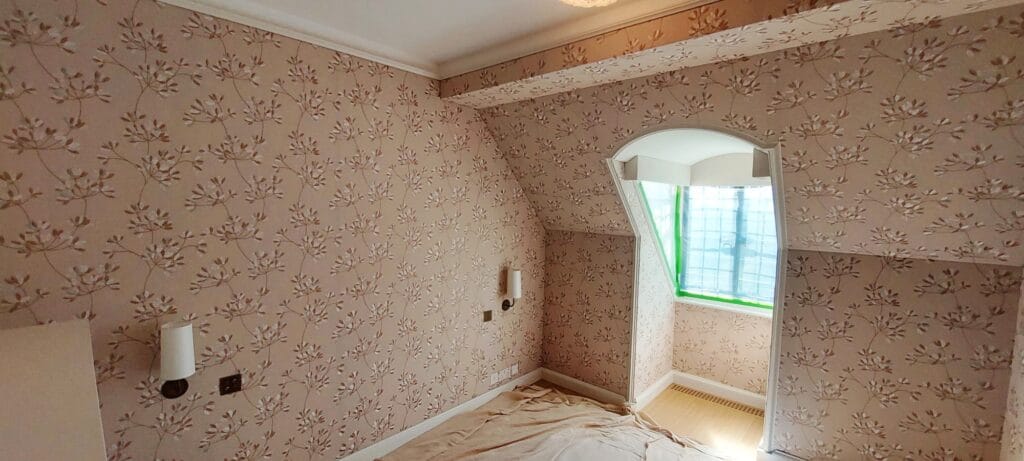
This capacity to join fabric seamlessly changes everything. It allows entire volumes to be treated: a hotel lobby, a performance hall, a restaurant, an auditorium. Not small squares of fabric hung here and there, but truly continuous textile surfaces that transform the acoustics and the entire atmosphere of a space.
Why does the confusion persist?
Several factors explain why even professionals conflate upholstered panels with true fabric walling.
First, cost. A genuine stretched fabric walling installation is substantially more expensive than an upholstered panel. It requires the intervention of a qualified specialist craftsman, several days of work for a single room, and quality materials throughout. The upholstered panel, by contrast, is manufactured in series and can be hung in minutes.
Then there is technical complexity. Installing fabric walling demands specific skills that few craftsmen still command. It requires reading a wall, managing plumb lines, calculating tensions, sewing seam joins, cutting accurately. It is not something one improvises.
How to recognise true fabric walling
If you are visiting a space and wondering whether you are looking at genuine fabric walling or an upholstered panel, here are the tell-tale signs.
The touch test
Place your hand (clean, please) flat against the fabric. If it feels hard, flat, rigid like a board – it is a panel. If you feel give, softness, a padded depth – you are touching true fabric walling, with wadding or bump interlining beneath the cloth.
The visual test
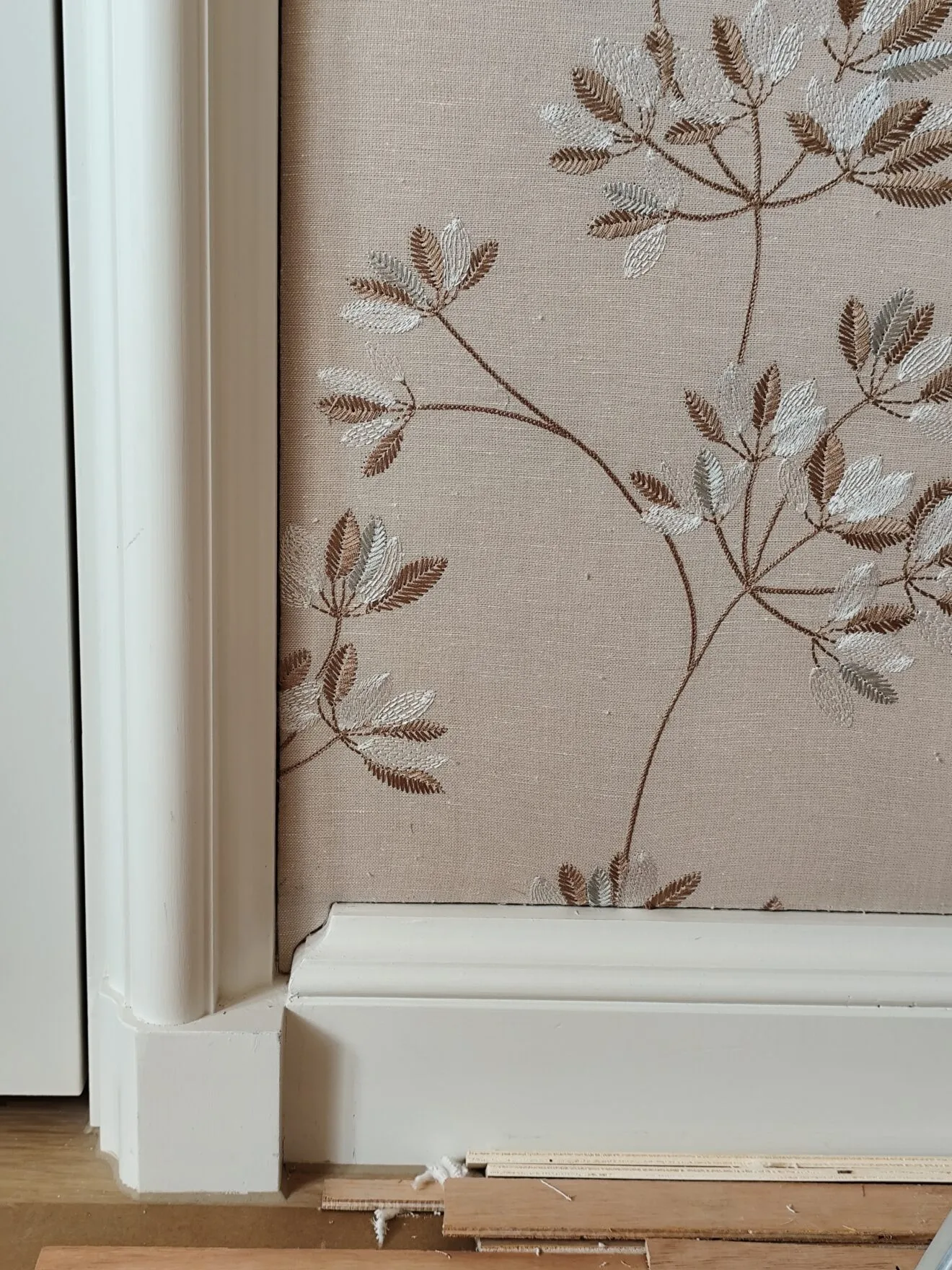
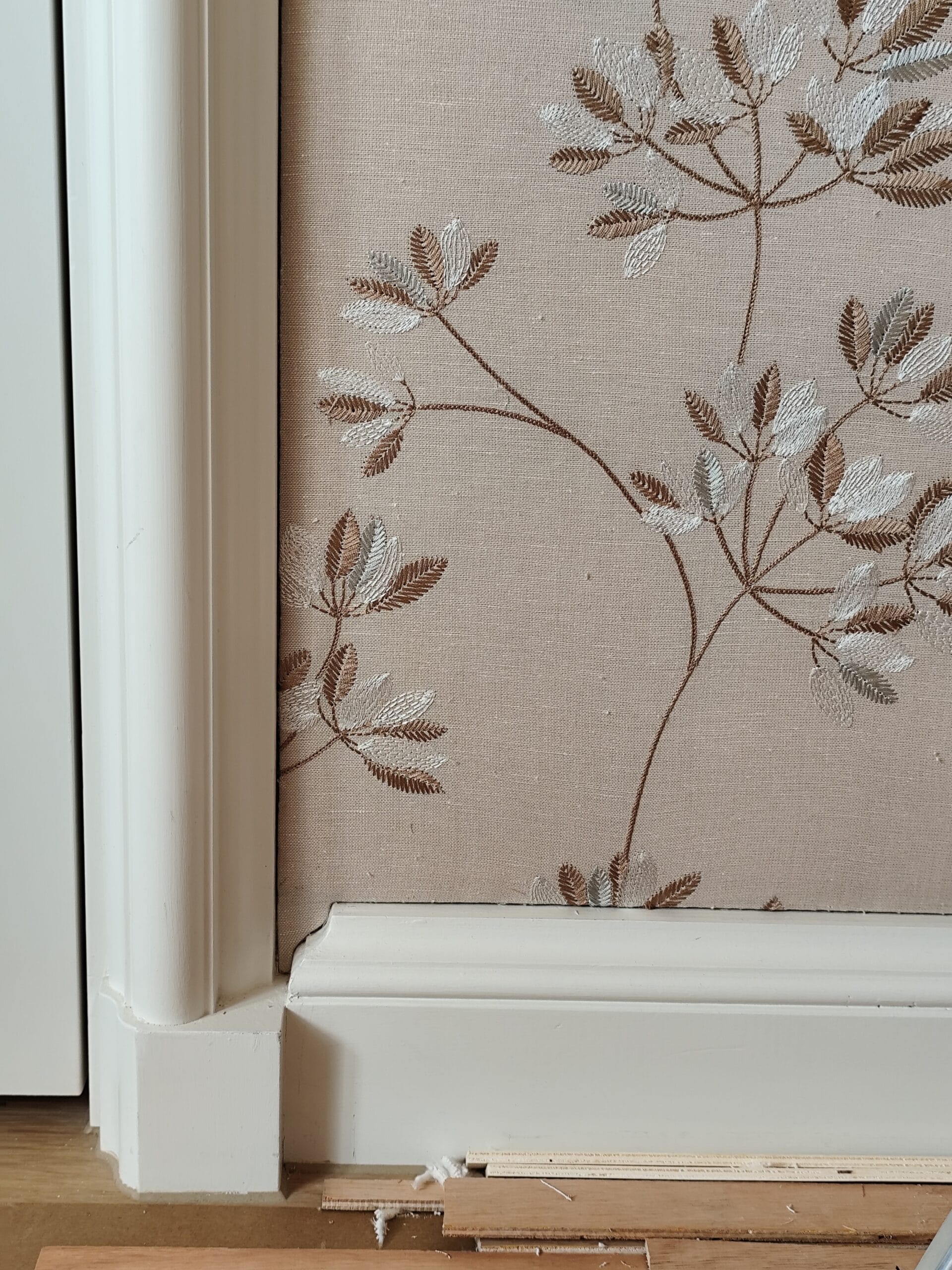
Look at the corners and edges. A panel stops abruptly with visible straight edges. Fabric walling runs all the way to the wall, disappearing into the skirting boards or the ceiling, or presenting a continuous line of trimming around its full perimeter.
Continuity
If the fabric runs for several metres without interruption, turning the corners of the room, it is unquestionably stretched fabric walling. Panels are by their nature limited in size.
Acoustics
You can also test the acoustics. Speak normally in the room. If the echo is markedly reduced – if your voice seems to be absorbed rather than reflected – there is a thick layer of wadding behind the fabric. You are standing in front of genuine fabric walling.
Fabric walling today
In contemporary interiors dominated by concrete, glass and hard surfaces, fabric walling has never felt more relevant. Acoustic problems are commonplace in open-plan spaces, double-height living areas and converted industrial buildings. Sound reverberates, conversation becomes tiring, sonic comfort erodes.
True fabric walling, with its layer of wadding, transforms the acoustics of a space completely. It absorbs frequencies, reduces reverberation, and softens the entire sonic environment. Acoustic studies have demonstrated reverberation time reductions of 30 to 50% in certain applications – which is precisely why cinema auditoriums have relied on fabric walling for decades.
Beyond its technical performance, fabric walling restores something sensory, tactile and warm that our hard-surfaced interiors have so often lost. Whether in high-end upholstery fabrics or noble materials such as linen or the finest natural fibres, it is a soft architecture, a textile skin that brings humanity back into a space.
But for this craft to survive, clients, architects and interior designers must know precisely what they are commissioning. They must be able to distinguish between a decorative upholstered panel and a genuine stretched fabric walling installation. They must understand that behind the words “fabric walling” lies a body of knowledge, a technique, a tradition.
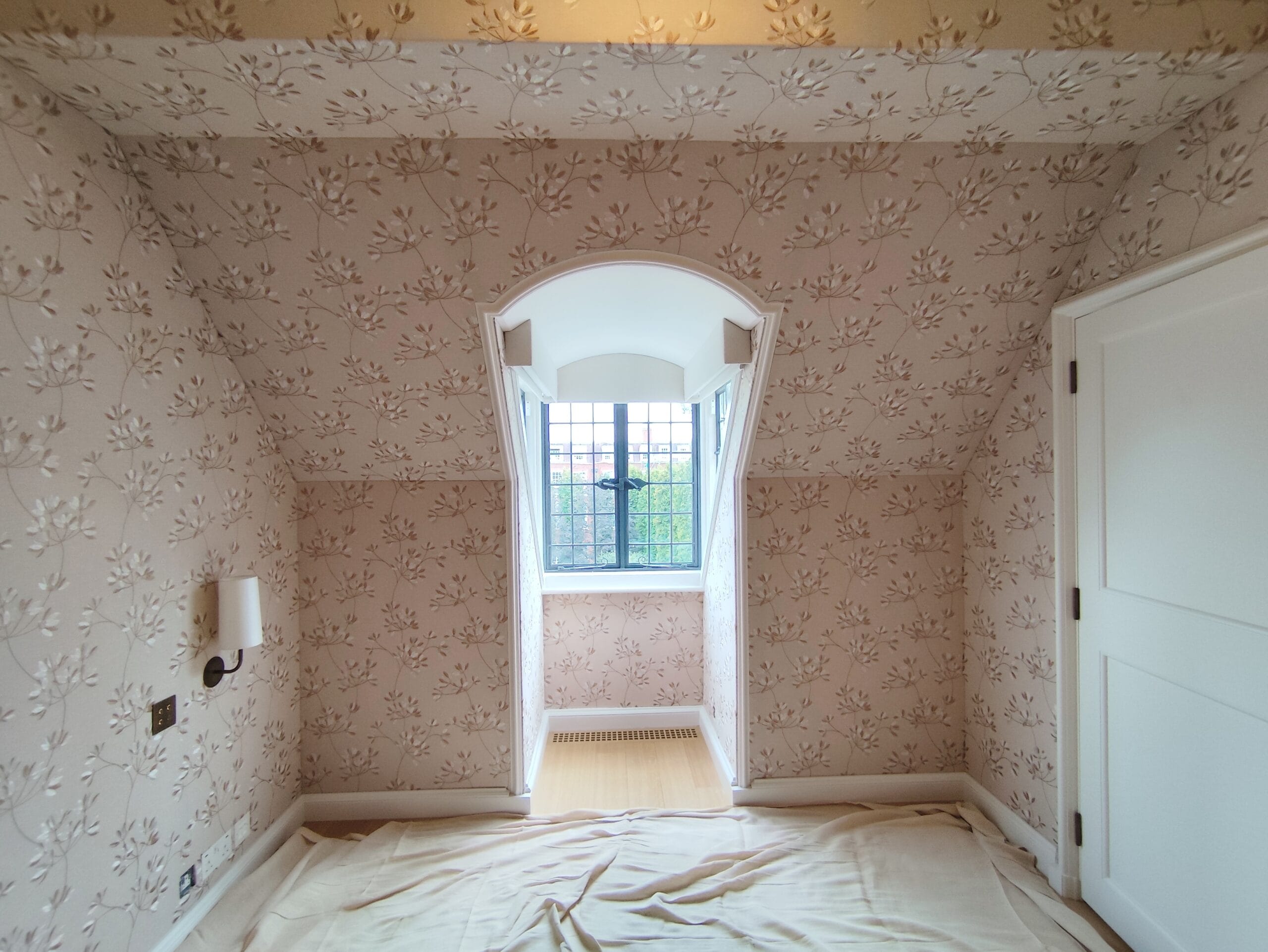
The next time you consider “fabric walling” for your project, you will know the right questions to ask: “What weight of wadding? What finishing technique?” And you will know how to recognise, by touch and by sight, the work of a true upholsterer and fabric walling specialist.
Photo credits: all example photographs are taken from the (exceptional) work of Stephen Franklin, master upholsterer and fabric walling specialist. Video: Céline Vanier
Digital entrepreneur and craft artisan.
My work bridges craftsmanship, design history and contemporary creation, shaping a personal vision of luxury interior design.
Since 2012, I have been based in my workshop on the shores of Lake Annecy, creating bespoke interiors for architects, decorators and private clients.