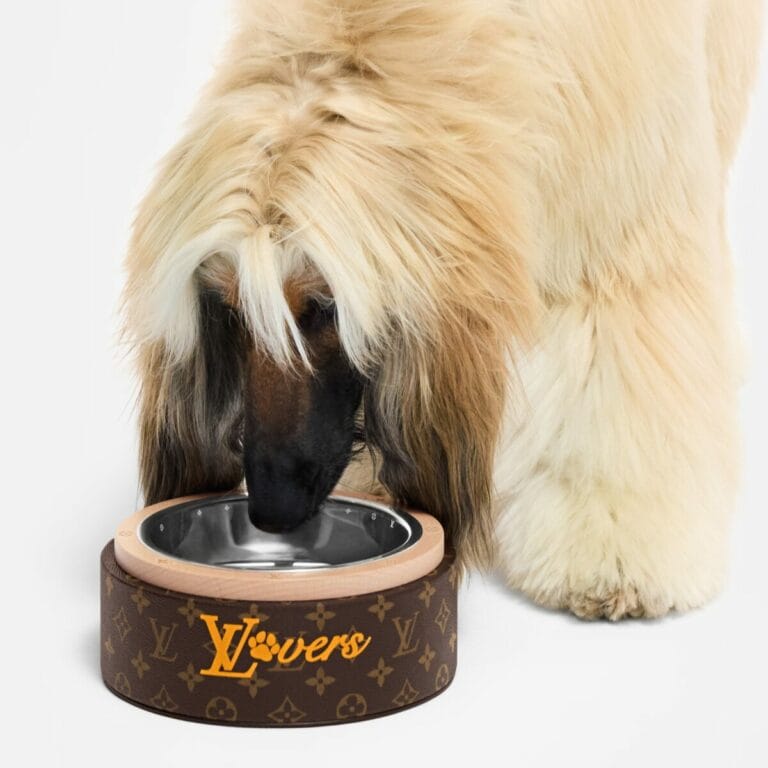


High-End Home Fragrances: When Scent Becomes Décor
The Invisible Art that Dresses Our Spaces
The perfume escapes from the bottle. It invades the space, caresses the walls, blends into the furniture. Long confined to the personal sphere or relegated to mere utilitarian air fresheners, interior fragrances underwent a spectacular transformation at the turn of the 21st century. Where the 1980s and 1990s favored synthetic and standardized atmospheres, a new approach emerged: that of perfume as a decorative object in its own right, a true olfactory signature of a place.
This revolution has its roots in the 2000s, driven by a Parisian and New York cultural elite seeking refined sensory experiences. Luxury houses quickly seized the opportunity to transpose their perfume-making expertise to the domestic universe. Today, choosing a scented candle or diffuser is no longer a simple purchase, but a statement of aesthetic intent, just like choosing a sofa or a work of art.
From Incense to Olfactory Design
The history of ambient perfumery dates back to ancient civilizations, but it was truly in the 1960s that the precursors of modern interior fragrance appeared. Artisanal scented candles emerged in Parisian workshops, while the first reed diffusers appeared in Asia. However, the real shift occurred in the 1990s-2000s, in a context of booming sensory marketing and lifestyle culture.
The influence of Scandinavian design, with its cult of hygge and cozy atmospheres, greatly contributed to this upscale democratization. Meanwhile, the emergence of the home staging concept and the growing obsession with customer experience in luxury boutiques revealed the power of scent as a vehicle for emotion and identity. Grand hotels, from Hôtel Costes in Paris to Park Hyatt Tokyo, were pioneers in creating their own exclusive olfactory signatures, inspiring individuals to reproduce this sophistication in their homes.

When the Bottle Becomes Sculpture
High-end interior fragrances are distinguished by a triple requirement: complex olfactory composition, container design, and usage ritual. Notes are structured as in classic perfumery: top, heart, base, with a marked preference for woody accords, noble citrus, and rare spices. Gone are the sweet and overwhelming scents: subtlety, evolution over time, and depth are now favored.
The materials speak for themselves. Hand-blown glass, artisanal ceramics, vegetable waxes (soy, coconut, rapeseed), wood or braided cotton wicks. Diffuser bottles rival in elegance with their caps in precious wood or brushed metal, their minimalist labels with refined typography. Color plays an essential role: immaculate white for Nordic purity, matte black for urban sophistication, powdery hues for bohemian softness.
Diffusion techniques have diversified: traditional candles with one, two or three wicks, reed diffusers, room sprays with metal pumps, porcelain fragrance burners, and more recently cold air diffusers preserving the integrity of the notes.
The Masters of the Invisible
Cire Trudon: French History
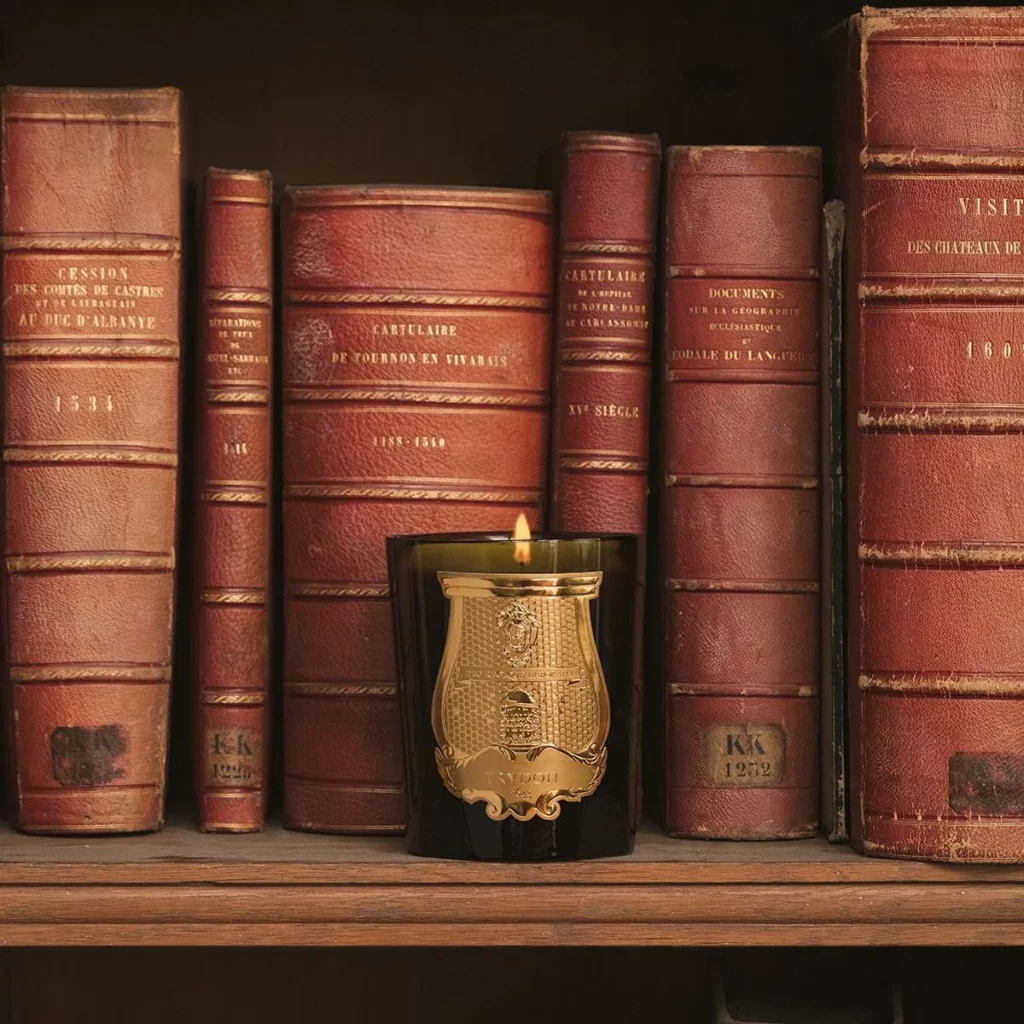
Founded in 1643, Trudon is the world’s oldest wax manufacturer still in operation. Official supplier to the court of Louis XIV and later to great French abbeys, it perpetuates exceptional craftsmanship where each candle is an art object, blown, filled and perfumed with monastic precision.
Among its iconic creations, Ernesto reigns supreme.
An opulent fragrance, amber and intensely woody, inspired by the hushed atmosphere of a Cuban salon: patinated leather, waxed wood, wisps of blond tobacco, vibrant warmth of rum and patchouli. It’s a characterful scent, enveloping and sensual, that transforms every interior into an elegant smoking room.
Its deep black glass, adorned with Trudon’s gold crest, recalls royal heraldry and marks a return to grand and theatrical luxury.
A candle for those who love dense, masculine, historic atmospheres, an olfactory presence that won’t be forgotten.
Diptyque: The Parisian Pioneers
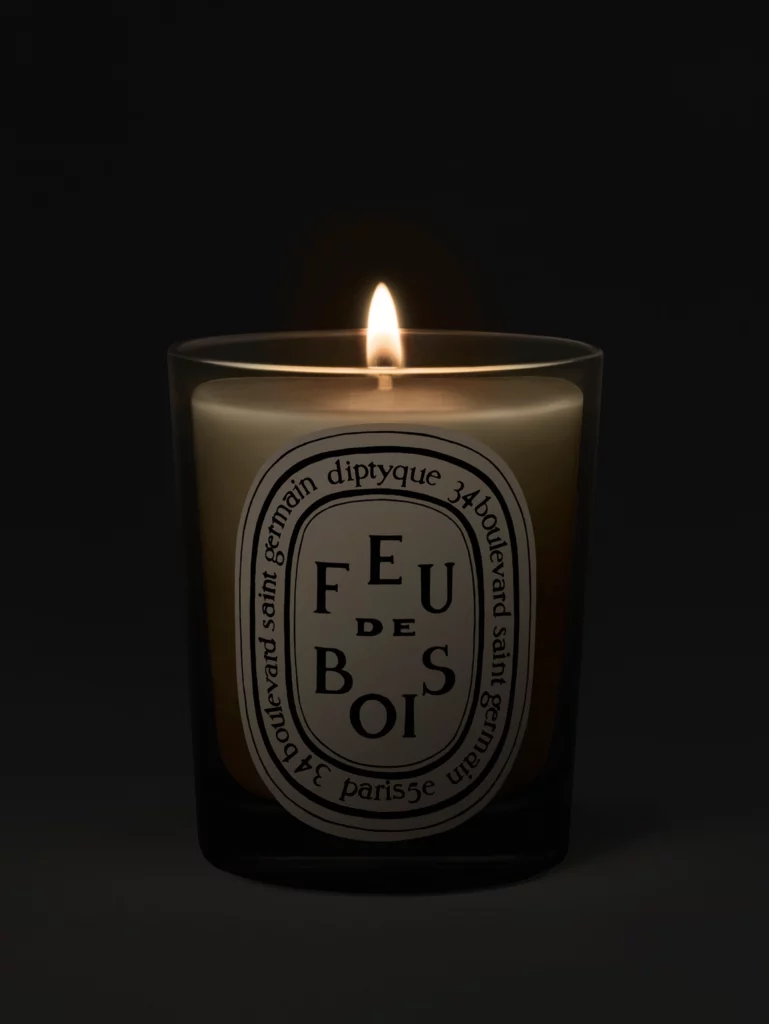
Founded in 1961 by three artist friends, Diptyque revolutionized the genre with its Baies candle in 1963. The brand from 34 boulevard Saint-Germain embodies the perfect alliance between artisanal heritage and modernity. Each fragrance tells a story, from Feu de Bois evoking fireplaces of yesteryear to Roses celebrating the flower in all its facets.
The Feu de Bois Candle remains the archetype of luxury interior fragrance. Its wood fire smell, its wax that burns evenly for 60 hours, its screen-printed oval glass make it a timeless classic since 1968.
Baobab Collection: Belgian Craftsmanship with African Inspirations
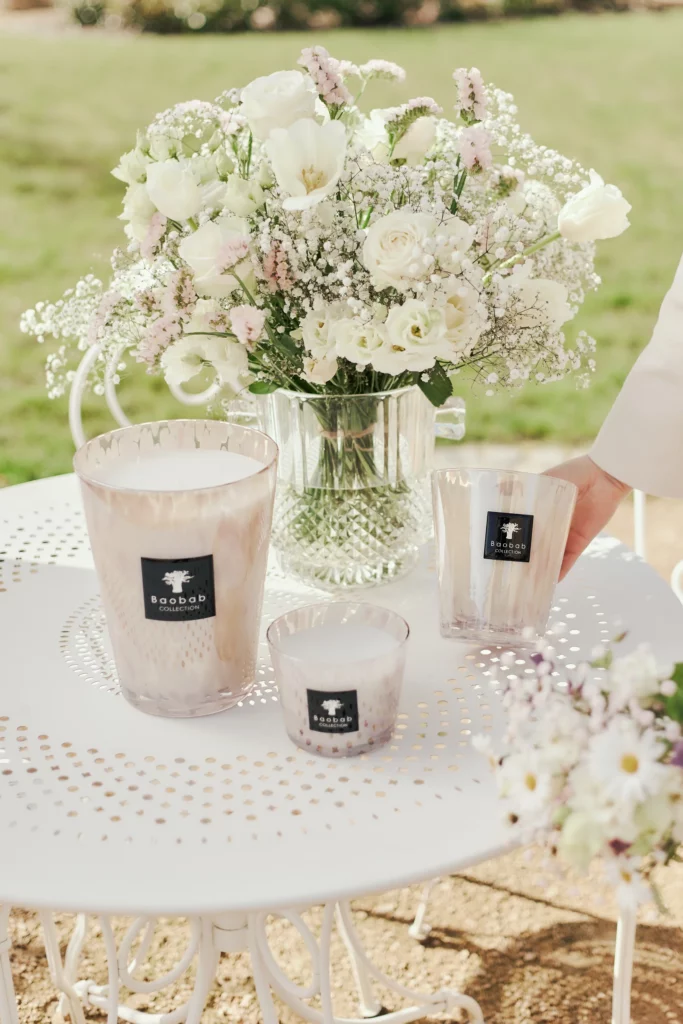
Born in 2002 in Belgium, Baobab Collection reinvented the luxury candle by transforming it into a true art object. Inspired by its founders’ travels through Africa and around the world, the brand stands out with its hand-screened glass, sophisticated graphic patterns, and multiple wooden wicks that crackle like a fireplace. The Pearls, Stones or Feathers collections play with textures and precious materials, while the Max (16 cm high) and Maxi (35 cm) formats stand as true olfactory sculptures. Baobab embodies this new generation of houses that fuse exceptional craftsmanship, contemporary design and poetic narrative.
The Pearls Candle perfectly illustrates the meeting between design and olfaction. Its three wooden wicks crackle like a wood fire, while its glass screen-printed with pearlescent patterns evokes the preciousness of pearls. With its 150 hours of burn time for the Max format, it diffuses sophisticated fragrances like White Pearls with powdery notes of musk and sandalwood.
Byredo: Swedish Minimalist Elegance
Created in 2006 by Ben Gorham, Byredo represents contemporary Scandinavian aesthetics applied to perfume. Its candles with evocative names: Bibliothèque, Safran, Eleventh Hour, are distinguished by their bold compositions and streamlined packaging with architectural lines.
Fornasetti: Italian Olfactory Art
The Milanese house, famous for its surrealist creations, has transcended simple ambient fragrance to make it a work of art. Its candles adorned with the face of Lina Cavalieri or architectural motifs transform the utilitarian object into a collector’s piece.

Boutiques & Concept Stores
Sales spaces have become true sensory temples. The Diptyque boutique on boulevard Saint-Germain, with its antique woodwork and cabinet of curiosities atmosphere, offers a unique immersive experience. The Aesop concept store in the Marais, designed by architect Ciguë, plays with volumes and raw materials to sublimate amber bottles. These spaces don’t just sell perfumes: they offer a complete lifestyle where architecture, design and olfaction harmoniously dialogue.
New Trends
The influence of high-end interior fragrances has largely exceeded the boundaries of traditional luxury. Fashion brands (Hermès, Loewe, Prada) have all developed their ambient lines, while young independent creators are reinventing the codes with a sustainable and local approach. Contemporary reinterpretations favor eco-responsibility: 100% vegetable waxes, lead-free wicks, diffuser refills, reusable containers.
The emergence of professional scent marketing now inspires individuals to create their own olfactory signatures by layering several scented sources, a trend called scent layering that democratizes the expertise of the perfumer.
The Essence of an Ephemeral Art
High-end interior fragrance has transcended its primary function to become a central element of contemporary decoration. It embodies this quest for complete sensory experiences that defines our current relationship to the home. More than a simple accessory, it’s an extension of our personality, a silent but powerful way of inhabiting space.
This trend is part of a broader movement toward holistic well-being and slow decoration, where each element of the home contributes to an intentional atmosphere. While the contours of a next revolution are already taking shape, that of connected and customizable fragrances via artificial intelligence, craftsmanship and authenticity remain the cardinal values of this market.
High-end interior fragrance remains essential because it responds to a universal need: to transform one’s home into a personal sanctuary, a place where all senses are honored. In a world saturated with visual stimuli, it reminds us of the power of the invisible, the magic of a scent that welcomes, comforts and tells who we are.

Independent interior architect and project manager, I combine technical expertise with aesthetic sensibility. From structural work to finishing touches, I have developed an in-depth knowledge of materials, which I share through writing to convey my passion for design and architecture.