

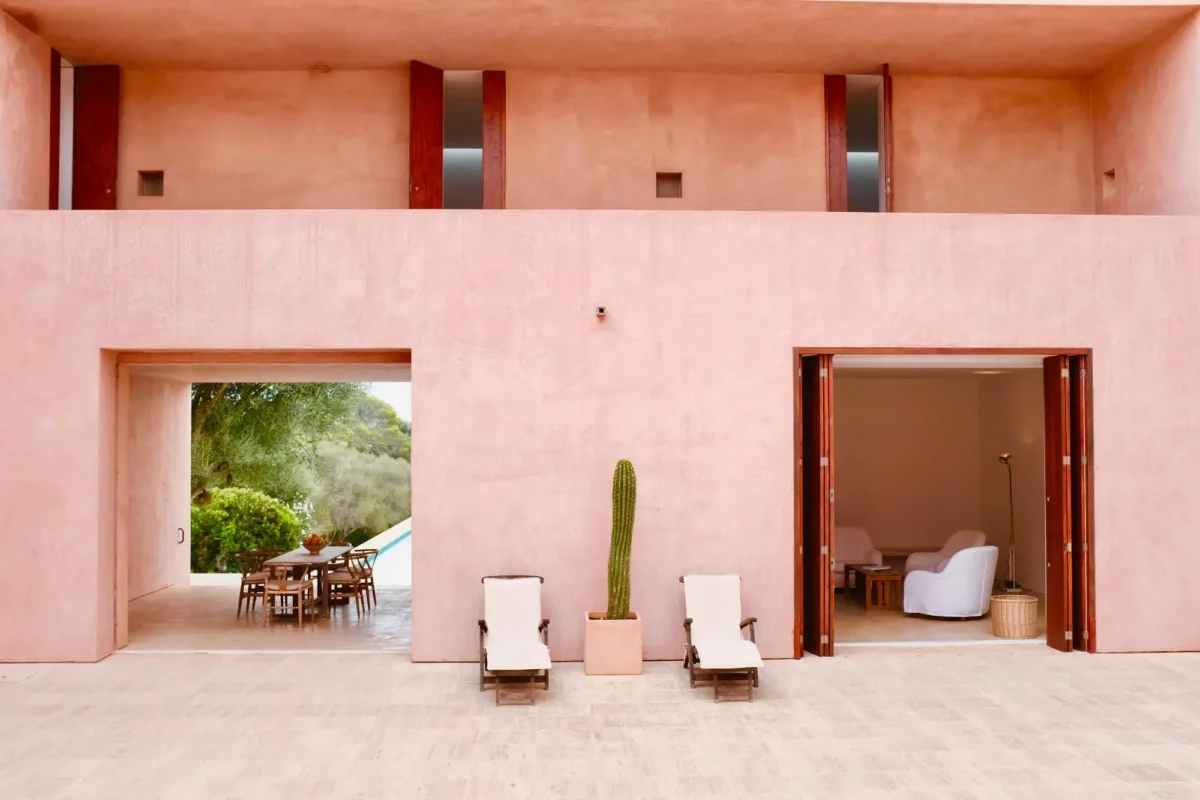
Minimalism (1990-2010): When “Less is More” Becomes a Global Manifesto
At the turn of the 1990s, in a world saturated with postmodern ornamentation and decorative excess, a silent revolution was taking place. In Manhattan lofts, Tokyo galleries, and London studios, a new generation of creators was rediscovering the power of emptiness, the eloquence of spatial silence, the force of radical refinement. Minimalism didn’t emerge from nowhere: it arose as a necessary breath, a contemplative response to the visual cacophony of the late twentieth century.
Essence and Philosophy: Understanding Minimalism
This aesthetic finds its perfect chromatic embodiment in shades like Cloud Dancer, that cloudy white announced by Pantone as the emblematic color of 2026. More than just white, Cloud Dancer symbolizes this quest for visual appeasement, this desire to create breathing spaces in an increasingly dense urban environment. Minimalism simultaneously draws from the heritage of architectural brutalism from the 1960s-1970s – with its love of raw concrete and structural honesty, while sublimating it through renewed attention to light, emptiness, and contemplative serenity.
This aesthetic of subtraction, far from being a passing trend, profoundly transformed our relationship to space, objects, and contemporary luxury. From architects’ raw concrete to the refined interfaces of the digital revolution, minimalism became the visual language of a generation seeking the essential.
The Quest for the Essential
Minimalism of the 1990s-2010s isn’t simply a matter of refined decoration. It represents an existential philosophy applied to space and objects. Its founding principle can be summed up in a few words: reduce to reveal, subtract to magnify, simplify to intensify. Each element retained in a minimalist space must justify its presence through its function, intrinsic beauty, or symbolic charge. This radical approach transforms emptiness into the main actor of spatial composition.
Minimalism celebrates pure geometry, immaculate surfaces, subtle transitions between materials. It refuses artifice, ornamental overload, decorative superfluity. But beware: refining doesn’t mean impoverishing. On the contrary, this aesthetic demands the precision of a goldsmith, meticulous attention to proportions, textures, and the quality of natural light. A failed minimalist interior resembles a sterile desert; a successful minimalist interior evokes a sanctuary of serenity.
The Material Vocabulary of Sobriety
The materials of minimalism speak a language of truth and authenticity. Raw concrete, left exposed with its imperfections and patina, becomes a noble surface. Brushed or polished steel reflects light with industrial sensuality. Glass, in its radical transparency, dissolves boundaries between spaces. Natural wood, treated in neutral tones or left raw, brings organic warmth without compromising overall rigor.
This limited material palette creates a soothing chromatic harmony: immaculate whites, grays ranging from light to charcoal, sandy beiges, deep blacks. Bright colors, when they appear, do so sparingly, functioning as accents sculpted into a neutral environment. Texture replaces ornament: concrete grain, marble veins, natural linen weave become the only authorized patterns.
Light as Architectural Material
In minimalist aesthetics, natural light acquires the status of a full-fledged construction material. Minimalist architects design their spaces as devices for capturing and modulating light. Large bay windows don’t just provide illumination: they frame the landscape like a moving painting, they punctuate days through their variations, they sculpt interior volumes through their cast shadows. This obsession with natural light finds its roots in traditional Japanese architecture, where the subtle interplay between shadow and clarity constitutes a millennial art.
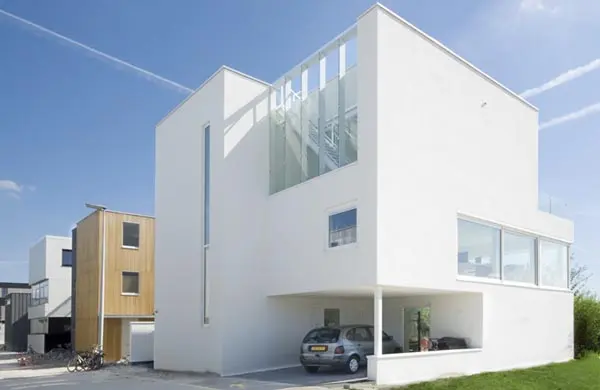
Genealogy of a Movement: The Roots of Contemporary Minimalism
From Bauhaus to the 1960s: Modernist Foundations
To understand minimalism of the 1990s, we must go back to the early decades of the twentieth century. The German Bauhaus (1919-1933) laid the theoretical groundwork with its motto “form follows function.” Ludwig Mies van der Rohe, a tutelary figure of the movement, formulated his famous “Less is more” in the 1920s. This maxim would become the mantra of contemporary minimalism seventy years later.
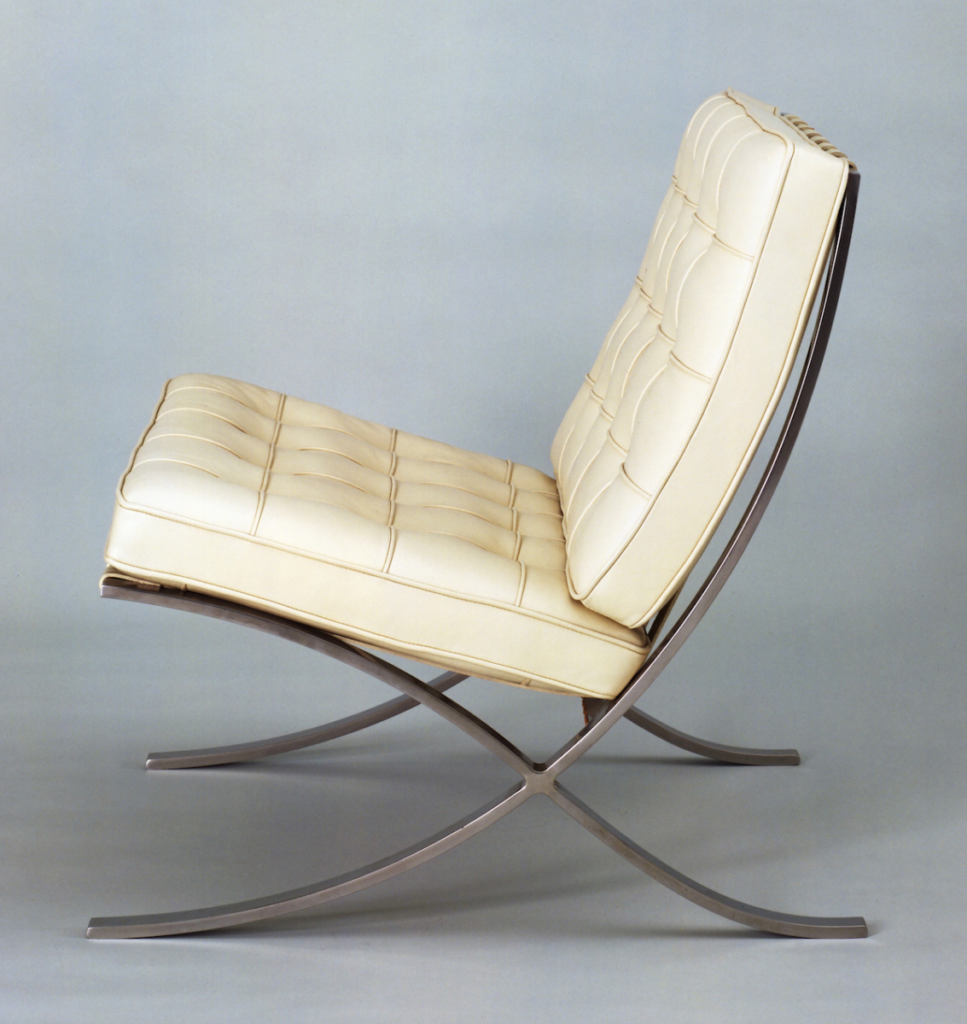
The 1950s-1960s saw minimalism emerge as an artistic movement in its own right. Donald Judd, Dan Flavin, Carl Andre developed an art of pure geometry, elementary forms, raw industrial materials. Their sculptures (steel cubes, fluorescent tubes, aligned metal plates) rejected all romantic expressivity, all traces of the artist’s hand. This “literalness” of objects, their raw presence in space, would directly influence designers in subsequent decades.
The Decisive Contribution of Japanese Culture
Western minimalism draws abundantly from traditional Japanese aesthetics. The concept of “ma” – the interval, active emptiness – teaches that negative space has as much importance as matter. Traditional Japanese interiors, with their tatami mats, sliding partitions, and near-absence of furniture, have embodied for centuries a philosophy of simple, meditative living.
The Japanese Zen garden, with its raked gravel surfaces and few rocks arranged according to cosmological principles, offers a model of minimalist composition. This influence intensified in the 1980s-1990s, when the West rediscovered Zen Buddhism and martial arts. Minimalism then became an aesthetic associated with Eastern wisdom, meditation, and a contemplative art of living.
1980s-1990s: The Reaction to Postmodernism
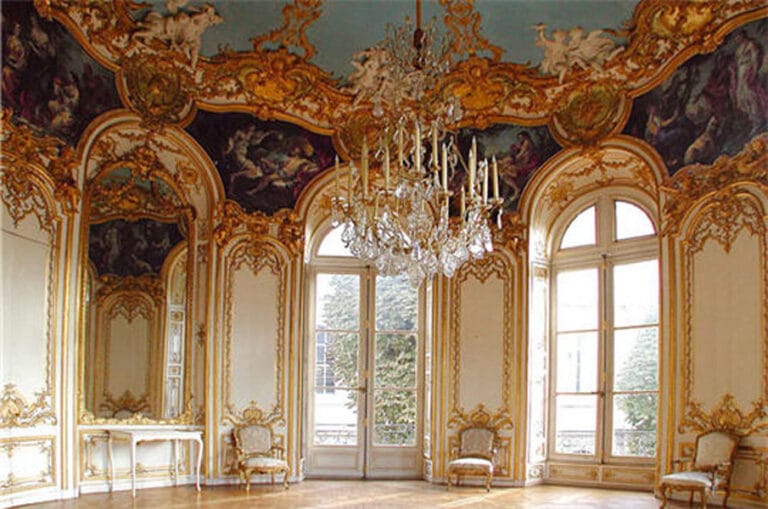
The immediate context of 1990s minimalism was one of rejection. Postmodernism of the 1980s, embodied by figures like Ettore Sottsass and the Memphis Group, had celebrated excess, garish color, mixing of styles, decorative irony. Postmodern interiors accumulated historical references, colorful geometric patterns, whimsical forms.
Faced with this visual saturation, a new generation of creators felt the need to start fresh, return to the essential, rediscover a form of purity. This movement coincided with the emergence of ecological consciousness: the consumer society of the 1980s was beginning to show its environmental limits. Minimalism then inscribed itself in an ethic of “less but better,” a valorization of quality over quantity, durability over the ephemeral.
1990-2000: The Golden Age of Global Minimalism
The 1990s marked the institutionalization of minimalism as an international aesthetic reference. Interior design magazines massively disseminated this aesthetic. Contemporary art galleries became immaculate white cubes. Luxury boutiques adopted refined, almost monastic retail design. This decade also saw the rise of the Internet and the digital economy: minimalism found a natural echo in the aesthetics of emerging digital interfaces, based on clarity, ergonomics, and simplicity of use.
Economic and cultural globalization favored the spread of minimalism, an aesthetic that transcends local particularisms and adapts to all geographical contexts. From Los Angeles to Stockholm, from Sydney to Tokyo, the language of raw concrete and pure volumes became a lingua franca of contemporary good taste.
The Architects and Designers of Silence
John Pawson: The British Prophet of Refinement
LoJohn Pawson embodies minimalist architecture of the 1990s better than anyone. This British architect, born in 1949, discovered his vocation in Japan in the 1970s. Studying at Nagoya’s design school, he absorbed Zen aesthetics and traditional Japanese architecture. Back in London, he developed an architectural language of monastic rigor.
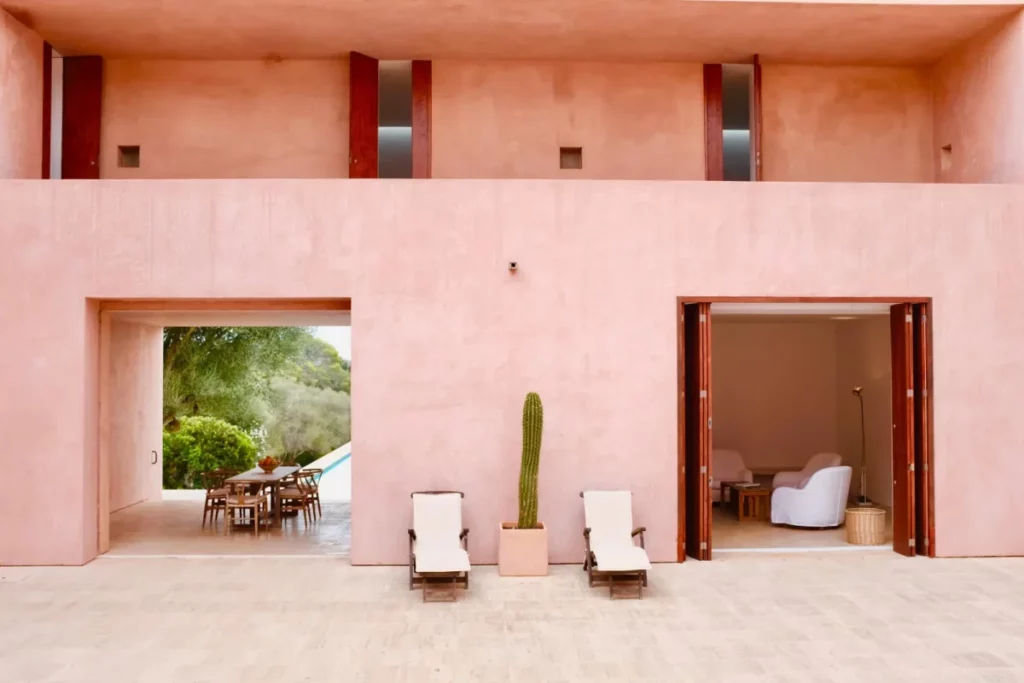
His most emblematic work remains perhaps the Neuendorf House in Majorca (1989), a rectangular volume of raw concrete set in an arid landscape. Proportions are meticulously calculated, light penetrates through strategically placed openings, furniture is reduced to a few essential pieces. This house functions as a contemplation machine, an architectural device that intensifies the experience of place and passing time.
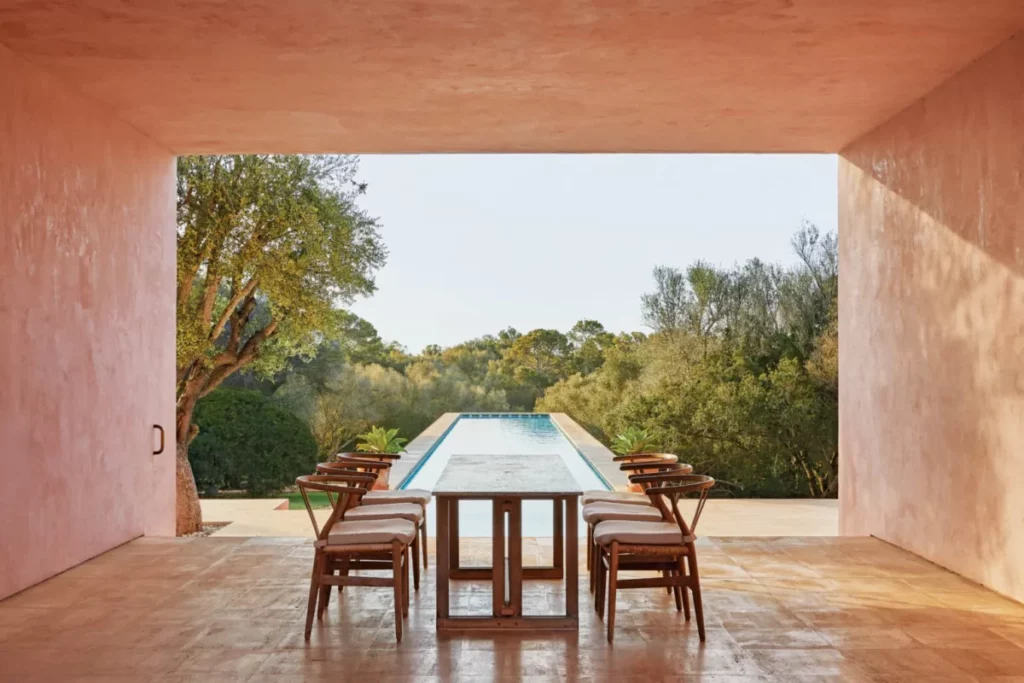
Pawson also designed boutiques for Calvin Klein in the 1990s, transforming luxury retail into a quasi-spiritual experience. His commercial spaces resemble contemporary art galleries: light stone floors, immaculate white walls, zenithal lighting, a few garments presented like sculptures. This aesthetic of luxurious emptiness redefined the codes of high-end retail.
Tadao Ando: The Japanese Master of Poetic Concrete
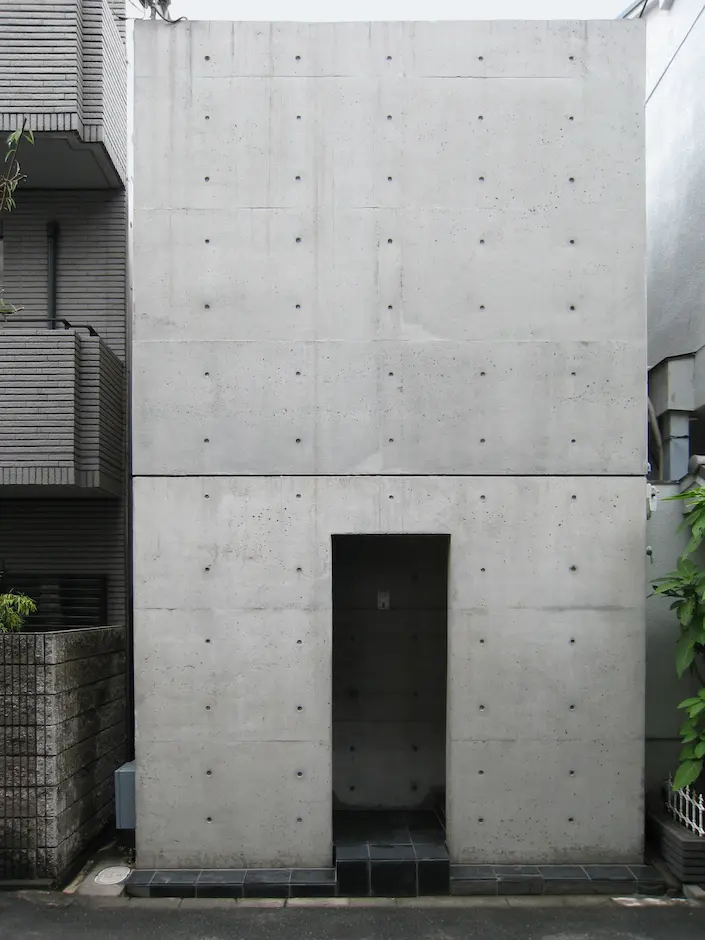
Tadao Ando, a self-taught Japanese architect born in 1941, became the global figure of minimalist architecture in the 1990s. His atypical journey – he was a professional boxer before training himself in architecture – forged a creator of rare determination. Ando developed an architectural language based on the trinity of concrete-light-water.
His emblematic works – the Church of Light in Osaka (1989), the Chichu Art Museum in Naoshima (2004), the Armani Theater in Milan (2001) – demonstrate how raw concrete can become a material of grace. In Ando’s work, form-cast concrete walls retain the imprint of wooden planks, creating a subtle texture. Natural light, filtered, reflected, fragmented, sculpts space with a choreographer’s precision.
Donald Judd: From Minimal Art to Functional Design
Donald Judd (1928-1994) occupies a unique position: both minimalist sculptor and furniture designer. In the 1960s-1970s, Judd created iconic sculptures – “stacks” (stackings) of metal boxes, geometric progressions in plywood and metal. These works, industrially produced, erased the distinction between art and manufactured object.
From the 1980s onward, Judd applied his minimalist principles to furniture. Installed in Marfa, Texas, he designed for his own use tables, chairs, shelving of implacable geometry. These pieces – steel and wood desks, modular plywood bookcases – function as miniature architectural structures. The Judd furniture collection, published after his death, durably influenced contemporary design through its formal rigor and constructive frankness.
Claudio Silvestrin: Latin Minimalism
Italian architect Claudio Silvestrin brings Mediterranean sensuality to minimalism. Trained under John Pawson, he developed in the 1990s a language where geometric rigor softens with sensual textures. His projects – Armani boutiques, private residences, cultural spaces – work natural stone, Venetian stucco, lime plasters with tactile sophistication.
In Silvestrin’s work, minimalism isn’t cold but warm, not austere but luxurious. His spaces breathe discreet refinement, that ultimate form of luxury that doesn’t proclaim itself but is felt in the quality of materials, precision of details, harmony of proportions. His work illustrates how minimalism can dialogue with European architectural history without betraying its principles of refinement.
Vincent Van Duysen: Flemish Minimalism
Belgian designer and architect Vincent Van Duysen, active since the 1990s, embodies a warm, almost domestic minimalism. His interiors blend polished concrete, natural linen, bleached oak, limestone. Van Duysen excels in the art of creating livable minimalist spaces, far from the museum coldness sometimes reproached in this movement.
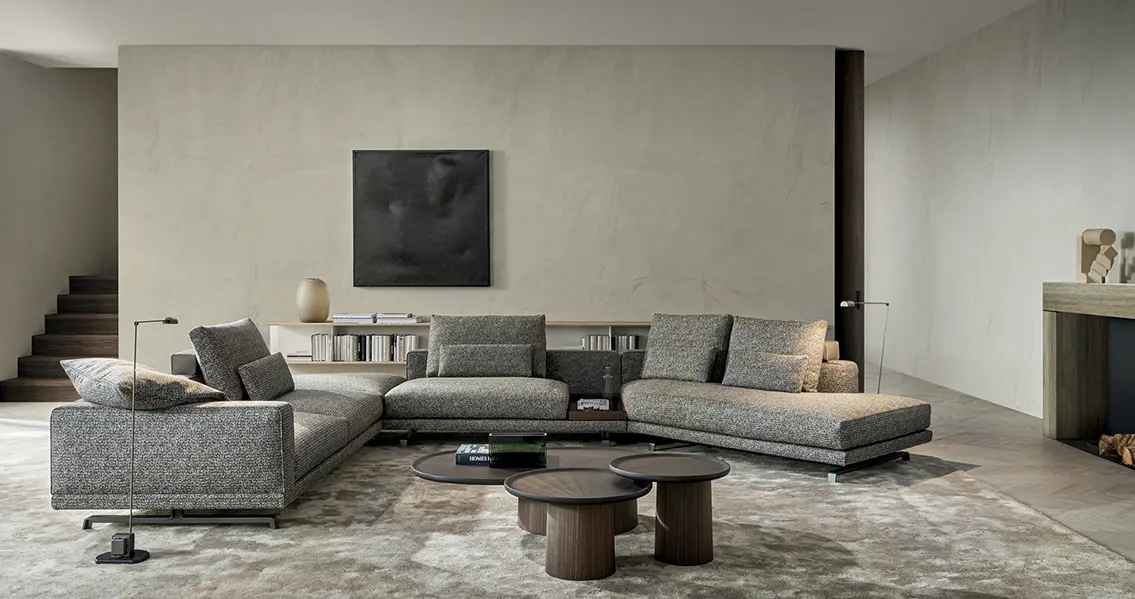
Creative Director of Molteni&C since 2016, he designs furniture with refined yet comfortable lines, deep sofas covered in natural fabrics, solid wood tables with generous proportions. His minimalism advocates comfort without ostentation, evident material quality without noisy demonstration. Van Duysen proves that minimalism and art of living don’t oppose each other but can merge harmoniously.
The Decisive Influence of Dieter Rams
Impossible to evoke minimalism without mentioning Dieter Rams, German industrial designer born in 1932. Head of design at Braun from 1961 to 1995, Rams formulated his famous “Ten Principles of Good Design” which became the catechism of functional minimalism. “Good design is as little design as possible”: this principle directly inspired Apple’s approach and Jonathan Ive’s in the 2000s.
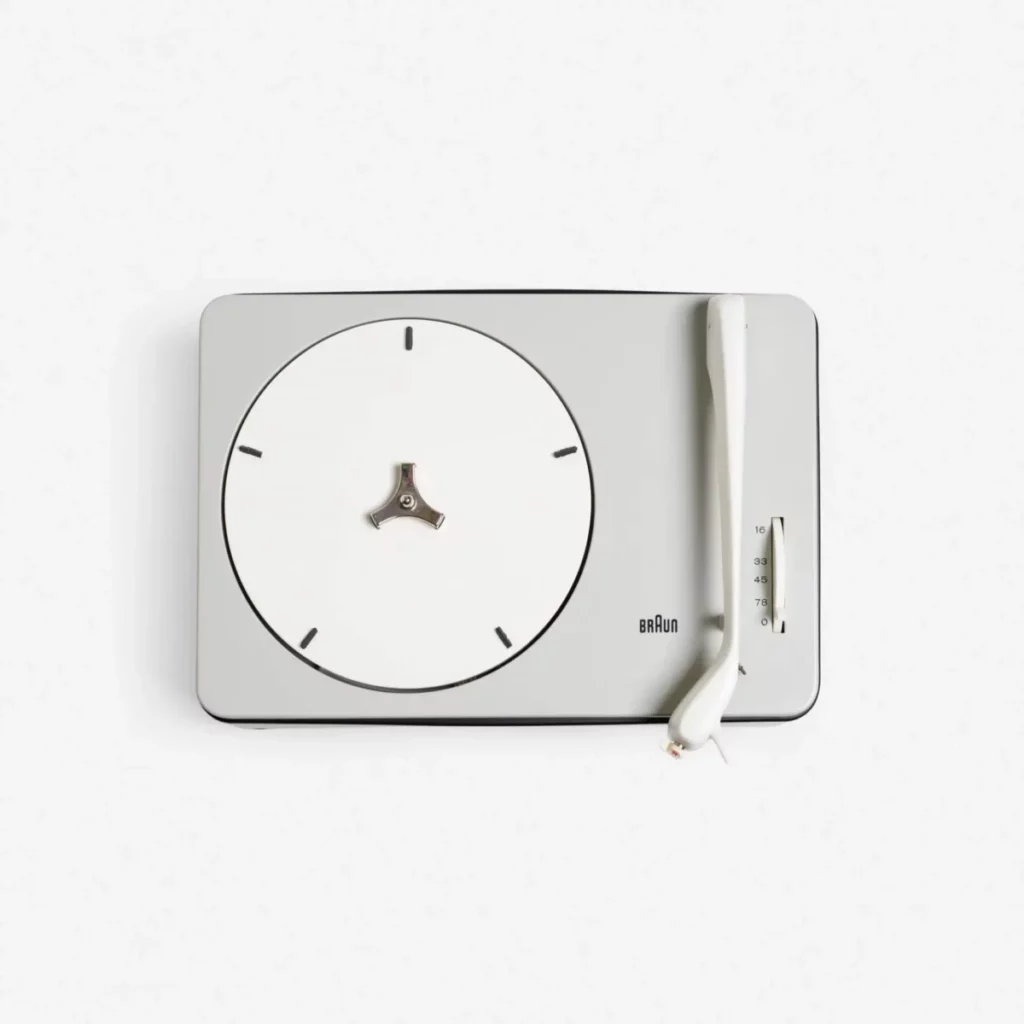
Rams’ creations (electric razors, radios, calculators, furniture for Vitsœ) all embody timeless modernity. Their pure lines, neutral colors, impeccable ergonomics resist passing fashions. The minimalism of the 1990s-2000s rehabilitated Rams as a thought leader, rediscovering the relevance of his work in the digital age.
Furniture Icons: The Pieces That Defined an Era
Le Corbusier’s LC4 (Contemporary Reissue)
Though designed in 1928, the LC4 chaise longue by Le Corbusier, Pierre Jeanneret, and Charlotte Perriand experienced a spectacular renaissance in the 1990s. This “resting machine” embodies the perfect synthesis between sculptural form and ergonomic function. Its chrome tubular frame and black leather shell became essential classics in any minimalist interior aspiring to modernist authenticity.
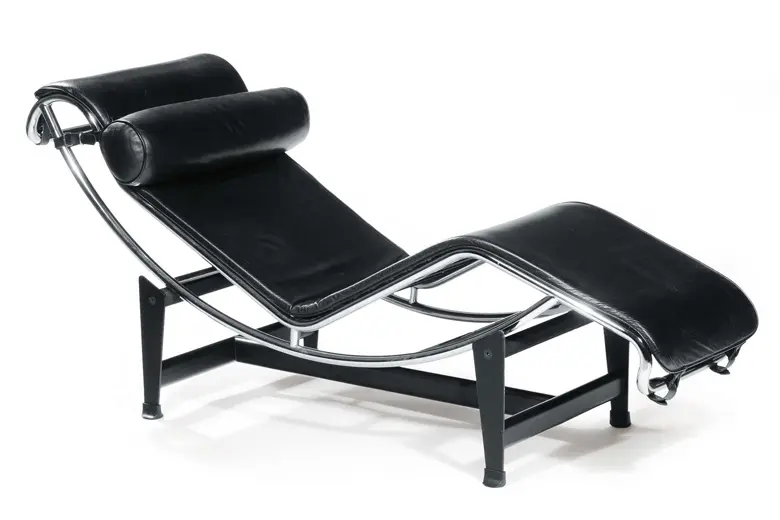
The LC4 illustrates how 1990s minimalism inscribed itself in a long historical lineage, reactivating the formal achievements of heroic modernism. Cassina, the official publisher, sold thousands of copies to a global clientele hungry for this timeless elegance.
Donald Judd’s Rectangular Table
Donald Judd’s tables, designed in the 1980s-1990s, reduce furniture to its essential structure. A birch plywood top, four tubular steel legs: no decorative concession, no artifice. Dimensions are rigorously proportioned according to Judd’s research on geometric progressions.
These tables, now collected as works of art, demonstrate how minimalism transcends the distinction between art and design. Their high price reflects their cult object status, museum pieces as much as functional furniture. They influenced a whole generation of designers seeking constructive authenticity and formal transparency.
Sofas and Armchairs by Piero Lissoni
Milanese designer Piero Lissoni created in the 1990s-2000s a collection of seating for Cassina and Porro that redefined minimalist comfort. His low-lined sofas, his generously proportioned armchairs wrapped in solid-colored fabrics demonstrate that refinement doesn’t mean discomfort.
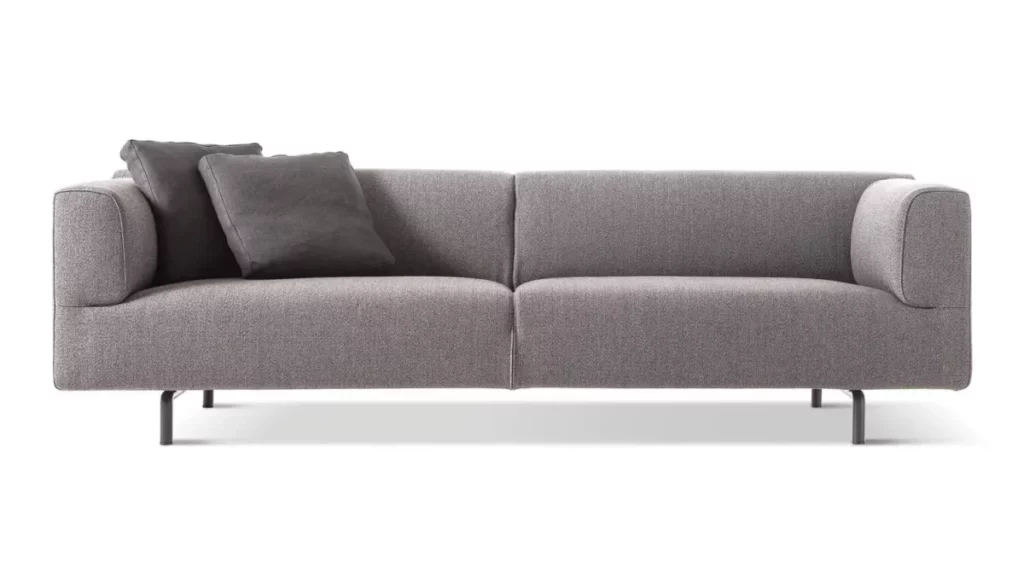
The Met sofa (1997) for Cassina became a global bestseller: invisible metal structure, deep seat cushions, monochrome fabric or leather upholstery. Lissoni proved that minimalism can be sensual, inviting, warm. His creations furnish New York lofts as well as Parisian apartments, Californian villas as well as London penthouses.
Modular Bookcases: USM Haller and Vitsœ 606
Two storage systems embody the minimalist spirit applied to storage: the USM Haller system (1965, popularized in the 1990s) and Dieter Rams’ 606 system for Vitsœ (1960, rediscovered in the 2000s). These modular metal and wood structures combine functional flexibility and formal purity.
USM Haller, with its chrome spheres and brightly colored lacquered panels, brings a sculptural touch to refined interiors. The 606 system, all in anodized aluminum and wood, embodies absolute discretion. These two approaches – the first slightly demonstrative, the second almost invisible – show the diversity of expressions within minimalism.
Lighting: Light as Sculpture
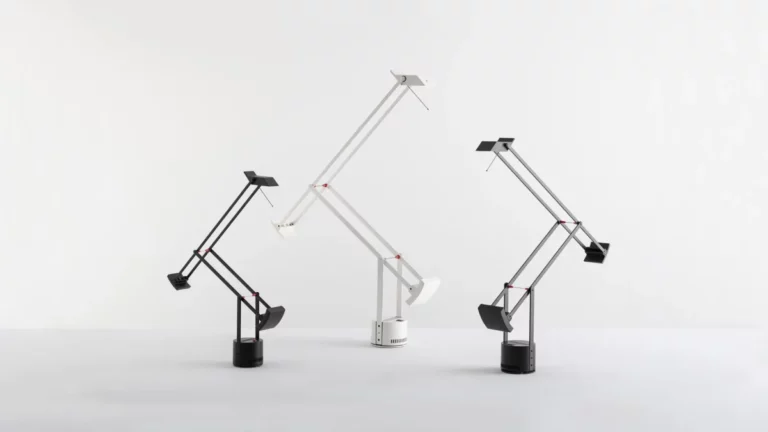
Minimalism of the 1990s-2000s saw the emergence of lighting fixtures designed as luminous sculptures. The cylindrical suspensions of Ingo Maurer, Dan Flavin’s fluorescent lamps integrated into architecture, architectural lighting systems from Flos and Artemide transformed light into a plastic material.
Minimalist philosophy favors indirect lighting, concealed light sources, integrated LEDs. Lamps become discreet, almost invisible, letting light itself sculpt the space. This approach profoundly influenced contemporary interior architecture, where lighting is now conceived as a full-fledged architectural element.
Tableware and Objects: The Revolution of the Everyday
Minimalism also transformed everyday objects. Tonale tableware by David Chipperfield for Alessi (2009), Nuovo Milano cutlery by Ettore Sottsass (1987, rediscovered in the 2000s), Japanese stainless steel kitchen utensils: all these objects applied the principles of radical refinement to the domestic.

The Muji boutique, a Japanese chain established internationally in the 1990s-2000s, democratized everyday minimalism. Its products without apparent branding, kraft packaging, generic but perfectly proportioned forms seduced a generation seeking authenticity and simplicity. Muji proved that minimalism could be financially accessible while maintaining impeccable quality.
How to Adopt Minimalism: A Practical and Philosophical Guide
First Step: Declutter Without Regret
Integrating minimalism into daily life begins with an exercise in radical decluttering. This practice, popularized by Marie Kondo in the 2010s, finds its roots in the minimalist philosophy of the 1990s. It’s not about compulsively throwing things away but lucidly evaluating each possessed object: is it used regularly? Does it possess beauty or real emotional value? Does it justify the space it occupies?
The decluttering process often reveals an unconscious accumulation of useless objects, never-worn clothes, never-read books, obsolete technological gadgets. Keeping only the essential liberates physically and mentally. Spaces breathe, the gaze rests on what truly matters, daily life gains fluidity.
This approach demands lucidity and determination. One must accept separating from objects charged with memories but become burdensome, recognize that owning less can mean living better. Minimalism isn’t an aesthetic of poverty but a philosophy of essential richness.
Second Step: Favor Quality Over Quantity
Once the space is decluttered, minimalism encourages investing in superior quality objects. Rather than ten cheap chairs, a single perfectly designed chair. Rather than a wardrobe overflowing with fast fashion, a few timeless garments in noble materials. This approach inscribes itself in a logic of durability: quality objects last, can be repaired, transcend fashions.
Purchasing becomes a thoughtful act, almost ceremonial. Before acquiring a piece of furniture, one studies its fabrication, materials, provenance. One favors creators who share these values of excellence and permanence. This conscious consumption transforms the relationship to objects: one owns less but values more what one possesses.
Minimalism here joins contemporary environmental ethics. By refusing planned obsolescence and overconsumption, it proposes an alternative economic model, more ecologically sustainable and more psychologically satisfying.
Third Step: Master the Chromatic Palette
The minimalist chromatic universe is built around neutral and natural tones. White, in its multiple nuances (off-white, linen white, chalky white), constitutes the base. Grays, from pearl to charcoal, bring depth and sophistication. Sandy beiges, pale ochres, taupe browns create gentle warmth without breaking the harmony.
This chromatic sobriety doesn’t totally exclude color but uses it with strategic parsimony. A cobalt blue vase on a white table, a terracotta cushion on a gray sofa, a work of art with vivid tones on an immaculate wall: these colored touches work all the better as they emerge from a neutral environment.
Mastering color demands a trained eye. One must understand how tones interact, how natural light transforms them throughout the hours, how textures modulate their perception. Chromatic minimalism is a subtle art, far from the simplism of sterile all-white.
Fourth Step: Work with Materials and Textures
In a minimalist space, the absence of ornament shifts attention to the intrinsic quality of materials. A raw concrete wall reveals the beauty of its formwork. A solid oak floor exposes its natural veins. A Carrara white marble table unveils its subtle gray clouds.
Textures become essential: wood grain, leather patina, coarse weave of natural linen, matte surface of lime plaster. These tactile variations enrich the sensory experience of space. A successful minimalist interior invites touch as much as sight.
The choice of materials also reflects an ethic: favoring natural and durable materials (solid wood, stone, terracotta, linen, wool) rather than synthetic imitations. This material authenticity participates in the intellectual honesty of minimalism: being what one appears, without pretense.
Fifth Step: Orchestrate Light
Natural light structures minimalist space. One must analyze one’s dwelling’s orientation, identify main light sources, understand how light evolves according to seasons and hours. This knowledge guides layout choices: position living spaces on the light side, orient seating toward windows, clear obstacles to light circulation.
Artificial lighting must remain discreet: recessed spotlights, integrated LEDs, lamps with refined design. One favors multiple sources with variable intensity rather than an overwhelming central chandelier. The objective is to prolong the softness of natural light once night falls.
Blinds and curtains participate in this light orchestration. Japanese screens, wooden Venetian blinds, natural linen sheers filter light without smothering it. Minimalism values transparency: letting the outside world enter, connecting interior to urban or natural landscape.
Sixth Step: Cultivate Emptiness as Active Space
The frequent error consists of confusing minimalism with uncomfortable emptiness. A minimalist space isn’t an empty space but a space where each element breathes, where circulations are fluid, where the gaze can rest without being assaulted by visual overload.
One must learn to value negative spaces: the void between two pieces of furniture isn’t a lack but a compositional element in its own right. This void allows each object to reveal its full presence, its own beauty. A sofa isolated in the center of a room becomes sculpture. A solitary table against an immaculate wall acquires architectural dignity.
This philosophy of void as plenitude draws directly from Japanese aesthetics. It demands an effort of perception: relearning to see, to appreciate space for itself and not as a support to compulsively fill.
Seventh Step: Integrate Minimalism Progressively
Conversion to minimalism doesn’t happen overnight. It’s illusory and counterproductive to throw everything away immediately to buy expensive designer furniture. The approach must be progressive, thoughtful, respectful of one’s personal history.
One can start with one room – the bedroom, often -, refine it, experiment with the sensation of space and calm it provides. If the experience is positive, one progressively extends the approach to other spaces. This progression allows refining one’s understanding of minimalism, developing one’s own style within this aesthetic framework.
It’s also possible to hybridize minimalism with one’s existing furniture heritage. An inherited antique table can find its place in a refined interior if it possesses authentic formal qualities. Minimalism isn’t a rigid dogma but an aesthetic and philosophical direction adaptable to each personal situation.
Minimalism as Daily Art of Living
Beyond spatial aesthetics, minimalism irrigates all of existence. It encourages simplifying one’s schedule, refusing superfluous solicitations, concentrating one’s energy on the essential. This life philosophy finds particular resonance in our era of informational saturation and permanent stimulations.
Adopting minimalism also means questioning one’s consumption modes, real needs versus manufactured desires, relationship to time and space. It’s choosing depth over superficiality, contemplation over agitation, being over appearing. This existential dimension of minimalism explains why it far exceeds the framework of design to become a major cultural movement of the 1990s-2010s, whose influence extends to today.
Epilogue: The Minimalist Legacy in the 21st Century
Minimalism of the 1990s-2010s profoundly transformed our visual culture and lifestyles. Its influence irrigates contemporary design, architecture, fashion, technology. Apple, with its products with refined lines and immaculate Apple Stores, massively popularized this aesthetic. Digital applications, with their “flat design” interfaces, perpetuate the principles of clarity and simplicity.
Paradoxically, minimalism became a victim of its success. Instrumentalized by marketing, it risks being reduced to a decorative style among others, emptied of its philosophical substance. Social networks abound with “instagrammable” interiors that ape refinement without understanding its spirit.
Yet, in a world saturated with images, objects, and information, the minimalist proposition remains relevant: sorting out, distinguishing the essential from the accessory, cultivating a form of joyful sobriety. Minimalism reminds us of this simple but forgotten truth: happiness doesn’t reside in accumulation but in conscious appreciation of what one already possesses. This lesson, formulated by the architects and designers of the 1990s, resonates with particular acuity at the beginning of the 21st century, confronted with ecological challenges and the necessity of reinventing our lifestyles. It’s therefore not surprising that the quiet luxury style remains among the most sought after.

Digital entrepreneur and craft artisan.
My work bridges craftsmanship, design history and contemporary creation, shaping a personal vision of luxury interior design.
Since 2012, I have been based in my workshop on the shores of Lake Annecy, creating bespoke interiors for architects, decorators and private clients.