

The Restoration Style: France Reinvents Its Heritage (1814–1830)
The Restoration style revolutionised Western art by marking the return of the monarchy and a reconciliation with the French heritage. This aesthetic renaissance reflects the political evolution of post-Napoleonic French society: from martial Empire to rediscovered refinement, from conquering grandeur to restored aristocratic comfort. The French Restoration invented an art of living that reconciled monarchical tradition with bourgeois innovation.
This silent revolution transformed our very notion of rediscovered French luxury. The first Restoration curves were already sketching a romantic future, while the last Empire lines bore witness to a past still very much present.
Restoration : The Creative Explosion of the Return
This remarkable period, marked by fifteen years of innovation and aesthetic renaissance, definitively transformed French art and heralded the decorative revolutions of the nineteenth century.
Decisive Timeline :
• 1815–1830 : Bourbon Restoration (15 years)
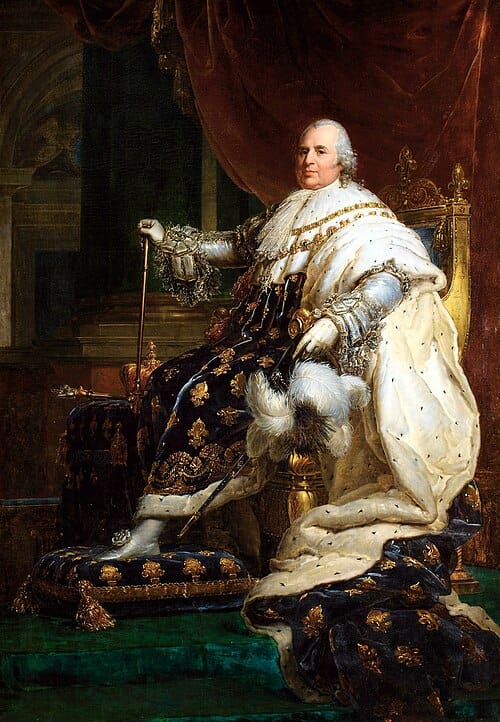
• 1815 : Return of Louis XVIII – renaissance of French taste
• 1824 : Accession of Charles X – the influence of aristocratic taste
The Revolution of the Return
This era overturned every code of Empire decorative art. The artist-creator broke free from military aesthetics, while the restored aristocracy and the enriched bourgeoisie became the arbiters of renewed European taste.
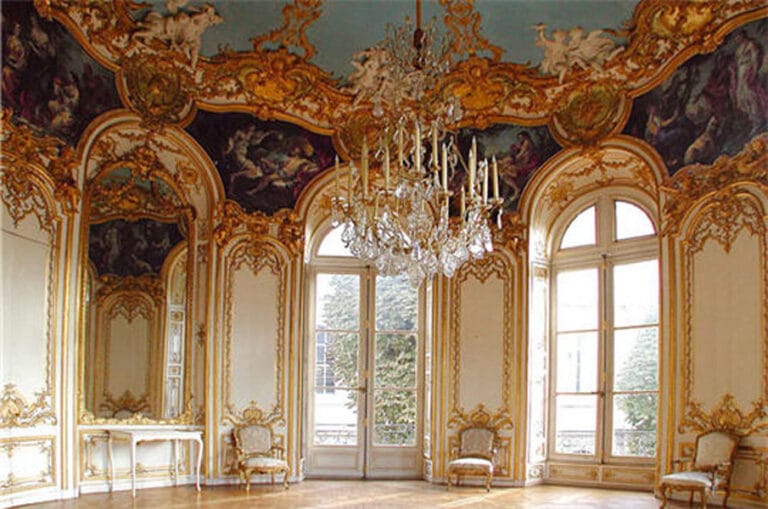
 Restoration Salon, Château de Malmaison, Pierre Fontaine, 1820
Pierre-Antoine Bellangé, François-Honoré-Georges Jacob-Desmalter, Claude Galle embodied this creative revolution that definitively transformed Western art.
The emergence of post-revolutionary society revolutionised ways of living. International trade, nascent industry, and a taste for comfort inspired an art that celebrated prosperity regained and social harmony.
This social transformation engendered an unprecedented aesthetic that still shapes our contemporary vision of bourgeois luxury and the restored French art of living.
Revolution of Form and Comfort
It was now the entrepreneur-cabinetmakers who invented modern aesthetics, replacing Empire rigidity with visionaries of democratised comfort.
This era invented the revolutionary alliance between rediscovered tradition and bourgeois innovation, aristocratic refinement and newfound accessibility, democratising the French art of living.
Restoration aesthetics abolished the boundary between grandeur and intimacy : nascent curves, precious materials, modern comfort testified to a reconciled modernity.
The Arts : Vanguard of Reconciliation
Paris Rediscovered, Laboratory of Renewed Taste
Parisian decorative art in the years 1815–1830 synthesised the French heritage and bourgeois innovations into a style of remarkable rediscovered coherence.
Pierre-Antoine Bellangé (master of restored cabinetmaking), François-Honoré-Georges Jacob-Desmalter (virtuoso of renewed joinery), Alexandre-Louis Bellangé (innovator of bourgeois forms) defined this new aesthetic.
Pierre Fontaine revolutionised palatial architecture, Jean-Baptiste Isabey transformed decorative art, while Horace Vernet explored the possibilities of modern history painting.
The Renaissance of French Decorative Crafts
The Restoration style spectacularly revitalised every French decorative craft by liberating them from the Empire’s military constraints and orienting them towards bourgeois innovation.
Pierre-Antoine Bellangé (virtuoso of inlaid cabinetmaking), François-Honoré-Georges Jacob-Desmalter (master of evolved joinery), Louis-Léopold Boilly (innovator of bourgeois painting) reinvented their art.
The bronze ateliers modernised with Claude Galle and Pierre-Philippe Thomire, who created an ornamental language of rediscovered elegance.
Silverwork reached new heights with Jean-Baptiste-Claude Odiot and Martin-Guillaume Biennais, while the manufactory of Sèvres developed pioneering neo-rococo decorations.
Tapestry was revolutionised by Les Gobelins under the Restoration, which developed a decorative language of reconciled modernity.
 Commode, Pierre-Antoine Bellangé, c. 1820
Restoration Architecture : A Manifesto of Reconciliation
The Restored Château as Innovation : Laboratory of Comfort
The Founding Event : The restored châteaux transformed architecture into a manifesto of the rediscovered French art of living.
This revolution imposed new architectural canons : modern layouts, bourgeois comfort, democratised elegance — nothing short of revolutionary.
 Château de Malmaison restored, Pierre Fontaine, modern layouts, 1815–1820
The permanent achievements (restored Malmaison, redesigned Tuileries, noble châteaux) inscribed rediscovered modernity definitively within the French landscape.
This aesthetic revolution transformed the international image of France and influenced post-Napoleonic European architecture.
The Masters of French Architecture
The architect Pierre Fontaine, creator of Restoration architecture, developed a palatial aesthetic that influenced all of modern European architecture.
 Rue de Rivoli completed, Pierre Fontaine, restored elegance, 1815–1830
Louis-Hippolyte Lebas (innovator of religious architecture), Achille Leclère (master of the Parisian hôtel particulier), Auguste de Montferrand (international architect) embodied this French avant-garde.
This architectural school, celebrated internationally, established the foundations of bourgeois art of living and inspired the European capitals.
It revolutionised our conception of modern living and durably imposed French elegance as an international aesthetic reference.
Total Decorative Art
The Restoration style invented the concept of reconciled art of living, in which architecture, furniture, objects of art and textiles formed a harmonious whole in the service of rediscovered comfort.
The creators Pierre-Antoine Bellangé, Jacob-Desmalter, Claude Galle developed the art of restored decorative synthesis.
The Synthesis of the Arts
The Restoration style codified a new decorative vocabulary that reconciled legacies : nascent eclecticism, historical references, modern comfort.
Jean-Auguste-Dominique Ingres (master of the bourgeois portrait), Horace Vernet (virtuoso of history painting) revolutionised the applied arts through their narrative innovations.
The influence of historical art and French tradition introduced a learned eclecticism that renewed European inspiration.
The furnishing arts were reborn with bronze-makers Galle and Thomire, the cabinetmakers of the Faubourg Saint-Antoine, creators of objects of reconciled refinement.
Porcelain found new life with the neo-rococo creations of Sèvres, which developed a table art of rediscovered delicacy.
 Sèvres porcelain service, neo-rococo decoration, c. 1820
The workshops of Pierre-Antoine Bellangé (revolutionary cabinetmaking), Claude Galle (furnishing bronzes), Jean-Baptiste-Claude Odiot (modern silverwork) established new European standards.
Bellangé’s furnishings, Galle’s bronzes, the renewed silks created an art of living of democratised sophistication.
Nascent eclecticism, precious materials, bourgeois functionality characterised this aesthetic of reconciled modernity.
The apartments of the Duchess of Berry, decorated in the restored taste, perfectly embodied this decorative revolution in which French art met post-revolutionary society in everyday life.
 Salon of the Duchess of Berry, Tuileries, Restoration decoration, 1820
The Fabrics of the Restoration Style : The Art of Rediscovered Textiles
Materials and Textures : The Revolution of Comfort
The Restoration style revolutionised textile art by privileging a return to refinement and the diversity of materials. French manufacturers developed renewed techniques that transformed textiles into a decorative element richer and more comfortable than ever.
Restored Lyon Silks : Lyon silks regained their splendour with renewed complex weaves and lustrous effects. Brocade silks integrated historical motifs to create decorative effects of rediscovered richness.
Renaissance Damasks : Damasks developed eclectic motifs drawn from the entire French heritage, creating decorative effects of newfound diversity.
French Cashmeres : A Restoration innovation, cashmere shawls produced in France offered a tactile luxury that harmonised with the bourgeois taste for comfort.
Rediscovered Velvets : Genoese velvets and stamped velvets introduced a material richness that renewed furnishing ornamentation.
The Colorist Palette : The Invention of Eclectic Colours
The Restoration colour revolution created a diversified palette drawn from all the French legacies to forge new harmonies.
Signature Colours :
- Restoration Blue : A deep blue yet warmer than Empire blue, a return to sensibility
- Cardinal Red : A vivid red reconnecting with the pre-revolutionary French tradition
- Malachite Green : A deep green inspired by precious stones, a new French richness
- Brilliant Gold : Lustrous gilding that reconnects with splendour, abandoning Empire severity
Sophisticated Harmonies : Restoration colour pairings privileged rich contrasts : blue and gold, red and green, violet and silver created atmospheres of rediscovered elegance.
Motifs and Iconography : The Eclectic Vocabulary
Restoration textile ornamentation developed an iconographic repertoire drawn from the entirety of the French and European heritage.
Rediscovered Motifs :
- Naturalistic Flowers : A return to detailed bouquets, abandoning Empire stylisation
- Gothic Motifs : First medieval references heralding the troubadour style
- Renewed Chinoiseries : A return to exotic motifs in a more decorative spirit
- Royal Emblems : Fleur-de-lis, crowns, coats of arms marking the monarchical return
Eclectic Iconography :
- Romantic Landscapes : First picturesque scenes announcing the age of Romanticism
- Allegories of the Arts : Cultural representations witnessing the artistic renaissance
- Troubadour Motifs : First references to an idealised French Middle Ages
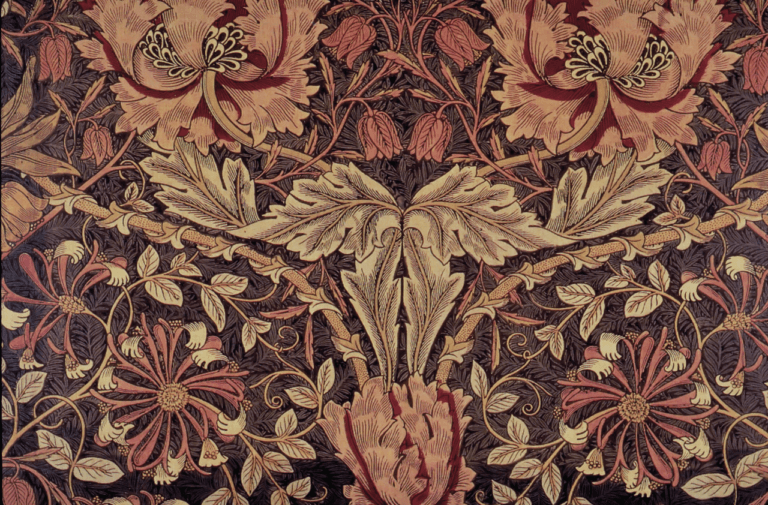
 Restoration woven silk, eclectic motifs, c. 1820
Furnishing Applications : Rediscovered Specificities
Seating and Upholstery : Beauvais tapestries regained their decorative richness with eclectic compositions in renewed colours. Seats adopted specific fabrics marking the evolution of taste :
- Comfortable Bergères : Deep velvets in rich, warm tones
- Gondola Chairs : Silks with naturalistic floral motifs
- Plush Sofas : Eclectic damasks or French cashmeres
Wall Hangings and Curtains : Wall coverings regained their decorative richness and privileged sumptuous effects. Lyon silks created theatrical effects with their new eclectic repeats.
- Window Curtains : Rich damasks with historical motifs
- Door Curtains : Sumptuous velvets, rediscovered trimmings
- Bed Canopies : Woven silks with renewed royal motifs
Cushions and Garnishes : The art of the trimming-maker regained its decorative richness :
- Restoration Trimmings : Eclectic motifs drawn from the French heritage
- Rediscovered Fringes : Sumptuous ornaments of renewed richness
- Historical Cords : Decorative elements with restored royal motifs
Techniques and Craftsmanship : Rediscovered Excellence
Renewed Weaving : The Lyon looms regained their technical complexity, enabling rich decorative effects :
- Sumptuous Lampas : A rediscovered technique for complex decorative reliefs
- Eclectic Weaves : A Restoration innovation, diversity of motifs and textures
- Renewed Brocades : A return to metallic threads and precious effects
Dyeing and Colours : French master dyers rediscovered exceptional techniques :
- Perfected Cochineal : Vivid reds of rediscovered richness
- Renewed Indigo : Deep blues of restored quality
- Perfected Mordanting : New chemical techniques for stable colours
 Les Gobelins tapestry, “History of Restored France”, c. 1820
Evolution and Influences : Towards Romanticism
From 1825 onwards, Restoration textiles evolved under the influence of nascent romantic taste :
- Enriched Motifs : Decorative complexification anticipating the Louis-Philippe style
- Strengthened Medieval Inspiration : A proliferation of Gothic and troubadour motifs
- More Contrasted Colours : Preparation of the romantic palette
This textile evolution accompanied the transformation of taste that led towards the Louis-Philippe style, testifying to the exceptional adaptability of French industry and the genuinely transitional character of this period of reconciliation.
Restoration Furniture : The Invention of Bourgeois Comfort
Material Revolution : The Restoration style progressively transformed the use of materials by privileging modern comfort and decorative richness within reconciled syntheses.
This revolutionary approach created an aesthetic of democratised refinement that directly influenced bourgeois furniture.
Creators favoured precious woods (mahogany, rosewood, elm burl) for their chromatic beauty, enhanced by enriched marquetry.
The art of marquetry evolved to new heights : brass inlays, precious incrustations, historical motifs created decorative effects of rediscovered richness.
The major innovation lay in the harmonious integration of renewed techniques : perfected mechanisms, gilt bronzes, modern upholstery revolutionised furniture aesthetics.
Formal Revolution : Restoration furniture invented bourgeois comfort by reconciling rediscovered refinement and modern functionality.
 Secretaire, Pierre-Antoine Bellangé, c. 1820
This innovative approach revolutionised the art of furniture and laid the direct foundations of bourgeois design.
Inspiration drew from eclectic art : French heritage, European influences, technical innovations nourished a Parisian cosmopolitan creativity.
Ergonomic and aesthetic research enriched this vocabulary : studies of comfort, the psychology of well-being, the art of intimacy inspired a refined bourgeois aesthetic.
The ingenuity of master cabinetmakers developed a furniture typology of democratised refinement, adapted to the new usages of post-revolutionary society.
Restoration interiors were characterised by their sophisticated richness and modern comfort, directly foreshadowing bourgeois conceptions.
Nascent eclecticism and the use of precious materials created an aesthetic of democratised French refinement accessible to the new European elites.
Restoration Furniture Typology : The Reconciled Art of Living
Seating : The Revolution of Democratised Comfort
Restoration seating revolutionised the art of sitting by reconciling modern comfort and rediscovered elegance in creations of renewed formal grace.
The adoption of more enveloping forms and perfected upholstery progressively transformed the French seating tradition.
Decorative innovation harmoniously integrated enriched sculptures, gilt bronzes and sumptuous fabrics within compositions of reconciled elegance.
Comfortable bergères adopted more generous volumes and richer ornaments of exceptional comfort.
The drawing-room chair diversified with specialised creations accompanying the new usages of bourgeois sociability.
Gondola chairs developed a decorative repertoire of rediscovered richness, often inspired by historical research.
Sofas and méridennes adopted more intimate forms celebrating conversation and the art of bourgeois leisure.
Drawing-room suites privileged enriched harmony and comfortable modularity, creating reception furniture adapted to democratised social usages.
 Restoration Bergère, rich tapestry upholstery, c. 1820
Functional Furniture : Innovation and Refinement
Domestic Revolution : The Restoration style invented democratised specialist furniture that transformed the home into a theatre of modern bourgeois art of living.
This functional revolution reflected the evolution of social usages and the emergence of the enriched bourgeoisie.
Convenience furniture multiplied, testifying to the adaptation of domestic space and the new rituals of private comfort.
Display furniture elegantly integrated precious objects within decorative cases of democratised exception.
Tables : Sculpting Rediscovered Elegance
Restoration tables revolutionised the art of table-making by privileging decorative richness and democratised precious materials.
 Restoration Console, gilt bronze and marble, c. 1820
Storage : Enriched Decorative Architecture
The Restoration style transformed storage furniture into decorative elements that simultaneously structured and embellished modern bourgeois space.
Bookshelves adopted enriched architectural compositions, often rhythmed by gilt bronzes and precious marquetry.
Secretaires developed a formal vocabulary of remarkable ornamental richness, adorned with perfected mechanisms of rediscovered finesse.
 Secretaire, Jacob-Desmalter, marquetry and bronzes, c. 1820
Bedroom Furniture : Bourgeois Intimacy
The Restoration style revolutionised bedroom furniture by creating suites of renewed richness and sensuality.
The modern bed adopted more sculptural forms, often enhanced by varied precious fabrics.
Nightstands, chiffonnières and secretaires formed coherent suites that transformed the bedroom into a boudoir of bourgeois intimacy.
 Restoration Bedroom, richly dressed bed, precious silks
Lighting : Sculpting Rediscovered Richness
The Restoration style revolutionised the art of lighting by creating luminaires that became true enriched decorative sculptures.
The creations of Claude Galle, Philippe Thomire and André-Antoine Ravrio transformed artificial lighting into sumptuous decorative spectacle.
 Chandelier, Claude Galle, chased and gilt bronze, c. 1820
The Virtuosos of the Restoration Style
The Restoration style revealed an exceptional generation of creators who definitively revolutionised Western art and established new reconciled European aesthetic standards.
Pierre-Antoine Bellangé : Master of Restored Cabinetmaking
Pierre-Antoine Bellangé (1758–1827) embodied the perfection of restored French cabinetmaking and carried the art of furniture towards its bourgeois evolution.
His genius lay in his ability to synthesise French tradition and bourgeois innovations within creations of unparalleled reconciled richness.
The Bellangé atelier revolutionised cabinetmaking by enriching techniques and developed new methods that durably influenced European art.
His creations for the royal family and European aristocracy definitively established French supremacy in the art of democratised luxury furniture.
Jacob-Desmalter : The Inventor of Modern Joinery
François-Honoré-Georges Jacob-Desmalter (1770–1841) revolutionised the art of furniture by inventing comfortable joinery, an aesthetic of revolutionary modernity.
His philosophy of “elegant comfort” profoundly influenced European art of living and continues to inspire today’s creators.
His collaborations with upholsterers created furniture of unique functionality and democratised beauty.
Claude Galle : The Architect of Rediscovered Bronze
Claude Galle (1759–1815) transformed bronze-working into an art of enriched ornamentation and imposed France as the worldwide reference in restored decorative art.
His ornamental innovations revolutionised the art of bronze and enabled creations of rediscovered richness and elegance.
Royal and bourgeois commissions spread French excellence across every continent and directly prepared the romantic flowering.
The Masters of Decorative Arts
The Sèvres Manufactory revolutionised the art of porcelain by developing neo-rococo techniques that transformed ceramics into rich decorative art.
Its innovations (eclectic decorations, historical references) transformed porcelain into a major art form and influenced the entire bourgeois evolution.
Jean-Baptiste-Claude Odiot developed an art of silverwork of restored richness, while Martin-Guillaume Biennais explored the possibilities of modern silversmithing.
The Restoration Market : Between Tradition and Modernity
Iconic Pieces and Bourgeois Refinement
The Restoration market reveals a particular segmentation between masterpieces of transition and documented period creations. This stylistic richness confers upon the originals a status of major decorative heritage.
The Collector’s Holy Grails :
Authentically Restoration pieces (1815–1830) reach peaks at international auction houses. Records concern Bellangé furniture and Galle bronzes.
Pierre-Antoine Bellangé stamped commodes trade between €80,000 and €500,000 depending on the quality of marquetry and documented provenance. Pieces with royal provenance regularly exceed €300,000.
Jacob-Desmalter stamped seating ranges from €25,000 to €150,000, while documented drawing-room suites can reach €250,000.
 Bellangé stamped Restoration commode, estimated €180,000
The French Market : Reconciled Heritage
Parisian Specialist Galleries :
Galerie Perrin (Saint-Germain) : the reference for French Restoration furniture. Authenticated Bellangé furniture : €100,000 to €400,000.
Galerie Steinitz (7th arr.) : specialist in Restoration decorative arts. Objects of art : €8,000 to €120,000 depending on the pieces.
Galerie Aveline : expert in period Restoration furniture. Stamped seating : €20,000 to €120,000.
The French Secondary Market :
Sales at Artcurial, Christie’s and Sotheby’s Paris reveal an active French market for this pivotal period.
Tajan : thematic sales “Restoration Furniture” with pieces from €8,000.
Osenat (Fontainebleau) : Restoration discoveries between €3,000 and €80,000.
The International Market : Fascination with Transition
Europe – Post-Napoleonic Influence :
London maintains a connoisseurs’ market for French Restoration furniture.
London Price Ranges :
- Stamped Restoration Bergère : £15,000 to £60,000
- Period Bellangé Commode : £40,000 to £180,000
- Restoration Sèvres Porcelain : £3,000 to £40,000
United States – Enlightened Collectors :
New York concentrates specialist collections of French Restoration art.
Christie’s and Sotheby’s NYC : regular sales for Bellangé and Jacob-Desmalter pieces.
The European Market : Post-Napoleonic Taste
Germany and Austria – Bourgeois Collections :
Munich and Vienna retain important collections of French Restoration art.
The German Market :
- French Restoration Furniture : €15,000 to €180,000
- Galle Furnishing Bronzes : €12,000 to €80,000
- Period Stamped Seating : €20,000 to €120,000
The Italian Market :
- French Restoration Influence : Restoration-inspired Italian furniture : €8,000 to €60,000
Reproductions and the Contemporary Market
Specialist Ateliers :
Ateliers d’Art de France maintains certain Restoration cabinetmaking traditions with contemporary creations of eclectic inspiration.
Contemporary Artisans :
Atelier Hervé Gicquel : faithful reproduction of Restoration furniture. Bellangé-style commode : €25,000 to €55,000.
Ébénisterie Rousseau : specialist in eclectic techniques. Jacob-Desmalter-style seating : €12,000 to €35,000.
The Style Market :
Quality nineteenth-century reproductions (Napoleon III era) trade between €4,000 and €25,000 depending on execution.
Contemporary copies range from €2,000 to €15,000 but hold no heritage value.
Expertise and Authentication
Authenticity Criteria :
Restoration stamps are crucial : Bellangé, Jacob-Desmalter, Galle, Werner.
Period woods reveal authenticity : mahogany, rosewood, elm burl employed with newfound richness.
Restoration bronzes are distinguished by their enriched chasing and rediscovered lustrous gilding.
Specialist Expertise :
Institut National du Patrimoine : specialised courses in French Restoration furniture.
Certified experts appointed by the Paris Court of Appeal : certification for major eclectic pieces.
Investment and Capital Gains
Price Evolution (2010–2024) :
Quality Restoration pieces have seen their value multiply by 1.8 to 3.5 over fifteen years.
Bellangé stamped commode : €80,000 in 2010, €180,000 in 2024.
Jacob-Desmalter bergère : €18,000 in 2010, €45,000 in 2024.
Investment Criteria :
Stamp and provenance : stamped master pieces outperform the market.
Decorative richness : fine marquetry and bronzes multiply the value.
Historical documentation : aristocratic or royal provenance preserves value.
Outlook 2025–2030 :
Experts anticipate moderate growth driven by the growing recognition of this period.
Demand from nineteenth-century specialists could revitalise certain segments.
Restoration bronzes still offer interesting appreciation potential.
 Restoration market evolution 2010–2024
Restoration Today : An Eclectic Heritage
Limited Influence on Contemporary Design
The Restoration style, by its transitional nature and its nascent eclectic character, exerts a discreet influence on contemporary creation.
A few specialist creators (François-Joseph Graf, certain palace decorators) draw occasionally from this heritage for high-profile projects, favouring refined eclecticism over stylistic orthodoxy.
This influence remains very limited to aficionados of historical eclecticism and prestige hotel projects.
Creating with Restoration Today
Integrating the Restoration Heritage : Eclecticism and Comfort
The contemporary integration of the Restoration requires a nuanced approach to avoid the “luxury antique shop” effect.
Selective approach : A stamped Bellangé commode in a contemporary drawing room brings a note of eclectic refinement with a distinctly bourgeois distinction.
Comfortable codes : Generous upholstery and rich fabrics create a warm decorative effect, more welcoming than monumental.
Pitfalls to avoid : An accumulation of eclecticism, associations with other heavily loaded styles, and decorative overload that betrays the spirit of reconciliation.
What Decorative Movement Follows the Restoration ?
After the Restoration style (1815–1830), the evolution moves towards :
Styles that directly succeed the Restoration :
1. Louis-Philippe Style (1830–1848) 🇫🇷
Country : France (July Monarchy)
Characteristics : Affirmed eclecticism, bourgeois comfort, historical references
Figures : Alexandre-Georges Fourdinois, Charles-Guillaume Diehl, Maison Krieger
2. Biedermeier Style (1815–1848) 🇦🇹🇩🇪
Country : Austria, Germany (parallel influence)
Characteristics : Bourgeois simplicity, functionality, light woods
Figures : Josef Danhauser, Michael Thonet, Franz Xaver Fortner
3. William IV Style (1830–1837) 🇬🇧
Country : England (British transition)
Characteristics : Late neoclassicism, French influence, mahogany
Figures : Thomas Hope, George Smith, Gillows of Lancaster
4. Late Federal Style (1820–1840) 🇺🇸
Country : United States (French influence)
Characteristics : American eclecticism, democratic comfort, European references
Figures : Mature Duncan Phyfe, Joseph Meeks, Anthony Quervelle

Digital entrepreneur and craft artisan.
My work bridges craftsmanship, design history and contemporary creation, shaping a personal vision of luxury interior design.
Since 2012, I have been based in my workshop on the shores of Lake Annecy, creating bespoke interiors for architects, decorators and private clients.