


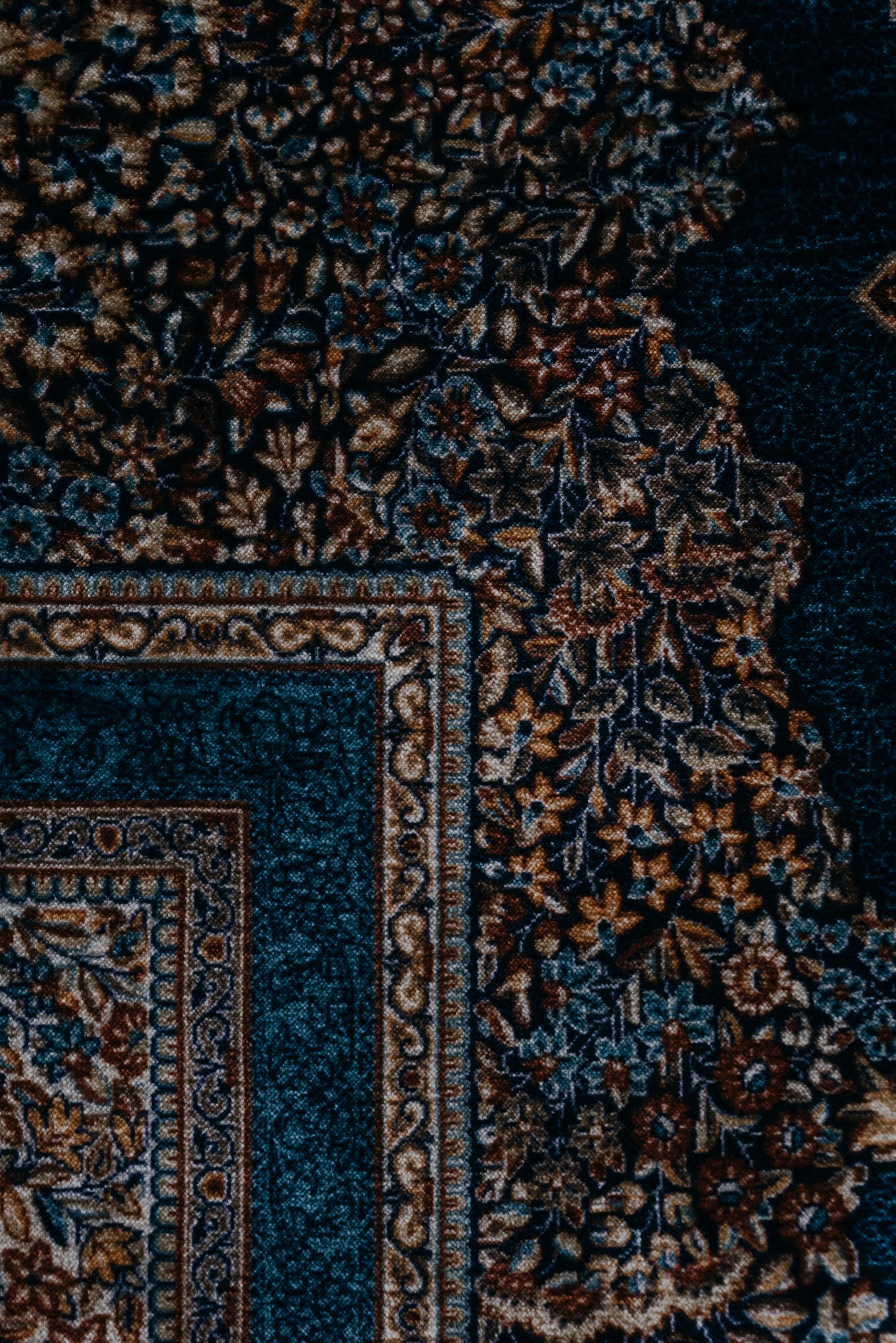
Hart Design Selection: The Ultimate Guide to High-End Rugs & Carpets
Explore our dedicated guides to master the art of textile floor coverings and elevate your spaces with understated refinement. The excellence of rugs and carpets is waiting for your eye to reveal its full potential.
The art of textile floor coverings: ancestral craftsmanship and contemporary innovation
From hand-knotted Persian rugs to high-performance technical carpeting, the world of textile floor coverings spans centuries—balancing artisanal tradition with technological innovation. This revival of textiles underfoot comes with unprecedented creative diversity and remarkable technical performance: statement rugs, acoustic carpets, authentic kilims, and bold contemporary creations.
Textile excellence at the service of your floors
Across the world, the industry continues time-honoured expertise through legendary makers such as Tai Ping, Christopher Farr, and The Rug Company, while French publishers and editors such as Toulemonde Bochart, Chevalier Édition, and Designers Guild constantly refresh the aesthetic codes. Traditional manufacturers like Manufacture Cogolin, Brintons, and Wilton Royal keep European excellence alive.
From hand-knotted Tibetan rugs to innovative loop-pile carpets, from Berber kilims to bespoke digital designs, these houses combine heritage with relentless research. Whether you’re seeking the quiet nobility of a plant-based silk rug, the robustness of contract-grade carpeting, or the originality of a contemporary piece, textile floor coverings offer endless ways to enhance both residential and professional spaces.
How to choose the right textile floor covering
Selecting a rug or carpet calls for a real understanding of fibres, manufacturing techniques, and use cases. This comprehensive guide helps you choose the ideal covering based on traffic intensity, the decorative style you want, and maintenance constraints. Discover the key criteria: UPEC ratings for durability, pile density, stain-resistant treatments, and acoustic performance.
Learn how to tailor your selection to each destination: intimate residential rooms, heavy-traffic areas, professional offices, or luxury hospitality. A successful investment rests on technical know-how—and a sharpened aesthetic eye.
Our specialised guides: master the world of rugs and carpets
The great international manufacturers
→ Discover exceptional makers
Step into the world of the most prestigious houses. From the British excellence of The Rug Company to Tai Ping’s bespoke creations, and the French audacity of Christopher Farr, explore each manufacturer’s creative DNA and signature expertise shaping contemporary textile excellence. This exclusive panorama reveals the secrets behind the biggest names in rugs and carpets—from ancestral craftsmanship to the most advanced innovations.
Oriental rugs and artisanal traditions: millennia of heritage
→ Understand the art of hand-knotting
Rediscover the centuries-old traditions of hand-knotting through the great creative centres of the world. Persian rugs from Tabriz and Isfahan, Anatolian kilims, Caucasian carpets, Tibetan weaves: learn to recognise techniques, read symbolic motifs, and assess true craftsmanship. From Kachan roses to Herati medallions, from Turkmen guls to Chinese dragons, explore how these textile works tell ancient stories—and turn interiors into living galleries.
Contemporary rugs: creation and 21st-century design
→ Explore today’s trends in designer rugs
Discover how contemporary creators are reinventing the art of the rug. Geometric abstraction, organic motifs, sculpted textures, collaborations with artists: learn how to integrate these exceptional pieces into modern interiors. From Nani Marquina to Patricia Urquiola, from Inga Sempé to Raw Edges, see how designers turn the rug into a true floor sculpture—playing with fibres, relief, and unexpected colour to create singular atmospheres.
Manufacturing techniques: from ancestral weaving to modern technologies
→ Master the making processes
Persian hand-knotting reaching 1,000,000 knots per m², Wilton or Axminster machine-tufting, flatweave kilim, Tibetan knotting techniques: discover how each method shapes quality, durability, and aesthetics. Density drives resilience: around 400,000 knots/m² for everyday use, up to 1,000,000 for very high-end pieces. Learn to distinguish Wilton (dense cut pile), Axminster (complex motifs possible), tufting (faster production), and traditional weaving that can require months of handwork.
Noble materials and technical fibres: wool, silk, viscose, and innovation
New Zealand wool for resilience, plant-based silk for lustre, hemp for durability, bamboo viscose for softness: each material brings its own set of properties. Discover the technical and aesthetic characteristics of each fibre. Pure wool is naturally stain-resistant, flame-retardant, and thermoregulating. Eco-friendly Tencel combines performance with sustainability. High-tech synthetics deliver extreme durability and easy maintenance for heavy-traffic environments.
Technical classifications and professional standards
→ Decode UPEC and NF ratings
UPEC classifies resistance: U for wear, P for indentation, E for water, C for chemical agents. Discover how to interpret these essential indices: U2s-P2 for bedrooms, U3-P3 for living areas, U4s-P4s for commercial spaces. NF EN standards define fire resistance (Cfl-s1 for flame-retardant), stain resistance, abrasion (Martindale testing up to 100,000 cycles). The European EN 1307 classification guarantees quality for contract carpeting.
Professional installation and fitting techniques
→ Master installation methods
Loose-lay for rugs, full-bond installation for heavy-traffic carpets, stretched installation over underlay for high-end residential: each method has its own requirements. Learn the professional techniques that ensure longevity and a flawless finish. Subfloor preparation accounts for 70% of the result: levelling compound, adhesion primer. Stretched installation on gripper rods offers optimal comfort with acoustic underlay. Bonding requires the right adhesive for each backing type.
Care and preservation of precious rugs
→ Protect your textile investments
Hand-knotted oriental rugs: weekly vacuuming without beater bar, twice-yearly rotation for even wear, professional cleaning every 3–5 years. Discover care protocols by fibre: wool tolerates water, silk requires dry cleaning. Stain protection is recommended from day one. Carpets: vacuum at least twice a week, annual shampooing, professional hot-water extraction every 18 months. Lifespan: wool rugs 50–100 years with proper care; residential carpet 10–15 years; contract carpet 7–10 years.
Acoustic performance and thermal comfort
→ Optimise sound comfort and insulation
Textile floor coverings reduce noise disturbance by 25 to 35 decibels depending on thickness. A thick loop-pile carpet with underlay can absorb up to 30% of impact noise. Discover how acoustic performance transforms comfort, with absorption coefficients (αw) up to 0.55 for technical carpets. Thermal insulation can deliver 15–20% heating savings. Walking comfort improves significantly with thermal resistance (R) up to 0.15 m².K/W.
2025 trends and textile innovations
→ Stay ahead of décor trends
2025 celebrates the return of organic textures and natural fibres. Bouclé is making a comeback after a 30-year absence, paired with earthy tones: terracotta, ochre, olive green—echoing the “Mocha Mousse” mood. Sculpted 3D rugs create dramatic relief. Upcycling transforms recycled textiles into high-end creations. Econyl fibres made from recycled fishing nets are reshaping the industry. Smart rugs integrate air-quality sensors and intelligent underfloor heating control.
Choosing by room and specific use
→ Match textiles to each space
Living room: a wool/viscose rug at 200×300 cm, or a Wilton carpet rated U3-P3. Bedrooms: soft natural fibres, U2s-P2 is often sufficient. Stairs: needle-punched carpet fixed with stair rods, minimum U4s-P3. Offices: modular 50×50 cm carpet tiles with anti-static treatment. Hospitality: bespoke Axminster rated U4s-P4s-E3-C2. Discover how each space dictates technical requirements—durability, aesthetics, and ease of care—to ensure performance and longevity.
Eco-friendly rugs and carpets: responsible choices
→ Select sustainable solutions
GUT (Gemeinschaft umweltfreundlicher Teppichboden) certifies the absence of harmful substances; Cradle to Cradle supports full recyclability. Environmental labels guide you toward ecological excellence: Woolmark certification for traceability, GOTS for plant-based dyeing. Pioneer manufacturers include Interface with Carbon Negative goals, Desso using Cradle to Cradle, and Toulemonde Bochart favouring French wool and Oeko-Tex dyes. Natural latex backings replace synthetics. Durability matters: a quality rug can last 50 years versus 5 years for entry-level options.
Bespoke rugs and customisation: create your unique piece
→ Design your exclusive creation
Manufacturers now offer full customisation: made-to-measure dimensions down to the centimetre, blended materials, exclusive colourways, and custom motifs or logos. Tai Ping, The Rug Company, and Manufacture Cogolin excel in this art. Lead times: 8 to 16 weeks depending on complexity. Digital tools enable 3D previews before production. Pricing: from around €300/m² for custom tufting, up to €3,000/m² for hand-knotted silk with an artist-designed pattern.