

Hart Textile Materials Guide: Linen
In the world of high-end decoration, linen occupies a singular place. Often associated with a natural and timeless aesthetic, it is nevertheless far from being a simple or interchangeable material. A demanding fiber, sometimes capricious, linen can prove exceptional in hold and durability… or conversely unsuitable when poorly chosen or poorly employed. This guide page offers a clear, factual, and neutral reading of linen in upholstery: its nature, properties, relevant uses, and real limitations.
Table of Contents
What is linen
Origin and transformation
Textile classification and abbreviations
Aesthetic and sensory properties
Textile constructions: what makes the difference
Uses in upholstery
Behavior over time
Resistance and technical performance
Maintenance and usage constraints
Environmental impact
To remember before choosing
What is linen
Linen is a natural plant fiber derived from the stem of the plant Linum usitatissimum. Unlike cotton (seed fiber), linen is a so-called “bast fiber,” which explains its long, resistant, and barely extensible structure. This characteristic gives linen excellent mechanical hold, but also relative stiffness when minimally processed.
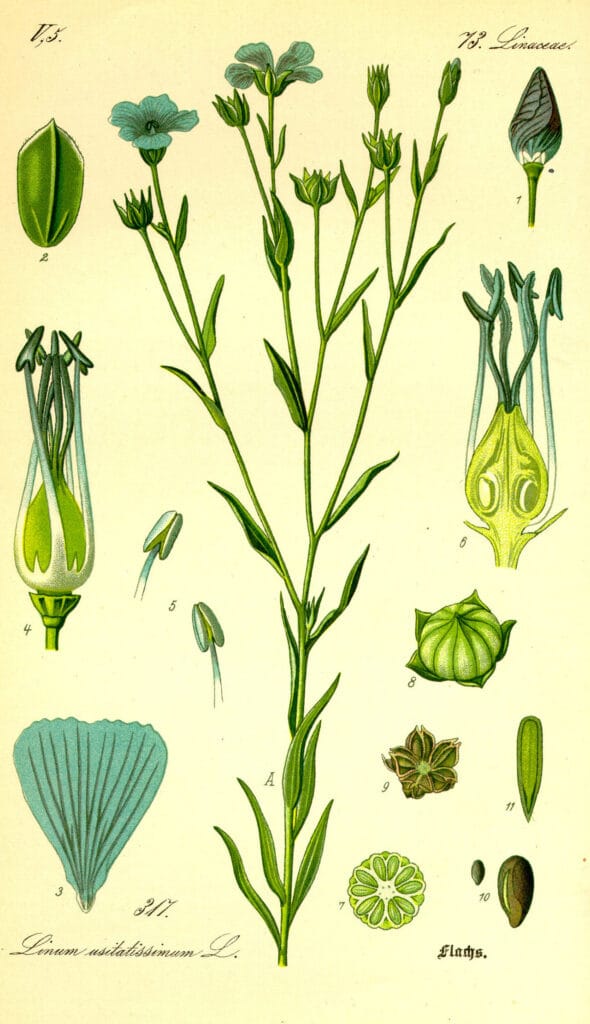
In upholstery, linen can be used pure or blended (linen-cotton, linen-wool, linen-viscose). Its reputation as a “wrinkle-prone” material often masks its true qualities: great strength, excellent breathability, and a rare capacity to patina over time.
Linen is a natural plant bast fiber, recognized for its strength and longevity, whose quality depends closely on fiber fineness, weave density, and its actual use.
Origin and transformation
Quality textile linen comes mainly from Western Europe, particularly France, Belgium, and the Netherlands. Linen cultivation is distinctive: it requires little irrigation, few inputs, and valorizes the entire plant. After harvest, the stems undergo retting, a natural process allowing the fiber to be separated from the woody part.
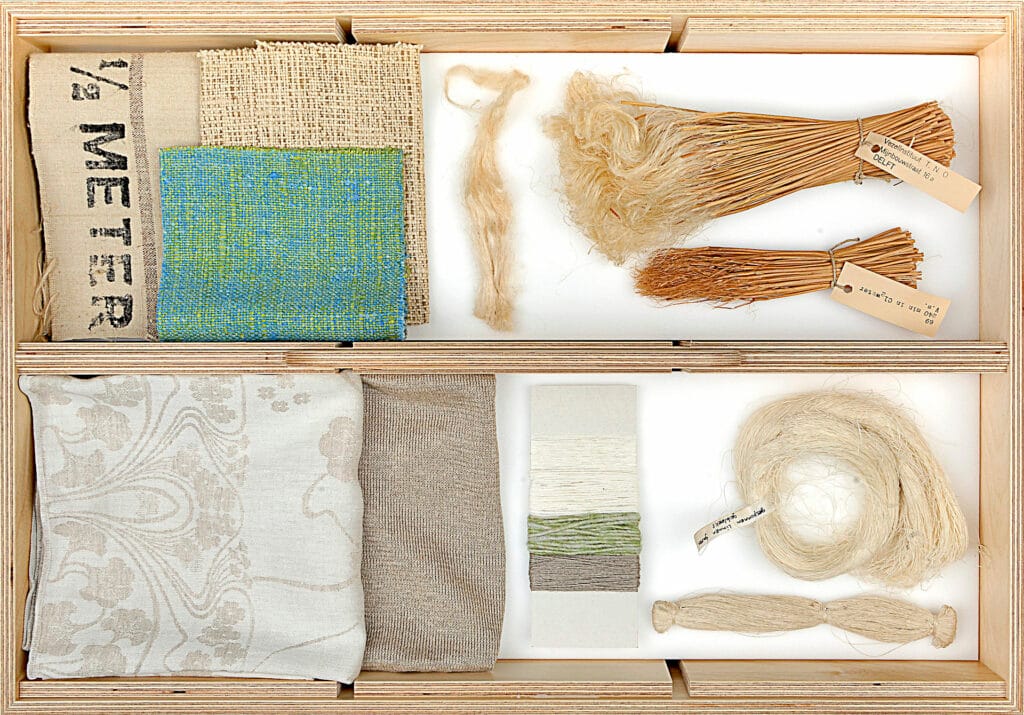
The fibers are then scutched, combed, and spun. The fineness of the yarn, fiber length, and spinning regularity strongly influence the touch and hold of the final fabric. In high-end upholstery, linen quality depends as much on the fiber as on the textile craftsmanship that accompanies it.
Textile classification and abbreviations
Label abbreviations
France: Lin
Europe (ISO): LI
United States: Linen
The abbreviation LI designates linen in European composition. As with any fiber, the mention “100% linen” does not automatically guarantee quality: yarn fineness, density, and weave are determining factors for upholstery use.
Aesthetic and sensory properties
Linen is distinguished by a living and irregular aesthetic. Its surface is never perfectly smooth: yarn variations, slight slubs, and reliefs are part of its visual language. These characteristics are sought after in high-end interiors for their authenticity.
- Cool and dry touch initially, softening over time
- Matte to slightly luminous appearance depending on weave
- Subtle reaction to light, highlighting the weave
- Sensation of “present” material, never artificial
Textile constructions: what makes the difference
In upholstery fabric, not all linens are equal. Major differences lie in:
- density (lightweight decorative linen vs thick upholstery linen)
- weave (plain, twill, basket, jacquard)
- washing (washed linen, raw linen, stabilized linen)
- blends (to soften or reinforce the fiber)
Key point
Linen suitable for seating is almost always denser and heavier than decorative linen. Wrinkling is not a defect: it’s an indicator of long, living fiber.
Uses in upholstery
Seating and sofas
Linen can be used on seating, provided you choose a fabric specifically designed for upholstery. Heavy, well-woven linens, sometimes blended with cotton or wool, offer excellent hold. Overly thin or supple linens are, however, unsuitable for areas of intense friction.
Curtains and sheers
Linen is particularly appreciated for curtains: natural drape, subtle light filtering, visible texture. Depending on weight and weave, it can be very structural or conversely airy.
Headboards and wall panels
Used on minimally stressed surfaces, linen offers an elegant and durable textile presence, provided maintenance and natural fiber variations are anticipated.
Behavior over time
Linen is a fiber that ages well. It doesn’t degrade abruptly: it softens, patinas, and gains in comfort. Creases and wrinkles are part of its natural evolution and contribute to its aesthetic.
- Progressive softening
- Visible but coherent patina
- Very good mechanical resistance on long fibers
- Little chemical degradation over time
Resistance and technical performance
A well-constructed upholstery linen can achieve resistance levels entirely compatible with intensive residential use. As always, performance depends on the specific fabric, not the fiber name.
To interpret abrasion values and choose linen suitable for use, refer to the:
complete guide to the Martindale test.
Maintenance and usage constraints
Linen requires a certain aesthetic tolerance: wrinkles, creases, and variations are part of its nature. For maintenance:
- Respect manufacturer recommendations
- Avoid aggressive cleaning
- Accept natural visual evolution
Best practices are detailed in:
upholstery fabric maintenance secrets.
Environmental impact
Linen is often considered one of the most environmentally coherent textile fibers: low water requirement, few inputs, European cultivation, predominantly mechanical transformation. Its main asset remains, however, its lifespan.
In a long-term logic, a dense and well-maintained linen can remain in place for several decades, making it a material structurally compatible with a sustainable approach to luxury.
To remember before choosing a linen fabric
Linen is relevant if:
– the fabric is dense and designed for upholstery
– use accepts natural patina
– the project values material and time
Be vigilant if:
– linen is too light for intended use
– seeking a perfectly smooth and fixed surface
– maintenance must be totally constrained
Conclusion
Linen is a material of culture and long-term thinking. When chosen with exigency, it offers a rare combination of strength, living aesthetic, and durability. It’s not a fiber of convenience, but a fiber of coherence. In high-end upholstery, linen doesn’t seduce through immediate effect, but through its capacity to traverse years with integrity.
HART Guide
Natural Textile Materials
Each textile material possesses its own characteristics: origin, transformation, behavior over time, usage constraints. These guides constitute a reference base for understanding natural, artificial, and synthetic textile fibers.
- → Alpaca
- → Hemp
- → Cotton
- → Horsehair
- → Jute
- → Wool
- → Linen
- → Mohair
- → Raffia
- → Sisal
- → Silk
- → Viscose
Digital entrepreneur and craft artisan.
My work bridges craftsmanship, design history and contemporary creation, shaping a personal vision of luxury interior design.
Since 2012, I have been based in my workshop on the shores of Lake Annecy, creating bespoke interiors for architects, decorators and private clients.