

Directoire Style: part of French Revolution
Do You Know the Directoire Style?
Do you know the Directoire style? This transitional period sits historically between the French Revolution and the Consulate. It marks the revival of French decorative arts after the revolutionary upheavals and sets the stage for the rise of the Empire style. It should not be confused with the late Louis XVI style that immediately precedes it.
The Directoire years mark a major cultural shift. After the Terror, France rediscovers the art of living and invents a new aesthetic—somewhere between republican restraint and a return to refined taste.
Directoire: An Artistic Renaissance
This exceptional moment—defined by five years of creative renewal and cultural intensity—ends with the rise of Bonaparte and the establishment of the Consulate, which would radically reshape French decorative arts.
Essential timeline:
• 1795–1799: Directoire as a political regime (4 years)
• 1795–1804: Broader stylistic influence (9 years)
• International equivalents: European Neoclassicism, American Federal style
Directoire Society
This era gives birth to a new French society, freed from the constraints of the Ancien Régime. The Merveilleuses and the Incroyables embody this worldly revival, transforming aesthetic and social codes almost overnight.

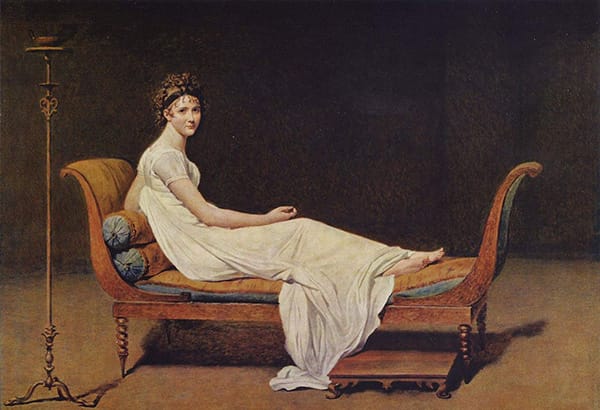
Joséphine de Beauharnais, Thérésa Tallien, and Juliette Récamier become icons of this new feminine modernity, deeply shaping the decorative arts of the period.
A new, emerging bourgeoisie—enriched by nationalized properties and commerce—rediscovers luxury and the decorative arts with a distinctly modern sensibility.
This social transformation gives rise to an unprecedented aesthetic that reconciles republican ideals with artistic refinement, foreshadowing 19th-century art de vivre.
Revolution in Taste and Morals
It is now women of taste who drive stylistic change, replacing aristocratic etiquette with a new creative freedom.
The period signals a democratization of refinement and the emergence of a decorative culture accessible to the enlightened bourgeoisie.
Directoire aesthetics celebrate elegant simplicity: clean lines, antique references, and noble materials reflect a revolutionary pursuit of formal purity.
Arts: Between Tradition and Innovation
David and the Republican School
Directoire art favors a democratic neoclassicism that balances republican ideals with artistic excellence. Jacques-Louis David still dominates the scene, but his influence shifts toward greater grace and refinement.
Pierre-Paul Prud’hon (master of feminine grace), François Gérard (portraitist of the new elite), and Jean-Baptiste Greuze (painter of sensibility) embody this aesthetic transition.
Élisabeth Vigée Le Brun and Adélaïde Labille-Guiard renew the art of the female portrait with striking modernity.
Revival of the Decorative Arts
The Directoire years see a spectacular revival of French crafts after the revolutionary interruption.
Martin-Guillaume Biennais (innovative silversmith), Pierre-Philippe Thomire (exceptional bronzier), and the Jacob brothers (revolutionary cabinetmakers) redefine French excellence.
Prestige watchmaking is reborn with Abraham-Louis Breguet, creator of technical masterpieces admired across Europe.
Sèvres porcelain regains its brilliance under Alexandre Brongniart, while Parisian silversmithing reconquers its international reputation.
Henri Auguste and Jean-Baptiste-Claude Odiot (future Empire silversmiths) are already developing a style of remarkable geometric purity.

Directoire Architecture: Simplicity and Grandeur
Percier and Fontaine: The Forerunners
First achievements: Charles Percier and Pierre Fontaine, future architects of the Empire, already develop under the Directoire a neoclassical aesthetic of revolutionary clarity.
Their early works (private hôtels particuliers, interior schemes) foreshadow the grandeur of their later imperial commissions.

The creation of modern social spaces (salons, winter gardens) responds to a society newly hungry for “democratic” refinement.
The invention of a bourgeois art of living transforms Parisian domestic life and influences European residential architecture.
The French School of Neoclassicism
Directoire architecture is defined by decorative restraint and a return to antique sources with renewed rigor.

Étienne-Louis Boullée (theorist of revolutionary architecture) and Claude-Nicolas Ledoux (urban visionary) influence this generation, devoted to geometric purity.
Admired across Europe, this French school lays foundations for modern architecture and inspires 19th-century creators.
It reshapes how we conceive domestic space and firmly establishes the French reference for refined art de vivre.
The Integrated Decorative Arts
The Directoire develops a holistic approach to decoration, where architecture, furniture, and objets d’art form a harmonious ensemble inspired by antiquity.
Charles Percier, Pierre Fontaine, and the Jacob brothers champion the art of coherent, unified interiors.
Decorative Innovation
The Directoire codifies a new ornamental vocabulary of revolutionary sobriety: palmettes, rosettes, and geometric motifs replace Rococo exuberance.
Dominique-Vivant Denon (future director of the Louvre) and Jean-Guillaume Moitte (sculptor and ornamentalist) expand this repertoire through archaeological research.
The influence of early archaeology and the discoveries at Pompeii introduces an archaeological neoclassicism that profoundly renews French decorative arts.
The bronze arts experience a renaissance through the works of Pierre-Philippe Thomire, a precursor of imperial excellence.
Cabinetmaking modernizes through the innovations of the Jacob brothers, who develop techniques and forms of unequaled purity.

The creations of Martin-Guillaume Biennais (silversmith), Pierre-Philippe Thomire (bronzier), and the Jacob brothers (cabinetmakers) set new standards of French quality.
The silverwork of Henri Auguste, the bronzes of Thomire, and the furniture of the Jacobs reinterpret antiquity through a distinctly French taste for elegance and measure.
Noble simplicity, precious materials, and pure forms define this transitional aesthetic preparing the way for imperial grandeur.
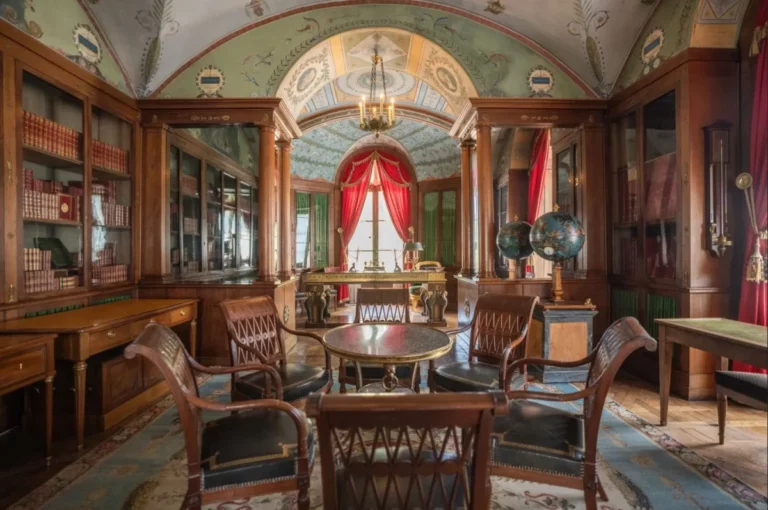
Juliette Récamier’s salon on the rue du Mont-Blanc, decorated by Louis-Martin Berthault, offers a perfect example of Directoire elegance—where refinement and restraint strike a rare balance.

Directoire Furniture: Elegance and Simplicity
Technical shift: The Directoire refines neoclassical cabinetmaking, favoring purity of line and material quality over ornamental abundance.
This forward-looking approach creates an aesthetic of striking modernity that leaves a lasting mark on European furniture design.
Cabinetmakers favor solid mahogany for its natural beauty and nobility, often enhanced with gilt bronzes in a restrained, elegant manner.
The art of inlay becomes simpler and sharper: ebony stringing, geometric marquetry, and finely chased bronzes create effects of quiet distinction.
Creators introduce measured use of precious materials: black lacquer, matte gilding, and subtle patinas form a new, sophisticated decorative palette.
Stylistic evolution: Directoire furniture abandons Rococo curves in favor of pure geometric forms inspired by antiquity.

This radical transformation reshapes French taste and anticipates the innovations of the Empire style.
The period draws on a reinterpreted Greco-Roman antiquity: gondola forms, saber legs, and antique-style backrests reflect a learned yet pared-back inspiration.
Early Egyptomania, heralding the Egyptian Campaign, discreetly introduces lotus motifs and pharaonic references into the decorative repertoire.
The ingenuity of cabinetmakers produces a typology of furniture with elegant functionality, suited to the new needs of post-revolution society.
Directoire interiors are defined by aristocratic spareness and modern practicality, prefiguring a contemporary art of living.
Classical symmetry and the use of carefully chosen pieces create an aesthetic of “democratic elegance” accessible to the new bourgeoisie.
Directoire Furniture: Between Heritage and Modernity
Seating: A Revolution in Comfort
Directoire seating reinvents the art of sitting by reconciling modern comfort with antique-inspired aesthetics in designs of revolutionary formal clarity.
The definitive move away from late Louis XVI curves toward straight lines and clean angles transforms the French tradition of seating.
Ornament becomes simpler and more refined: gilt bronzes, delicate caning, and solid-colored textiles create a new decorative harmony.
Gondola chairs adopt boat-like silhouettes inspired by antique seats, resulting in a strikingly original type.
The reclining-back armchair (fauteuil à dossier renversé) becomes emblematic—balancing modern comfort and archaeological references.
Bergères simplify into pure geometric volumes while maintaining their function as deep, enveloping seats.
Chairs develop a formal repertoire of elegant functionality, often adorned with stylized antique motifs used with new restraint.
Curule stools, directly inspired by ancient Rome, become symbols of republican authority and revolutionary aesthetics.

Directoire Furniture Innovations
Signature achievement: The Directoire invents a true transitional language—uniting the French classical heritage with revolutionary modernity.
This unique synthesis reflects France’s ability to turn crisis into new aesthetic opportunity.
Showpiece furniture becomes more widely owned and adapts to bourgeois interiors, shaping a refined yet accessible art of living.
Tables: Geometry and Function
Directoire tables favor pure geometry and modern practicality. The top—often solid mahogany—rests on a base defined by elegant simplicity.

Commodes and Secretary Desks: Elegant Functionalism
The Directoire transforms storage furniture into works of remarkable geometric purity and modern functionality.
Commodes adopt pure rectangular forms, often accented with fluted colonnettes and gilt bronzes of restrained sophistication.
Secretary desks modernize with new ergonomics, suited to the needs of an educated, commercial bourgeois society.

Beds: Simplicity and Comfort
Directoire beds abandon canopies in favor of pared-back, antique-inspired forms—often “boat” beds.
This aesthetic innovation reshapes bedroom furniture and influences European cabinetmaking for decades.

Psychés and Mirrors: Practical Modernity
The Directoire develops the psyché (full-length tilting mirror) in streamlined forms that transform the rituals of feminine dressing.
Often made in mahogany with gilt bronzes, these pieces reflect new attention to intimacy and personal refinement.

Pedestals and Consoles: Decorative Elegance
The Directoire elevates occasional furniture—pedestals and consoles—with a remarkable sense of functional elegance.
Often created in dialogue with bronziers, these pieces combine modern utility and decorative sophistication in perfectly balanced compositions.
Objet d’Art: A Crafts Revival
Lepaute and Breguet clocks reach a level of technical and aesthetic perfection under the Directoire that influences watchmaking worldwide.
Thomire bronzes, Auguste silverwork, and Sèvres porcelain complete this decorative world of exceptional quality.

The Masters of the Directoire Style
The Directoire reveals an exceptional generation of artisans who reinvent French decorative arts and lay the foundations for future imperial excellence.
The Jacob Brothers: Revolutionaries of Cabinetmaking
Georges Jacob (1739–1814) and his sons Georges II and François-Honoré-Georges Jacob-Desmalter embody the creative genius of the Directoire.
Their workshop transforms the art of seating with forms of unmatched geometric purity that influence cabinetmaking throughout Europe.
The Jacobs’ technical innovations (reinforced joinery, integrated bronzes, flawless finishing) set new quality standards that endure to this day.
Their commissions for Joséphine de Beauharnais and the Directoire elite show their ability to translate the era’s aesthetic aspirations into furniture.
Thomire: Bronze, Elevated
Pierre-Philippe Thomire (1751–1843) develops under the Directoire the techniques that will later make his name under the Empire.
His early works (clocks, lighting, furniture mounts) already reveal exceptional mastery and a remarkable artistic sensibility.
The Thomire workshop trains a generation of bronziers who spread French excellence across Europe and permanently establish Paris’s reputation in the metal arts.
The Rise of Modern Silversmithing
Martin-Guillaume Biennais (1764–1843) revolutionizes silverwork with a style of geometric purity that anticipates the Empire aesthetic.
His collaborations with Percier and Fontaine create tableware of striking modernity that influences silversmithing across Europe.
Henri Auguste (1759–1816) simultaneously develops an elegant, functional language that captivates the new French society.
Technical and Aesthetic Innovations
The Directoire gives rise to major technical innovations that transform the decorative arts:
• New joinery systems in cabinetmaking, enabling bolder forms
• Refined gilding techniques, producing unprecedented decorative effects

Digital entrepreneur and craft artisan.
My work bridges craftsmanship, design history and contemporary creation, shaping a personal vision of luxury interior design.
Since 2012, I have been based in my workshop on the shores of Lake Annecy, creating bespoke interiors for architects, decorators and private clients.