


Vitra: From Modernism to Cultural Heritage
Founded in 1950 in Switzerland, Vitra established itself as one of the major forces of modern design. More than a manufacturer, the company operates as a true design publisher: producing, reissuing and sustaining pieces that have become cultural references.
A Foundational Encounter
The decisive turning point came in the 1950s when Willi Fehlbaum discovered the work of Charles and Ray Eames in the United States. Vitra subsequently secured the European production license for their creations, firmly anchoring the brand in 20th-century design history.
The house grew around a conviction rare in the industry: a well-designed object has no expiration date. Rather than following fashion cycles, Vitra invested in deep collaborations with designers whose formal approach is irreducible to a trend. This editorial stance explains the remarkable coherence of the catalogue over more than seven decades.
Aesthetic DNA and House Codes
What sets Vitra apart at first glance is a quiet self-evidence. No ostentation, no loud signature but a coherence of line, material and intention that runs through the entire catalogue. The house does not treat beauty as an end in itself; it makes it the natural consequence of a considered approach to use, structure and comfort.
The forms are restrained, often organic, always legible. The visual vocabulary draws from the Mid-Century Modern without being confined to it: Vitra has integrated more contemporary languages — the structural lightness of Jasper Morrison, the formal poetry of the Bouroullec brothers — without breaking with the spirit of the house. Materials are treated with the same rigour: high-precision moulded plastic, chrome steel, full-grain leather, solid wood. Every choice is justified by function, never by fashion.
Icons in Continuous Production
Vitra’s catalogue includes pieces that have become emblematic: the Eames Lounge Chair, the Panton Chair, the Aluminium Group, and the Standard Chair by Jean Prouvé. Produced for decades, these creations reflect an approach grounded in longevity rather than trend.
The Eames Lounge Chair, created in 1956, remains one of the most cited pieces in the history of contemporary furniture. Moulded wood shell, leather cushions, pivoting aluminium structure: everything in this armchair expresses the idea of sophisticated comfort. The Panton Chair, designed in 1960 and produced by Vitra from 1967, is the first single-piece plastic chair in the history of design, a formal statement that embodies the Pop spirit of the 1960s in its purest form.
A Network of Major Designers
Over time, Vitra has collaborated with George Nelson, Verner Panton, Eero Saarinen, Jean Prouvé, Jasper Morrison, Ronan & Erwan Bouroullec, among others. These partnerships follow a logic of continuity and formal rigour, never the pursuit of a flash in the pan.
Manufacturing Philosophy and Craftsmanship
Vitra produces nearly all of its collections at its workshops in Weil am Rhein. This geographic concentration of production guarantees permanent quality control and the ability to refine processes over several decades. Repairability is a founding principle: Vitra pieces are designed to be disassembled, their components replaced, their upholstery changed. In an industry where planned obsolescence is often the norm, this approach constitutes a form of resistance and a genuine value proposition for the discerning buyer.
The Vitra Campus
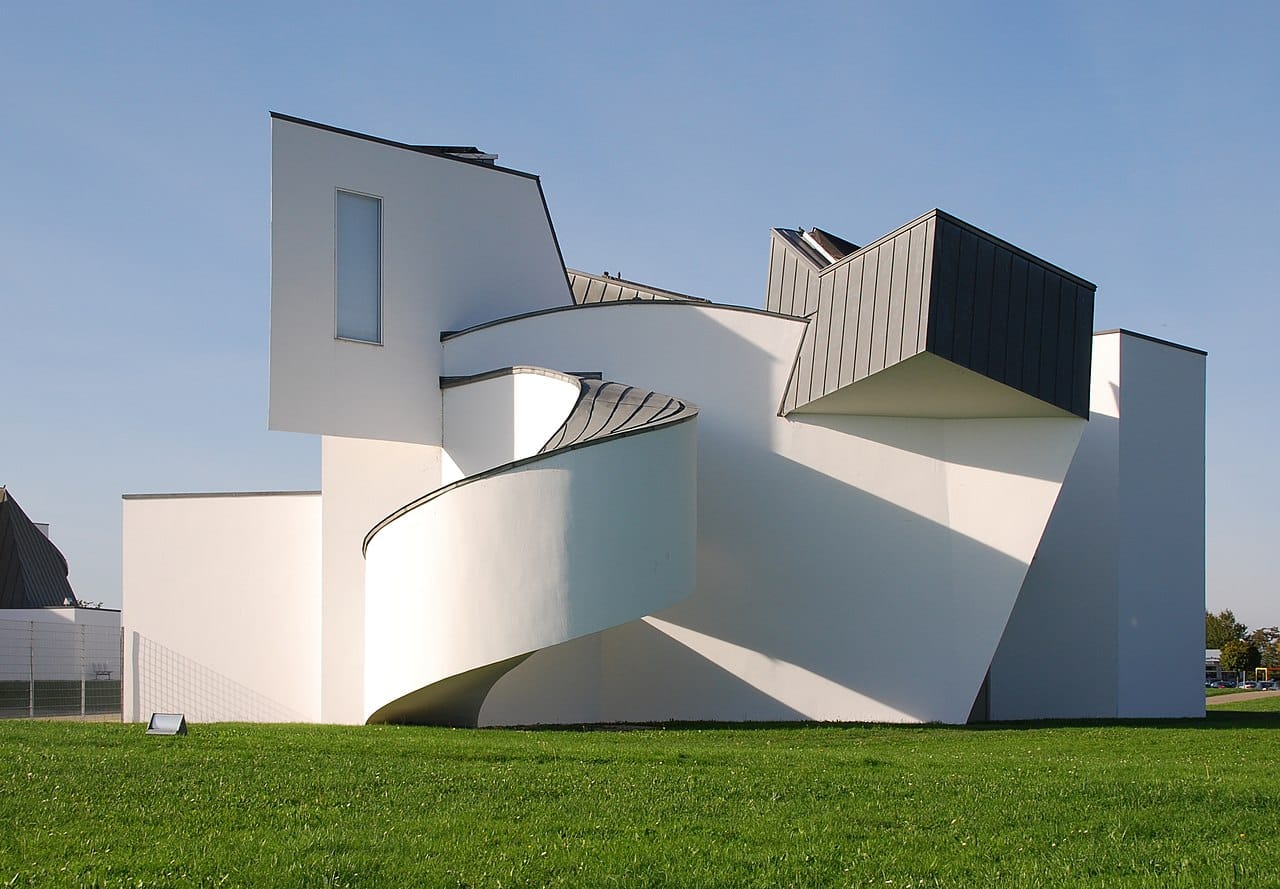
In Weil am Rhein, the Vitra Campus brings together buildings designed by Frank Gehry, Zaha Hadid and Herzog & de Meuron. The site also houses the Vitra Design Museum, reinforcing the brand’s cultural positioning well beyond furniture.
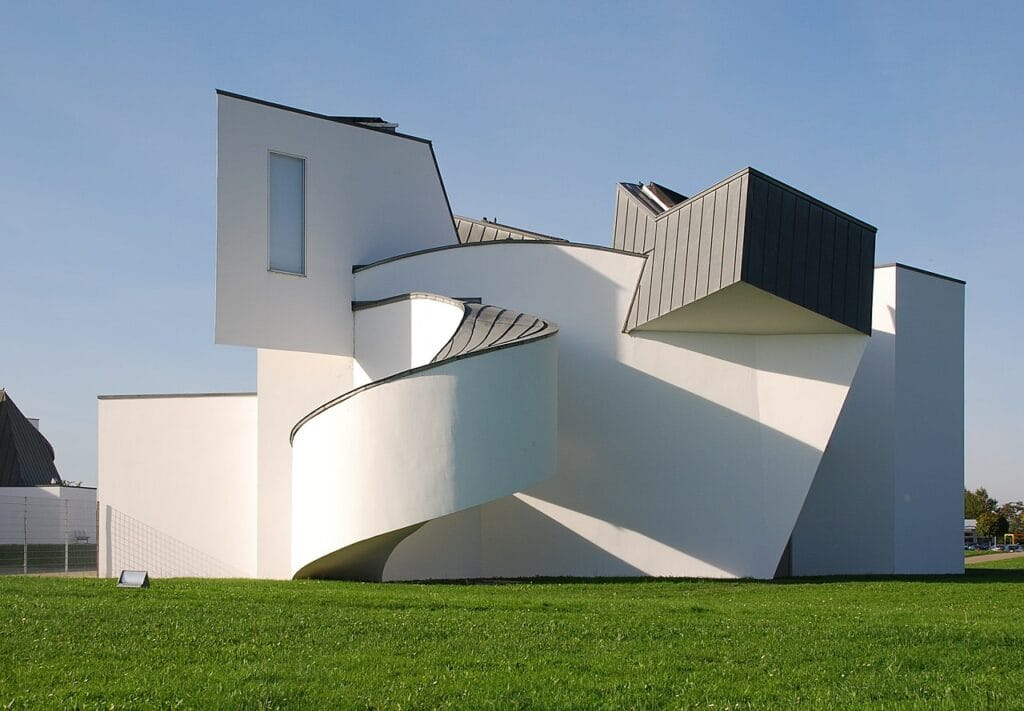
Photo: Wladyslaw Sojka / Wikimedia Commons – License CC BY-SA 3.0
A Sustainable Vision of Design
Today, Vitra develops collections for residential and professional environments while maintaining a focus on longevity, repairability and material quality. More than a catalogue, the brand builds a living heritage of modern design. This influence is found throughout the grand history of design and in the most demanding contemporary interiors.