

Outdoor Trimmings: Durable Textile Finishes for Exteriors and High-Traffic Areas
Upholstery trimmings are no longer confined to hushed living rooms and elegant bedrooms. Over the past decade, manufacturers have developed true outdoor passementerie designed to withstand the harshest exterior conditions: intense sunlight, rain, sea spray, temperature fluctuations.
These technical textile finishes find their place far beyond garden furniture. They’re essential in sun-drenched conservatories, family kitchens where easy maintenance matters most, boats, and any high-traffic areas where durability and practicality are key.
Table of Contents
What is Outdoor Passementerie?
Definition and Characteristics
Outdoor passementerie includes all braids, fringes, piping, cords, and other textile finishes specifically designed to resist outdoor conditions. Unlike traditional indoor trimmings, it fears neither UV rays, humidity, nor mold.
This exceptional performance rests on three pillars: technical synthetic fibers (acrylic, polyester, polypropylene) solution-dyed, specific protective treatments (anti-UV, anti-mildew, water-repellent), and design that prioritizes durability over decorative refinement.
Outdoor trimmings clean easily with a sponge, dry quickly, don’t rot, don’t mildew, and keep their colors even after years of sun exposure. This robustness justifies the price, which is typically higher than standard indoor trimmings.
Outdoor Indoors: Smart Uses
Why choose outdoor trimmings for interior use? Because certain spaces in our homes face constraints comparable to the outdoors.
Conservatories and south-facing rooms suffer from intense sunlight that quickly fades classic textiles. Outdoor trimmings will keep their colors intact for years, while viscose or cotton trimmings would turn gray or yellow within months.
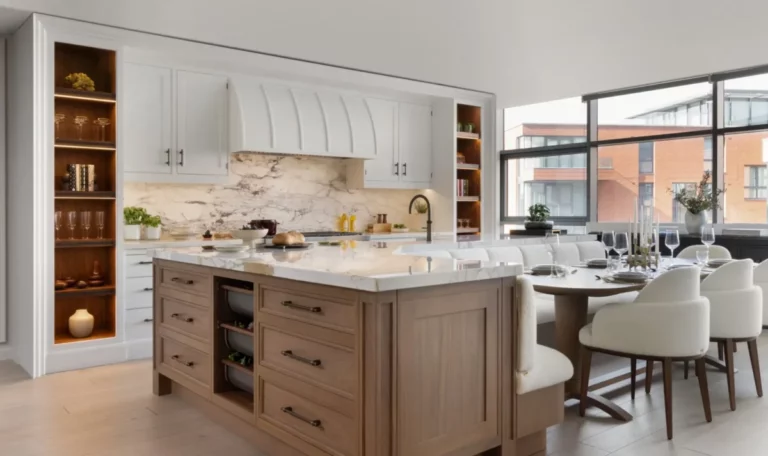
Kitchens represent another smart use for outdoor materials. Grease splatters, food stains, cooking moisture… all daily aggressions. With outdoor trimmings on your kitchen chairs and banquettes, a quick wipe suffices. No need for delicate stain removers or professional cleaning.
Families with young children particularly appreciate this ease of maintenance. An outdoor welt on a dining room cushion cleans in two minutes, while a cotton welt would require dry cleaning the entire cushion.
Very sunny regions (southern France, seaside areas, high-altitude mountains) also benefit from using outdoor materials indoors. UV radiation is more intense there, and classic textiles age prematurely.
Technical Materials for Outdoor Trimmings
Solution-Dyed Acrylic Fibers
Solution-dyed acrylic represents the high end of outdoor trimmings. The principle: color is integrated into the fiber itself during manufacturing, not applied to the surface afterward.
Result: exceptional UV resistance. Where surface-dyed textiles fade in one or two seasons, solution-dyed acrylic maintains its color for 5 to 10 years of continuous sun exposure. Manufacturers often offer 5-year warranties on color fastness.
Acrylic is naturally rot-proof: it won’t decay even when soaked. It resists mildew without additional chemical treatment. It dries quickly after rain. And it remains supple and pleasant to touch, unlike some technical fibers that can be stiff.
The price reflects this: it’s the most expensive fiber for outdoor trimmings. But for use in full sun or by the sea, it’s the most durable investment.
Solution-Dyed Polyester
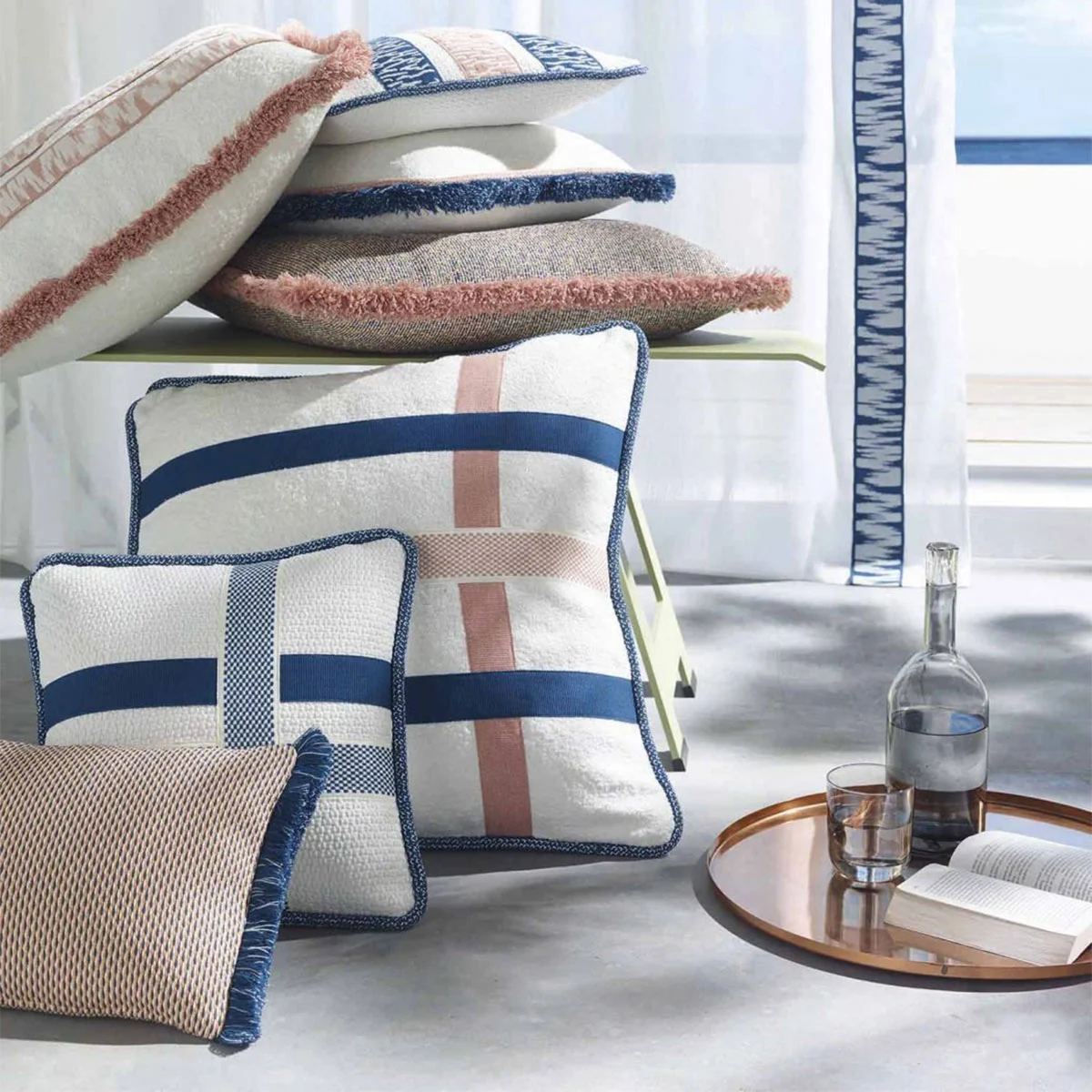
Solution-dyed polyester offers an excellent performance-to-price ratio. Less expensive than premium acrylic, it nonetheless shares many of its qualities.
Water resistance is excellent: polyester absorbs very little moisture and dries in a few hours. Perfect for furniture that stays outside year-round, or for boat cushions.
Polyester’s mechanical strength even surpasses that of acrylic. Polyester welts resist abrasion and tension better. For heavily used furniture (restaurant terraces, beach clubs), it’s often the most relevant choice.
Color fastness, though slightly inferior to premium acrylic, remains excellent: expect 3 to 5 years of intensive exposure without visible fading.
Polypropylene and Technical Blends
Polypropylene represents the entry level for outdoor trimmings. Very light, completely waterproof, it resists stains well and cleans easily. Its main drawback: color fastness not as good as acrylic or solution-dyed polyester.
It’s often found in technical blends: polypropylene-polyester, or polypropylene-acrylic. These combinations aim to optimize the performance-to-price ratio by leveraging the complementary qualities of each fiber.
For occasional use (vacation home, furniture used only in summer), or for areas with little sun exposure, polypropylene can suffice. For intensive use in full sun, better to invest in quality acrylic or polyester.
Protective Treatments
Beyond the fiber itself, applied treatments make all the difference. UV treatment reinforces protection against solar rays, further prolonging color fastness. Some manufacturers use UV stabilizers integrated directly into the fiber.
Anti-mildew and antibacterial treatments prevent the development of fungi and bacteria, even in humid environments. Essential for seaside or poolside furniture.
Water-repellent and waterproofing treatments make water bead on the surface instead of absorbing. Trimmings dry faster, stains penetrate less.
Finally, stain-resistant treatments (Teflon or Scotchgard type) create an invisible barrier that greatly facilitates cleaning. A wine, ketchup, or oil stain wipes away with a sponge before penetrating the fiber.
Available Elements in Outdoor Versions
Outdoor Braids
Outdoor braids exist primarily in flat versions. You’ll find plain braids, striped braids, sometimes simple geometric patterns. Widths generally range from 10mm to 50mm.
What’s missing compared to indoor: complex gimp braids, highly elaborate jacquard braids, braids with metallic threads. Why? These sophisticated constructions often rely on natural fibers (silk, viscose) or metallic threads that don’t withstand the elements.
Outdoor braids find their place on garden cushions (to hide seams), on exterior blinds, on terrace banquettes. Their role remains primarily structural: neatly finish edges, hide fastenings.
Outdoor Fringes
Outdoor fringes generally limit themselves to cut fringes: a header braid with neatly cut threads hanging straight. Available heights range from 30mm to 100mm depending on manufacturers.
Complex bullion fringes, elaborate tasseled fringes, sophisticated brushed fringes remain rare in outdoor versions. The technical reason: these constructions require very fine, supple threads, difficult to obtain with thick synthetic fibers.
Outdoor fringes are used primarily on parasols (decorative border), garden cushions (bottom finish), terrace blinds. The effect remains more understated than indoors, but durability more than compensates.
Outdoor Piping
Piping is probably the most used and important element of outdoor trimmings. On outdoor furniture, it plays an essential structural role: reinforcing seams, preventing water from seeping into joints, extending the furniture’s lifespan.
Outdoor piping comes in various diameters, from 3mm (discreet) to 8mm (quite visible). You can find them pre-made in standard colors, or have them custom-made with your outdoor upholstery fabric.
In kitchens, outdoor piping on chairs and banquettes is life-changing. It wipes clean with a sponge, resists grease splatters, doesn’t yellow. For heavily used dining seats, it’s a perfectly sensible choice even though technically “indoors.”
Outdoor Cords and Cables
Twisted cords and cables exist in outdoor versions, primarily for exterior blind tiebacks, pergola drape holdbacks, or nautical applications.
In nautical settings, outdoor trimmings are actually indispensable. Cords must resist saltwater, sea spray, UV rays reflected by water. Marine upholsterers use exclusively technical trimmings for this reason.
For highly sun-exposed kitchen curtains, an outdoor cord tieback will keep its color and shape, while a viscose cord would have faded and deformed.
What Doesn’t Exist (Yet) in Outdoor
Let’s be clear: not all the richness of indoor trimmings translates to outdoor. Cartisanes (those embroidered silk or gold thread reliefs), highly elaborate tassels with metallic threads, complex pompoms, sophisticated bullion fringes… all these remain the domain of indoor use.
Why these limitations? Synthetic fibers don’t allow the same finesse as silk. Metallic threads oxidize in contact with humidity and salt air. Complex constructions require delicate assemblies that don’t withstand the mechanical stresses of outdoor use.
Outdoor trimmings prioritize function over form. But manufacturers constantly innovate, and collections grow more refined each year.
Applications of Outdoor Trimmings
Garden Furniture and Terraces
This is the most obvious use: all garden lounge cushions, outdoor banquettes, terrace daybeds benefit from outdoor trimmings. Well-installed piping extends cushion life by several years by preventing seams from tearing.
Parasols can receive outdoor fringes around their perimeter, creating a decorative effect while resisting the elements. Outdoor poufs and seating finish neatly with outdoor braids that won’t mildew after a downpour.
For furniture that stays outside year-round, outdoor trimmings aren’t a luxury, they’re a technical necessity. Classic textile finishes wouldn’t survive six months in these conditions.
Nautical and Seaside
The nautical environment imposes extreme constraints: corrosive saltwater, UV rays reflected by water (doubly aggressive), constant spray, confined spaces promoting mildew. Only technical outdoor trimmings resist this.
Boat cushions, marine upholstery, cabin curtains use exclusively outdoor piping and braids. Tieback cords must withstand tension without deforming, resist salt without rotting.
Even for a seaside residence (not on a boat), salt air considerably accelerates textile degradation. Outdoor trimmings naturally impose themselves in these environments.
Conservatories and Transition Spaces
Conservatories pose an often underestimated problem: they’re technically “indoors,” but the greenhouse effect considerably amplifies UV rays. A cushion placed behind glass in full sun receives as much radiation as outdoors, sometimes more.
Result: classic textiles fade there in months. Homeowners discover with dismay that their beautiful conservatory sofa has gone from navy blue to light gray in a single summer.
The solution: treat the conservatory as an outdoor space from a textile perspective. Outdoor fabrics and outdoor trimmings are perfectly justified there, even if “technically” you’re under roof.
Kitchens and Dining Rooms
Here’s a use for outdoor trimmings that few people consider, yet it radically changes daily life: kitchen chairs and banquettes.
A family kitchen is a daily battlefield. Tomato sauce splatters, greasy fingerprints, crumbs, spilled liquids… Classic textile finishes suffer terribly. A cotton welt absorbs stains, gradually yellows, becomes grayish.
An outdoor welt? A quick wipe with a damp sponge and a little dish soap, and it’s spotless. Stains don’t penetrate, grease doesn’t embed, colors don’t change.
For families with young children, this is an enormous relief. No more stress at every meal, no more complex stain removal. The easy maintenance of outdoor makes it a perfectly rational choice for these high-traffic areas.
Commercial Outdoor Spaces
Restaurant and café terraces, beach clubs, hotels and resorts, all these commercial outdoor spaces use outdoor trimmings extensively. The reason is simple: use is intensive, furniture must stay pristine, cleaning must be quick and efficient.
A restaurateur who invests in furniture with outdoor trimmings amortizes the investment over 5 to 10 years. With classic trimmings, everything would need replacing every 2-3 years. The economic calculation is straightforward.
Fire safety standards in public establishments often require fire-rated textiles. Many outdoor trimmings carry these ratings, which simplifies regulatory compliance.
Care and Durability of Outdoor Trimmings
Routine Cleaning
Maintaining outdoor trimmings is disarmingly simple: a sponge, warm water, a little mild soap (or dish soap), and you’re done. Rub gently, rinse with clean water, let air dry.
For deep cleaning, you can use a soft brush to work in the product. Avoid hard brushes that could damage surface fibers.
Products to favor: Marseille soap, mild dish soap, diluted black soap, or specific cleaners for outdoor textiles. All these pH-neutral products clean effectively without attacking fibers or treatments.
What to absolutely avoid: pure bleach (it can discolor certain dyes), highly alkaline detergents, aggressive solvents. These products risk damaging protective treatments and reducing your trimmings’ lifespan.
Stain Removal
Food stains (very common in kitchens or restaurant terraces) generally come out with a simple sponge wipe if you act quickly. The longer you wait, the more time the stain has to penetrate, even on stain-treated outdoor material.
For stubborn grease stains, a little degreasing dish soap works wonders. Apply undiluted to the stain, let sit 5 minutes, rub gently, rinse thoroughly.
Surface mildew (which can appear if furniture stays damp long in a shaded spot) treats with a water + soap + few drops of bleach mixture (10% maximum). Scrub, let sit 10 minutes, rinse very thoroughly, dry in sun.
For stains of unknown origin, always test your cleaning method on an inconspicuous area before treating the visible stain. Even outdoor has its limits, and certain very aggressive products can alter the fiber’s appearance.
Drying and Winter Storage
Complete drying is crucial to prevent mildew development. Even though outdoor trimmings resist humidity well, leaving soaked furniture in a closed, dark place still promotes fungi.
After a shower or cleaning, put cushions in the sun or a ventilated area if possible. Turn them so air circulates. If you bring still-damp furniture into a storage box or garden shed, leave it open a few hours.
For winter storage (in regions where you put away garden furniture in winter), ensure everything is perfectly dry before storing. Store in a dry, aerated place if possible. Protective covers can help, but beware: a waterproof cover on damp furniture creates a mildew terrarium.
In mild-climate regions where furniture stays out year-round, protective covers still extend trimmings’ life by protecting from dirt accumulation and driving rain.
Expected Lifespan
High-end outdoor trimming manufacturers generally offer 3 to 5-year warranties on color fastness and UV resistance. That’s a minimum. In real use, count rather on 5 to 10 years lifespan depending on exposure and maintenance.
An outdoor welt on a shaded garden cushion, well maintained, can easily last 10 years. The same welt in full Mediterranean sun 12 months a year will last more like 5-7 years before showing signs of fatigue.
Factors influencing longevity: sunlight intensity (UV), fiber quality (acrylic > polyester > polypropylene), color (bright colors and blacks hold less well than beiges and grays), regular maintenance, and quality of initial installation.
When to replace? When colors have truly faded, fiber becomes rough or brittle to touch, tears appear. At this stage, trimmings have done their time and should be replaced to maintain your furniture’s aesthetics and protection.
Choosing Your Outdoor Trimmings
Selection Criteria
The first criterion is sun exposure level. A garden cushion in full sun all day absolutely needs solution-dyed acrylic or high-end solution-dyed polyester. A covered or partially shaded terrace cushion can make do with standard polyester or even polypropylene.
Geographic location matters enormously. Southern France, Corsica, the Mediterranean coast, high-altitude mountain regions: all these territories have very intense UV radiation that puts textiles to the test. Conversely, in Brittany or Normandy, sun is less aggressive and you can opt for fibers a notch below in resistance.
Usage also makes a difference. Purely decorative use (cushion rarely used) is less demanding than intensive daily use. For commercial furniture (restaurant, hotel), don’t skimp on quality: go high-end, you’ll amortize it widely.
Budget, finally, plays its role. Outdoor trimmings cost more than standard indoor, and price gaps between entry and high-end are significant. But always relate price to lifespan: paying 30% more for trimmings that last twice as long is economical.
Coordinating with Outdoor Fabrics
A fundamental principle: always coordinate your trimmings’ performance with your fabric’s. No point putting premium outdoor piping on low-end outdoor fabric that will fade in two years. The reverse is also true: a premium Sunbrella fabric deserves matching trimmings.
Color harmonization follows the same rules as indoors: tone-on-tone for an understated, elegant effect, gradation for soft harmony, or frank contrast to emphasize lines. Many brands offer coordinated fabric + trimming collections, which greatly simplifies selection.
Some outdoor fabric manufacturers (like Sunbrella) offer their own trimming lines in the same colorways as their fabrics. This ensures perfect consistency, both aesthetic and technical.
Outdoor vs Treated Indoor: Making the Right Choice
A question often arises: can you make do with stain-treated indoor fabric instead of true outdoor? The answer depends on use.
For a conservatory or kitchen, if sunlight isn’t too intense and you’re mainly seeking easy maintenance, an indoor fabric with Scotchgard treatment can suffice. It won’t last 10 years like outdoor, but it costs less and often offers more aesthetic choices.
However, for true outdoor furniture, a south-facing terrace, nautical use, forget treated indoor. UV will defeat it in one season. Outdoor is non-negotiable in these cases.
The price difference between outdoor and treated indoor shrinks when you factor in lifespan. Outdoor at $50/m that lasts 8 years ultimately costs less than treated indoor at $30/m that needs replacing every 3 years.
The aesthetic difference exists: outdoor often has a more “technical” aspect, less refined than high-end indoor. But new collections reduce this gap each year.
Outdoor Trimming Brands and Manufacturers
Outdoor Trimming Specialists
Houlès, the historic French trimming reference, offers a quality outdoor collection. You’ll find piping, braids, cords designed to resist UV and humidity. Quality is there, with high-end acrylic and polyester fibers.
Samuel & Sons, the major American house, has developed several outdoor lines including the famous “Riviera” collection. Their outdoor trimmings stand out for particularly successful colorways and remarkable attention to detail for outdoor products.
Other manufacturers have specialized in technical trimmings: companies that supply the nautical industry, contract sector (hotels-restaurants), and now offer their products to the public through upholstery professionals.
Outdoor Fabric Brands Offering Trimmings
Sunbrella, the global leader in outdoor fabric, offers a complete line of trimmings coordinated with its fabrics. The advantage: you’re assured that fabric and trimmings will have exactly the same resistance level and color fastness over time.
Phifertex and other technical brands follow the same logic: offering complete ecosystems (fabric + trimmings + outdoor sewing thread) to guarantee overall consistency.
This approach greatly facilitates professional upholsterers’ work: they can source all components from the same supplier with assurance of perfect technical compatibility.
Where to Source Outdoor Trimmings
Outdoor trimmings are found primarily through professionals: upholsterers, saddlers, supply stores for upholstery professionals. The public rarely has direct access, except for a few spooled products in large DIY chains.
For custom work or specific references, going through a professional is virtually mandatory. They can order exactly what you need, in the right quantities, with the right colors.
Lead times vary: some standard references are available immediately, others require ordering with 4 to 8 week delays. Plan ahead if you have a project with a deadline.
Aesthetic Differences: Outdoor vs Indoor
Outdoor’s Aesthetic Limitations
Let’s be honest: outdoor trimmings don’t (yet) rival the finesse and sophistication of high-end indoor trimmings. Synthetic fibers, however technically performant, don’t have silk’s nobility or viscose’s drape.
Details often lack finesse. An outdoor braid will have simpler, less delicate patterns than an indoor jacquard braid. An outdoor welt will have a more “sporty” aspect, less refined than a silk welt.
The color palette also differs. Outdoor favors bright, saturated colors that resist UV better, or conversely very neutral beiges and grays. Subtle tones, complex nuances, powdery colorways so prized in interior decoration are rarer in outdoor.
The sheen and satin finish of silk or viscose are impossible to reproduce with acrylic or polyester. Outdoor has a more matte aspect, sometimes slightly plastic to touch. That’s the price of durability.
Evolution Toward More Refinement
Good news: manufacturers progress each year. New outdoor collections are increasingly elegant, with more worked textures, subtler colors, more careful finishes.
High-end outdoor progressively approaches indoor aesthetics. We’re seeing outdoor piping with finer diameters, outdoor braids with more elaborate patterns, outdoor cords whose twist nearly rivals silk cords.
Innovation in fiber textures now yields acrylics and polyesters that are softer, more supple, less “technical” to touch. Some new-generation fibers imitate linen or cotton quite well.
Color palettes also enrich with more sophisticated hues inspired by interior decoration trends. We now find terracottas, sage greens, deep blues that hold magnificently well outdoors.
Outdoor Style
Rather than desperately trying to imitate indoor, we can fully embrace outdoor aesthetics. After all, it has its own charm: a clean, graphic, contemporary side that perfectly suits modern outdoor spaces.
Contemporary garden furniture, streamlined, with frank lines, pairs very well with unabashed outdoor trimmings: clearly visible contrasting welts, graphic braids, bright colors.
Chic outdoor style exists and dominates in decoration magazines: immaculate whites, nautical stripes, deep solids, all in ultra-performing technical materials. It’s a coherent aesthetic universe that needn’t ape traditional indoor.
The mistake would be trying to do pseudo-classic with outdoor. A Louis XV-style sofa with bright orange acrylic piping doesn’t work. But a contemporary daybed with the same piping can be superb.
Conclusion
Outdoor trimmings represent far more than a simple technical adaptation of classic trimmings. It’s a product family in its own right, with its materials, constraints, specific assets. Ignoring its existence or limiting it to garden furniture alone would miss many relevant applications.
A fading conservatory, an impossible-to-maintain kitchen, moldy boat cushions: all problems that outdoor trimmings simply solve. Easy maintenance (a sponge wipe), durability (5 to 10 years), UV resistance (manufacturer warranties), everything argues for broadening its use well beyond the garden.
Initial investment is certainly higher than standard indoor trimmings. But relative to lifespan and peace of mind (no more stress over stains, no surprise fading), the calculation is quick. For high-constraint areas, outdoor imposes itself as both a technical and economic obviousness.
Aesthetic limitations exist, let’s not deny them. But they shrink each year with manufacturer innovations. And above all, they become negligible compared to practical benefits in relevant uses. Nobody regrets putting outdoor on their kitchen chairs when they see how simple it is to clean.
To properly choose and install your outdoor trimmings, using a professional upholsterer remains strongly recommended. They know the right references, know which fiber to choose for your exposure, master installation techniques that will guarantee longevity.

Digital entrepreneur and craft artisan.
My work bridges craftsmanship, design history and contemporary creation, shaping a personal vision of luxury interior design.
Since 2012, I have been based in my workshop on the shores of Lake Annecy, creating bespoke interiors for architects, decorators and private clients.