

Hart Textile Materials Guide: Mohair Wool
In the world of high-end upholstery textiles, mohair holds a distinctive place. Rare, demanding, and durable, it embodies a vision of luxury based on material quality, longevity, and craftsmanship rather than immediate impact. Used for over a century in the most demanding interiors, mohair remains today one of the most high-performing and noble fibers in upholstery textiles.
Mohair: Anatomy of an Exceptional Fiber
This guide builds on our editorial approach to textile materials, developed notably in our Guide to Exceptional Upholstery Fabrics. It offers a clear, neutral, and expert analysis of mohair: origin, properties, uses, durability, and genuine environmental impact.
Mohair: What Exactly Is It?
Textile Abbreviations
France: MOHAIR
Europe (ISO): WM
United States: Mohair
Description
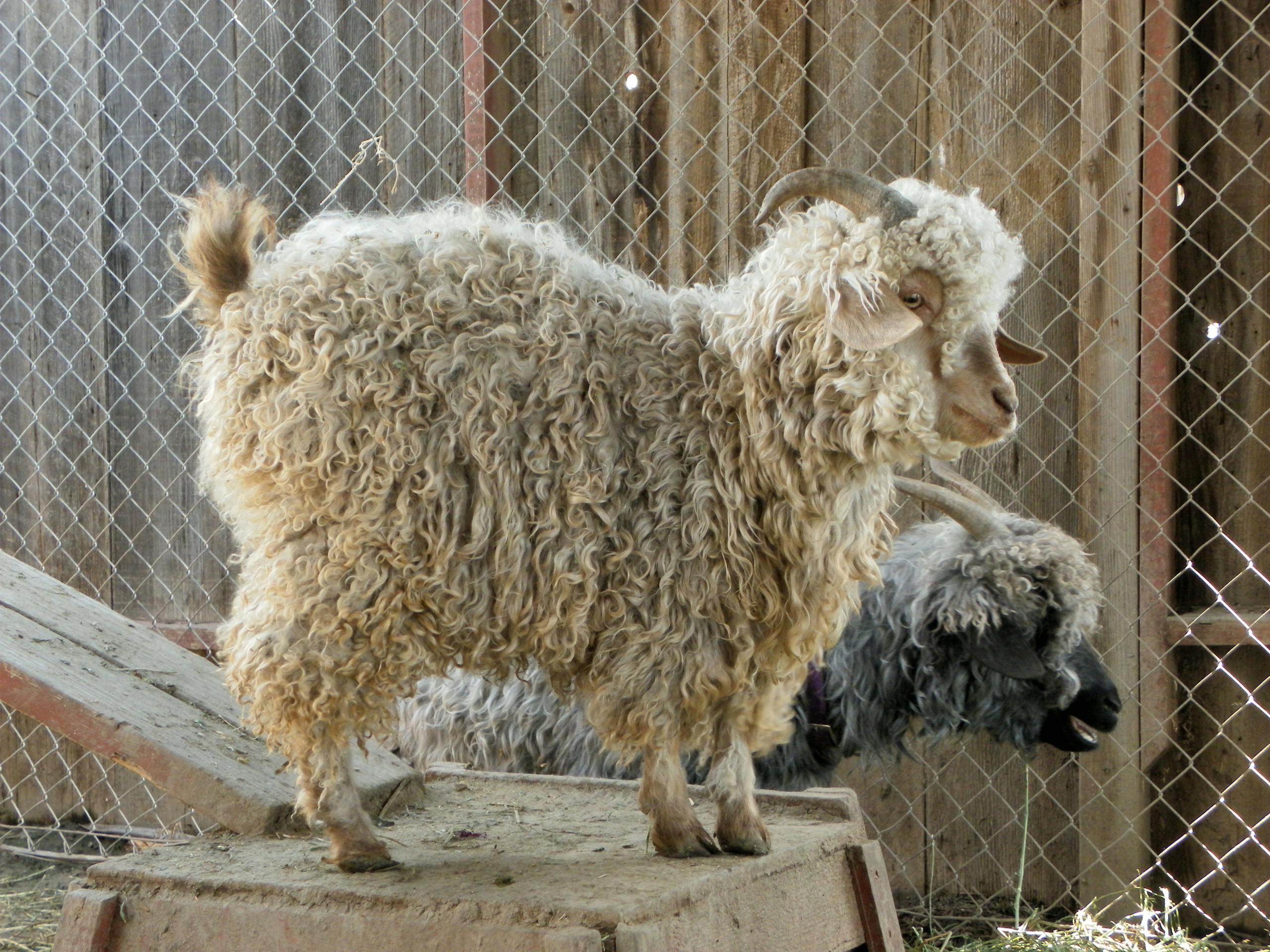
Mohair is a natural animal fiber derived from the fleece of the Angora goat. Contrary to a common misconception, it is neither cashmere nor standard wool. Its fibrous structure—longer, smoother, and more resilient than sheep’s wool—gives it exceptional mechanical and aesthetic properties.
Classification
Natural animal fiber – fine hair family.
Origin and Production of Mohair
Historically originating from the Ankara region (formerly Angora, in Turkey), mohair developed from the 19th century in South Africa, now the world’s leading producer, as well as in the United States and Australia.
Mohair production relies on the annual shearing of the Angora goat. A goat produces on average between 3 and 5 kg of fiber per year, which explains the scarcity and high cost of the raw material.
Quality mohair for upholstery comes mainly from established, structured, and controlled supply chains, particularly in South Africa, where quality and animal welfare standards have been progressively strengthened.
Technical Properties of Mohair
Exceptional Mechanical Resistance
Mohair is one of the most abrasion-resistant natural fibers. In upholstery velvet, it commonly achieves between 50,000 and 100,000 Martindale cycles—two to four times more than dense wool velvet, and up to ten times more than viscose velvet.
This resistance has made it a material historically used in high-traffic spaces: bourgeois salons, hotels, theaters, train carriages, ocean liners, and public institutions.
Elasticity and Shape Memory
Mohair fiber possesses excellent natural elasticity. It bends under pressure and then returns to its original form without breaking or permanently deforming. This property limits velvet crushing and the formation of irreversible shiny patches.
Natural Luster and Visual Depth
Unlike the artificial shine of certain manufactured fibers, mohair’s luster is intrinsic to the fiber’s structure. Mohair velvet captures light, diffuses it, and creates a unique visual depth that evolves over time without degrading.
Behavior with Moisture and Dirt
Mohair is naturally resistant to soiling. Its smooth fiber retains less dust and particles than rougher fibers. It also maintains good mechanical resistance when wet, unlike viscose which loses up to 50% of its strength when moistened.
Uses of Mohair in High-End Upholstery
Mohair is primarily used in velvet form, tightly woven, with short or long pile depending on the application.
Recommended Uses
- Sofas and armchairs for daily use
- Heavily used seating
- Banquettes, public seating, hotels, and high-traffic areas
- Heritage furniture and pieces intended to last several decades
Less Common Uses
- High-end headboards
- Heavy decorative curtains (less frequent due to weight and cost)
Durability and Aging
Mohair doesn’t degrade—it ages. This distinction is essential. Where manufactured fibers weaken and lose their mechanical qualities, mohair develops a patina, maintains its structure, and can be restored.
A properly maintained mohair velvet can withstand 25 to 40 years of use, sometimes more. It tolerates professional cleaning, local repairs, and restoration, making it compatible with the concept of heirloom quality.
Environmental Impact: A Nuanced Perspective
A Renewable Fiber
Mohair is a renewable fiber produced annually without harming the animal. Its production relies on extensive farming, often in areas unsuitable for intensive agriculture.
Farming-Related Issues
The environmental impact of mohair heavily depends on farming practices: pasture management, animal welfare, transportation, and processing. Past issues have led to the implementation of charters and labels (notably the RMS – Responsible Mohair Standard).
Durability as a Major Ecological Factor
The strongest environmental argument in favor of mohair remains its longevity. A textile used for 30 years has a significantly lower overall impact than a textile replaced every 5 to 8 years, even if its initial cost and footprint are higher.
Mohair Compared to Other Fibers
Compared to viscose velvets, mohair is more expensive to purchase but incomparably more durable. Against wool, it offers superior resistance and better long-term performance. Compared to silk, it’s less fragile and better suited to intensive use.
In the context of sustainable luxury, mohair stands as a reference material for seating and heavily used pieces.
How to Recognize Genuine Mohair
Genuine mohair velvet has high density, a firm yet supple hand, a deep non-artificial luster, and excellent recovery after pressure. Price is also an indicator: authentic mohair velvet rarely falls below €150 to €180 per meter.
Composition must be clearly stated. Wool-mohair blends exist and can be appropriate, but a velvet advertised as “mohair” without specifics always warrants verification.
Conclusion
Mohair embodies a demanding vision of textile luxury: a rare, high-performing, durable, and culturally rooted material. It doesn’t seduce through immediate effect but through its capacity to stand the test of time without losing value.
In a context where upholstery textiles are often driven toward economically profitable but technically fragile solutions, mohair reminds us that true luxury rests on material quality, durability, and knowledge. A fiber chosen for what it is, not for what it promises.

Digital entrepreneur and craft artisan.
My work bridges craftsmanship, design history and contemporary creation, shaping a personal vision of luxury interior design.
Since 2012, I have been based in my workshop on the shores of Lake Annecy, creating bespoke interiors for architects, decorators and private clients.