


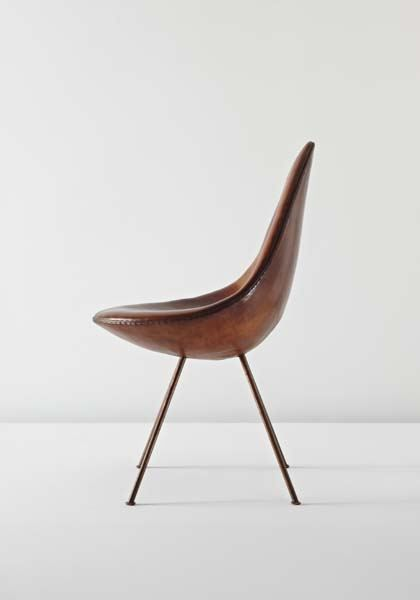
Fritz Hansen: Icons of Danish Modernism
Founded in 1872 in Denmark, Fritz Hansen is one of the foundational houses of Scandinavian modernism.
Balancing industrial precision, formal clarity and architectural rigour, the brand has played a decisive role in shaping twentieth-century furniture design.

Origins in Danish Craftsmanship
Founded in Copenhagen in 1872, Fritz Hansen began as a cabinetmaking workshop and quickly built a reputation for precision and material discipline. That early culture of craftsmanship became the foundation that later enabled the brand to scale industrially without losing structural refinement.
The Danish context matters. Scandinavian furniture culture developed around proportion, honest construction and everyday functionality. For Fritz Hansen, modernity was never about visual effect. It was about clarity and longevity.
The Modernist Turning Point
The brand’s decisive shift took shape in the early twentieth century and accelerated in the 1930s, as Fritz Hansen adopted industrial processes and began collaborating with architects. Modernity, here, was not a style. It was a method: aligning use, structure and production.
This evolution placed the company within the larger story of modern design while retaining a distinctly Scandinavian restraint. Where other traditions often celebrate expressive experimentation, Fritz Hansen refined a quieter form of authority.
Fritz Hansen’s DNA: Lightness, Proportion, Structural Intelligence
Fritz Hansen’s formal language rests on lightness, seamless transitions and legible structure. Even when a piece looks minimal, it is usually supported by precise engineering. The technique remains present, but never loud.
This ability to make craft and engineering feel effortless is central to the brand’s identity. The object holds its place through proportion, comfort and coherence with architectural space.
Iconic Designers Associated with Fritz Hansen
Fritz Hansen’s cultural authority is inseparable from its designer collaborations. The brand operates almost like a Scandinavian editor: selecting, producing and stabilising pieces that become references over time.
Arne Jacobsen
A defining figure of Danish modernism, he created globally recognised models such as the Ant and Series 7, and designed seating that often emerged directly from architectural projects.
Poul Kjærholm
Through disciplined compositions in steel, leather and wood, he elevated furniture into architectural structure. His pieces remain among the purest expressions of Danish design.
Jaime Hayon
Representing a contemporary expansion of the catalogue, he brings a more expressive softness while remaining compatible with the brand’s standards of finish and construction.
Cecilie Manz
She embodies a modern Scandinavian continuity: quiet intelligence, material sensitivity, and perfectly balanced volumes.
This range of voices highlights Fritz Hansen’s strength: a stable identity able to welcome different sensibilities without dilution.
Materials and Craft: Moulded Plywood, Steel, Leather, Textiles
Fritz Hansen helped establish moulded plywood as a modern design language. Beyond aesthetics, the technique enables continuous curves, structural lightness and long-term resistance, particularly suited to intensive everyday use.
Metal structures, often in steel, contribute stability and precision, while veneers and wood finishes reflect the brand’s cabinetmaking heritage. Upholstered pieces typically rely on high-quality leathers, wools and durable textiles engineered to preserve silhouette and comfort over time.
Iconic Pieces
A few designs crystallise Fritz Hansen’s international reputation:
– Ant Chair
– Series 7
– Egg Chair
– Swan Chair
Their status does not come from trend cycles. It comes from a rare balance of comfort, structure, proportion and quiet elegance, designed to endure.
Industrial Strategy and Global Reach
From the second half of the twentieth century onwards, Fritz Hansen became a reference in both residential and contract contexts. Its designs perform in real life: stability, durability, repairability and continuity of production.
This industrial dimension is not a compromise. It is part of the modernist project itself: to produce well, produce clearly, and produce for the long term.
Fritz Hansen Today
Today, Fritz Hansen balances heritage re-editions with contemporary creations without breaking its modernist grammar. For official collections, visit Fritz Hansen.
Why Fritz Hansen Matters
Within the international design landscape, Fritz Hansen stands for disciplined modernism: authority built through proportion, structure and duration.
Where Italian design often embraced expressive experimentation, Fritz Hansen demonstrates a different strength: precision, controlled comfort and architectural restraint.
The cultural role of Danish design is documented by institutions such as Designmuseum Danmark.