

Hart Textile Materials Guide: Raffia
This page continues our expert reading of textile fibers and materials, developed in the Guide to Exceptional Upholstery Fabrics. It aims to clarify the relevant uses of raffia, its real qualities and limitations, to avoid any confusion with structural fibers.
Raffia: expressive decorative plant fiber
Raffia occupies a very specific place in high-end interior decoration. Natural plant fiber with an immediately recognizable aesthetic, it is chosen for its texture, relief, and visual presence. Raffia is neither a comfort fiber nor a performance fiber: it’s a decorative material, used to create surfaces, rhythms, and material effects.
To remember
Raffia is a decorative plant fiber, chosen for its texture and visual expressiveness, suitable for surfaces and accent elements, but unsuitable for stressed or structural uses.
Table of Contents
Raffia: definition and classification
Origin and production
Technical properties
Uses in interior decoration
Constraints and limitations
Maintenance
Ecological impact
Raffia and other decorative fibers
To remember before choosing
Raffia: definition and classification
Textile abbreviations
France: RAPHIA
Europe (ISO): RA
United States: Raffia
Description
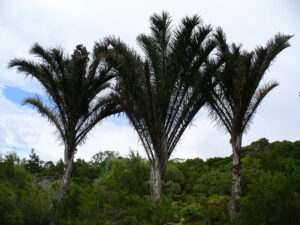
Raffia is a natural plant fiber derived from the leaves of various palms of the Raphia genus, mainly cultivated in Africa, Madagascar, and Southeast Asia. The fiber is extracted, dried, then used as is or slightly braided.
Classification
Natural plant fiber – decorative leaf fiber.
Origin and production
Raffia is traditionally hand-harvested. Palm leaves are split, dried, then transformed into long fibers or ribbons. Production remains predominantly artisanal, which explains variations in color, thickness, and texture.
In the high-end decorative sector, raffia is sometimes dyed, woven, or applied to substrates (paper, textile, nonwoven) to create more stable surfaces exploitable in interiors.
Technical properties
Texture and relief
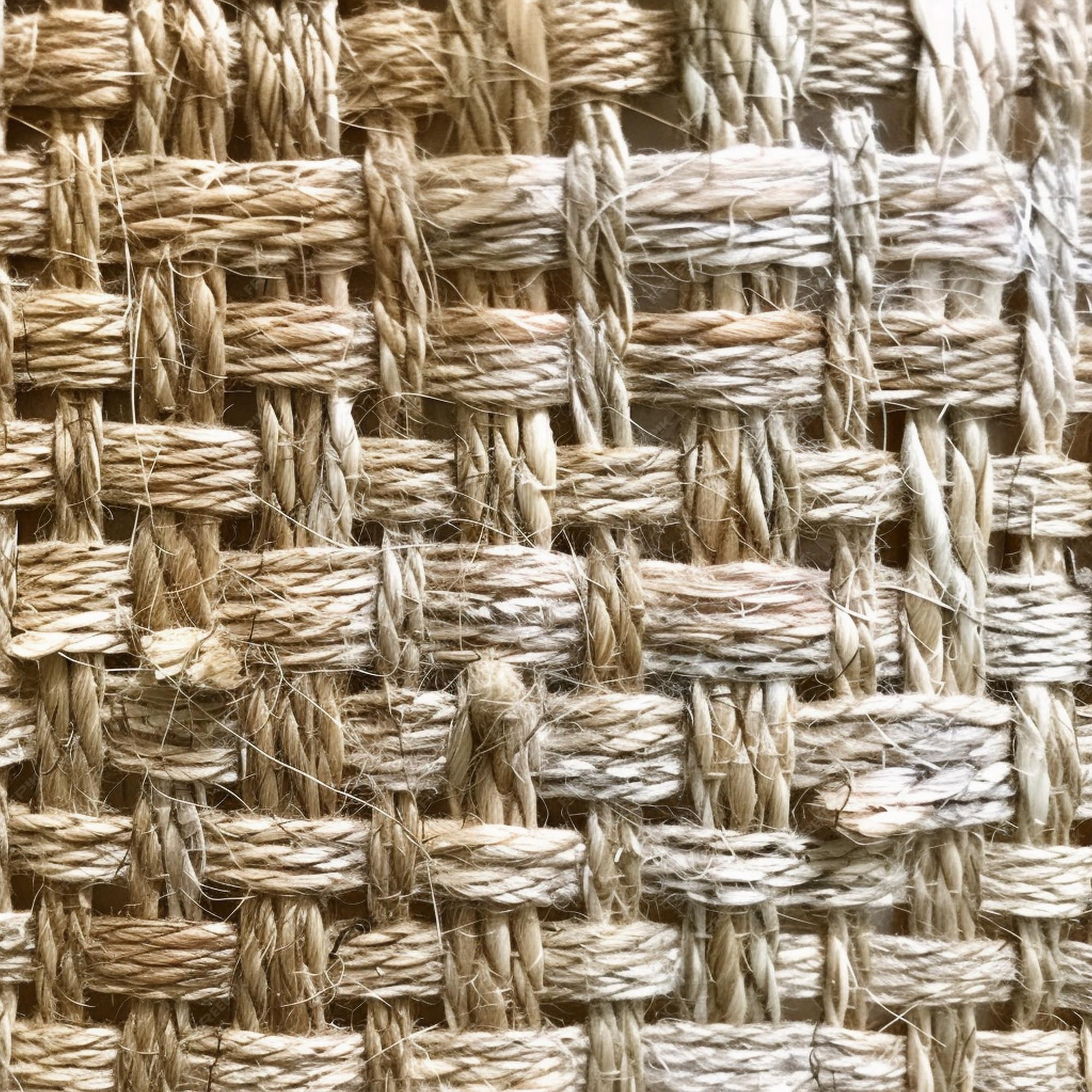
Raffia is distinguished by a highly readable texture, sometimes irregular, with marked relief. This expressiveness is its main quality: it captures light, creates shadows, and introduces a strong visual tactile dimension.
Limited flexibility
The fiber is relatively flexible when dry but remains fragile. It can break or fray under repeated traction or friction.
Low mechanical resistance
Raffia cannot withstand abrasion or mechanical constraints. It is not designed for functional or durable uses in direct contact with the body.
Uses in interior decoration
Recommended uses
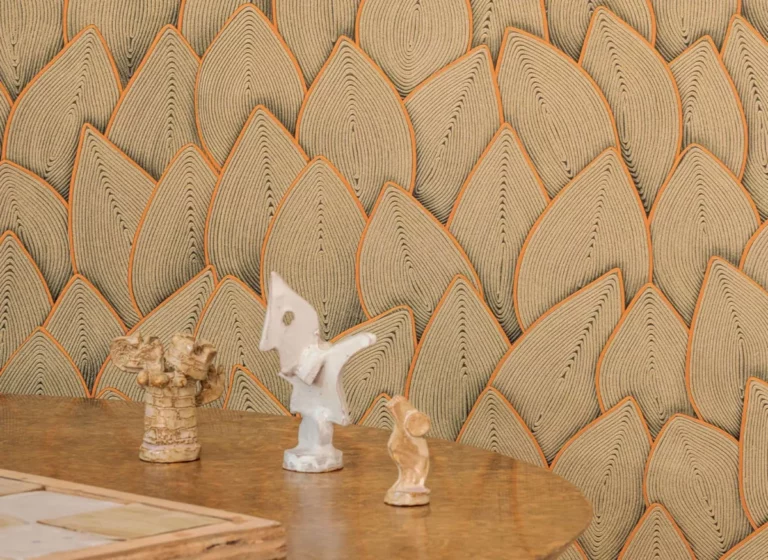
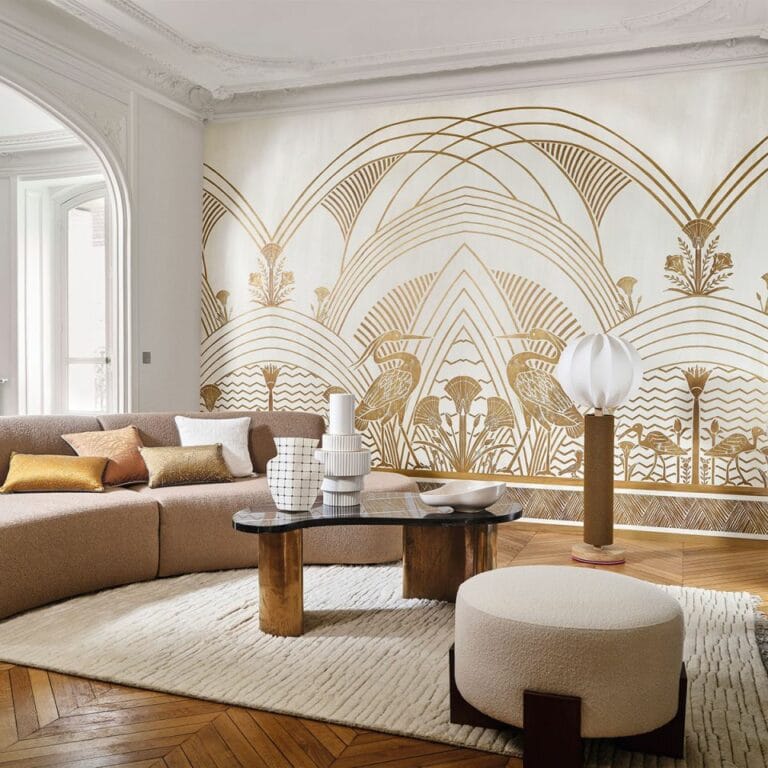
- Decorative wall coverings
- Panels and accent surfaces
- Decorative headboards
- Scenographic and architectural elements
- Decorative accessories
Uses to avoid
- Seating, sofas, armchairs
- Traffic areas
- Humid spaces or those exposed to significant variations
Constraints and limitations
Raffia is sensitive to humidity, dust, and friction. In interior environments, it must be protected and used on minimally stressed surfaces. It may fade slightly over time, especially when exposed to prolonged direct light.
Maintenance
Raffia maintenance is minimal and essentially preventive:
- Gentle dusting (low-power vacuuming)
- No humidification
- Professional intervention recommended for stains
General maintenance principles are detailed in our guide dedicated to upholstery fabric maintenance.
Ecological impact
Raffia is a renewable and biodegradable fiber. Its environmental impact depends heavily on harvesting and transformation conditions. When reasonably harvested and used for durable surfaces, it can fit into a responsible logic.
However, its decorative use sometimes involves substrates, adhesives, or treatments that modify its overall ecological profile.
Raffia and other decorative fibers
Compared to jute or sisal, raffia is significantly less resistant but much more visually expressive. Where sisal structures a floor, raffia structures a gaze. It fits into a decorative logic, not a functional one.
To remember before choosing
Raffia is relevant if:
– you seek a strong and natural material effect
– use is wall-based or decorative
– visual sensory dimension is paramount
Be vigilant if:
– the surface is stressed or manipulated
– the space is humid or dusty
– mechanical durability is expected
Conclusion
Raffia is a material of expression more than function. In a high-end interior, it brings texture, rhythm, and depth, provided it is used with discernment. Its luxury resides in its raw materiality and visual impact, not in its resistance.

Digital entrepreneur and craft artisan.
My work bridges craftsmanship, design history and contemporary creation, shaping a personal vision of luxury interior design.
Since 2012, I have been based in my workshop on the shores of Lake Annecy, creating bespoke interiors for architects, decorators and private clients.