


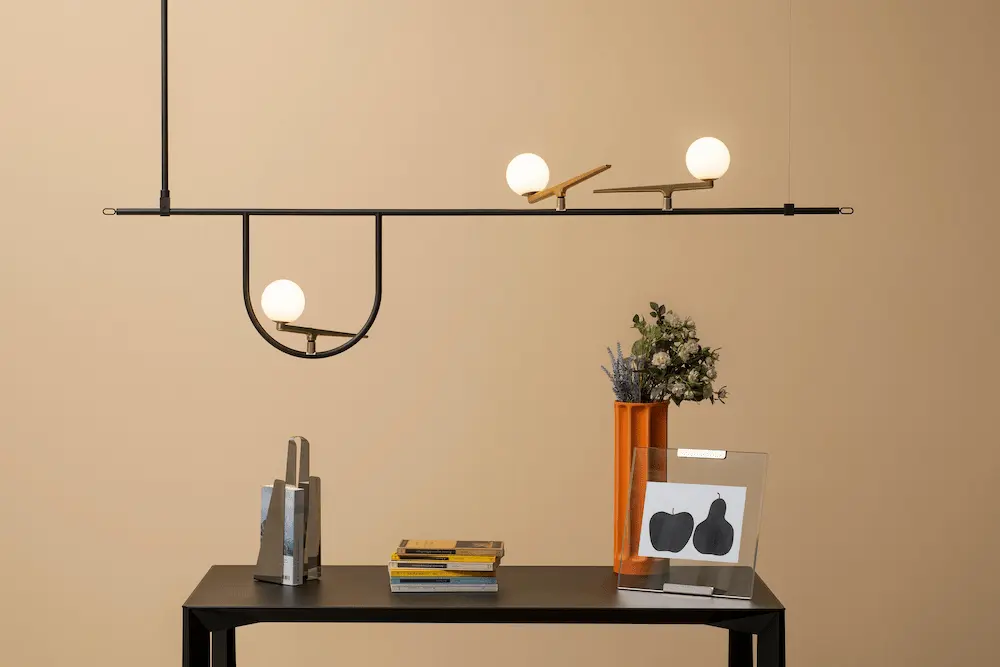
Artemide: From Milanese Avant-Garde to Contemporary Architecture of Light
Founded in 1960 in Milan by Ernesto Gismondi and Sergio Mazza, Artemide established itself as one of the defining forces of postwar Italian design.
At the intersection of technological research, industrial engineering and architectural culture, the company transformed lighting into a central discipline of contemporary design.

1960: The Birth of a Milanese Laboratory
Artemide emerged in a Milan that was rapidly becoming the epicenter of European design culture.
In the wake of the Italian design miracle of 1950–1980 and the experimental tensions of Radical Design, lighting evolved from decorative object to technological instrument.
Ernesto Gismondi understood early on that light would become architectural rather than ornamental.
From its origins, Artemide adopted a research-driven approach, combining scientific experimentation, new materials and close collaboration with architects.
This strategic direction immediately distinguished the brand from traditional lighting manufacturers.
Light as Architectural Project
At Artemide, light is never treated as a mere accessory.
It becomes spatial modulation, visual structure and atmospheric control.
This approach resonates with the principles of the Bauhaus: functional clarity, structural logic and reduction of excess.
Yet Artemide integrates advanced technological engineering, aligning with the industrial evolution of Italian design during the second half of the twentieth century.
The company pioneered what can be described as “light engineering,” anticipating contemporary concerns surrounding energy efficiency, ergonomics and sustainable production.
Iconic Pieces
Several creations have shaped the international design landscape:
– Eclisse (Vico Magistretti, 1967)
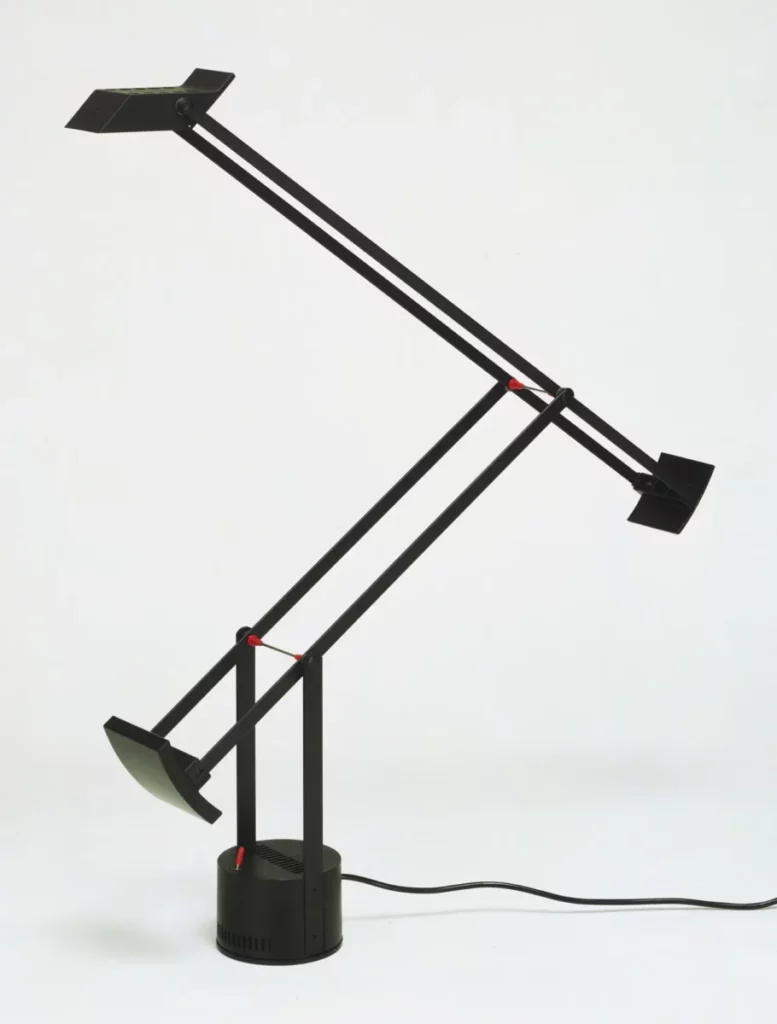
– Tizio (Richard Sapper, 1972)
– Tolomeo (Michele De Lucchi & Giancarlo Fassina, 1987)
– Pirce
– Castore
The Tolomeo lamp in particular became a global reference, comparable to the iconic furniture explored in our guide to leading design furniture brands.
Its articulated aluminum arm, visible mechanics and structural precision exemplify the fusion of engineering and minimalist elegance.
Designers Associated with Artemide
Since its foundation, Artemide has collaborated with major figures in international design.
Vico Magistretti
Richard Sapper
Michele De Lucchi
Zaha Hadid
Herzog & de Meuron
BIG (Bjarke Ingels Group)
This diversity demonstrates the brand’s ability to absorb radically different creative visions while maintaining strong industrial coherence.
As with Fritz Hansen or Herman Miller, collaboration with architects remains central to Artemide’s identity.
Research, Innovation and Materials
Artemide’s identity rests on advanced technological mastery:
– Extruded aluminum
– High-performance technical polymers
– Advanced LED systems
– Precision optics
– Modular structural systems
The company invests heavily in research and development, optimizing light diffusion, energy efficiency and product longevity.
This industrial rigor places Artemide alongside technologically driven houses such as B&B Italia, where engineering and design evolve simultaneously.
Artemide Today
Present in more than 90 countries, Artemide continues to develop lighting systems for residential, corporate and large-scale architectural projects.
The brand plays a central role in contemporary Italian design culture, alongside houses such as Cassina.
For official collections and archives:
Artemide Official Website
Why Artemide Matters
Artemide does not simply manufacture lighting fixtures.
The company redefined the role of light within modern space.
By articulating scientific research, industrial precision and architectural vision, Artemide built a lasting authority in international design history.
Within the broader narrative of twentieth- and twenty-first-century design, Artemide represents the technological and cultural dimension of Italian modernity.