


Blacksmithing & Art Metalwork Guide
Blacksmiths and Metal Artists: The Power of Sculpted Metal
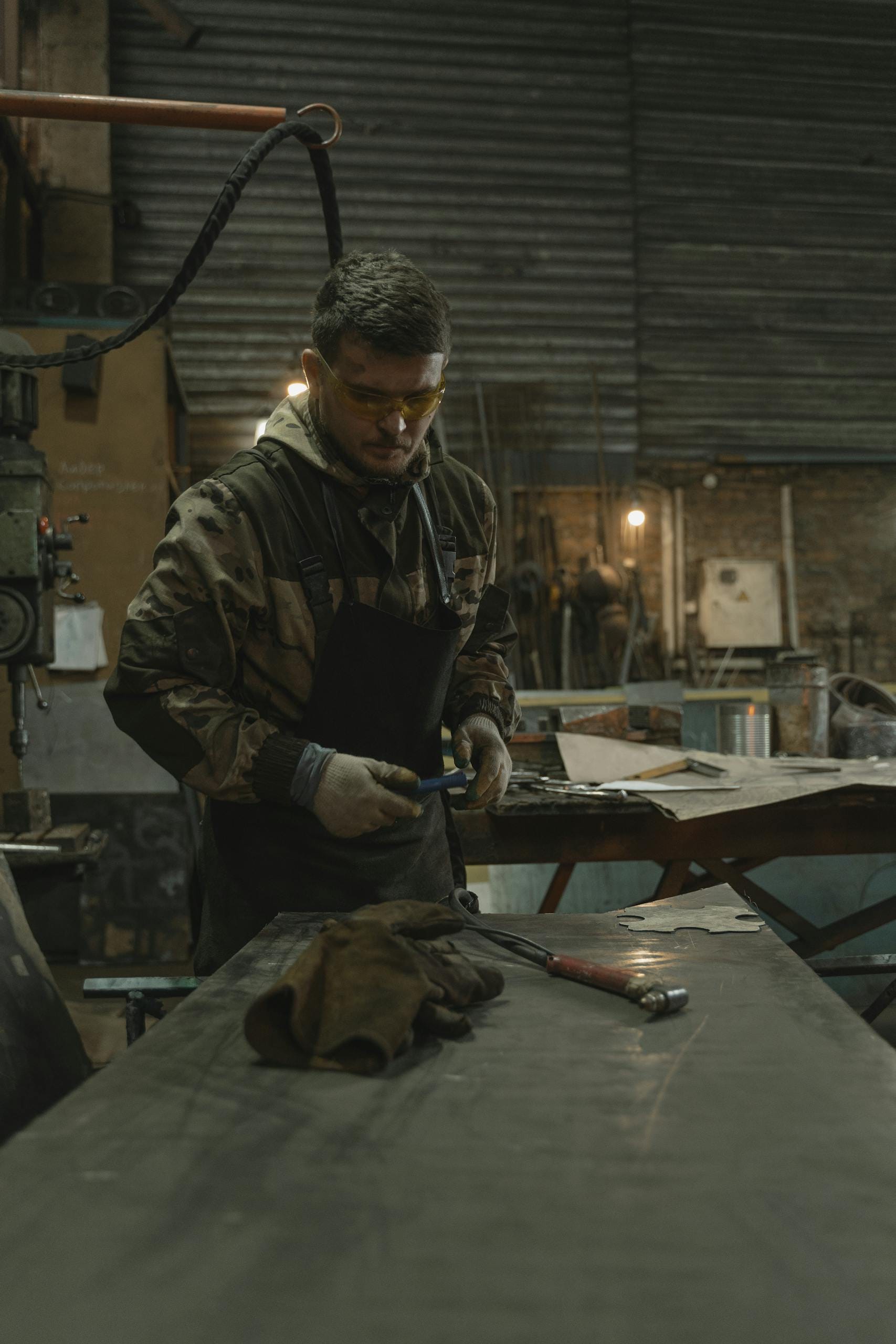
In the glowing workshop of a Parisian blacksmith, incandescent metal gleams under rhythmic hammer blows. The master observes the steel bar, anticipating each curve, each volute that will emerge from the meeting of fire, iron, and his expertise. This ancestral dialogue between craftsman and metal perpetuates an art where each strike engages eternity.
Artistic blacksmithing refers to the art of hot-forging iron and steel to create stair railings, balconies, gates, portals, and architectural elements, while art metalwork encompasses working with all metals (bronze, copper, brass, aluminum, precious metals) through various techniques: forging, chasing, repoussé, welding, and patination. Unlike sculptors who create free forms, blacksmiths and metalworkers craft metal in both functional and aesthetic dimensions.
From the gates of Versailles to Art Nouveau balconies, from Art Deco railings to minimalist contemporary creations, these artisans remain the guardians of an art where raw metal becomes iron lacework, sculptural guardrails, exceptional lighting fixtures, or architectural furniture. Since antiquity, blacksmiths have created weapons, tools, and ornaments. In the Middle Ages, ironworkers crafted cathedral hinges, choir screens, and monumental fittings. During the Renaissance, Jean Tijou revolutionized ironwork in England. Art Nouveau (Guimard, Majorelle) elevated metal to the status of total art.
Today, despite industrialization of the metalworking sector, an elite of artistic blacksmiths and metalworkers perpetuate excellence. These exceptional workshops work on major heritage restoration projects, luxury hotels, yachts, and exceptional private residences, combining ancestral techniques with contemporary technologies without ever sacrificing artisanal precision.
How to Become a Blacksmith or Metal Artist?
Traditional Training Path
Vocational Diploma in Artistic Blacksmithing or Metalwork (2 years)
Technical fundamentals: hot and cold forging, welding (arc, TIG, MIG), layout, bending, assembly techniques, metal identification, use of traditional tools (anvil, hammer, punches, dies). Training in vocational schools or apprenticeship centers with workshop internships. Approximately 500 hours of forge practice.
Advanced Diploma in Art Crafts – Artistic Blacksmithing (2 years post-vocational)
Excellence training focused on decorative techniques: repoussé, chasing, damascening, artistic patinas. Predominantly creative dimension. Execution of complex pieces: volutes, scrollwork, interlacing. Learning technical and artistic drawing.
Higher Diploma in Art Crafts – Habitat Arts – Metal Décor and Furniture Option
Higher education equivalent to Associate’s Degree. Conceptual and artistic approach. Applied art history in metal. Management of large-scale projects.
Compagnonnage (5 to 8 years)
The Tour de France of the Compagnons du Devoir: ancestral oral transmission, journey through France and Europe, apprenticeship in prestigious workshops and on major restoration sites. Culminates in the title of Compagnon after creating a masterpiece before a jury of peers. The Compagnons Metalworkers are recognized worldwide.
Reference Schools and Institutions
- École Boulle (Paris, France): Art metalwork section, internationally recognized excellence training.
- Lycée Maximilien Perret (Alfortville, France): Advanced Diploma in Artistic Blacksmithing, reference training in Greater Paris.
- CFA de Savignac (Aveyron, France): Specialization in traditional and contemporary blacksmithing.
- European Institute of Heritage Crafts (Avignon, France): Historical ironwork restoration.
- Hereford College of Arts (UK): World-renowned Blacksmithing & Metalwork program.
- Penland School of Craft (North Carolina, USA): Intensive workshops in forging and metal sculpture.
- Scuola d’Arte e Mestieri (Florence, Italy): Italian tradition of decorative metalwork.
International Directory of Master Metalworkers
This selection brings together the most prestigious workshops and houses on the international scene, recognized for their technical excellence, creativity, and contribution to the art of metal. Discover other exceptional artisans and workshops in our catalog.
🇩🇪 Germany – Industrial & Artisanal Precision
🇺🇸 United States – Contemporary Innovation
🇫🇷 France – Excellence and Tradition
France possesses one of the richest artistic ironwork traditions in the world, from the gates of Versailles to Guimard’s metro stations, with workshops perpetuating this centuries-old expertise.
🇮🇹 Italy – Renaissance Mastery
Italy, cradle of the Renaissance, preserves a centuries-old tradition of artistic ironwork, from Florence to Venice, where masters perpetuate exceptional expertise.
🇬🇧 United Kingdom – British Tradition
🇪🇸 Spain – Catalan Art & Modernism
How to Choose Your Blacksmithing or Metalwork Workshop?
For a Bespoke Project
1. Define Your Needs Precisely
Project type (staircase railing, balcony, gate, grille, lighting fixture, furniture), exact dimensions and technical constraints, desired style (classic, Art Nouveau, contemporary, minimalist), usage (interior/exterior, heavy traffic), realistic budget. For exceptional bespoke work, expect minimum $4,000 for a simple railing, $10,000 for an ornate railing, $18,000+ for a forged gate, $30,000+ for a monumental balcony, $50,000+ for exceptional grilles.
2. Choose the Right Metal
Wrought Iron: Traditional, solid, capable of receiving noble patinas. Requires regular maintenance (rust-preventive paint).
Steel: Modern, resistant, various finishes (raw, patinated, painted, Corten). Excellent value for money.
Stainless Steel: Minimal maintenance, contemporary polished or brushed appearance. Ideal for outdoor and seaside.
Bronze: Noble, beautiful natural green patina, unalterable. High price, reserved for exceptional pieces.
Brass/Copper: Golden luster, warm patina. Used for lighting fixtures and decorative elements.
Aluminum: Lightweight, rust-proof, various finishes. Good for light structures and contemporary furniture.
3. Verify References and Expertise
Request to see similar completed works (HD photos, better yet: site visit with owner’s consent). Verify craftsmen’s training (vocational degrees, advanced certifications, Compagnons, MOF). Review detailed portfolio. Read verified client reviews. For heritage restoration, require Historical Monuments certification.
- Inability to visit workshop or see completed works
- Lack of detailed technical plans and precise contract
- Unrealistic deadline promises (less than 2 months for complex hand-forged project)
- Refusal to provide finish and metal samples
- Full payment required before starting (30% deposit normal, 30% mid-project, balance on delivery)
- Lack of warranty and professional insurance
Essential Questions to Ask
- Do you work with traditional forge or use modern techniques (bending, laser cutting)?
- What finish do you recommend for my usage (interior/exterior, seaside)?
- What maintenance will be required and how often?
- Do you manage installation or must I hire an independent installer?
- What warranty do you offer on your work and finishes?
- Do you have certifications (Historical Monuments, Compagnons, MOF)?
Where to See and Acquire These Creations?
Trade Shows and Professional Fairs
- European Heritage Days (April, Europe): Open workshops, forge demonstrations, artisan meetings.
- Maison & Objet (Paris – January and September): “Craft” section with metalworkers and designers.
- Salon Révélations (Grand Palais, Paris – May): Art crafts and creation biennial, exceptional blacksmiths.
- Design Miami/Basel (USA/Switzerland): Furniture and design objects including contemporary metal creations.
- Salone del Mobile (Milan – April): Euroluce section for lighting fixtures, design metal furniture.
Places to Visit and Find Inspiration
- Musée Le Secq des Tournelles (Rouen, France): World’s largest museum of ancient ironwork.
- Versailles Gates: Absolute masterpiece of French classical ironwork.
- Guimard Paris Metro: Art Nouveau icons in cast iron and wrought iron.
- Casa Milà & Batlló (Barcelona): Gaudí’s modernist ironwork.
- Hampton Court Palace (UK): Jean Tijou gates, English Baroque ironwork.
Discover More Exceptional Artisans
Hart Design Selection guides you in discovering the finest art craft workshops.
Ironwork and Metalwork Facing Contemporary Challenges
Sustainability and Metal Recycling
The metallurgical industry faces major environmental challenges. Responsible artistic blacksmiths adopt sustainable practices. Use of recycled metals: reclaimed steel, remelted bronze, antique iron. Low-impact techniques: natural gas or electric forge rather than coal, heat recovery. Ecological finishes: water-based paints, natural oils, non-toxic patinas. Intrinsic durability: well-crafted and maintained ironwork lasts centuries, philosophy opposed to planned obsolescence.
Technical Innovation: Tradition Meets Technology
Metalwork has never been more innovative. Laser and water jet cutting: extreme precision for complex forms, combined with manual finishes. 3D modeling and prototyping: realistic visualization before fabrication, allows client adjustments. Precision TIG welding: invisible assemblies for clean contemporary aesthetics. Advanced surface treatments: hot-dip galvanizing, powder coating, anodizing for maximum durability. Composite metals: innovative alloys (Corten, weathering steels, titanium) offering new aesthetic possibilities.
Transmission of Ancestral Expertise
Artistic blacksmithing faces a shortage of skilled labor. Major challenge: attracting younger generations to a physically demanding but creatively rewarding craft. Compagnonnage and schools of excellence (École Boulle, Compagnons du Devoir) ensure transmission. Craft revaluation: growing awareness of the value of unique artisanal work. Workshop-schools: many master blacksmiths offer internships and training, perpetuating the ancestral chain of transmission.
Further Reading
📚 Reference Books
- “La Ferronnerie d’Art en France” by Raymond Subes
- “The Art of Blacksmithing” by Alex W. Bealer
- “Decorative Ironwork” by Henry J. Kauffman
- “Forge et Chaudronnerie : Techniques Traditionnelles” by Jean-Jacques Valette
- “Modern Blacksmith” by Ted Tucker
🏛️ Museums and Heritage Sites
- Musée Le Secq des Tournelles (Rouen, France): World’s largest collection of antique ironwork
- Musée du Compagnonnage (Tours, France): Locksmith-blacksmith section with masterpieces
- Victoria & Albert Museum (London): Exceptional collection of European metalwork
- Château de Versailles: Exceptional gates and ironwork from the Grand Siècle
- Ironbridge Gorge Museum (UK): History of metallurgy and industrial forging
🌐 Professional Organizations
- Compagnons du Devoir: Excellence training in ironwork
- FFMI (French Federation of Metalwork and Associated Trades)
- BABA (British Artist Blacksmiths Association)
- ABANA (Artist-Blacksmith’s Association of North America)
- Ateliers d’Art de France: Network of blacksmiths and creative metalworkers
Metal, Material of Strength and Elegance
Blacksmithing and art metalwork embody that rare alchemy where the raw power of metal meets the delicacy of creative gesture. From the smoking anvils of medieval forges to contemporary workshops equipped with cutting-edge technology, these crafts perpetuate an ancestral dialogue between man and fire, between strength and finesse.
Each forged railing, each sculpted grille, each chased lighting fixture bears the unique imprint of its creator. Metal, a material reputed to be cold and hard, becomes under the master blacksmith’s hand airy lacework, sensual curve, monumental sculpture. It bends, twists, and assembles in a millennial dance where each hammer blow tells a story.
In a world dominated by standardized industrial production, artistic ironwork represents the affirmation of a philosophy of uniqueness, permanence, and excellence. Well-designed ironwork will traverse centuries, patinating nobly, acquiring that particular beauty that only time can confer on passionately worked metal.
Today as yesterday, wrought iron and precious metals remain the materials of architectural nobility, between centuries-old tradition and contemporary boldness, between ancestral strength and timeless elegance.